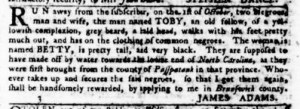
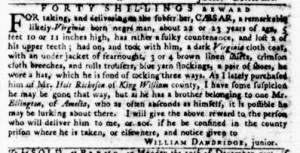
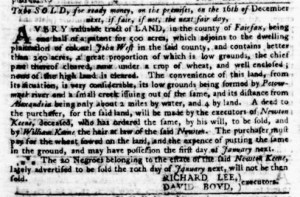
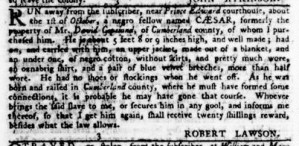
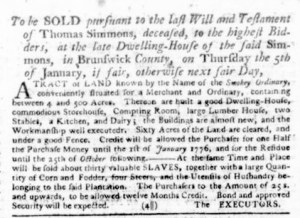
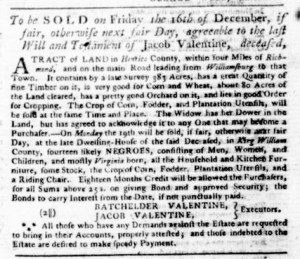
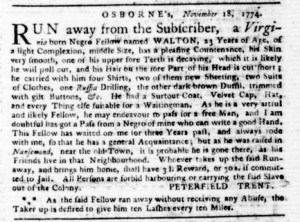
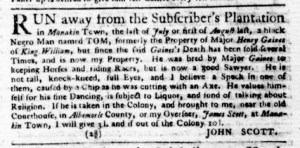
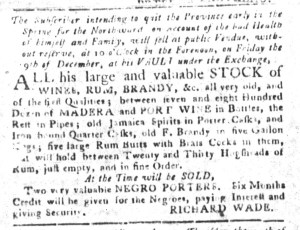
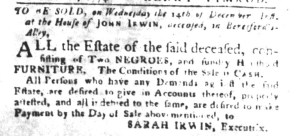
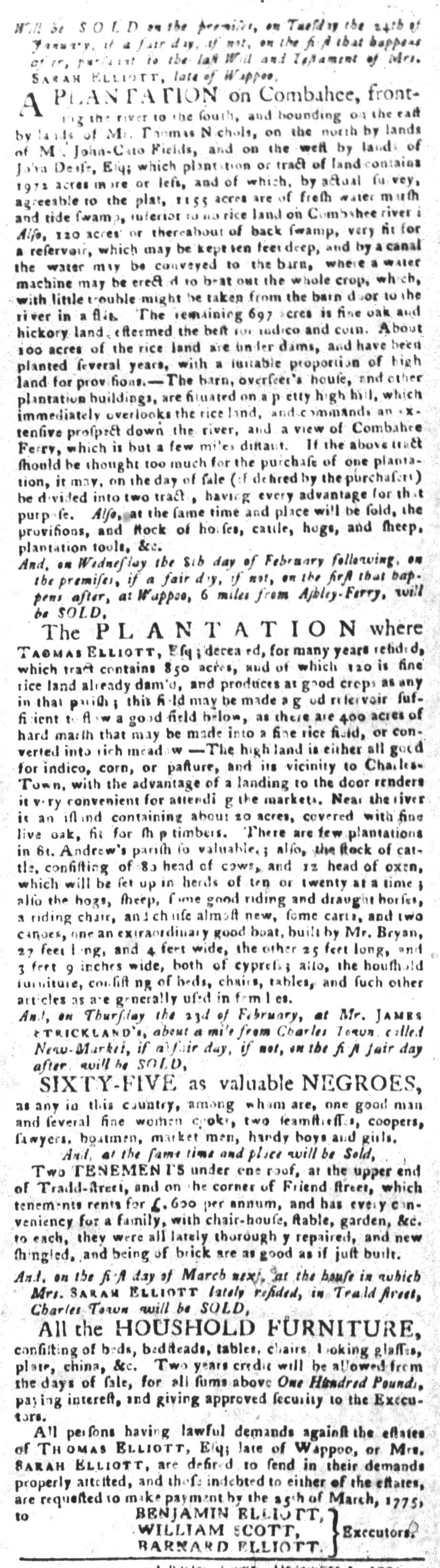
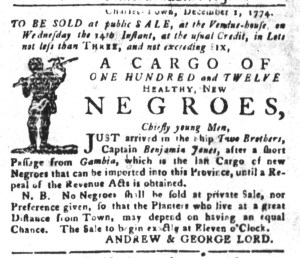
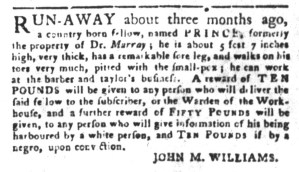
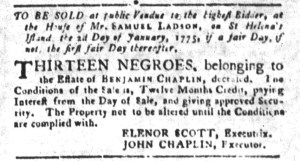
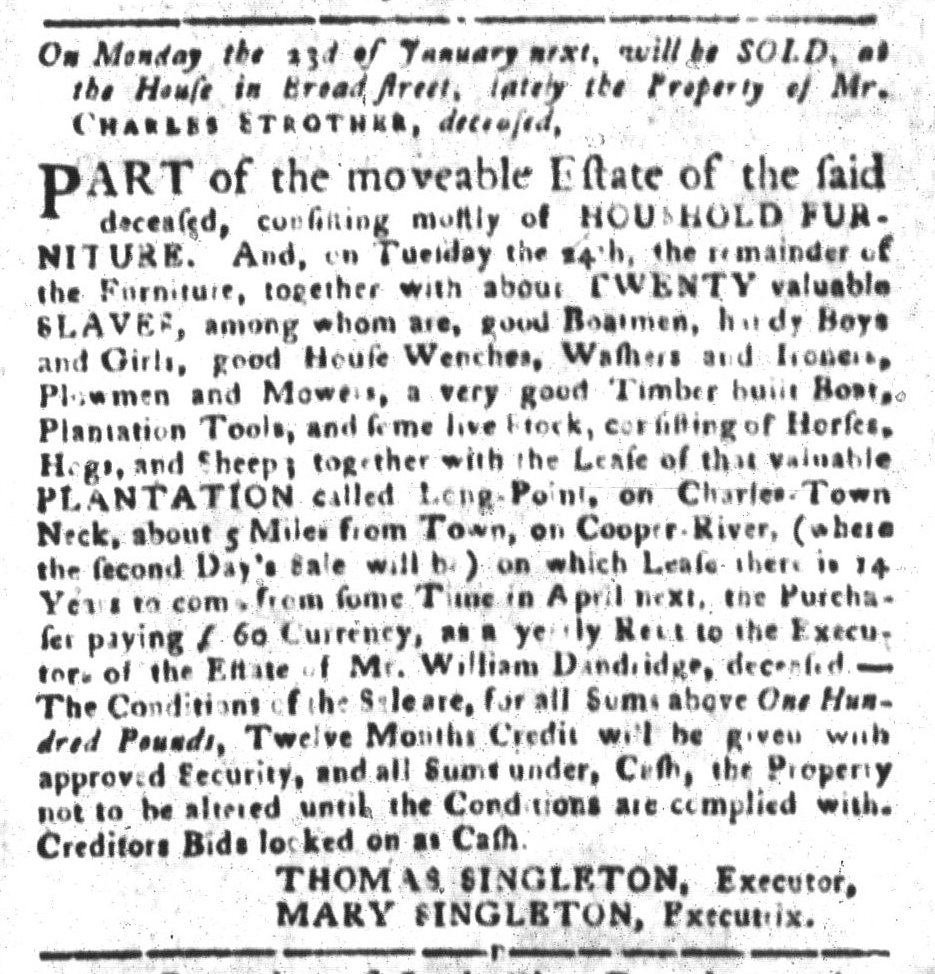
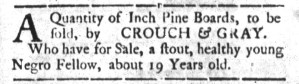
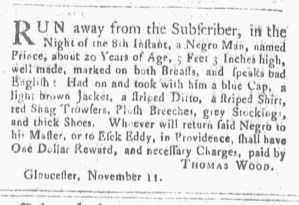
Slavery Advertisements Published December 8, 1774

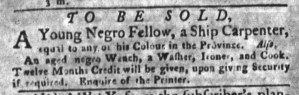
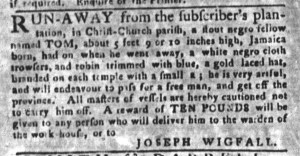
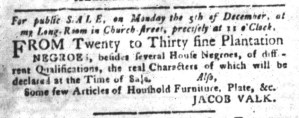
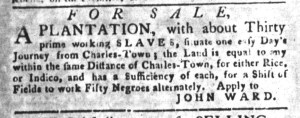
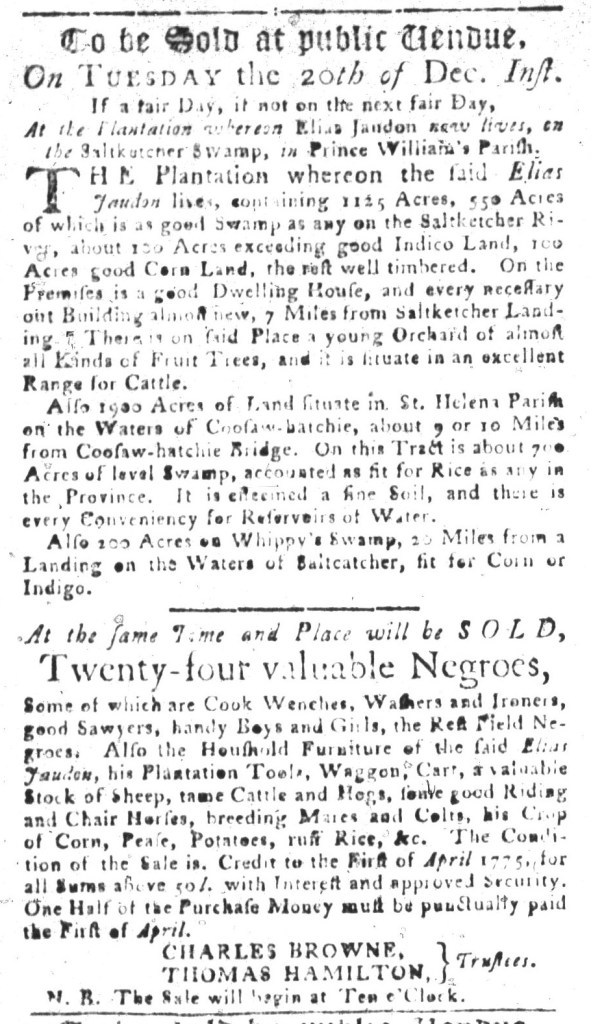
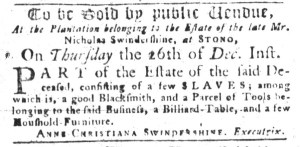
The Slavery Adverts 250 Project chronicles the role of newspaper advertising in perpetuating slavery in the era of the American Revolution. The project seeks to reveal the ubiquity of slavery in eighteenth-century life from New England to Georgia by republishing advertisements about enslaved people – for sale as individuals or in groups, wanted to purchase or for hire for short periods, runaways who liberated themselves, and those who were subsequently captured and confined in jails and workhouses – in daily digests on this site as well as in real time via the @SlaveAdverts250 Twitter feed, utilizing twenty-first-century media to stand in for the print media of the eighteenth century.

The project aims to provide modern audiences with a sense of just how often colonizers encountered these advertisements in their daily lives. Enslaved men, women, and children appeared in print somewhere in the colonies almost every single day. Those advertisements served as a constant backdrop for social, cultural, economic, and political life in colonial and revolutionary America. Colonizers who did not purport to own enslaved people were still confronted with slavery as well as invited to maintain the system by purchasing enslaved men, women, and children or assisting in the capture of so-called “runaways” who sought to free themselves from bondage. The frequency of these newspaper advertisements suggests just how embedded slavery was in colonial and revolutionary American culture in everyday interactions beyond the printed page.

These advertisements also testify to the experiences of enslaved men, women, and children, though readers must consider that those experiences have been remediated through descriptions offered by enslavers rather than enslaved people themselves. Often unnamed in the advertisements, enslaved men, women, and children were not invisible or unimportant in early America.

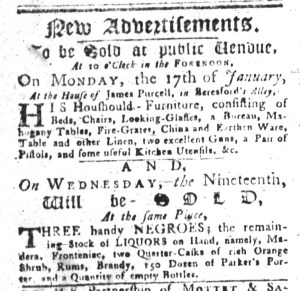
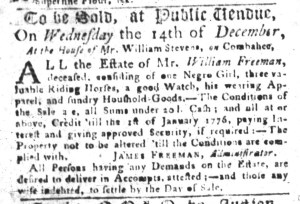
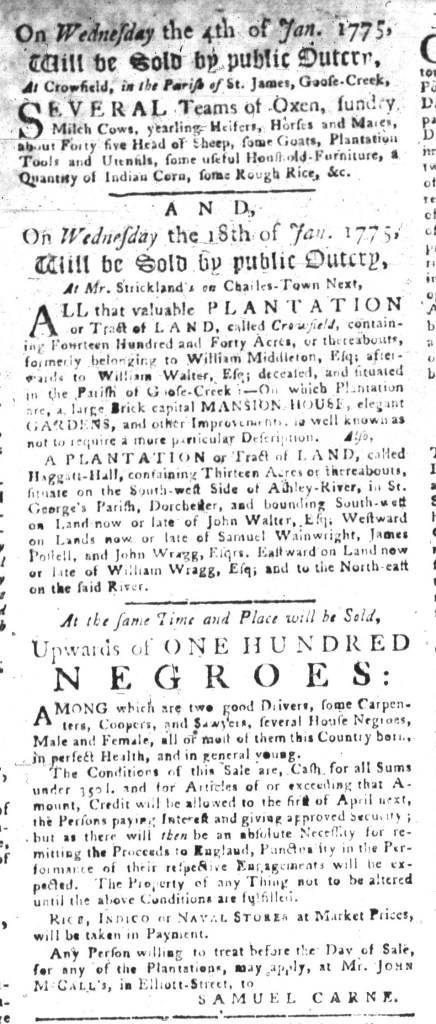
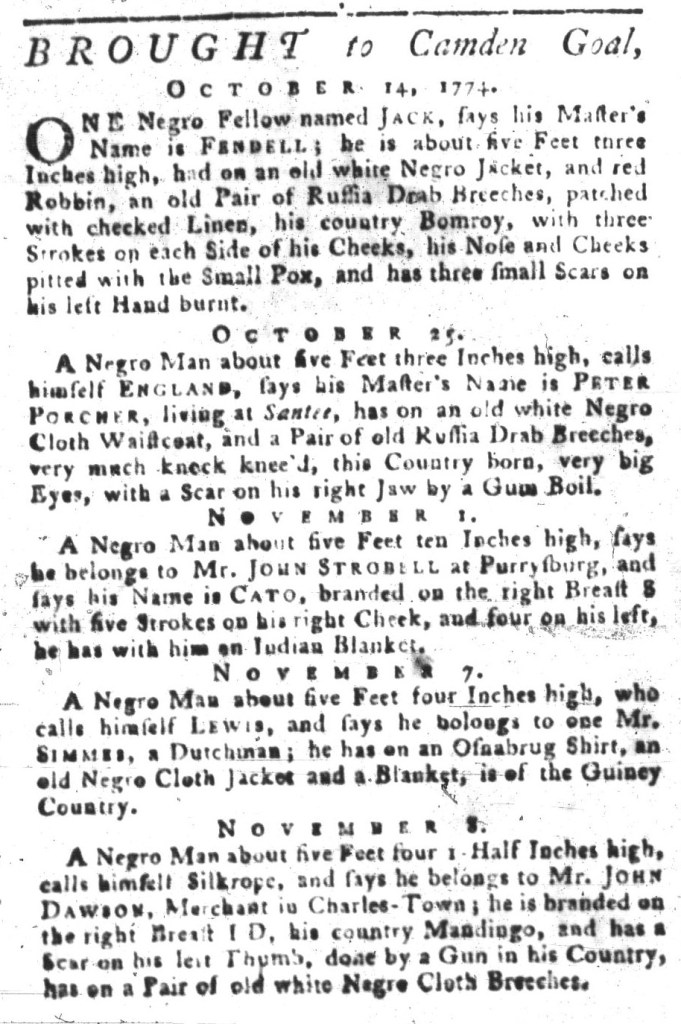
These advertisements appeared in colonial American newspapers 250 years ago today.
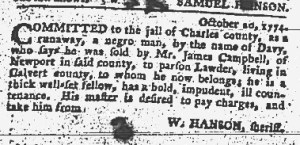
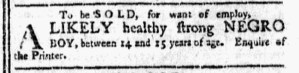
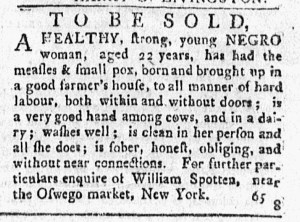
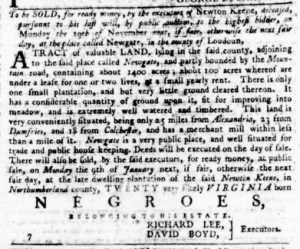
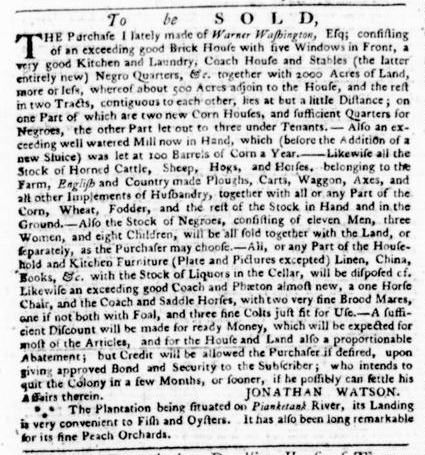
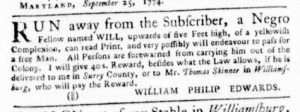
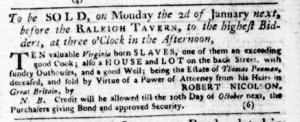
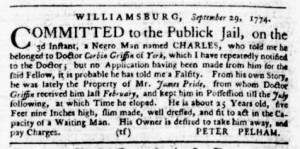
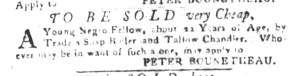
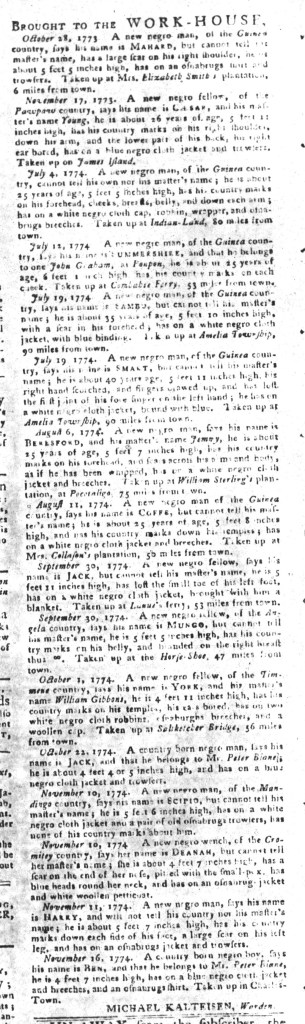
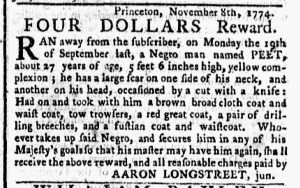
Maryland Gazette (December 8, 1774).

**********
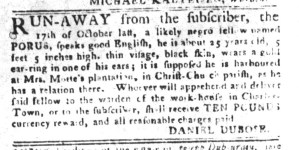
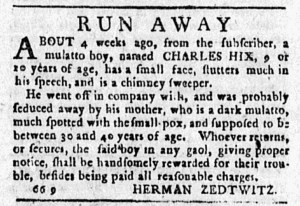
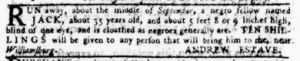
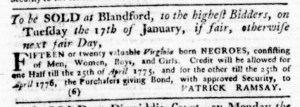
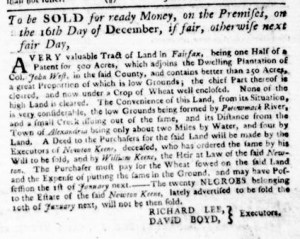
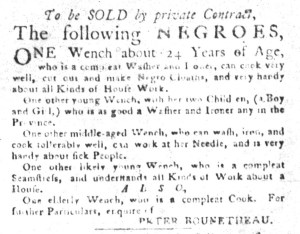
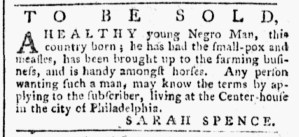
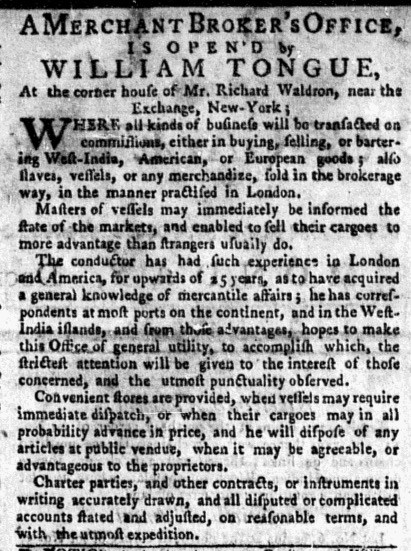
Massachusetts Spy (December 8, 1774).

**********
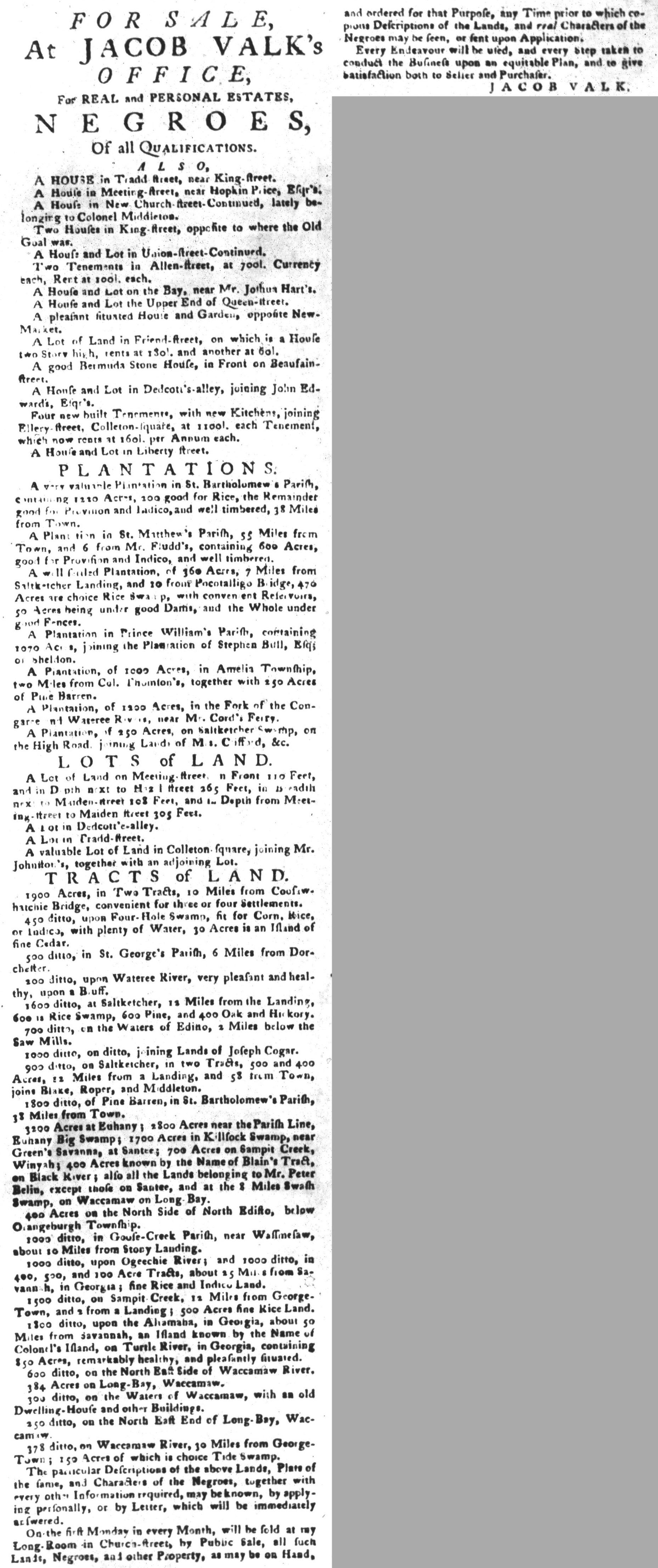
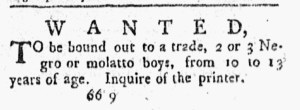
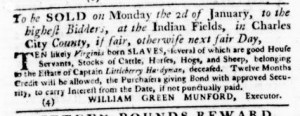
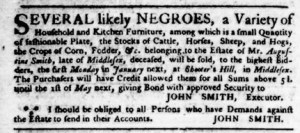
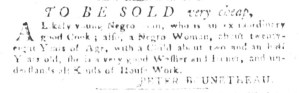
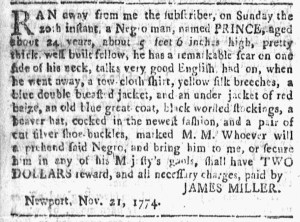
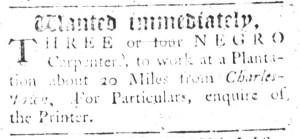
New-York Journal (December 8, 1774).

**********
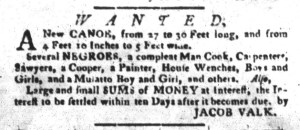
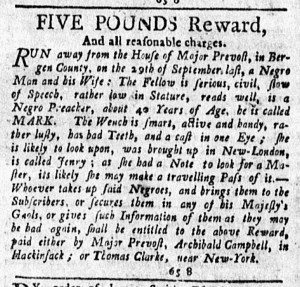
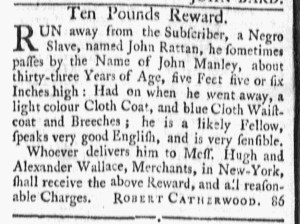
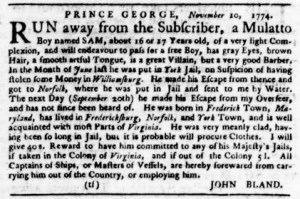
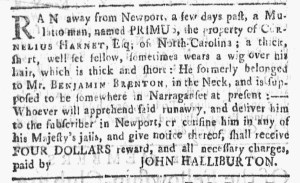
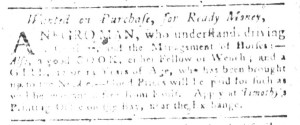
New-York Journal (December 8, 1774).

**********
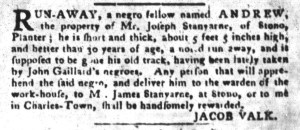
New-York Journal (December 8, 1774).

**********
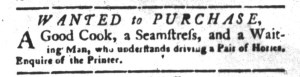
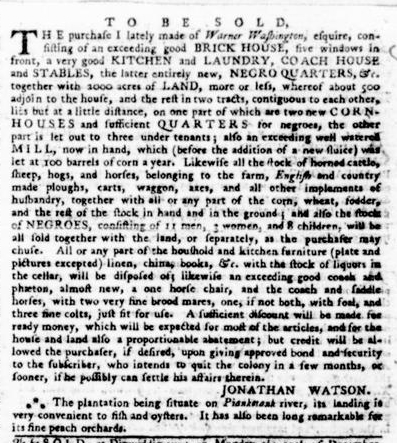
New-York Journal (December 8, 1774).

**********
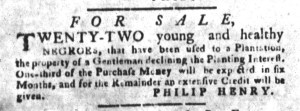
Rivington’s New-York Gazetteer (December 8, 1774).

**********
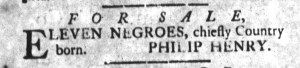
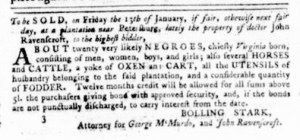
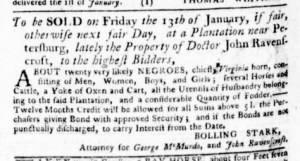
Virginia Gazette [Pinkney] (December 8, 1774).

**********
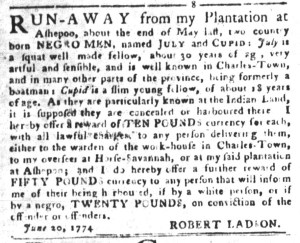
Virginia Gazette [Pinkney] (December 8, 1774).

**********
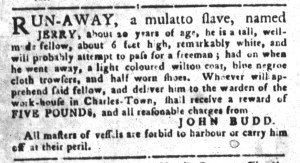
Virginia Gazette [Pinkney] (December 8, 1774).

**********
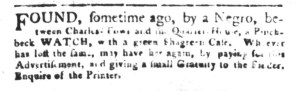
Virginia Gazette [Pinkney] (December 8, 1774).

**********

Virginia Gazette [Pinkney] (December 8, 1774).

**********

Virginia Gazette [Pinkney] (December 8, 1774).

**********

Virginia Gazette [Pinkney] (December 8, 1774).

**********

Virginia Gazette [Pinkney] (December 8, 1774).

**********

Virginia Gazette [Pinkney] (December 8, 1774).

**********

Virginia Gazette [Pinkney] (December 8, 1774).

**********

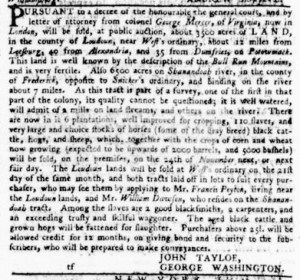
Virginia Gazette [Purdie and Dixon] (December 8, 1774).

**********

Virginia Gazette [Purdie and Dixon] (December 8, 1774).

**********

Virginia Gazette [Purdie and Dixon] (December 8, 1774).

**********

Virginia Gazette [Purdie and Dixon] (December 8, 1774).

**********

Virginia Gazette [Purdie and Dixon] (December 8, 1774).

**********

Virginia Gazette [Purdie and Dixon] (December 8, 1774).

**********

Virginia Gazette [Purdie and Dixon] (December 8, 1774).

**********

Virginia Gazette [Purdie and Dixon] (December 8, 1774).

**********

Virginia Gazette [Purdie and Dixon] (December 8, 1774).

**********

Virginia Gazette [Purdie and Dixon] (December 8, 1774).

**********

Virginia Gazette [Purdie and Dixon] (December 8, 1774).

**********

Virginia Gazette [Purdie and Dixon] (December 8, 1774).

**********

Virginia Gazette [Purdie and Dixon] (December 8, 1774).

**********

Virginia Gazette [Purdie and Dixon] (December 8, 1774).

**********

Virginia Gazette [Purdie and Dixon] (December 8, 1774).

**********

Virginia Gazette [Purdie and Dixon] (December 8, 1774).

December 7

What was advertised in a colonial American newspaper 250 years ago today?

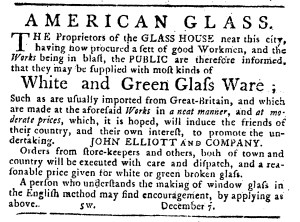
Pennsylvania Journal (December 7, 1774).

“White and Green Glass Ware; Such as are usually imported from Great-Britain.”

A headline in capital letters and a large font proclaimed, “AMERICAN GLASS.”  In a secondary headline composed of font of the same size, John Elliott and Company promoted “White and Green Glass Ware” that they produced ay their “GLASS HOUSE” near Philadelphia.  That advertisement happened to appear in the December 7, 1774, edition of the Pennsylvania Journal, the first issue published since the Continental Association went into effect on December 1.  Throughout the colonies, retailers and consumers adopted that boycott of goods imported from Britain, some enthusiastically and some under pressure.  They hoped that measure would help convince Parliament to repeal the Coercive Acts passed in retaliation for the Boston Tea Party.

Ever since the boycotts inspired by the Stamp Act nearly a decade earlier, supporters of the American cause emphasized the importance of “domestic manufactures” or goods produced in the colonies.  Such products offered an alternative to imported wares while also bolstering local economies and creating jobs.  The Continental Association had the potential to disrupt consumption practice, but it also presented opportunities for American entrepreneurs, including Elliott and Company.

In their advertisement, the proprietors of the Glass House reported that they had “procured a sett of good Workmen” and the glassworks were “in blast.”  That meant that the public “may be supplied with most kinds of White and Green Glass Ware; Such as are usually imported from Great-Britain.”  Prospective customers did not need to worry about the quality or cost of this alternative.  Elliott and Company offered assurances that they produced glassware “in a neat manner, and at moderate prices.”  In their appeal to “the PUBLIC,” Elliott and Company did not address consumers alone.  They also hoped to entice retailers, noting that “Orders from store-keepers and others, both of town and country will be executed with care and dispatch.”  They hoped these various appeals would “induce the friends of their country, and their own interest, to promote the undertaking.”  It was a win-win-win situation for the protest against Parliament, for customers, and for Elliott and Company.

Slavery Advertisements Published December 7, 1774

The Slavery Adverts 250 Project chronicles the role of newspaper advertising in perpetuating slavery in the era of the American Revolution. The project seeks to reveal the ubiquity of slavery in eighteenth-century life from New England to Georgia by republishing advertisements about enslaved people – for sale as individuals or in groups, wanted to purchase or for hire for short periods, runaways who liberated themselves, and those who were subsequently captured and confined in jails and workhouses – in daily digests on this site as well as in real time via the @SlaveAdverts250 Twitter feed, utilizing twenty-first-century media to stand in for the print media of the eighteenth century.

The project aims to provide modern audiences with a sense of just how often colonizers encountered these advertisements in their daily lives. Enslaved men, women, and children appeared in print somewhere in the colonies almost every single day. Those advertisements served as a constant backdrop for social, cultural, economic, and political life in colonial and revolutionary America. Colonizers who did not purport to own enslaved people were still confronted with slavery as well as invited to maintain the system by purchasing enslaved men, women, and children or assisting in the capture of so-called “runaways” who sought to free themselves from bondage. The frequency of these newspaper advertisements suggests just how embedded slavery was in colonial and revolutionary American culture in everyday interactions beyond the printed page.

These advertisements also testify to the experiences of enslaved men, women, and children, though readers must consider that those experiences have been remediated through descriptions offered by enslavers rather than enslaved people themselves. Often unnamed in the advertisements, enslaved men, women, and children were not invisible or unimportant in early America.

These advertisements appeared in colonial American newspapers 250 years ago today.

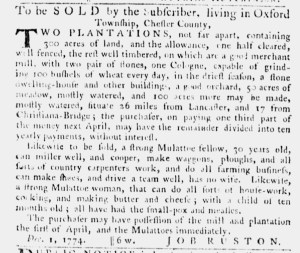
Pennsylvania Gazette (December 7, 1774).

**********

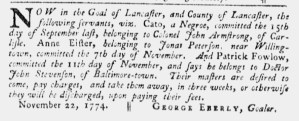
Pennsylvania Gazette (December 7, 1774).

December 6

What was advertised in a colonial American newspaper 250 years ago today?

South-Carolina Gazette and Country Journal (December 6, 1774).

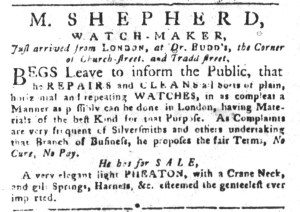
“WATCH-MAKER … proposes the fair Terms, No Cure, No Pay.”

When he moved to Charleston, one of the largest port cities in the colonies, M. Shepherd, a watchmaker, took to the pages of the South-Carolina Gazette and Country Journal to introduce himself to his prospective customers.  Like many artisans who crossed the Atlantic, he emphasized his connections to London, suggesting the level of skill he obtained while employed there.  In addition to stating that he “Just arrived from LONDON,” Shepherd also asserted that he “REPAIRS and CLEANS all Sorts of plain, horizontal and repeating WATCHES, in as compleat a Manner as possibly can be done in London.”  That was possible, in part, because he had “Materials of the best Kind for that Purpose.”  Shepherd’s competitors could make claims about doing work that rivaled that of their counterparts in London, but he was in a much better position to deliver on those promises.

The watchmaker also seized an opportunity to critique what he believed was a shortcoming in the services offered in the local market.  He suggested that “Silversmiths and other undertaking that Branch of Business,” rather than trained and experienced watchmakers, attempted to repair and clean watches, resulting in “very frequent” complaints about shoddy work.  In that regard, he echoed the critiques so often launched by John Simnet, another watchmaker from London who had migrated to the colonies.  Simnet regularly asserted that his competitors who attempted to fix watches did more damage, making it necessary for him to undertake even greater repairs.  Shepherd was so confident of his abilities that he offered a guarantee that he framed as “fair Terms.”  Invoking language more often deployed by physicians and apothecaries, the watchmaker promised, “No Cure, No Pay.”  In other words, if he could not fix a watch then he did not charge the customer for the time or materials that he invested in the effort.  As a newcomer in Charleston, he aimed to make his services attractive to prospective clients, highlighting both his skill and his no-risk guarantee.

Slavery Advertisements Published December 6, 1774

The Slavery Adverts 250 Project chronicles the role of newspaper advertising in perpetuating slavery in the era of the American Revolution. The project seeks to reveal the ubiquity of slavery in eighteenth-century life from New England to Georgia by republishing advertisements about enslaved people – for sale as individuals or in groups, wanted to purchase or for hire for short periods, runaways who liberated themselves, and those who were subsequently captured and confined in jails and workhouses – in daily digests on this site as well as in real time via the @SlaveAdverts250 Twitter feed, utilizing twenty-first-century media to stand in for the print media of the eighteenth century.

The project aims to provide modern audiences with a sense of just how often colonizers encountered these advertisements in their daily lives. Enslaved men, women, and children appeared in print somewhere in the colonies almost every single day. Those advertisements served as a constant backdrop for social, cultural, economic, and political life in colonial and revolutionary America. Colonizers who did not purport to own enslaved people were still confronted with slavery as well as invited to maintain the system by purchasing enslaved men, women, and children or assisting in the capture of so-called “runaways” who sought to free themselves from bondage. The frequency of these newspaper advertisements suggests just how embedded slavery was in colonial and revolutionary American culture in everyday interactions beyond the printed page.

These advertisements also testify to the experiences of enslaved men, women, and children, though readers must consider that those experiences have been remediated through descriptions offered by enslavers rather than enslaved people themselves. Often unnamed in the advertisements, enslaved men, women, and children were not invisible or unimportant in early America.

These advertisements appeared in colonial American newspapers 250 years ago today.

Essex Gazette (December 6, 1774).

**********

Essex Gazette (December 6, 1774).

**********

South-Carolina Gazette and Country Journal (December 6, 1774).

**********

South-Carolina Gazette and Country Journal (December 6, 1774).

**********

South-Carolina Gazette and Country Journal (December 6, 1774).

**********

South-Carolina Gazette and Country Journal (December 6, 1774).

**********

South-Carolina Gazette and Country Journal (December 6, 1774).

**********

South-Carolina Gazette and Country Journal (December 6, 1774).

**********

South-Carolina Gazette and Country Journal (December 6, 1774).

**********

South-Carolina Gazette and Country Journal (December 6, 1774).

**********

South-Carolina Gazette and Country Journal (December 6, 1774).

**********

South-Carolina Gazette and Country Journal (December 6, 1774).

**********

South-Carolina Gazette and Country Journal (December 6, 1774).

**********

South-Carolina Gazette and Country Journal (December 6, 1774).

**********

South-Carolina Gazette and Country Journal (December 6, 1774).

**********

South-Carolina Gazette and Country Journal (December 6, 1774).

**********

South-Carolina Gazette and Country Journal (December 6, 1774).

**********

South-Carolina Gazette and Country Journal (December 6, 1774).

**********

South-Carolina Gazette and Country Journal (December 6, 1774).

**********

South-Carolina Gazette and Country Journal (December 6, 1774).

**********

South-Carolina Gazette and Country Journal (December 6, 1774).

**********

South-Carolina Gazette and Country Journal (December 6, 1774).

**********

South-Carolina Gazette and Country Journal (December 6, 1774).

**********

South-Carolina Gazette and Country Journal (December 6, 1774).

**********

South-Carolina Gazette and Country Journal (December 6, 1774).

**********

South-Carolina Gazette and Country Journal (December 6, 1774).

**********

South-Carolina Gazette and Country Journal (December 6, 1774).

**********

South-Carolina Gazette and Country Journal (December 6, 1774).

**********

South-Carolina Gazette and Country Journal (December 6, 1774).

**********

South-Carolina Gazette and Country Journal (December 6, 1774).

**********

South-Carolina Gazette and Country Journal (December 6, 1774).

**********

South-Carolina Gazette and Country Journal (December 6, 1774).

December 5

What was advertised in a colonial American newspaper 250 years ago today?

Boston Gazette (December 5, 1774).

James Bruce of Boston … was never in Company with a Captain Lovett.”

James Bruce resorted to an advertisement in the December 5, 1774, edition of the Boston-Gazette in hopes of rehabilitating his reputation.  From London, the mariner sent a sworn statement that addressed a story about him relayed “by a Paragraph in the Boston Journal, dated 28 July, last.”  He referred to an update from a Captain Lovett published in the Massachusetts Spy on that day.  Lovett had recently arrived in Boston from Antigua, by way of Portsmouth, New Hampshire.  He delivered news that the “merchants and planters” in Antigua “were in great consternation on learning about proposals to suspend trade with Britain and its Caribbean colonies in response to the Boston Port Act and other Coercive Acts.

Despite anticipating hardships, those merchants and planters supposedly supported the American cause, even to the point of intervening when an “old troubler of Boston, Capt. Bruce, was railing against this town in a large company at a principal tavern.”  According to Lovett’s account, Bruce “expatiated largely on the abuse he had suffered for bringing his blessed cargo of Tea” to Boston aboard the Eleanor, one of the ships involved in the Boston Tea Party, and “hoped the next freight he brought them would be soldiers.”  At that point, a “gentleman” confronted him, noting how ungrateful he sounded toward a town that had contributed to his livelihood for so many years, and “caught Bruce by the nose and led him out of the company, requiring him to keep his distance, as a dirty ingrate, unworthy of any gentleman’s company or countenance.”

That story from July came to Bruce’s attention in September, prompting him to compose the statement that appeared in the Boston-Gazette in December.  Whether or not the incident in the tavern in Antigua occurred, Bruce apparently realized that he “got his bread” from the people of Boston and attempted to undo the damage.  He asserted that he “was never in Company with a Captain Lovett … at a Tavern in Antigua” and “the Contents of the Paragraph” inserted in the Massachusetts Spy “in order to hurt him” were “groundless and void of Truth.”  He “never made use of any such Expressions.”  Furthermore, he claimed that he “did not think or know at the Time he took the East India Company’s Tea on Board the Ship Eleanor, that the same would have been either detrimental, or displeasing to the Town of Boston.”  Had he been more aware of the circumstances, “himself and [the] owners would not have suffered any of the said Tea to have been shipt on Board the said Ship Eleanor.”  Bruce not only backtracked from the story told by Lovett but from his involvement in the events that culminated in the Boston Tea Party.

Just as many colonizers who signed an address to Governor Thomas Hutchinson upon his departure from Massachusetts later ran advertisements apologizing for having done so and claiming that they had not fully considered the contents of that address before affixing their signatures, Bruce paid to have his account of recent events run as an advertisement.  Among the five newspapers published in Boston at the time, he most likely chose to submit it to the Boston-Gazette because of that publication’s reputation for supporting patriots and opposing Parliament, thus placing his message before the eyes of those most offended by the reports of his conduct.  In placing such an advertisement, Bruce contributed to shaping the news that readers encountered, though that did not guarantee that anyone believed his version of events or the sincerity of his regret.

Slavery Advertisements Published December 5, 1774

The Slavery Adverts 250 Project chronicles the role of newspaper advertising in perpetuating slavery in the era of the American Revolution. The project seeks to reveal the ubiquity of slavery in eighteenth-century life from New England to Georgia by republishing advertisements about enslaved people – for sale as individuals or in groups, wanted to purchase or for hire for short periods, runaways who liberated themselves, and those who were subsequently captured and confined in jails and workhouses – in daily digests on this site as well as in real time via the @SlaveAdverts250 Twitter feed, utilizing twenty-first-century media to stand in for the print media of the eighteenth century.

The project aims to provide modern audiences with a sense of just how often colonizers encountered these advertisements in their daily lives. Enslaved men, women, and children appeared in print somewhere in the colonies almost every single day. Those advertisements served as a constant backdrop for social, cultural, economic, and political life in colonial and revolutionary America. Colonizers who did not purport to own enslaved people were still confronted with slavery as well as invited to maintain the system by purchasing enslaved men, women, and children or assisting in the capture of so-called “runaways” who sought to free themselves from bondage. The frequency of these newspaper advertisements suggests just how embedded slavery was in colonial and revolutionary American culture in everyday interactions beyond the printed page.

These advertisements also testify to the experiences of enslaved men, women, and children, though readers must consider that those experiences have been remediated through descriptions offered by enslavers rather than enslaved people themselves. Often unnamed in the advertisements, enslaved men, women, and children were not invisible or unimportant in early America.

These advertisements appeared in colonial American newspapers 250 years ago today.

Connecticut Courant (December 5, 1774).

**********

Dunlap’s Pennsylvania Packet (December 5, 1774).

**********

Newport Mercury (December 5, 1774).

**********

Newport Mercury (December 5, 1774).

**********

New-York Gazette and Weekly Mercury (December 5, 1774).

**********

Supplement to the New-York Gazette and Weekly Mercury (December 5, 1774).

**********

Supplement to the New-York Gazette and Weekly Mercury (December 5, 1774).

**********

South-Carolina Gazette (December 5, 1774).

**********

South-Carolina Gazette (December 5, 1774).

**********

South-Carolina Gazette (December 5, 1774).

**********

South-Carolina Gazette (December 5, 1774).

**********

South-Carolina Gazette (December 5, 1774).

**********

South-Carolina Gazette (December 5, 1774).

**********

South-Carolina Gazette (December 5, 1774).

**********

South-Carolina Gazette (December 5, 1774).

**********

South-Carolina Gazette (December 5, 1774).

December 4

What was advertised in a colonial American newspaper 250 years ago this week?

Virginia Gazette [Purdie and Dixon] (December 1, 1774).

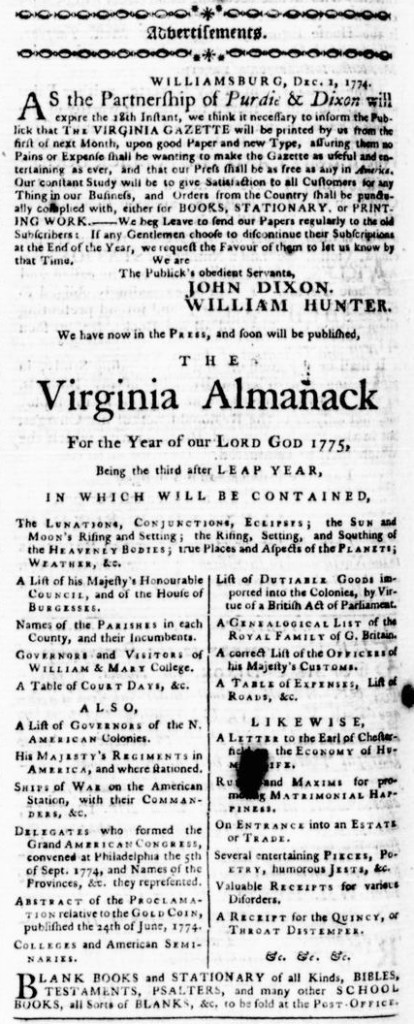
“Our Press shall be as free as any in America.”

The first page of the December 1, 1774, edition of the Virginia Gazette featured two notices about the future endeavors of the partners who printed that newspaper.  In the first, Alexander Purdie announced his withdrawal from that partnership and outlined his plans to publish another newspaper on his own as soon as he garnered enough subscribers to make it a viable venture.  In the other, John Dixon expressed his appreciation for customers who had supported the partnership and revealed that he would continue to publish the Virginia Gazette with a new partner, William Hunter.

Although those were the only advertisements on the first page, they were not the only advertisements in that issue, nor the end of the notices inserted by the printers.  The remainder of the advertisements appeared after news and essays, commencing in the final column of the second page.  A notice placed by Dixon and Hunter led those advertisements, making clear that the new partnership would actively serve current and prospective customers.  They asserted that their newspaper “will be printed … upon good Paper and new Type.”  Beyond that investment that would benefit readers, Dixon and Hunter pledged that “no Pains or Expense shall be wanting to make this Gazette as useful and entertaining as ever.”  In other words, the newspaper would maintain the same quality that readers expected when the new management went into place.  Furthermore, they proclaimed that “our Press shall be as free as any in America.”  They hoped that would convince customers to continue their patronage, yet did not make assumptions.  “We beg Leave,” they declared, “to send put Papers regularly to the old Subscribers,” but recognized that some might not wish to renew.”  “If any Gentlemen choose to discontinue their Subscriptions at the end of the Year,” they instructed, “we request the Favour of them to let us know by that Time.”  The new partners also promoted other branches of their business, offering “BOOKS, STATIONARY, or PRINTING WORK” to residents of Williamsburg who visited their shop and customers in the country who sent orders.

That, however, did not conclude their advertisement.  Instead, Dixon and Hunter alerted readers that they would soon publish “THE Virginia Almanack For the Year of our LORD GOD 1775.”  The list of contents, intended to entice prospective customers, occupied more space than their announcement about upcoming changes in the partnership.  It contained the usual astronomical data and a selection of informative and “entertaining PIECES” along with several items related to current events.  Those included a list of “DELEGATES who formed the Grand AMERICAN CONGRESS convened at Philadelphia the 5th of Sept, 1774, and Names of the Provinces, &c. they represented,” a “List of DUTIABLE GOODS imported into the Colonies, by Virtue of a British Act of Parliament,” “His MAJESTY’S REGIMENT in AMERICA, and where stationed,” and “SHIPS of WAR on the American Station, with their COMMANDERS.”  The imperial crisis loomed large among the materials selected for inclusion in Dixon and Hunter’s almanac.  Before they began publishing the Virginia Gazette together, they disseminated information about the troubled relationship between the colonies and Britain in an almanac that customers would consult throughout the entire year of 1775.

December 3

What was advertised in a colonial American newspaper 250 years ago today?

Providence Gazette (December 3, 1774).

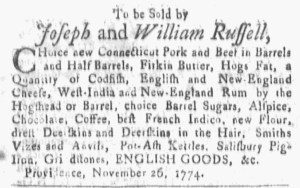
“ENGLISH GOODS, &c. Providence, November 26, 1774.”

Joseph Russell and William Russell, two of the most prosperous merchants in Providence on the eve of the American Revolution, regularly advertised a variety of wares in the Providence Gazette.  On December 3, 1774, they ran an advertisement for several commodities, including “Connecticut Pork and Beef in Barrels and Half Barrels, … a Quantity of Codfish, … West-India and New-England Rum by the Hogshead or Barrell, … Chocolate, Coffee, … and “drest Deerskins and Deerskins in the Hair.”  They concluded their notice with “ENGLISH GOODS,” indicating that they stocked and sold merchandise imported from Britain.

This advertisement appeared two days after the Continental Association, a nonimportation agreement adopted by the First Continental Congress, went into effect.  However, that was not the first time that it ran in the Providence Gazette.  A date appended to the end of the advertisement established that the Russells composed it on November 26, matching the date of the first issue of the newspaper that carried it.  Advertisements usually ran for a minimum of three weeks, though advertisers could arrange for notices to appear for much longer.  In this instance, the Russells opted for four weeks, commencing just days before the Continental Association went into effect and continuing when that pact was supposed to constrain buying and selling imported goods.  In the December 3 edition of the Providence Gazette, their advertisement appeared one column over from a notice promoting the Extracts from the Votes and Proceedings of the American Continental Congress, a pamphlet that included “the Association” along with “a List of Grievances” and “occasional Resolves.”  By including the date, the Russells may have sought to offer prospective customers some leeway in purchasing “ENGLISH GOODS” that had been received before the nonimportation agreement went into effect.  They made it easier for readers to feel comfortable with that decision than Richard Mathewson did.  His advertisement, which also ran before the Continental Association went into effect and continued into December, proclaimed that he sold a “large and general Assortment of GOODS” that were “Just imported from London.”  That notice did not include a date, making it less apparent when he received the goods.  Readers could reasonably conclude that Mathewson had ordered that merchandise before learning of the Continental Association, but that required more work on their part than the Russells did when they included a date in their advertisement.

Slavery Advertisements Published December 3, 1774

The Slavery Adverts 250 Project chronicles the role of newspaper advertising in perpetuating slavery in the era of the American Revolution. The project seeks to reveal the ubiquity of slavery in eighteenth-century life from New England to Georgia by republishing advertisements about enslaved people – for sale as individuals or in groups, wanted to purchase or for hire for short periods, runaways who liberated themselves, and those who were subsequently captured and confined in jails and workhouses – in daily digests on this site as well as in real time via the @SlaveAdverts250 Twitter feed, utilizing twenty-first-century media to stand in for the print media of the eighteenth century.

The project aims to provide modern audiences with a sense of just how often colonizers encountered these advertisements in their daily lives. Enslaved men, women, and children appeared in print somewhere in the colonies almost every single day. Those advertisements served as a constant backdrop for social, cultural, economic, and political life in colonial and revolutionary America. Colonizers who did not purport to own enslaved people were still confronted with slavery as well as invited to maintain the system by purchasing enslaved men, women, and children or assisting in the capture of so-called “runaways” who sought to free themselves from bondage. The frequency of these newspaper advertisements suggests just how embedded slavery was in colonial and revolutionary American culture in everyday interactions beyond the printed page.

These advertisements also testify to the experiences of enslaved men, women, and children, though readers must consider that those experiences have been remediated through descriptions offered by enslavers rather than enslaved people themselves. Often unnamed in the advertisements, enslaved men, women, and children were not invisible or unimportant in early America.

These advertisements appeared in colonial American newspapers 250 years ago today.

Providence Gazette (December 3, 1774).