September 20

What was advertised in a revolutionary American newspaper 250 years ago today?

Pennsylvania Gazette (September 20, 1775).

“A neat and correct VIEW of the late BATTLE at CHARLESTOWN, not inferior to any hithero proposed.”

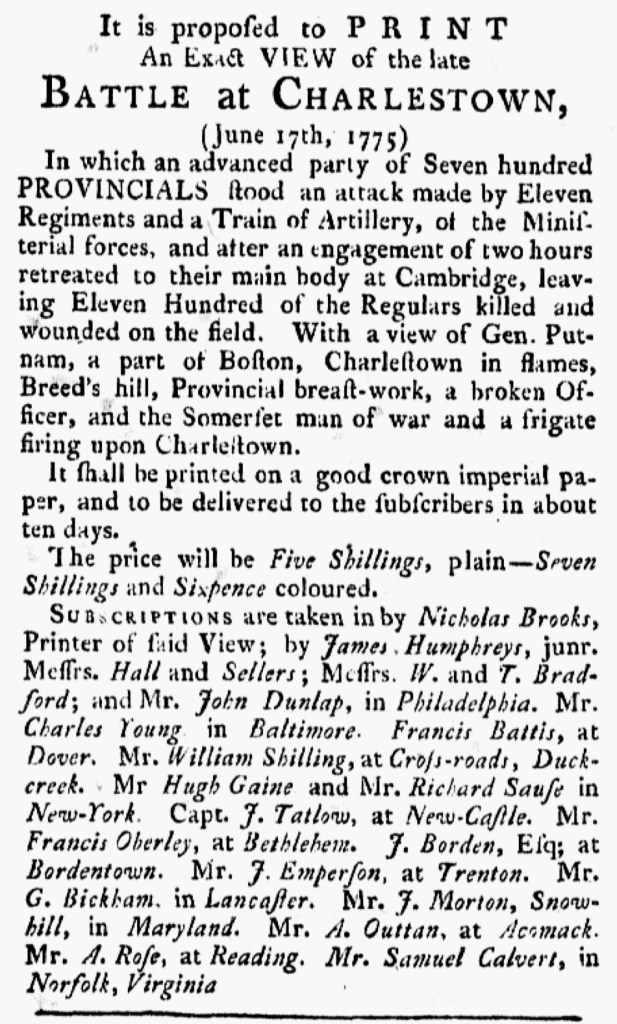
After appearing in the Pennsylvania Ledger on September 16, 1775, the subscription proposal for “An exact VIEW of the late Battle at Charlestown,” now known as the Battle of Bunker Hill, ran in the Pennsylvania Gazette four days later.  It featured nearly identical copy, including a list of local agents, among them several printers in Philadelphia, who collected the names of subscribers in that city and other towns from New York to Virginia.  The notice named Nicholas Brooks as the “printer of said view,” but did not mention that he collaborated with Bernard Romans, the cartographer and engraver.  An addition at the bottom of the advertisement, “Frames and Glass may be had at the abovesaid N. Brooks’s,” suggested that Brooks managed the marketing of the proposed print.

Immediately below that advertisement, Robert Aitken announced, “NOW engraving for the Pennsylvania Magazine, or American Monthly Museum, a neat and correct VIEW of the late BATTLE at CHARLESTOWN, not inferior to any hitherto proposed.”  Aitken, who was not among the printers listed as local agents for the Brooks and Romans print, promoted a competing print!  This one, however, “shall be printed in a size proper for the Magazine.”  The two prints looked strikingly similar, not unlike the competing prints of the Boston Massacre produced by Henry Pelham and Paul Revere in 1770, though one was larger than the other.  Aitken’s print measured 18 x 26 cm (approximately 7 x 10 inches), the right size to tuck it inside the magazine for delivery to subscribers.  Brooks and Romans’s print measured 31.5 x 42.2 cm (approximately 12.5 x 16.5 inches) on a 40.6 x 50.5 cm sheet (approximately 16 x 20 inches), perhaps making it a better candidate to frame and display.
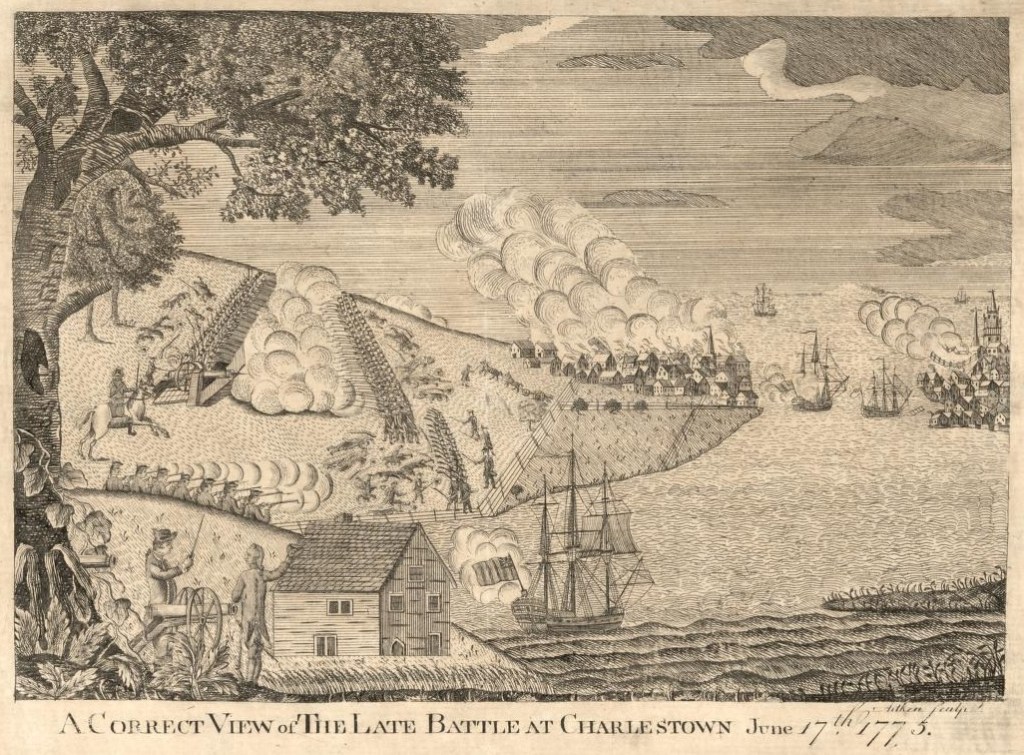
Robert Aitken (engraver and publisher), “A Correct View of the Late Battle at Charlestown” (1775). Courtesy Library of Congress.

Subscribers to the Pennsylvania Magazine received the print as a premium.  Nonsubscribers could purchase the issue for “One Shilling and Sixpence, on account of the great expence of the engraving.”  On other occasions, including the September 16, 1775, edition of the Pennsylvania Ledger, Aitken advertised the price as one shilling per issue.  He now informed “those Gentlemen who incline to purchase this View of the Battle may be furnished with it at the moderate price of Sixpence.”  In effect, he did not give readers who purchased a single issue of the magazine any sort of discount, perhaps hoping to encourage them to subscribe to receive the print as a gift.  Whatever the case, Aitken’s print was slightly more expensive than the five shillings that Brooks and Romans charged for their uncolored print.
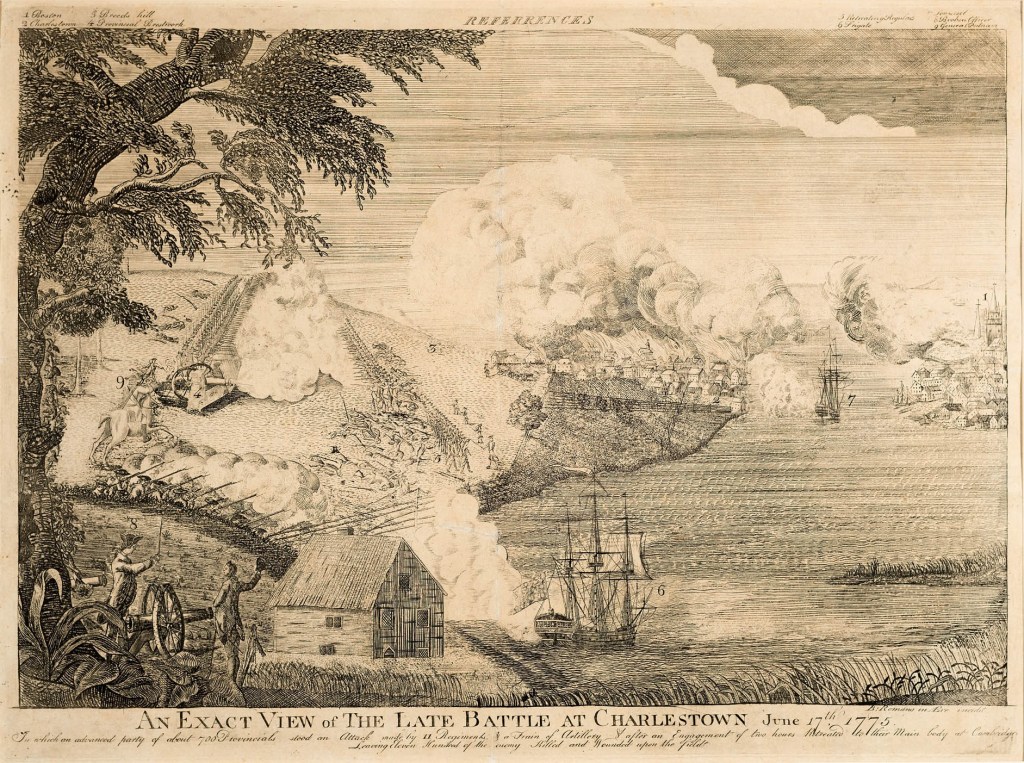
Nicholas Brooks (publisher) and Bernard Romans (engraver), “An Exact View of the Late Battle at Charlestown” (1775). Courtesy Massachusetts Historical Society.

Given the similarity of the prints, did Aitken pirate his “VIEW of the late BATTLE at CHARLESTOWN” from Brooks and Romans?  That had been the case with Revere issuing a print based on a drawing by Pelham before the artist managed to publish his own.  Or did Aitken collaborate with Brooks and Romans?  It was not the first time that an image that accompanied his magazine resembled one of their projects.  The July 1775 issue of the Pennsylvania Magazine featured a map, “A New and Correct Plan of the Town of Boston, and Provincial Camp.”  Aitken marketed it at the same time that Brooks and Romans published a map of eastern Massachusetts and northern Rhode Island that featured an inset showing a “Plan of BOSTON and its ENVIRONS 1775.”  The two did not resemble each other as much as the “VIEW” that each advertised.  Whether they collaborated or competed, Aitken and Brooks and Romans all aimed to disseminate a commemorative item that simultaneously kept buyers better informed and inspired them to support the American cause.
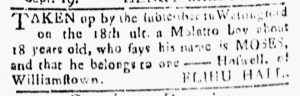
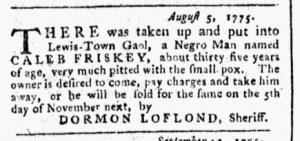
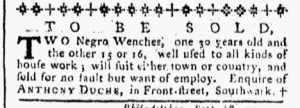
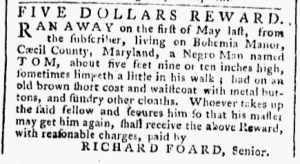
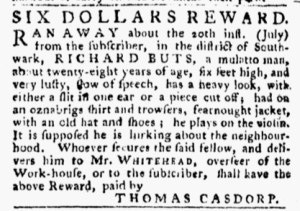
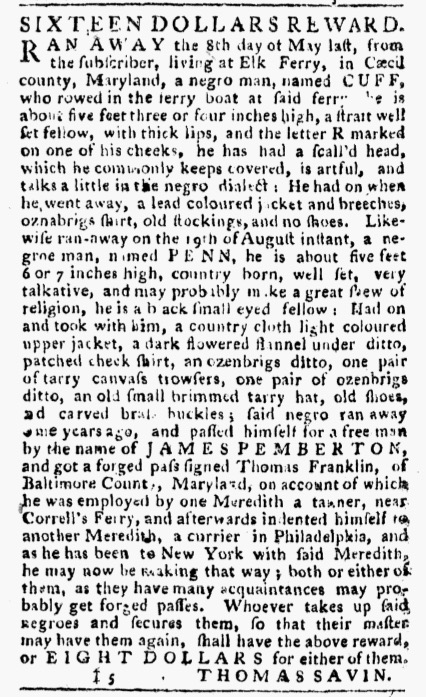
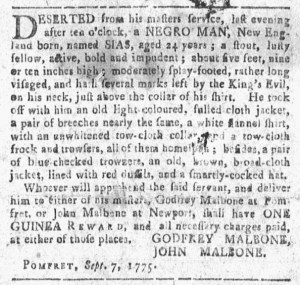
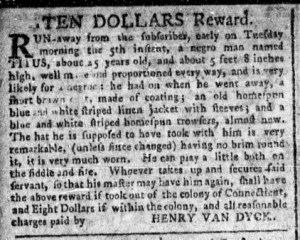
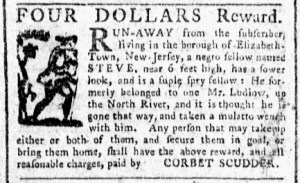
Slavery Advertisements Published September 20, 1775

The Slavery Adverts 250 Project chronicles the role of newspaper advertising in perpetuating slavery in the era of the American Revolution. The project seeks to reveal the ubiquity of slavery in eighteenth-century life from New England to Georgia by republishing advertisements about enslaved people – for sale as individuals or in groups, wanted to purchase or for hire for short periods, runaways who liberated themselves, and those who were subsequently captured and confined in jails and workhouses – in daily digests on this site as well as in real time via the @SlaveAdverts250 Twitter feed, utilizing twenty-first-century media to stand in for the print media of the eighteenth century.

The project aims to provide modern audiences with a sense of just how often colonizers encountered these advertisements in their daily lives. Enslaved men, women, and children appeared in print somewhere in the colonies almost every single day. Those advertisements served as a constant backdrop for social, cultural, economic, and political life in colonial and revolutionary America. Colonizers who did not purport to own enslaved people were still confronted with slavery as well as invited to maintain the system by purchasing enslaved men, women, and children or assisting in the capture of so-called “runaways” who sought to free themselves from bondage. The frequency of these newspaper advertisements suggests just how embedded slavery was in colonial and revolutionary American culture in everyday interactions beyond the printed page.

These advertisements also testify to the experiences of enslaved men, women, and children, though readers must consider that those experiences have been remediated through descriptions offered by enslavers rather than enslaved people themselves. Often unnamed in the advertisements, enslaved men, women, and children were not invisible or unimportant in early America.

These advertisements appeared in colonial American newspapers 250 years ago today.

Connecticut Journal (September 20, 1775).

**********

Pennsylvania Journal (September 20, 1775).

September 19

What was advertised in a revolutionary American newspaper 250 years ago today?

South-Carolina Gazette (September 19, 1775).

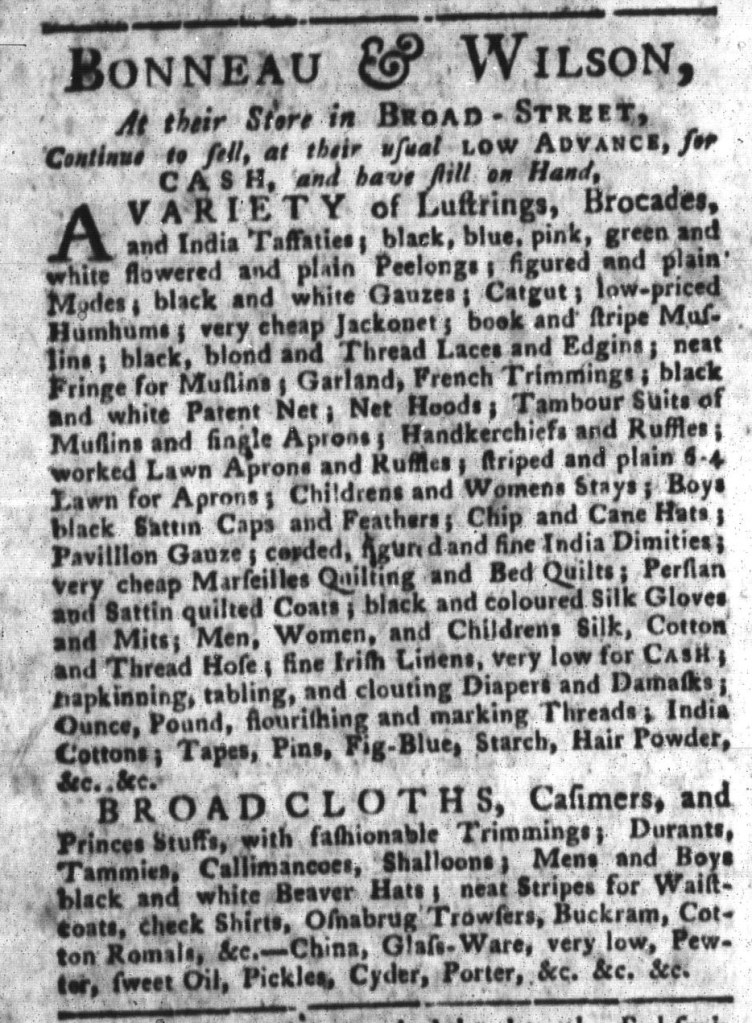
“Bonneau & Wilson … Continue to sell … fashionable Trimmings.”

It was the type of advertisement that often appeared in colonial newspapers from New England to Georgia during the middle third of the eighteenth century.  In the September 19, 1775, edition of the South-Carolina Gazette, Bonneau and Wilson listed an array of imported goods available at their store on Broad Street in Charleston.  They stocked everything from “Tambour Suits of Muslins and single Aprons” to “Persian and Sattin quilted Coats” to “black and coloured Silk Gloves and Mits” to “Men, Women, and Childrens Silk, Cotton and Thread Hose.”

The merchants did not indicate when they acquired those items, whether they had arrived before the Continental Association went into effect on December 1, 1774, but they did state that they “Continue to sell” them.  Perhaps they meant that they continued to sell goods received before the nonimportation agreement went into effect.  After all, the familiar format of their advertisement lacked some elements that often appeared in such notices.  It did not proclaim that they had just imported their merchandise on the latest vessels from English ports, nor did it name which ships had transported their wares so prospective customers could confirm that they stocked new items.

Neither did Bonneau and Wilson assure the public that they sold goods according to the provisions of the Continental Association.  They may not have believed it necessary considering the surveillance underway at the time.  Just a few days earlier Richard Lushington ran an advertisement in the South-Carolina and American General Gazette to defend his reputation against allegations by “some evil, malicious designed Person or Persons” to the “Committee of Charlestown” that he did not abide by the Continental Association.  In addition, no reader could have perused Bonneau and Wilson’s advertisement without keeping current events in mind, especially since the first page of that issue featured “A DECLARATION By the REPRESENTATIVES of the United Colonies of NORTH-AMERICA, now in General Congress, at PHILADELPHIA, setting forth the Causes and Necessity of their taking up Arms.”

Some aspects of Bonneau and Wilson’s advertisement suggested business as usual at their store, especially the extensive list of imported goods, yet missing elements, news items that accompanied their notice, and current events all indicated that both the merchants and their prospective customers thought about the marketplace differently than they had when similar advertisements ran in newspapers before the imperial crisis.

Slavery Advertisements Published September 19, 1775

The Slavery Adverts 250 Project chronicles the role of newspaper advertising in perpetuating slavery in the era of the American Revolution. The project seeks to reveal the ubiquity of slavery in eighteenth-century life from New England to Georgia by republishing advertisements about enslaved people – for sale as individuals or in groups, wanted to purchase or for hire for short periods, runaways who liberated themselves, and those who were subsequently captured and confined in jails and workhouses – in daily digests on this site as well as in real time via the @SlaveAdverts250 Twitter feed, utilizing twenty-first-century media to stand in for the print media of the eighteenth century.

The project aims to provide modern audiences with a sense of just how often colonizers encountered these advertisements in their daily lives. Enslaved men, women, and children appeared in print somewhere in the colonies almost every single day. Those advertisements served as a constant backdrop for social, cultural, economic, and political life in colonial and revolutionary America. Colonizers who did not purport to own enslaved people were still confronted with slavery as well as invited to maintain the system by purchasing enslaved men, women, and children or assisting in the capture of so-called “runaways” who sought to free themselves from bondage. The frequency of these newspaper advertisements suggests just how embedded slavery was in colonial and revolutionary American culture in everyday interactions beyond the printed page.

These advertisements also testify to the experiences of enslaved men, women, and children, though readers must consider that those experiences have been remediated through descriptions offered by enslavers rather than enslaved people themselves. Often unnamed in the advertisements, enslaved men, women, and children were not invisible or unimportant in early America.

These advertisements appeared in colonial American newspapers 250 years ago today.

Dunlap’s Maryland Gazette (September 19, 1775).

**********

New-Hampshire Gazette (September 19, 1775).

**********

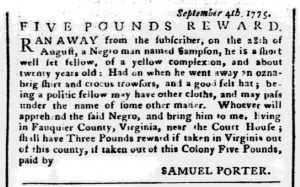
South-Carolina Gazette (September 19, 1775).

**********

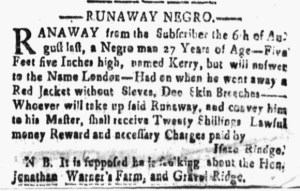
South-Carolina Gazette (September 19, 1775).

**********

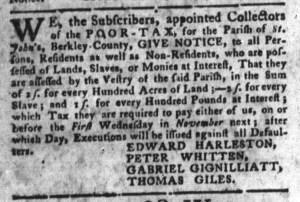
South-Carolina Gazette (September 19, 1775).

September 18

What was advertised in a revolutionary American newspaper 250 years ago today?

Boston-Gazette (September 18, 1775).

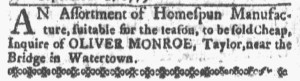
“AN Assortment of Homespun Manufacture.”

It was a short advertisement, just four lines in the September 18, 1775, edition of the Boston-Gazette, but it spoke volumes about the times in which the advertiser placed it and colonizers read it.  “AN Assortment of Homespun Manufacture, suitable for the season,” the notice announced, “to be sold Cheap.  Inquire of OLIVER MONROE, Taylor, near the Bridge in Watertown.”  Even before the battles at Lexington and Concord marked a new chapter in the imperial crisis, homespun cloth became a symbol of resistance to British abuses, especially duties on imported goods imposed by Parliament.  Over the past decade, colonizers had participated in a series of boycotts, first to protest the Stamp Act in 1765, then in response to the Townshend Acts in the late 1760s, and again when they learned of the Coercive Acts in 1774.  Each time, consumers opted for homespun cloth produced in the colonies as an alternative to textiles imported from England.

At the time that Monroe ran his advertisement, the Continental Association remained in place.  It had gone nine months earlier.  In addition to prohibiting merchants and shopkeepers from selling goods received after December 1, 1774, it called on colonizers to “promote Agriculture, Arts, and the Manufactures of this Country.”  That included purchasing homespun rather than the “Fine assortment” of imported textiles, ranging from corduroys to striped hollands to cambrics, listed in a longer advertisement that appeared in the same column as Monroe’s short notice.  Monroe did not need to invest much effort in marketing his “Homespun Manufacture” because the times spoke for themselves.  Prospective customers already recognized the political significance of the choices they made in the marketplace.  That they read his advertisement in the Boston-Gazette, now published in Watertown as the siege of Boston continued, only underscored the importance of practicing politics when they went shopping.

Slavery Advertisements Published September 18, 1775

The Slavery Adverts 250 Project chronicles the role of newspaper advertising in perpetuating slavery in the era of the American Revolution. The project seeks to reveal the ubiquity of slavery in eighteenth-century life from New England to Georgia by republishing advertisements about enslaved people – for sale as individuals or in groups, wanted to purchase or for hire for short periods, runaways who liberated themselves, and those who were subsequently captured and confined in jails and workhouses – in daily digests on this site as well as in real time via the @SlaveAdverts250 Twitter feed, utilizing twenty-first-century media to stand in for the print media of the eighteenth century.

The project aims to provide modern audiences with a sense of just how often colonizers encountered these advertisements in their daily lives. Enslaved men, women, and children appeared in print somewhere in the colonies almost every single day. Those advertisements served as a constant backdrop for social, cultural, economic, and political life in colonial and revolutionary America. Colonizers who did not purport to own enslaved people were still confronted with slavery as well as invited to maintain the system by purchasing enslaved men, women, and children or assisting in the capture of so-called “runaways” who sought to free themselves from bondage. The frequency of these newspaper advertisements suggests just how embedded slavery was in colonial and revolutionary American culture in everyday interactions beyond the printed page.

These advertisements also testify to the experiences of enslaved men, women, and children, though readers must consider that those experiences have been remediated through descriptions offered by enslavers rather than enslaved people themselves. Often unnamed in the advertisements, enslaved men, women, and children were not invisible or unimportant in early America.

These advertisements appeared in colonial American newspapers 250 years ago today.

Connecticut Courant (September 18, 1775).

**********

Dunlap’s Pennsylvania Packet (September 18, 1775).

**********

Dunlap’s Pennsylvania Packet (September 18, 1775).

**********

Dunlap’s Pennsylvania Packet (September 18, 1775).

**********

Dunlap’s Pennsylvania Packet (September 18, 1775).

**********

Postscript to Dunlap’s Pennsylvania Packet (September 18, 1775).

**********

Postscript to Dunlap’s Pennsylvania Packet (September 18, 1775).

**********

Newport Mercury (September 18, 1775).

**********

New-York Gazette and Weekly Mercury (September 18, 1775).

**********

New-York Gazette and Weekly Mercury (September 18, 1775).

September 17

What was advertised in a revolutionary American newspaper 250 years ago this week?

Connecticut Gazette (September 15, 1775).

“Excellent Accommodations for Passengers.”

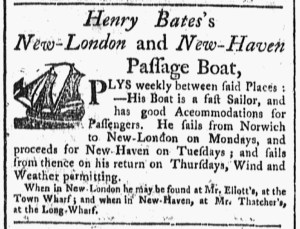
In the early months of the Revolutionary War, colonizers who needed to travel between Norwich and New London had an option other going by road between the two towns.  They could instead book passage on “BRADDICK’s NORWICH and NEW-LONDON PASSAGE-BOAT,” according to John Braddick’s advertisement in the September 15, 1775, edition of the Connecticut Gazette.  He offered that service “every Day in the Week, Wind and Weather permitting,” though his advertisement did not specify the time that the boat departed from each town.  Presumably it left Norwich in the morning, sailed about fifteen miles down the Thames River to New London on the coast, remained there for a few hours, and returned in the late afternoon before darkness arrived.  Prospective passengers could get more information from Braddick at his house near Chelsea Landing in Norwich or at the London Coffee House in New London.

Connecticut Gazette (September 15, 1775).

The same issue also carried an advertisement for “Henry Bates’s New-London and New-Haven Passage Boat.”  His service ran weekly rather than daily, transporting passengers over a much longer distance.  Despite the name in the advertisement, Bates’s passage boat actually originated in Norwich on Mondays and remained in New London overnight, departing for New Haven on Tuesdays.  The boat departed for the return trip through the Long Island Sound on Thursdays, though Bates did not indicate whether it arrived in New Haven on Tuesdays or Wednesdays or when it made its stop in New London.  He did state that his service depended on “Wind and Weather.”  Prospective customers could learn more “at Mr. Eliott’s, at the Town Wharf” in New London and “at Mr. Thatcher’s, at the Long-Wharf” in New Haven.

Newspaper advertisements advised readers of the transportation infrastructure that linked cities and towns in the colonies.  Most such advertisements promoted stage services, but along the Connecticut coastline travelers had other options.  Both Bates and Braddick emphasized the “excellent Accommodations” they provided for passengers, attempting to convince them that passage boats offered the most comfortable as well as the fastest way to travel from one town to another.

September 16

What was advertised in a revolutionary American newspaper 250 years ago today?

Pennsylvania Ledger (September 16, 1775).

“It is proposed to PRINT An Exact VIEW of the late BATTLE at CHARLESTOWN.”

Bernard Romans, a cartographer, apparently met with sufficient success in marketing and publishing his “MAP, FROM BOSTON TO WORCESTER, PROVIDENCE AND SALEM” in the summer of 1775 that he launched a similar project as fall arrived.  He placed a subscription proposal for a print depicting “An Exact VIEW of the late BATTLE at CHARLESTOWN,” known today as the Battle of Bunker Hill, in the September 16, 1775, edition of the Pennsylvania Ledger.  The proposal stated that it “shall be printed on a good crown imperial paper” at a price of five shillings, “plain,” or seven shilling and six pence, “coloured.”

In promoting the print, Romans summarized the battle, though most readers likely already knew the details.  “[A]n advanced party of Seven hundred PROVINCIALS,” the cartographer narrated, “stood an attack made by Eleven Regiments and a Train of Artillery, of the Ministerial forces, and after an engagement of two hours retreated to their main body at Cambridge, leaving Eleven Hundred of the Regulars killed and wounded on the field.”  Even though the British prevailed, it was such a costly victory in terms of casualties that officers that British General Henry Clinton wrote in his diary, “A dear bought victory, another such would have ruined us.”  The Americans had reason to feel proud despite retreating.  Romans hoped to capitalize on that even as he aimed to publish a print that helped colonizers far from Boston visualize the battle.  The print included “a view of Gen. [Israel] Putnam,” an American officer, “a part of Boston, Charlestown in flames, Breed’s hill, Provincial breast-work, a broken Officer, and the Somerset man of war and a frigate firing upon Charlestown.”

As had been the case with his map, Romans collaborated with Nicholas Brooks, a shopkeeper and “Printer of said View” as well as local agents in several cities and towns from New York to Virginia.  The subscription proposal indicated that the print would be ready “to be delivered to the subscribers in about ten days,” not nearly enough time to disseminate the proposal and collect the names of subscribers before making the first impressions.  In both instances, Romans likely felt confident that consumers would be so interested in purchasing items that commemorated the newest chapter in the struggle against Britain that the demand for the map and the print would justify the expense of producing initial copies as well as prompt him to issue even more as local agents submitted their lists of subscribers.

Slavery Advertisements Published September 16, 1775

The Slavery Adverts 250 Project chronicles the role of newspaper advertising in perpetuating slavery in the era of the American Revolution. The project seeks to reveal the ubiquity of slavery in eighteenth-century life from New England to Georgia by republishing advertisements about enslaved people – for sale as individuals or in groups, wanted to purchase or for hire for short periods, runaways who liberated themselves, and those who were subsequently captured and confined in jails and workhouses – in daily digests on this site as well as in real time via the @SlaveAdverts250 Twitter feed, utilizing twenty-first-century media to stand in for the print media of the eighteenth century.

The project aims to provide modern audiences with a sense of just how often colonizers encountered these advertisements in their daily lives. Enslaved men, women, and children appeared in print somewhere in the colonies almost every single day. Those advertisements served as a constant backdrop for social, cultural, economic, and political life in colonial and revolutionary America. Colonizers who did not purport to own enslaved people were still confronted with slavery as well as invited to maintain the system by purchasing enslaved men, women, and children or assisting in the capture of so-called “runaways” who sought to free themselves from bondage. The frequency of these newspaper advertisements suggests just how embedded slavery was in colonial and revolutionary American culture in everyday interactions beyond the printed page.

These advertisements also testify to the experiences of enslaved men, women, and children, though readers must consider that those experiences have been remediated through descriptions offered by enslavers rather than enslaved people themselves. Often unnamed in the advertisements, enslaved men, women, and children were not invisible or unimportant in early America.

These advertisements appeared in colonial American newspapers 250 years ago today.

Providence Gazette (September 16, 1775).

September 15

What was advertised in a revolutionary American newspaper 250 years ago today?

South-Carolina and American General Gazette (September 15, 1775).

“He … declares, that he has never made the least Infringement on the said Resolves.”

Richard Lushington was serious about defending his reputation.  When the merchant suspected that rumors circulated about alleged misconduct, he placed an advertisement in the South-Carolina and American General Gazette to offer a substantial reward to anyone who revealed the source.  In a notice dated September 5, 1775, Lushington declared that he “has just Reason to surmise, from the Conduct of the Committee of Charlestown” that was responsible for enforcing nonimportation and nonexportation agreements “that some evil, malicious Person or Persons has lodged an Information of his having violated the Resolves of the Continental and Provincial Congresses, by shipping Provisions to the disunited Colonies.”  The Continental Association did not prohibit exporting commodities to Britain, Ireland, and colonies in the West Indies until September 10, but perhaps the reports contended that Lushington had been overzealous in how much and how quickly he exported provisions to colonies in the Caribbean that had not signaled support for the American cause.  Had the merchant attempted to sidestep the Continental Association, abiding by the letter but not the spirit?
Lushington denied that he acted inappropriately.  “[I]n justification of his own Character, which he esteems as sacred,” he proclaimed that “he has never made the least Infringement on the said Resolves.”  The merchant was so anxious to address the allegations that offered “a Reward of ONE HUNDRED POUNDS currency to any Person or Persons that will discover to him the Informer, on Oath, in order that such false, atrocious Villains may be publickly known in the Community.”  He may have been especially keen to address the charges manufactured against him because, as Amy Pastan explains, he was a Quaker and thus an outsider among the predominantly Anglican population in Charleston.  “While Quakers were tolerated in the southern port city,” Pastan notes, “their anti-slavery views set them apart from the Charleston elite.”  Whatever challenges he faced as fall arrived in 1775, Lushington later demonstrated his allegiance to the American cause by serving as captain of a Patriot militia company known as the Free Citizens of Charleston as well as the Jews Company because several Jewish men, also outsiders in Charleston, served in it.

For more on Lushington and the Free Citizens of Charleston, visit “Rediscovering Charleston’s Revolutionary Outsiders.”