September 25

What was advertised in a revolutionary American newspaper 250 years ago today?

New-York Gazette and Weekly Mercury (September 25, 1775).

“Illustrated with a beautiful Plan of Boston, and the Provincial Camp.”

When fall arrived, it was time to market almanacs for the coming year.  It was an annual ritual in American newspapers from New England to Georgia.  Hugh Gaine, the printer of the New-York Gazette and Weekly Mercury, began advertising “HUTCHIN’s Improv’d: BEING AN ALMANACK … For the Year of our LORD 1776” on September 18, 1775, and then inserted his extensive notice in subsequent issues.  The almanac’s contents included the usual astronomical data, such as “Length of Days and Nights” as well as a schedule of the courts, a description of roads to other cities and towns, and “useful Tables, chronological Observations and entertaining Remarks.”  Gaine enumerated thirty-one of those items, such as a “Very comical, humorous, and entertaining Adventure of a young LADY that used to walk in her sleep,” an essay on the “evil Consequences of Sloth and Idleness,” and a “Method for destroying Caterpillars on Trees.”

If all of that was not enough to entice customers, Gaine made sure that they knew that the almanac was “Illustrated with a beautiful Plan of Boston, and the Provincial Camp.”  That proclamation led the advertisement, appearing immediately above the title of the almanac.  Gaine then devoted the greatest amount of space to describing the map: “13. A very neat Plan of the Town of Boston, shewing at one View, the Provincial Camp, Boston Neck, Fortification, Commons, Battery, Magazines, Charlestown Ferry, Mill Pond, Fort Hill, Corps Hill, Liberty Tree, Windmill Point, South Battery, Long Wharf, Island Wharf, Hancock’s [Wharf], Charlestown, Bunker’s Hill, Winter Hill, Cobble Hill, Forts, Prospect Hill, Provincial Lines, Lower Fort, Upper [Fort], Main Guard, Cambridge College, Charles River, Pierpont’s Mill, Fascine Battery, Roxbury Hill Lines, General Gage’s Lines, Dorchester Hill and Point, and Mystick River.”  As the siege of Boston continued, Daine realized that colonizers in Boston would be interested in supplementing what they read in newspapers and heard from others with a map that would help them envision and better understand recent events.

What was the source for the map?  According to the catalog description for the almanac by PBA Galleries, Auctioneers and Appraisers, the map, “titled a ‘Plan of Boston,’ details Boston’s Shawmut Peninsula and with a smaller inset of the greater Boston area.  Both maps appear to be based on the ‘New and Correct Plan of the Town of Boston and Provincial Camp,’ which appeared in the Pennsylvania Magazine for July, 1775.”  The image that Aitken marketed to spur magazine sales found its way into another periodical publication.  Another printer used it to generate demand for an item produced on his press.

Gaine also listed “11. The whole Process of making SALT PETRE, recommended by the Hon. The Continental Congress, for the making of which there is a Bounty now given both in this and the neighbouring Provinces” and “12. The Method of making Gun-Powder, which at this Juncture may be carried into Execution in a small Way, by almost every Framer in his own Habitation.”  The auction catalog further clarifies that the almanac contains “the Resolution of Congress, July 28, 1775 on the necessity of making gunpowder in the colonies, signed in print by John Hancock, with a recipe for gunpowder on the reverse of the map.”  More than ever, current events played a part in compiling the contents and then marketing almanacs.

“Plan of Boston,” in Hutchins Improved: Being an Almanack and Ephemeris … For the Year of Our Lord 1776 (New York: Hugh Gaine, 1775). Courtesy PBA Galleries, Auctioneers and Appraisers.

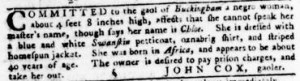
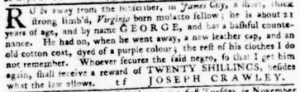
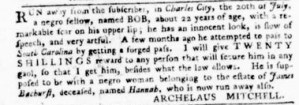
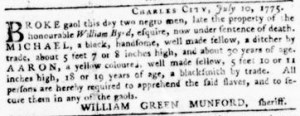
Slavery Advertisements Published September 25, 1775

GUEST CURATOR: Massimo Sgambati

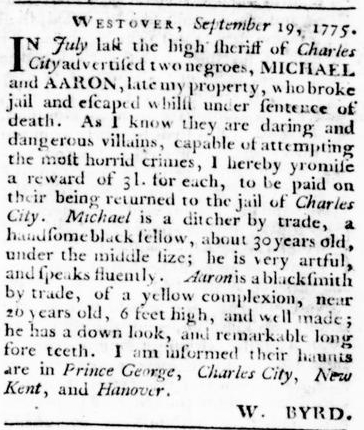
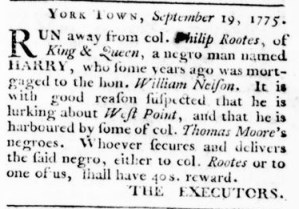
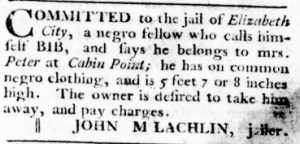
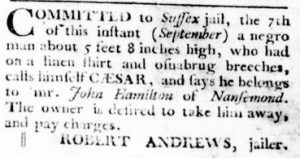
The Slavery Adverts 250 Project chronicles the role of newspaper advertising in perpetuating slavery in the era of the American Revolution. The project seeks to reveal the ubiquity of slavery in eighteenth-century life from New England to Georgia by republishing advertisements about enslaved people – for sale as individuals or in groups, wanted to purchase or for hire for short periods, runaways who liberated themselves, and those who were subsequently captured and confined in jails and workhouses – in daily digests on this site as well as in real time via the @SlaveAdverts250 Twitter feed, utilizing twenty-first-century media to stand in for the print media of the eighteenth century.

The project aims to provide modern audiences with a sense of just how often colonizers encountered these advertisements in their daily lives. Enslaved men, women, and children appeared in print somewhere in the colonies almost every single day. Those advertisements served as a constant backdrop for social, cultural, economic, and political life in colonial and revolutionary America. Colonizers who did not purport to own enslaved people were still confronted with slavery as well as invited to maintain the system by purchasing enslaved men, women, and children or assisting in the capture of so-called “runaways” who sought to free themselves from bondage. The frequency of these newspaper advertisements suggests just how embedded slavery was in colonial and revolutionary American culture in everyday interactions beyond the printed page.

These advertisements also testify to the experiences of enslaved men, women, and children, though readers must consider that those experiences have been remediated through descriptions offered by enslavers rather than enslaved people themselves. Often unnamed in the advertisements, enslaved men, women, and children were not invisible or unimportant in early America.

From compiling an archive of digitized eighteenth-century newspapers to identifying advertisements about enslaved men, women, and children in those newspapers to preparing images of each advertisement to posting this daily digest, Massimo Sgambati served as guest curator for this entry. He completed this work as part of the Summer Scholars Program, funded by a fellowship from the D’Amour College of Liberal Arts and Sciences at Assumption University in Worcester, Massachusetts, in Summer 2025.

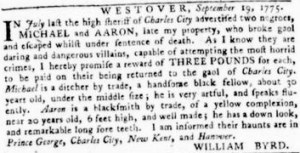
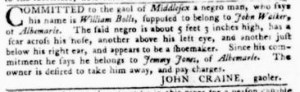
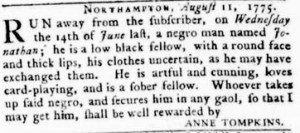
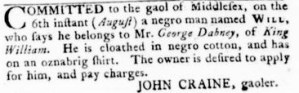
These advertisements appeared in colonial American newspapers 250 years ago today.

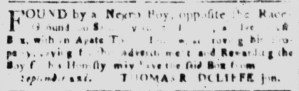
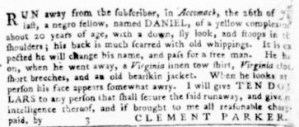
Dunlap’s Pennsylvania Packet (September 25, 1775)

**********

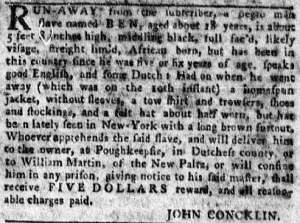
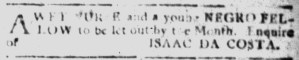
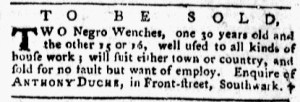
New-York Gazette and Weekly Mercury (September 25, 1775)

**********

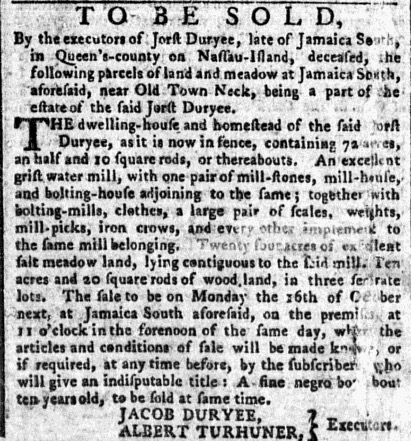
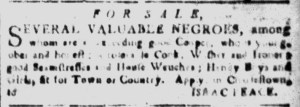
New-York Gazette and Weekly Mercury (September 25, 1775)

**********

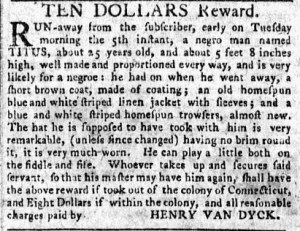
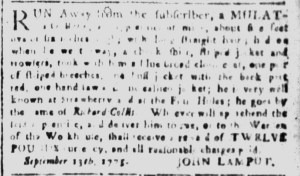
New-York Gazette and Weekly Mercury (September 25, 1775)

**********

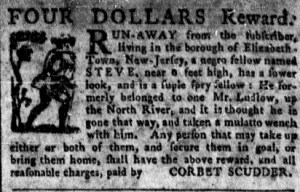
New-York Gazette and Weekly Mercury (September 25, 1775)

**********

New-York Gazette and Weekly Mercury (September 25, 1775)

**********

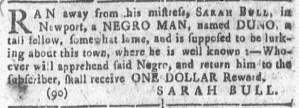
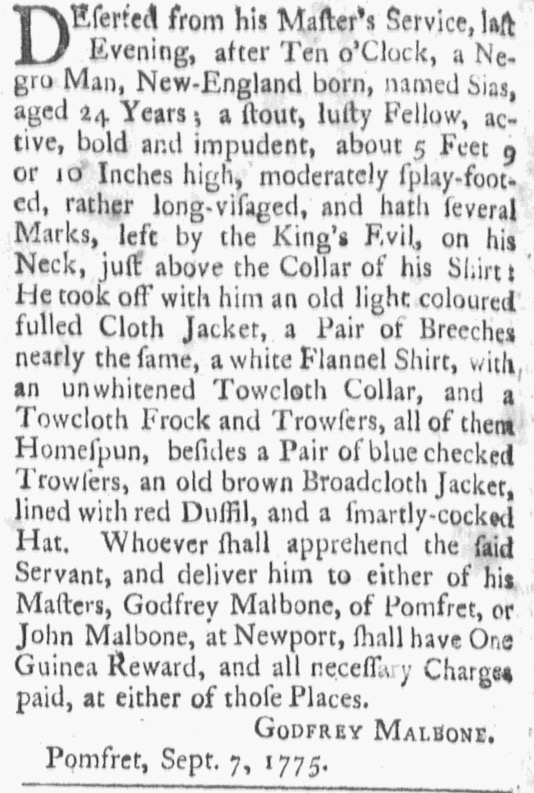
Newport Mercury (September 25, 1775)

**********

Newport Mercury (September 25, 1775)

September 24

What was advertised in a revolutionary American newspaper 250 years ago this week?

New-York Journal (September 21, 1775).

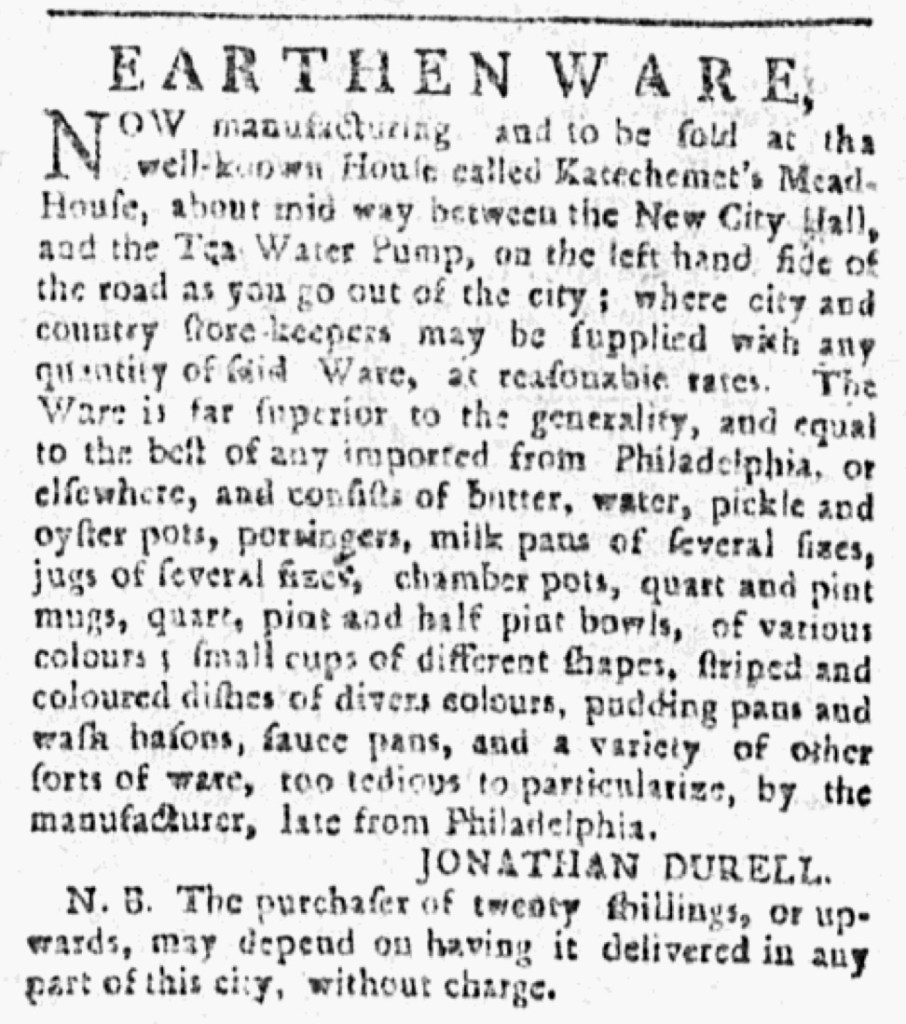
“EARTHENWARE … equal to the best of any imported from Philadelphia, or elsewhere.”

As fall arrived in 1775, Jonathan Durell took to the pages of the New-York Journal to advertised “EARTHENWARE” that he made locally and sold “at the well-known House called Katechemet’s Mead-House” on the outskirts of the city.  The potter offered a variety of items, including, “butter, water, pickle and oyster pots, porringers, milk pans of several sizes, jugs of several sizes, chamber pots,” and “a variety of other sorts of ware, too tedious to particularize.”  Durrel promoted these items as “far superior to the generality, and equal to the best of any imported from Philadelphia, or elsewhere.”  He also reported that he had migrated to New York from Philadelphia.

Mentioning Philadelphia twice in his advertisement was intentional.  When Durell compared the quality of his earthenware to items imported into New York, he did not refer only to goods arriving from English manufactories, though looking to alternatives would have been on the minds of consumers while the Continental Association remained in effect.  Colonizers who wished to purchase “domestic manufactures” in support of their political principles knew that Philadelphia was an important center for pottery production.  Deborah Miller, an archaeologist, notes that Philadelphia Style earthenware “became recognized across the colonies for its quality and durability” by the middle of the eighteenth century.  Citing Durell’s advertisement, Edwin Atlee Barber states that “it would appear that even before the Revolution the wares made in Philadelphia had acquired a reputation abroad for excellence.”[1]  Durell’s pottery was not made in Philadelphia, but he had resided there and presumably used the same techniques to produce his earthenware.  As both consumers and “city and country store-keepers” sought goods made in the colonies, he presented an attractive option.

To increase his chances of making sales, Durell mentioned the “reasonable rates” he charged for his earthenware and provided a convenient service.  In a nota bene, he declared, “The purchaser of twenty shillings, or upwards, may depend on having it delivered in any part of this city, without charge.”  The potter hoped that free delivery would entice customers to take a chance on earthenware that he asserted matched any others, including products from Philadelphia, in its quality.

**********

[1] Edwin Atlee Barber, The Pottery and Porcelain of the United States: An Historical Review of American Ceramic Art from the Earliest Times to the Present Day (New York: G.P. Putnam’s Sons, 1893).

September 23

What was advertised in a revolutionary American newspaper 250 years ago today?

Virginia Gazette [Dixon and Hunter] (September 21, 1775).

“EVERY MAN HIS OWN DOCTOR.”

Like many other printers, John Dixon and William Hunter supplemented revenues from newspaper subscriptions, advertisements, and job printing by hawking patent medicines.  They ran an advertisement for “Dr. KEYS[E]R’s celebrated PILLS” in the September 23, 1775, edition of their newspaper, marketing a familiar remedy for “the Veneral Disorder.”  In addition to curing venereal diseases, the pills reportedly “restored Persons afflicted with dropsical Disorders, the Gravel [or kidney stones], Palsey, Apoplexy, White Swellings, Stiff Joints, and the Asthma.”

Yet, Dr. Keyser’s Pills were especially known for their efficacy in treating venereal disease, so much so that Dixon and Hunter offered a short history intended to assure prospective patients that they could depend on finding relief from their symptoms if they purchased the pills.  “His Majesty ordered the most rigid and nicest Examination, by twenty seven of the principal Physicians and Surgeons,” the printers reported.  They did so “not only immediately upon the Persons having been treated with the Medicine, but even for the Space of two Years afterwards, to see if the cures of all the numerous Patients were durable.”  This trail demonstrated that the pills were indeed effective: “to the eternal Honour of Dr. Keyser, there was not found a single Instance of Failure.”  Such an extraordinary outcome prompted the king to establish a hospital “where these Pills alone are administered.”  In addition, physicians on the continent had also “pronounced the Use of [Dr. Keyser’s Pills] superior in Efficacy, to all the Modes of Practice hitherto discovered.”

Beyond their effectiveness, the pills had another important advantage.  “EVERY MAN HIS OWN DOCTOR,” the headline proclaimed, echoing a similar headline, “Every One their own Physician,” that James Rivington, a printer in New York, previously used in promoting Dr. Keyser’s Pills.  Prospective customers, Dixon and Hunter suggested, could purchase the pills and use them without exposing themselves to the embarrassment of consulting a physician or, even worse, having their symptoms become visible to others.  “The Patient is most effectually cured,” the printers explained, “without any inconvenience to himself, or being exposed to the Shame or Confusion of his Disaster being known to the nicest Observer.”  Referring to “his Disaster” was a telling alternative to “his Disorder,” one intended to stoke anxiety in hopes of convincing readers afflicted with venereal disease to purchase Dr. Keyser’s Pills.  The printers conveniently acquired “a fresh Parcel lately from PARIS,” where the doctor’s widow continued making the pills.

Slavery Advertisements Published September 23, 1775

GUEST CURATOR: Massimo Sgambati

The Slavery Adverts 250 Project chronicles the role of newspaper advertising in perpetuating slavery in the era of the American Revolution. The project seeks to reveal the ubiquity of slavery in eighteenth-century life from New England to Georgia by republishing advertisements about enslaved people – for sale as individuals or in groups, wanted to purchase or for hire for short periods, runaways who liberated themselves, and those who were subsequently captured and confined in jails and workhouses – in daily digests on this site as well as in real time via the @SlaveAdverts250 Twitter feed, utilizing twenty-first-century media to stand in for the print media of the eighteenth century.

The project aims to provide modern audiences with a sense of just how often colonizers encountered these advertisements in their daily lives. Enslaved men, women, and children appeared in print somewhere in the colonies almost every single day. Those advertisements served as a constant backdrop for social, cultural, economic, and political life in colonial and revolutionary America. Colonizers who did not purport to own enslaved people were still confronted with slavery as well as invited to maintain the system by purchasing enslaved men, women, and children or assisting in the capture of so-called “runaways” who sought to free themselves from bondage. The frequency of these newspaper advertisements suggests just how embedded slavery was in colonial and revolutionary American culture in everyday interactions beyond the printed page.

These advertisements also testify to the experiences of enslaved men, women, and children, though readers must consider that those experiences have been remediated through descriptions offered by enslavers rather than enslaved people themselves. Often unnamed in the advertisements, enslaved men, women, and children were not invisible or unimportant in early America.

From compiling an archive of digitized eighteenth-century newspapers to identifying advertisements about enslaved men, women, and children in those newspapers to preparing images of each advertisement to posting this daily digest, Massimo Sgambati served as guest curator for this entry. He completed this work as part of the Summer Scholars Program, funded by a fellowship from the D’Amour College of Liberal Arts and Sciences at Assumption University in Worcester, Massachusetts, in Summer 2025.

These advertisements appeared in colonial American newspapers 250 years ago today.

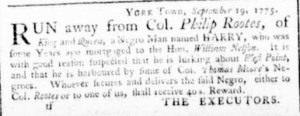
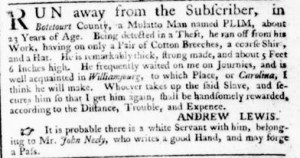
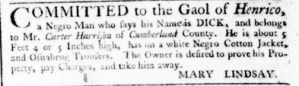
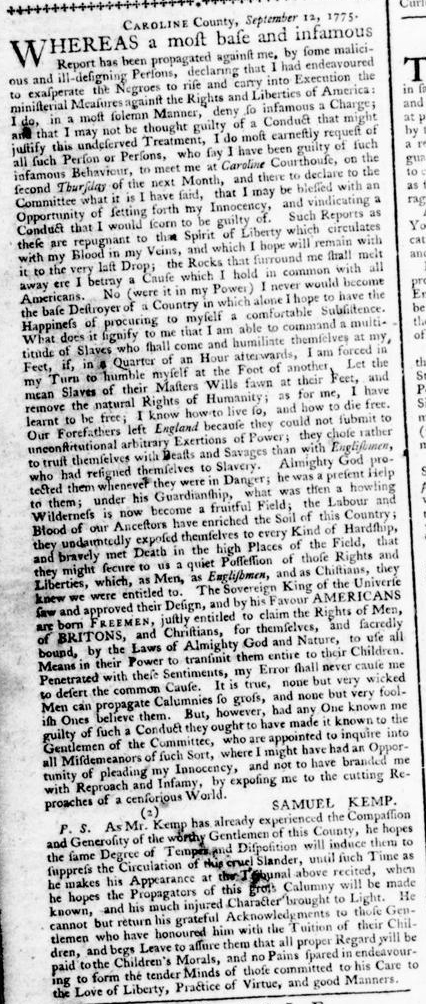
Providence Gazette (September 23, 1775)

**********

Virginia Gazette [Dixon and Hunter] (September 23, 1775)

**********

Virginia Gazette [Dixon and Hunter] (September 23, 1775)

**********

Virginia Gazette [Dixon and Hunter] (September 23, 1775)

**********

Virginia Gazette [Dixon and Hunter] (September 23, 1775)

**********

Virginia Gazette [Dixon and Hunter] (September 23, 1775)

September 22

What was advertised in a revolutionary American newspaper 250 years ago today?

Story and Humphreys’s Pennsylvania Mercury (September 22, 1775).

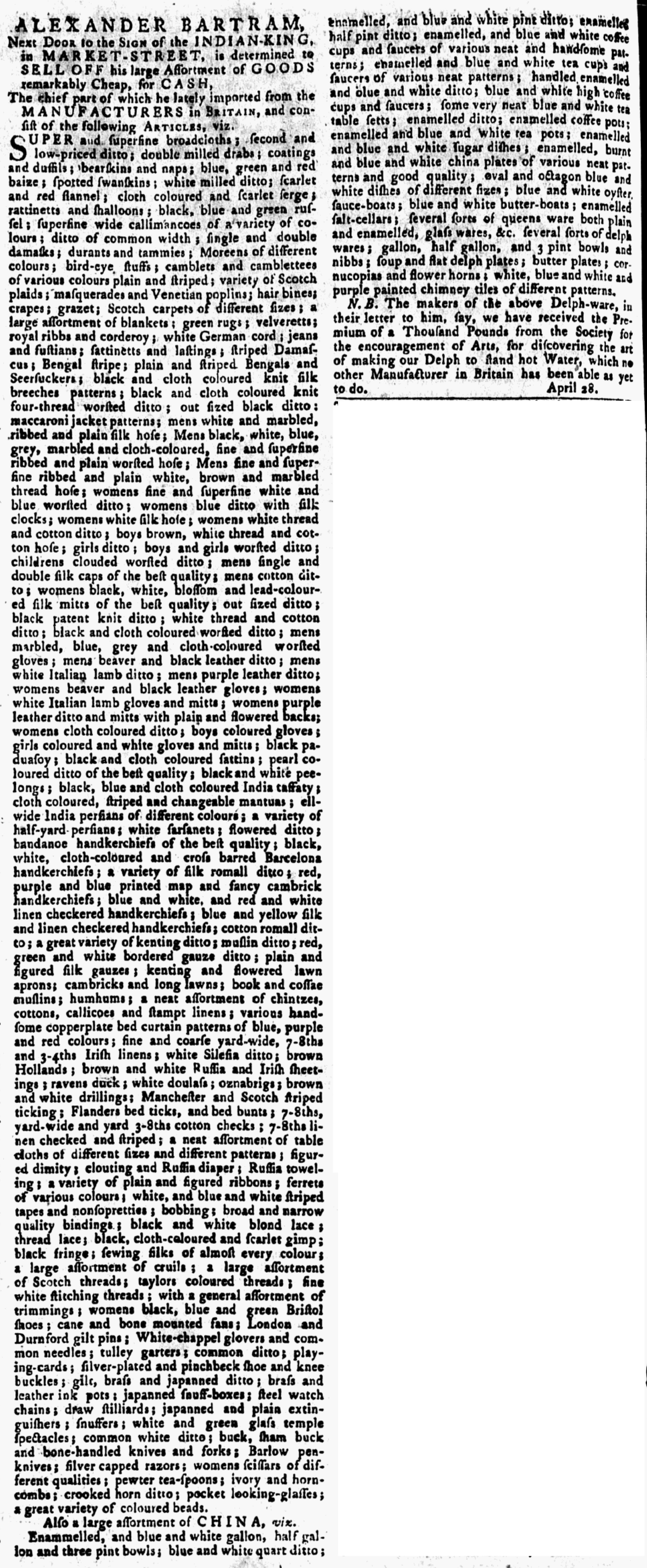
“Determined to SELL OFF his large Assortment of GOODS remarkably Cheap.”

The pages of American newspapers had a different appearance after the Continental Association went into effect on December 1, 1774.  While adherence to prior nonimportation agreements had been scattered, this one attracted much greater compliance.  As a result, the advertisements that featured lengthy lists of imported merchandise to be sold by local merchants and shopkeepers appeared in the public prints less often, but they did not disappear completely.  Notices that listed a few dozen items continued to appear in some newspapers.

Even so, Alexander Bartram’s advertisement for goods “lately imported from the MANUFACTURERS in BRITAIN” seemed extraordinary because of its length.  It did not fill only a portion of a column in Story and Humphreys’s Pennsylvania Mercury; instead, it extended an entire column and overflowed into another column.  It cataloged dozens of items available at his shop “Next Door to the SIGN of the INDIAN-KING, in MARKET-STREET” in Philadelphia.  Dated April 28, Bartram’s advertisement first appeared in the newspaper on that day in 1775 and then again in the supplement the following week.  The shopkeeper declared his intention to “SELL OFF his large Assortment of GOODS remarkably Cheap.”  He apparently acquired his wares prior to December 1, though he did not make a point of asserting that was the case.  The boycott presented an opportunity to clear his shelves of older merchandise since he would not have to compete with new arrivals.

Five months later, his advertisement ran in Story and Humphreys’s Pennsylvania Mercury once again.  The compositor had not broken down the type in that time.  With the Continental Association still in effect, Bartram saw another opportunity to clear the shelves in his shop … but how many of the items listed in his advertisement remained after his prior attempts to sell them “remarkably Cheap” over the summer?  That likely mattered little to Bartram, especially if he believed that such an extensive list would get customers looking for bargains through the doors.  A month later, he took to the Pennsylvania Journal with a much shorter advertisement that promoted a “General assortment of MERCHANDIZE, suitable for the season.”  Dated October 25 and scheduled to run for six weeks, that notice advised that Bartram “proposes to leave the city in a short time.”  If he already planned to depart Philadelphia at the time he republished his lengthy advertisement in late September, he may have considered it worth the expense of taking up so much column space if it might result in significant sales to liquidate his merchandise.

Slavery Advertisements Published September 22, 1775

GUEST CURATOR: Massimo Sgambati

The Slavery Adverts 250 Project chronicles the role of newspaper advertising in perpetuating slavery in the era of the American Revolution. The project seeks to reveal the ubiquity of slavery in eighteenth-century life from New England to Georgia by republishing advertisements about enslaved people – for sale as individuals or in groups, wanted to purchase or for hire for short periods, runaways who liberated themselves, and those who were subsequently captured and confined in jails and workhouses – in daily digests on this site as well as in real time via the @SlaveAdverts250 Twitter feed, utilizing twenty-first-century media to stand in for the print media of the eighteenth century.

The project aims to provide modern audiences with a sense of just how often colonizers encountered these advertisements in their daily lives. Enslaved men, women, and children appeared in print somewhere in the colonies almost every single day. Those advertisements served as a constant backdrop for social, cultural, economic, and political life in colonial and revolutionary America. Colonizers who did not purport to own enslaved people were still confronted with slavery as well as invited to maintain the system by purchasing enslaved men, women, and children or assisting in the capture of so-called “runaways” who sought to free themselves from bondage. The frequency of these newspaper advertisements suggests just how embedded slavery was in colonial and revolutionary American culture in everyday interactions beyond the printed page.

These advertisements also testify to the experiences of enslaved men, women, and children, though readers must consider that those experiences have been remediated through descriptions offered by enslavers rather than enslaved people themselves. Often unnamed in the advertisements, enslaved men, women, and children were not invisible or unimportant in early America.

From compiling an archive of digitized eighteenth-century newspapers to identifying advertisements about enslaved men, women, and children in those newspapers to preparing images of each advertisement to posting this daily digest, Massimo Sgambati served as guest curator for this entry. He completed this work as part of the Summer Scholars Program, funded by a fellowship from the D’Amour College of Liberal Arts and Sciences at Assumption University in Worcester, Massachusetts, in Summer 2025.

These advertisements appeared in colonial American newspapers 250 years ago today.

Connecticut Gazette (September 22, 1775)

**********

Connecticut Gazette (September 22, 1775)

**********

South-Carolina and American General Gazette (September 22, 1775)

**********

South-Carolina and American General Gazette (September 22, 1775)

**********

South-Carolina and American General Gazette (September 22, 1775)

**********

South-Carolina and American General Gazette (September 22, 1775)

**********

South-Carolina and American General Gazette (September 22, 1775)

**********

South-Carolina and American General Gazette (September 22, 1775)

**********

South-Carolina and American General Gazette (September 22, 1775)

**********

South-Carolina and American General Gazette (September 22, 1775)

**********

South-Carolina and American General Gazette (September 22, 1775)

**********

South-Carolina and American General Gazette (September 22, 1775)

**********

South-Carolina and American General Gazette (September 22, 1775)

**********

Virginia Gazette [Purdie] (September 22, 1775)

**********

Virginia Gazette [Purdie] (September 22, 1775)

**********

Virginia Gazette [Purdie] (September 22, 1775)

**********

Virginia Gazette [Purdie] (September 22, 1775)

**********

Virginia Gazette [Purdie] (September 22, 1775)

**********

Virginia Gazette [Purdie] (September 22, 1775)

**********

Virginia Gazette [Purdie] (September 22, 1775)

**********

Virginia Gazette [Purdie] (September 22, 1775)

**********

Virginia Gazette [Purdie] (September 22, 1775)

Welcome, Guest Curator Massimo Sgambati

Massimo Sgambati with Old Number One at the American Antiquarian Society (AAS). He conducted much of his research in the reading room at the AAS, one of the nation’s oldest research libraries and learned societies.

Massimo Sgambati is a senior double majoring in History and Secondary Education at Assumption University in Worcester, Massachusetts. Originally from Farmington Hills, Michigan, he discovered his love for history through his father and time spent growing up in England. He is passionate about studying both the era of slavery and Reconstruction in America, hoping to attend grad school and specialize in the effects of those periods on Black Americans and connections to today’s mass incarceration. He hopes to continue research in the field and eventually become a professor, spreading awareness for how slavery has continued to resonate in American society. Massimo is involved in activities across campus, working in both the university’s d’Alzon Library and the Office of Admissions, serving as the Vice President of the Education Club, and being the kicker on the football team. Massimo conducted the research for his contributions as a guest curator for the Slavery Adverts 250 Project as a summer research assistant, funded through the D’Amour College of Liberal Arts and Sciences Summer Scholars Program.

Welcome, guest curator Massimo Sgambati!

September 21

What was advertised in a revolutionary American newspaper 250 years ago today?

New-England Chronicle (September 21, 1775).

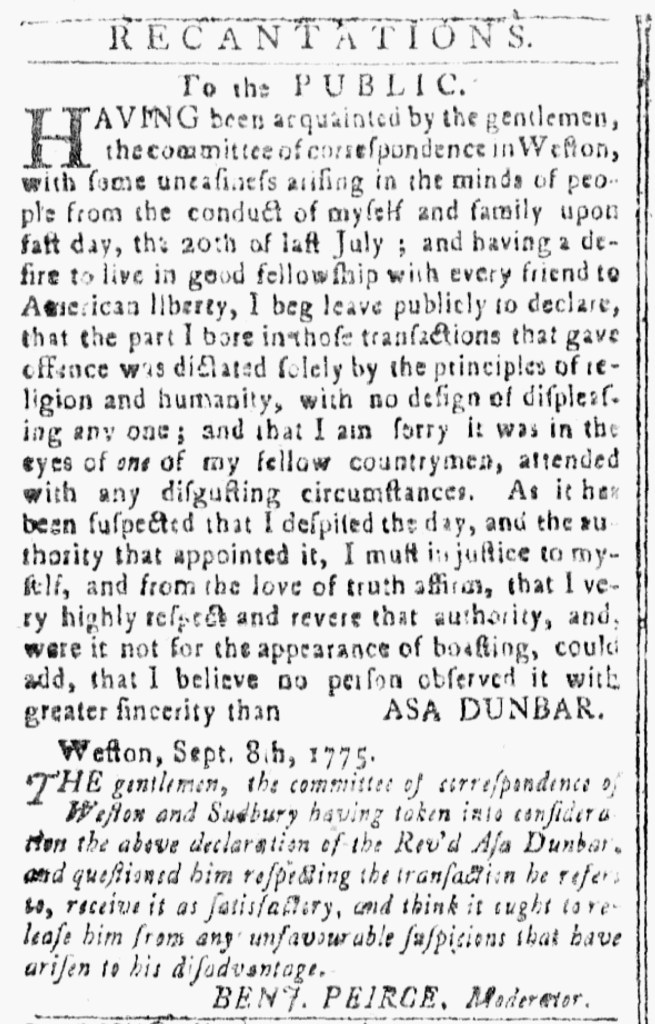
“Uneasiness arising in the minds of people from the conduct of myself and family upon the fast day.”

The final page of the September 21, 1775, edition of the New-England Chronicle had an entire column of “RECANTATIONS.”  Five notices appeared under that header, four of them colonizers who expressed regret for signing an address to Thomas Hutchinson, the former governor of the colony, in February 1774.  Such advertisements had become a regular feature in newspapers published in New England over the past year.  In the first of the “RECANTATIONS,” however, Asa Dunbar, a minister in Salem, apologized for something else that had caused concern in his community.

He had been “acquainted by the gentlemen, the committee of correspondence in Weston” about “some uneasiness arising in the minds of people from the conduct of myself and family upon the fast day, the 20th of last July.”  Katherine Carté, author of Religion and the American Revolution: An Imperial History, explains that on June 12 the Second Continental Congress passed a resolution to declare the fast on July 20, allowing for enough time for the news to reach distant colonies from Philadelphia.  The fast day became, Carté asserts, “in effect our first national holiday.”  Furthermore, it “was probably one of the only moments of the Revolutionary War that Americans experienced simultaneously, though not everyone celebrated it.  In a short essay, “Why We Should Remember July 20, 1775,” she chronicles commemorations of the fast day throughout the colonies, noting that many embraced the occasion and a few “marked it in protest.”

Something happened that day that cast suspicion on Dunbar and his support for the American cause: “I beg leave publicly to declare, that the part I bore in those transactions that gave offence was dictated solely by the principles of religion and humanity, with no design of displeasing any one.”  Whatever had occurred, the minister had not intended to make a statement, unlike Samuel Seabury who had “closed the doors of his church in protest” on the day of the fast.  “As it has been suspected that I despised the day, and the authority that appointed it,” Dunbar proclaimed, “I must in justice to myself, and from the love of truth affirm, that I very highly respect and revere that authority.”  Furthermore, “were it not for the appearance of boasting, [I] could add, that I believe no person observed it with greater sincerity.”

A short note from Benjamin Peirce, the moderator of Weston and Sudbury’s Committee of Correspondence, accompanied Dunbar’s recantation.  He reported that the committee took into account Dunbar’s “declaration” and “questioned him respecting the transaction he refers to,” but he did not elaborate on that transgression.  Whatever had occurred, the committee considered Dunbar’s explanation “satisfactory, and think it ought to release him from any unfavourable suspicions that have arisen to his disadvantage.”  That must have been a relief to Dunbar.  Like so many others, he resorted to an advertisement in the public prints to confess, to apologize, and to assure his community that he was not an enemy to American liberties.

Slavery Advertisements Published September 21, 1775

GUEST CURATOR: Massimo Sgambati

The Slavery Adverts 250 Project chronicles the role of newspaper advertising in perpetuating slavery in the era of the American Revolution. The project seeks to reveal the ubiquity of slavery in eighteenth-century life from New England to Georgia by republishing advertisements about enslaved people – for sale as individuals or in groups, wanted to purchase or for hire for short periods, runaways who liberated themselves, and those who were subsequently captured and confined in jails and workhouses – in daily digests on this site as well as in real time via the @SlaveAdverts250 Twitter feed, utilizing twenty-first-century media to stand in for the print media of the eighteenth century.

The project aims to provide modern audiences with a sense of just how often colonizers encountered these advertisements in their daily lives. Enslaved men, women, and children appeared in print somewhere in the colonies almost every single day. Those advertisements served as a constant backdrop for social, cultural, economic, and political life in colonial and revolutionary America. Colonizers who did not purport to own enslaved people were still confronted with slavery as well as invited to maintain the system by purchasing enslaved men, women, and children or assisting in the capture of so-called “runaways” who sought to free themselves from bondage. The frequency of these newspaper advertisements suggests just how embedded slavery was in colonial and revolutionary American culture in everyday interactions beyond the printed page.

These advertisements also testify to the experiences of enslaved men, women, and children, though readers must consider that those experiences have been remediated through descriptions offered by enslavers rather than enslaved people themselves. Often unnamed in the advertisements, enslaved men, women, and children were not invisible or unimportant in early America.

From compiling an archive of digitized eighteenth-century newspapers to identifying advertisements about enslaved men, women, and children in those newspapers to preparing images of each advertisement to posting this daily digest, Massimo Sgambati served as guest curator for this entry. He completed this work as part of the Summer Scholars Program, funded by a fellowship from the D’Amour College of Liberal Arts and Sciences at Assumption University in Worcester, Massachusetts, in Summer 2025.

These advertisements appeared in colonial American newspapers 250 years ago today.

Maryland Gazette (September 21, 1775)

**********

Maryland Gazette (September 21, 1775)

**********

Maryland Gazette (September 21, 1775)

**********

Maryland Gazette (September 21, 1775)

**********

Maryland Gazette (September 21, 1775)

**********

Maryland Gazette (September 21, 1775)

**********

Maryland Gazette (September 21, 1775)

**********

New York Journal (September 21, 1775)

**********

New York Journal (September 21, 1775)

**********

Virginia Gazette [Pinkney] (September 21, 1775)

**********

Virginia Gazette [Pinkney] (September 21, 1775)

**********

Virginia Gazette [Pinkney] (September 21, 1775)

**********

Virginia Gazette [Pinkney] (September 21, 1775)

**********

Virginia Gazette [Pinkney] (September 21, 1775)

**********

Virginia Gazette [Pinkney] (September 21, 1775)

**********

Virginia Gazette [Pinkney] (September 21, 1775)

**********

Virginia Gazette [Pinkney] (September 21, 1775)

**********

Virginia Gazette [Pinkney] (September 21, 1775)

**********

Virginia Gazette [Pinkney] (September 21, 1775)