What was advertised in a revolutionary American newspaper 250 years ago today?
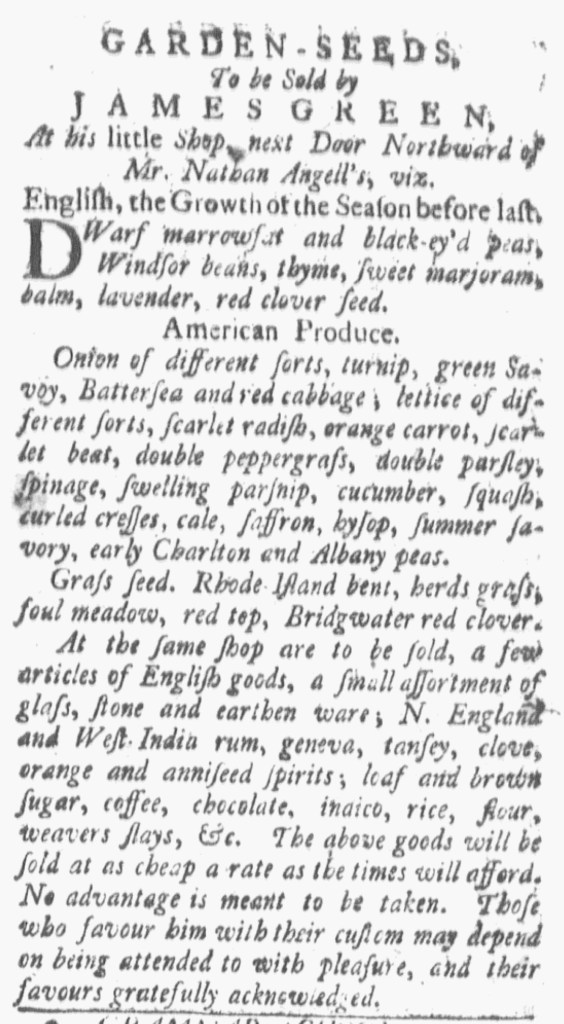
“No advantage is meant to be taken.”
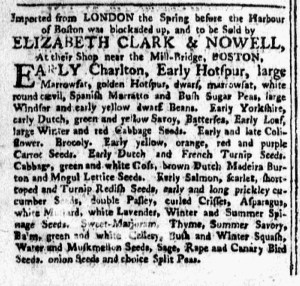
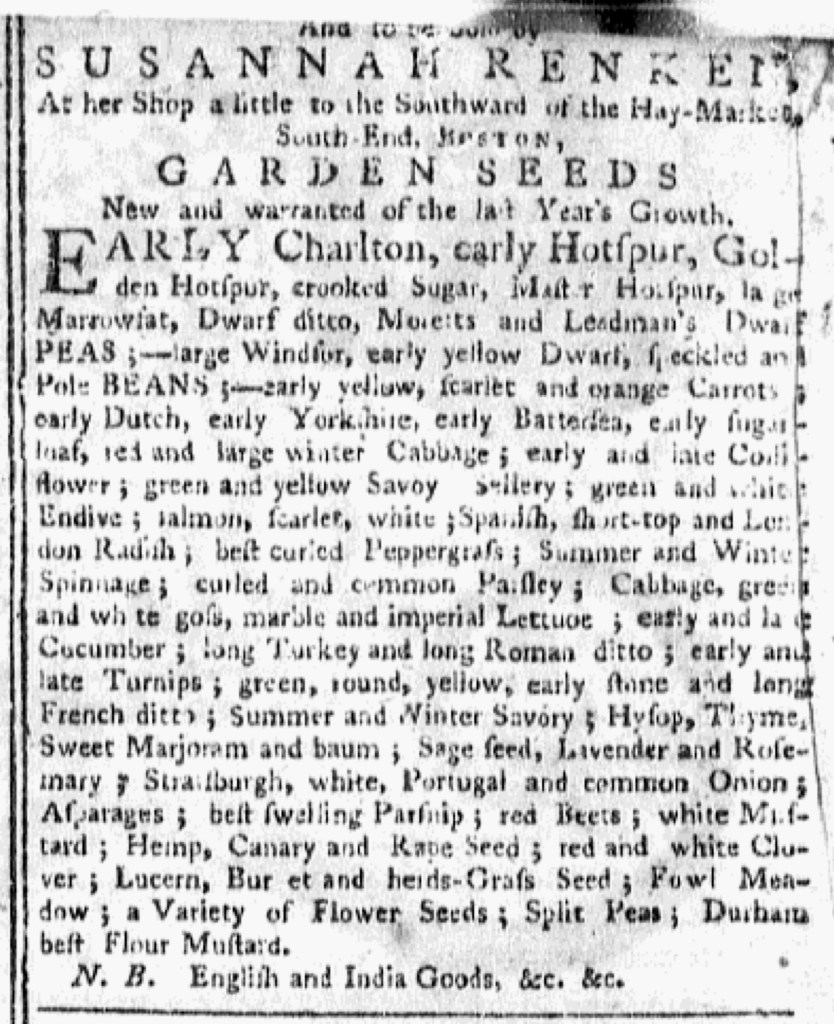
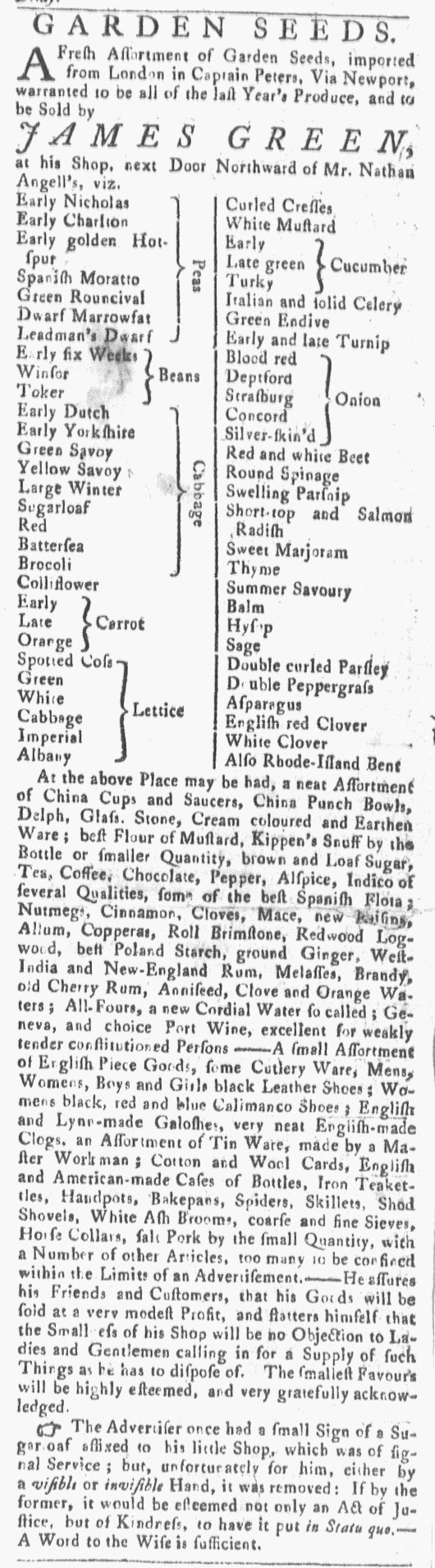
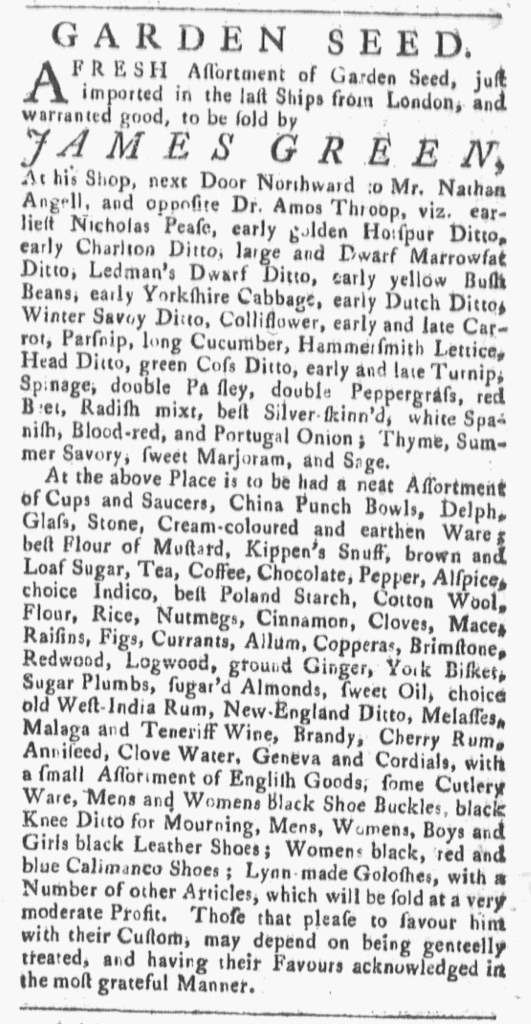
As spring approached in 1776, James Green took to the pages of the Providence Gazette to advertise “GARDEN-SEEDS” that he sold “At his little Shop.” He had done so in recent years, though the Continental Association, a nonimportation agreement devised by the Second Continental Congress that went into effect on December 1, 1774, and the outbreak of hostilities at Lexington and Concord on April 19, 1775, seemingly had an impact on his business. He previously promoted a “Fresh Assortment of Garden Seed, just imported in the last Ships from London,” in the spring of 1773 and a “Fresh Assortment of Garden Seeds, imported from London …, warranted to be all of the last Year’s Produce,” in the spring of 1774. In 1776, on the other hand, he stocked some seeds that he described as “English, the Growth of the Season before last,” meaning that they arrived before the Continental Association went into effect. This time around he also had seeds for a variety of “American Produce,” adapting his business to the changing times.
As was often the case, Green took the opportunity to hawk other merchandise, including “a few articles of English goods,” presumably imported more than a year earlier, “a small assortment of glass, stone and earthen ware,” and “loaf and brown sugar, coffee, chocolate, indico, rice, [and] flour.” Tea was conspicuously missing from the list of groceries that Green stocked. The shopkeeper did not merely list his wares. He also assured prospective customers his merchandise “will be sold at as cheap a rate as the times will afford.” In other words, he set reasonable prices, yet he acknowledged that the nonimportation agreement and the war resulted in higher prices. Still, he sought to avoid suspicion that he engaged in price gouging: “No advantage is meant to be taken.” In making that statement, he echoed the ninth article of the Continental Association. It dictated that “such as are Venders of Goods or Merchandise will not take Advantage of the Scarcity of Goods that may be occasioned” by this agreement. Green wanted the entire community to know that he dealt fairly with his customers.