January 20

GUEST CURATOR:  Kelly Blecker

What was advertised in a colonial American newspaper 250 years ago today?

Supplement to the Boston-Gazette (January 20, 1772).

“Snake Root Waters.”

This advertisement features a wide variety of items for sale by Joseph Hall, including “Snake Root Waters,” an item I found particularly interesting. I had never heard of this before, so I was curious to see what it was and how colonists used it. The snakeroot plant is native to North America. According to George E. Gifford, Jr., in “Botanic Remedies in Colonial Massachusetts, 1620-1820,” snakeroot “had long been used by the Seneca … as a specific in cases of poisoning by the bite of a rattlesnake.” They boiled the plant in water and made a paste, or poultice, which they used to heal rattlesnake bite. “They had inferred this from a supposed resemblance between the root of the plant and the rattle of the snake.” Other uses for snakeroot included treating headache, stomachache, and respiratory problems such as pneumonia and bronchitis. English physicians found using the plant to treat their patients to be highly effective.

The increase in the use of snakeroot waters and other natural remedies showcases how the colonists did not trust European medicine exclusively. Gifford states, “The settlers benefited from the skill of native healers who understood the medicinal value of many indigenous animal and vegetable products.”  As a result, they “establish[ed] an independent tradition of prescribing a specific remedy for a specific ailment. It also caused them to gradually shift from relying on the European schoolmen to depending on the simples and specifics of the old wives, Indians, and ministers.” Colonists adopted knowledge and guidance from Native Americans to create remedies right in North America instead of relying only on patent medicines imported from England.

**********

ADDITIONAL COMMENTARY:  Carl Robert Keyes

Readers of the Boston-Gazette and other newspapers published throughout the colonies regularly encountered advertisements for a vast array of patent medicines produced in England and exported to America.  Apothecaries stocked patent medicines (as we will see in some of the advertisements selected by Kelly’s classmates), but so did merchants and shopkeepers … and even printers!  Patent medicines were the over-the-counter drugs of the eighteenth century, the brands and their uses so familiar that they did not require specialized expertise on the part of purveyors who provided them to colonial consumers.  The producers of many of those patent medicines claimed that their elixirs cured all sorts of maladies rather than targeting specific symptoms and illnesses.

Yet medical knowledge and remedies did not flow in just one direction across the Atlantic, as Kelly demonstrates in her examination of snakeroot.  On both sides of the Atlantic, Europeans embraced knowledge and products derived from the experiences of indigenous peoples.  As Gifford explains, “simple remedies,” like snakeroot, “were quite unlike the complicated nostrums and electuaries of Europe,” those patent medicines, “which sometimes contained up to eighty ingredients.”  Identifying a specific purpose for snakeroot and other flora contributed to a “tradition of prescribing a specific remedy for a specific ailment” instead of relying as extensively on patent medicines that supposedly cured just about any disorder or disease.

Gifford indicates that the “collection, cultivation, and exportation of plant drugs such as ipecac, Virginia snakeroot, and ginseng were of considerable economic significance in the colonies.”  In 1770, for instance, England imported seventy-seven tons of sassafras, used for treating syphilis.  Gifford describes this as part of a “favorable exchange” of ideas as European practitioners incorporated indigenous knowledge into their treatment of patients.  That does not mean that doctors and apothecaries recognized indigenous healers as equal partners in the enterprise, but Europeans on both sides of the Atlantic did benefit from knowledge, experience, and guidance from indigenous Americans.

Welcome, Guest Curator Kelly Blecker

Kelly Blecker is a senior at Assumption University in Worcester, Massachusetts. She is majoring in Elementary Education and History. On campus, she is this president of the Assumption University Chorale and a member of VOCE, a smaller, auditioned choir. Following graduation, Kelly hopes to earn her master’s degree in Special Education. She made contributions to the Adverts 250 Project and Slavery Adverts 250 Project while enrolled in Revolutionary America, 1763-1815, in Fall 2021.

Welcome, guest curator Kelly Blecker!

Slavery Advertisements Published January 20, 1772

GUEST CURATOR: Kelly Blecker

The Slavery Adverts 250 Project chronicles the role of newspaper advertising in perpetuating slavery in the era of the American Revolution. The project seeks to reveal the ubiquity of slavery in eighteenth-century life from New England to Georgia by republishing advertisements about enslaved people – for sale as individuals or in groups, wanted to purchase or for hire for short periods, runaways who liberated themselves, and those who were subsequently captured and confined in jails and workhouses – in daily digests on this site as well as in real time via the @SlaveAdverts250 Twitter feed, utilizing twenty-first-century media to stand in for the print media of the eighteenth century.

The project aims to provide modern audiences with a sense of just how often colonizers encountered these advertisements in their daily lives. Enslaved men, women, and children appeared in print somewhere in the colonies almost every single day. Those advertisements served as a constant backdrop for social, cultural, economic, and political life in colonial and revolutionary America. Colonizers who did not purport to own enslaved people were still confronted with slavery as well as invited to maintain the system by purchasing enslaved men, women, and children or assisting in the capture of so-called “runaways” who sought to free themselves from bondage. The frequency of these newspaper advertisements suggests just how embedded slavery was in colonial and revolutionary American culture in everyday interactions beyond the printed page.

These advertisements also testify to the experiences of enslaved men, women, and children, though readers must consider that those experiences have been remediated through descriptions offered by enslavers rather than enslaved people themselves. Often unnamed in the advertisements, enslaved men, women, and children were not invisible or unimportant in early America.

These advertisements appeared in colonial American newspapers 250 years ago today.

Boston-Gazette (January 20, 1772).

**********

Massachusetts Gazette and Boston Post-Boy (January 20, 1772).

**********

New-York Gazette and Weekly Mercury (January 20, 1772).

**********

New-York Gazette and Weekly Mercury (January 20, 1772).

**********

Supplement to the New-York Gazette and Weekly Mercury (January 20, 1772).

**********

Supplement to the New-York Gazette and Weekly Mercury (January 20, 1772).

**********

Supplement to the New-York Gazette and Weekly Mercury (January 20, 1772).

**********

Supplement to the New-York Gazette and Weekly Mercury (January 20, 1772).

**********

Supplement to the New-York Gazette and Weekly Mercury (January 20, 1772).

**********

Pennsylvania Chronicle (January 20, 1772).

**********

South-Carolina and American General Gazette (January 20, 1772).

**********

South-Carolina and American General Gazette (January 20, 1772).

**********

South-Carolina and American General Gazette (January 20, 1772).

**********

South-Carolina and American General Gazette (January 20, 1772).

**********

South-Carolina and American General Gazette (January 20, 1772).

**********

South-Carolina and American General Gazette (January 20, 1772).

**********

South-Carolina and American General Gazette (January 20, 1772).

**********

South-Carolina and American General Gazette (January 20, 1772).

**********

South-Carolina and American General Gazette (January 20, 1772).

**********

South-Carolina and American General Gazette (January 20, 1772).

**********

South-Carolina and American General Gazette (January 20, 1772).

**********

South-Carolina and American General Gazette (January 20, 1772).

**********

South-Carolina and American General Gazette (January 20, 1772).

**********

South-Carolina and American General Gazette (January 20, 1772).

Happy Birthday, Isaiah Thomas!

Isaiah Thomas, patriot printer and founder of the American Antiquarian Society, was born on January 19 (New Style) in 1749 (or January 8, 1748/49, Old Style).  It’s quite an historical coincidence that the three most significant printers in eighteenth-century America — Benjamin Franklin, Isaiah Thomas, and Mathew Carey — were all born in January.

isaiah_thomas1818
Isaiah Thomas (January 30, 1739 – April 4, 1831). American Antiquarian Society.

The Adverts 250 Project is possible in large part due to Thomas’s efforts to collect as much early American printed material as he could, originally to write his monumental History of Printing in America.  The newspapers, broadsides, books, almanacs, pamphlets, and other items he gathered in the process eventually became the initial collections of the American Antiquarian Society.  That institution’s ongoing mission to acquire at least one copy of every American imprint through 1876 has yielded an impressive collection of eighteenth-century advertising materials, including newspapers, magazine wrappers, trade cards, billheads, watch papers, book catalogs, subscription notices, broadsides, and a variety of other items.  Exploring the history of advertising in early America — indeed, exploring any topic related to the history, culture, and literature of early America at all — has been facilitated for more than two centuries by the vision of Isaiah Thomas and the dedication of the curators and other specialists at the American Antiquarian Society over the years.

Thomas’s connections to early American advertising were not limited to collecting and preserving the items created on American presses during the colonial, Revolutionary, and early national periods.  Like Mathew Carey, he was at the hub of a network he cultivated for distributing newspapers, books, and other printed goods — including advertising to stimulate demand for those items.  Sometimes this advertising was intended for dissemination to the general public (such as book catalogs and subscription notices), but other times it amounted to trade advertising (such as circular letters and exchange catalogs intended only for fellow printers, publishers, and booksellers).

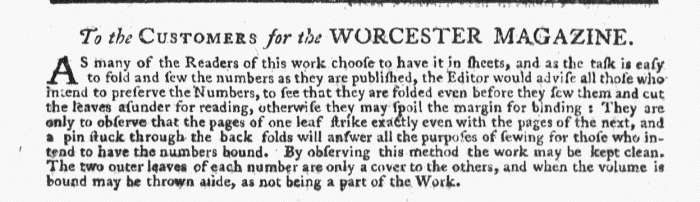
Thomas also experimented with advertising on wrappers that accompanied his Worcester Magazine, though he acknowledged to subscribers that these wrappers were ancillary to the publication:  “The two outer leaves of each number are only a cover to the others, and when the volume is bound may be thrown aside, as not being a part of the Work.”[1]

jan-30-worcerster-magazine-april-1786
Detail of Advertising Wrapper, Worcester Magazine (Second Week of April, 1786).

Thomas’s patriotic commitment to freedom of the press played a significant role in his decision to develop advertising wrappers.  As Thomas relays in his History of Printing in America, he discontinued printing his newspaper, the Massachusetts Spy, after the state legislature passed a law that “laid a duty of two-thirds of a penny on newspapers, and a penny on almanacs, which were to be stamped.”  Such a move met with strong protest since it was too reminiscent of the Stamp Act imposed by the British two decades earlier, prompting the legislature to repeal it before it went into effect.  On its heels, however, “another act was passed, which imposed a duty on all advertisements inserted in the newspapers” printed in Massachusetts.  Thomas vehemently rejected this law as “an improper restraint on the press. He, therefore, discontinued the Spy during the period that this act was in force, which was two years. But he published as a substitute a periodical work, entitled ‘The Worcester Weekly Magazine,’ in octavo.”[2] This weekly magazine lasted for two years; Thomas discontinued it and once again began printing the Spy after the legislature repealed the objectionable act.

jan-30-advertising-wrapper-worcester-magazine-4th-week-may-1786
Third Page of Advertising Wrapper, Worcester Magazine (Fourth Week of May, 1786).

Isaiah Thomas was not interested in advertising for its own sake to the same extent as Mathew Carey, but his political concerns did help to shape the landscape of early American advertising.  Furthermore, his vision for collecting American printed material preserved a variety of advertising media for later generations to admire, analyze, ponder, and enjoy.  Happy 273rd birthday, Isaiah Thomas!

**********

[1] Isaiah Thomas, “To the CUSTOMERS for the WORCESTER MAGAZINE,” Worcester Magazine, wrapper, second week of April, 1786.

[2] Isaiah Thomas, The History of Printing in America: With a Biography of Printers, and an Account of Newspapers, vol. 2 (Worcester, MA: Isaac Sturtevant, 1810), 267-268.

January 19

What was advertised in a colonial American newspaper 250 years ago today?

Massachusetts Spy (January 16, 1772).

“ADVERTISEMENTS taken in … Small HAND-BILLS at an Hour’s Notice.”

Advertising represented significant revenues for early American printers.  For many, advertising, rather than subscriptions, determined the viability and profitability of their newspapers.  Some printers included invitations to submit advertisements along with publication information in the colophons that appeared at the bottom of the final page of their newspapers.  In the colophon for the Massachusetts Spy, for instance, Isaiah Thomas proclaimed, “ADVERTISEMENTS taken in.”  Considering how much revenue advertisements generated, some printers devoted as much space (or more!) to paid notices in their newspapers as to other content, though others made efforts to balance news and advertising.  For his part, Thomas did not allow advertising to crowd out local news for Boston, “AMERICAN INTELLIGENCE” from other cities, letters to the editor, and other content.  In the January 16, 1772, edition, for instance, he filled one-third of the columns with advertising and the rest with news.  He also inserted a note that “Advertisements omitted will be in our next,” alerting advertisers that their notices had not been overlooked but merely delayed.

At the same time, Thomas produced other forms of advertising, including handbills, and promoted such work as well as other job printing performed “on the most reasonable Terms.”  Those services appeared in the colophon of every issue of the Massachusetts Spy in the early 1770s.  The printer alerted prospective advertisers that he produced “Small HAND-BILLS at an Hour’s Notice.”  Though relatively few of those handbills survive today, especially compared to newspapers (and the advertisements in them) preserved in their entire runs, they were part of a vibrant culture of advertising in the second half of the eighteenth century.  As they traversed the streets of Boston and other cities and towns, colonizers glimpsed broadsides pasted to buildings and grasped handbills thrust at them as they passed.  Merchants and shopkeepers gave out trade cards to promote their businesses and wrote accounts and receipts on billheads.  Booksellers and auctioneers distributed catalogs.  Advertisements were not the only kind of job printing undertaken by Thomas, but singling out handbills for special attention in the colophon of his newspaper suggests that he saw advertising as an especially lucrative endeavor.

January 18

What was advertised in a colonial American newspaper 250 years ago today?

Providence Gazette (January 18, 1772).

“He has likewise procured an European Blue-Dyer.”

In January 1772, John Nichols placed an advertisement in the Providence Gazette to remind the community that “he carries on the Weaving Business, as usual,” at his house on Broad Street.  He devoted most of his advertisement, however, to promoting an ancillary service he recently added to his business.  Nichols informed readers that he “procured an European Blue-Dyer, who will warrant his Colours to be equally durable with those from that Country.”  Nichols made that appeal to quality in hopes of convincing prospective customers to support services provided in the colonies rather than resort to imported goods.  When they did so, the weaver suggested, customers would also save money and reap other benefits.  In particular, he pledged that items committed to the care of his dyer would not become saturated with “the (generally detested) Smell of a common Dye-Pot.”  Customers could enjoy vivid colors without having to tolerate the unpleasant odors often associated with dyes.

On behalf of his dyer, Nichols also offered advice to prospective customers to help them achieve and maintain those vivid colors.  “Those who intend bringing Yarn to dye,” he instructed, “are requested to have it well cleaned.”  If they did not, the yarn “will not take the Dye so well.”  This made it easier for the dyer, but it also contributed to the quality that Nichols promised.  Colors had a tendency to fade over time, so producing colors “equally durable” as imported textiles required careful attention of both the dyer and the customers who delivered yarn for processing.

When it came to textiles, Nichols and his dyer offered alternatives to some of the imported good promoted by other advertisers.  Like many others who engaged in domestic manufactures, they attempted to make goods produced in the colonies attractive to consumers by emphasizing both price and quality.  Customers would actually pay less, Nichols declared, without sacrificing quality.  Consumers still clamored for the imported goods that so many other advertisers hawked in the Providence Gazette, but some may have considered seeking out the services of Nichols and his dyer rather than favoring imported goods over items produced locally.

Happy Birthday, Benjamin Franklin!

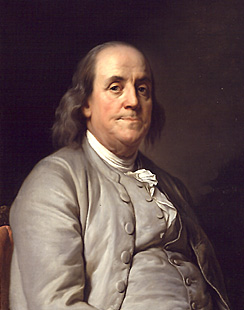
Today is an important day for specialists in early American print culture, for Benjamin Franklin was born on January 17, 1706 (January 6, 1705, Old Style), in Boston. Among his many other accomplishments, Franklin is known as the “Father of American Advertising.” Although I have argued elsewhere that this title should more accurately be bestowed upon Mathew Carey (in my view more prolific and innovative in the realm of advertising as a printer, publisher, and advocate of marketing), I recognize that Franklin deserves credit as well. Franklin is often known as “The First American,” so it not surprising that others should rank him first among the founders of advertising in America.

benjamin-franklin
Benjamin Franklin (Joseph Siffred Duplessis, ca. 1785).  National Portrait Gallery.

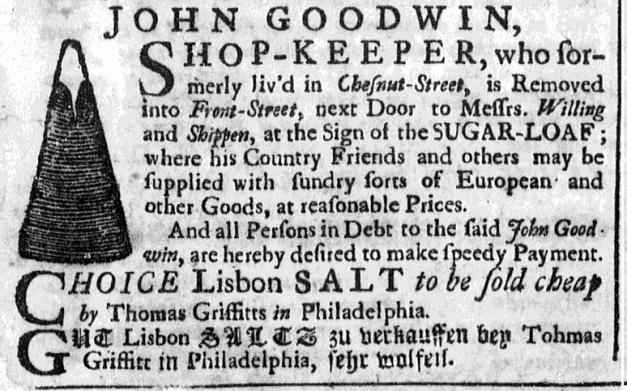
Franklin purchased the Pennsylvania Gazette in 1729. In the wake of becoming printer, he experimented with the visual layout of advertisements that appeared in the weekly newspaper, incorporating significantly more white space and varying font sizes in order to better attract readers’ and potential customers’ attention. Advertising flourished in the Pennsylvania Gazette, which expanded from two to four pages in part to accommodate the greater number of commercial notices.

jan-17-pennsylvania-gazette-19-161736
Advertisements with white space, varying sizes of font, capitals and italics, and a woodcut from Benjamin Franklin’s Pennsylvania Gazette (December 9-16, 1736).

Many historians of the press and print culture in early America have noted that Franklin became wealthy and retired as a printer in favor of a multitude of other pursuits in part because of the revenue he collected from advertising. Others, especially David Waldstreicher, have underscored that this wealth was amassed through participation in the colonial slave trade. The advertisements for goods and services featured in the Pennsylvania Gazette included announcements about buying and selling enslaved men, women, and children as well as notices offering rewards for those who escaped from bondage.

jan-17-pennsylvania-gazette-slave-19-161736
Advertisement for an enslaved woman and an enslaved child from Benjamin Franklin’s Pennsylvania Gazette (December 9-16, 1736).

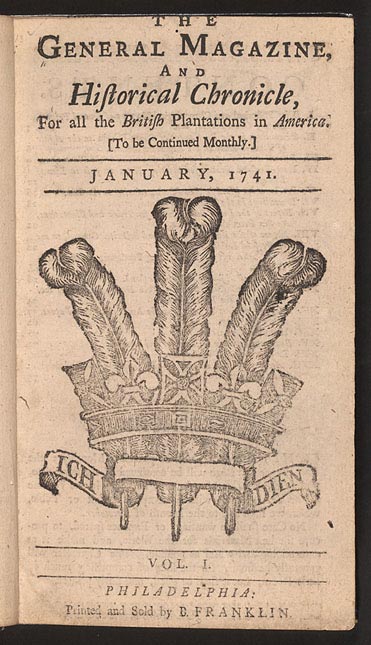
In 1741 Franklin published one of colonial America’s first magazines, The General Magazine and Historical Chronicle, for all the British Plantations in America (which barely missed out on being the first American magazine, a distinction earned by Franklin’s competitor, Andrew Bradford, with The American Magazine or Monthly View of the Political State of the British Colonies). The magazine lasted only a handful of issues, but that was sufficient for Franklin to become the first American printer to include an advertisement in a magazine (though advertising did not become a standard part of magazine publication until special advertising wrappers were developed later in the century — and Mathew Carey was unarguably the master of that medium).

general-magazine
General Magazine and Historical Chronicle, For all the British Plantations in America (January 1741).  Library of Congress.

In 1744 Franklin published an octavo-sized Catalogue of Choice and Valuable Books, including 445 entries. This is the first known American book catalogue aimed at consumers (though the Library Company of Philadelphia previously published catalogs listing their holdings in 1733, 1735, and 1741). Later that same year, Franklin printed a Catalogue of Books to Be Sold at Auction.

Franklin pursued advertising through many media in eighteenth-century America, earning recognition as one of the founders of American advertising. Happy 316th birthday, Benjamin Franklin!

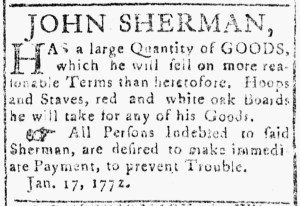
January 17

What was advertised in a colonial American newspaper 250 years ago today?

Connecticut Journal (January 17, 1772).

“All Persons Indebted to said Sherman, are desired to make immediate Payment, to prevent Trouble.”

John Sherman had two purposes in placing an advertisement in the Connecticut Journal and New-Haven Post-Boy in January 1772.  He aimed to attract customers for the “large Quantity of GOODS” available at his shop, but he also wished to collect on debts.  As was often the case in colonial newspapers, he pursued both goals in a single advertisement rather than placing multiple notices with distinct purposes.  This may have been a strategy to avoid paying for more than one notice, depending on how the printer set advertising rates, but it also suggests that advertisers expected readers to closely examine the content of advertisements as well as news articles, letters, and editorials that appeared elsewhere in newspapers.

In a slightly longer advertisement, Roger Sherman addressed three different purposes.  Like John, he marketed textiles and “a general Assortment of other GOODS.”  He also demanded that “those indebted to him by Book or Note … make immediate Payment to avoid Trouble.”  That threat of legal action echoed the language deployed in John’s advertisement. Finally, he made a much more specific request: “The Person who has his Province Law-Book is desired to return it.” Rather than place a separate advertisement solely about returning the book, he expected that readers would peruse his entire notice.

Such was the case among colonizers who placed advertisements in other newspapers.  On the same day that these advertisements ran in the Connecticut Journal and New-Haven Post-Boy, Samuel Noyes, a jeweler, ran a notice in the New-London Gazette.  He devoted the vast majority of it to listing items available at his shop, including shoe and knee buckles, rings, and lockets.  At the very end, he also announced that he “Wanted a likely Boy as an Apprentice to the Goldsmith’s Business.”  Not completely trusting readers to closely examine the conclusion of the advertisement, the compositor used a slightly larger font to draw attention, but that was not usually the case in advertisements with multiple purposes.  Neither of the notices in the Connecticut Journal and New-Haven Post-Boy featured variations in font size except for the names of the advertisers (which also served as headlines).

January 16

What was advertised in a colonial American newspaper 250 years ago today?

New-York Journal (January 16, 1772).

“He shall receive Encouragement and Assistance from the true Friends of their Country of all Ranks.”

In an advertisement that ran in the New-York Journal for several weeks in January 1772, William Shaffer addressed both the production and consumption of paper.  He issued a call for colonizers to provide him with “all Sorts of Linen Rags and old Paper” that he could use in making new paper, offering “Ready Money” in return.  Shaffer stated that he “continues to manufacture … All Sorts of Paper … to the general Satisfaction of his Customers.”

In addition, he offered an extensive explanation about why current and prospective customers should buy his paper.  The “Establishment of this Manufactory is of great Advantage to the Country,” Shaffer asserted, “by causing the Money that otherwise would be sent out of it, for the Purchase of Paper, imported from abroad, to circulate here, among a great Number of poor People.”  In the recent past, colonizers boycotted paper and other goods imported from Great Britain because Parliament imposed duties, but then resumed trade when Parliament repealed all of the duties except the one on tea.  For Shaffer and others who encouraged “domestic manufactures,” the production of goods in the colonies, that repeal addressed only one problem.  Colonizers continued to face a trade imbalance in which they sent their money across the Atlantic instead of spending it in support of local economies.  Colonial consumers, Shaffer argued, had an obligation to purchase paper and other goods produced locally.

They also had a responsibility to contribute to the production of paper by “supplying [Shaffer] with Linen Rags and old Paper, (Articles absolutely necessary to the Support of this Manufactory, and otherwise of little or no Use).”  This was an endeavor that could be undertaken by “the true Friends of their Country of all Ranks,” though Shaffer imagined different roles based on status.  “Gentlemen and Ladies in Town and Country,” he suggested, should “give proper Orders to their Servants” to collect and save linen rags and old paper and then send it to Shaffer.  In turn, he would “supply Country Merchants, Printers and others in this and the neighbouring Governments … with Paper of all Sorts, at the most reasonable Rates.”  Colonizers did not need to depend on imported paper, Shaffer proclaimed, when he offered a viable alternative, but the production of paper in New York depended in part on their cooperation in providing the necessary materials.  Colonizers could demonstrate that they were “Friends of their Country” by participating in both the production and consumption of paper.

Slavery Advertisements Published January 16, 1772

GUEST CURATOR: Kelly Blecker

The Slavery Adverts 250 Project chronicles the role of newspaper advertising in perpetuating slavery in the era of the American Revolution. The project seeks to reveal the ubiquity of slavery in eighteenth-century life from New England to Georgia by republishing advertisements about enslaved people – for sale as individuals or in groups, wanted to purchase or for hire for short periods, runaways who liberated themselves, and those who were subsequently captured and confined in jails and workhouses – in daily digests on this site as well as in real time via the @SlaveAdverts250 Twitter feed, utilizing twenty-first-century media to stand in for the print media of the eighteenth century.

The project aims to provide modern audiences with a sense of just how often colonizers encountered these advertisements in their daily lives. Enslaved men, women, and children appeared in print somewhere in the colonies almost every single day. Those advertisements served as a constant backdrop for social, cultural, economic, and political life in colonial and revolutionary America. Colonizers who did not purport to own enslaved people were still confronted with slavery as well as invited to maintain the system by purchasing enslaved men, women, and children or assisting in the capture of so-called “runaways” who sought to free themselves from bondage. The frequency of these newspaper advertisements suggests just how embedded slavery was in colonial and revolutionary American culture in everyday interactions beyond the printed page.

These advertisements also testify to the experiences of enslaved men, women, and children, though readers must consider that those experiences have been remediated through descriptions offered by enslavers rather than enslaved people themselves. Often unnamed in the advertisements, enslaved men, women, and children were not invisible or unimportant in early America.

These advertisements appeared in colonial American newspapers 250 years ago today.

Maryland Gazette (January 16, 1772).

**********

Maryland Gazette (January 16, 1772).

**********

Maryland Gazette (January 16, 1772).

**********

Maryland Gazette (January 16, 1772).

**********

Massachusetts Spy (January 16, 1772).

**********

New-York Journal (January 16, 1772).

**********

Virginia Gazette [Purdie and Dixon] (January 16, 1772).

**********

Virginia Gazette [Purdie and Dixon] (January 16, 1772).

**********

Virginia Gazette [Purdie and Dixon] (January 16, 1772).

**********

Virginia Gazette [Purdie and Dixon] (January 16, 1772).

**********

Virginia Gazette [Purdie and Dixon] (January 16, 1772).

**********

Virginia Gazette [Purdie and Dixon] (January 16, 1772).

**********

Virginia Gazette [Purdie and Dixon] (January 16, 1772).

**********

Virginia Gazette [Purdie and Dixon] (January 16, 1772).

**********

Virginia Gazette [Purdie and Dixon] (January 16, 1772).

**********

Virginia Gazette [Purdie and Dixon] (January 16, 1772).