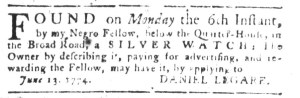
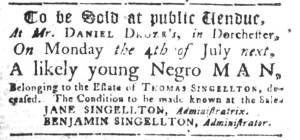
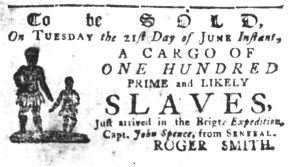
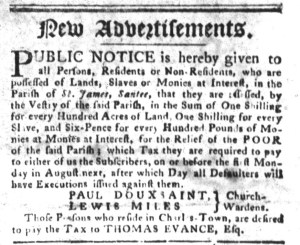
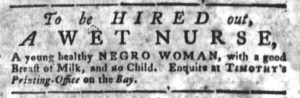
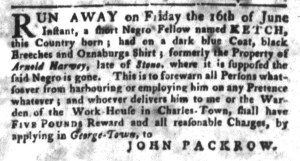
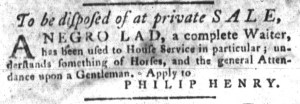
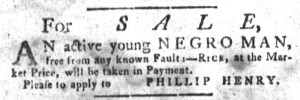
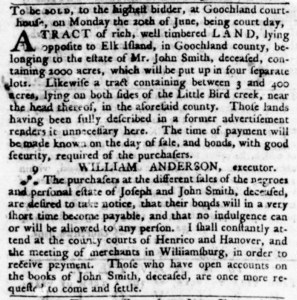
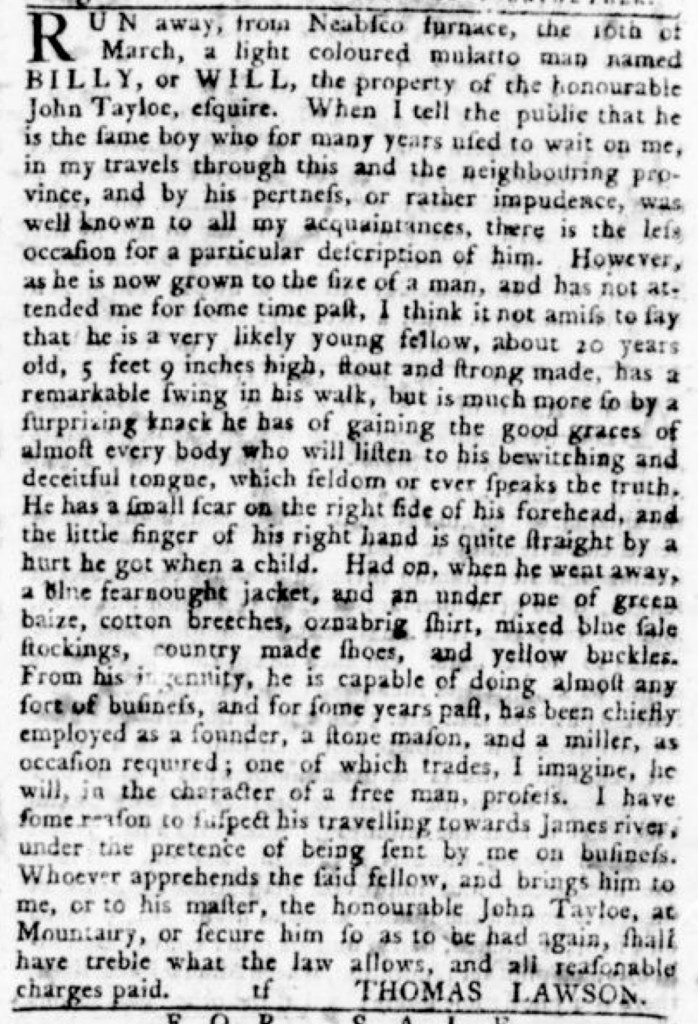
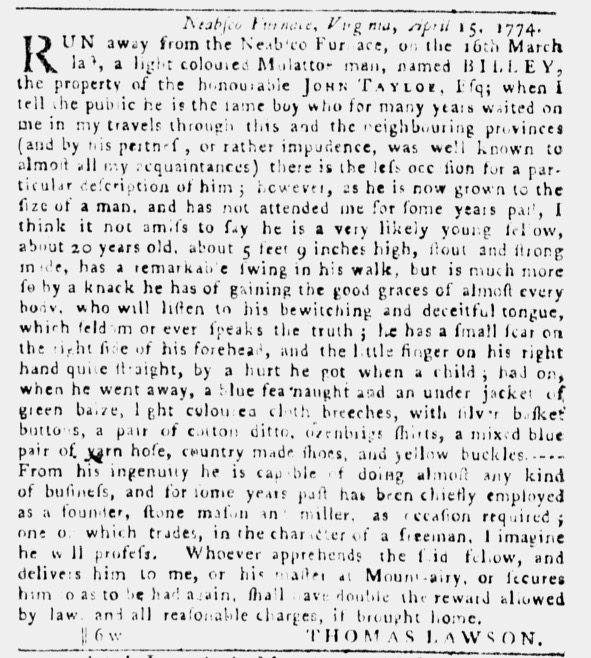
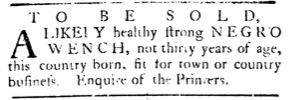
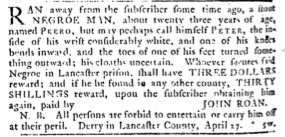
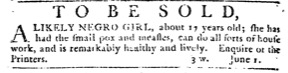
Slavery Advertisements Published June 20, 1774

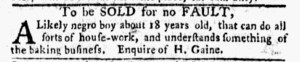
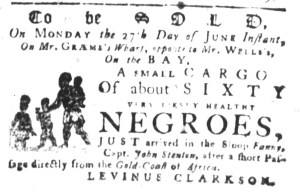
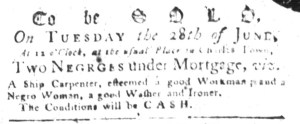
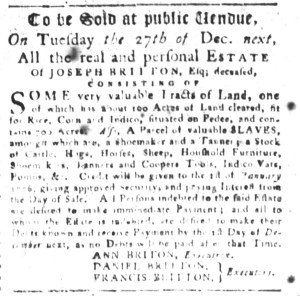
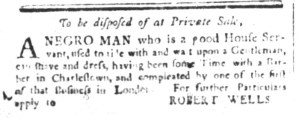
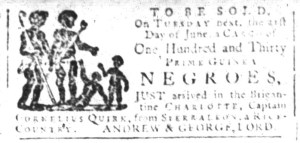
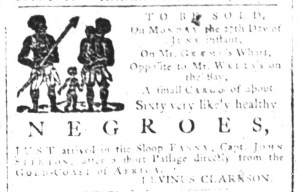
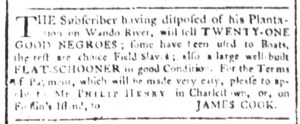
The Slavery Adverts 250 Project chronicles the role of newspaper advertising in perpetuating slavery in the era of the American Revolution. The project seeks to reveal the ubiquity of slavery in eighteenth-century life from New England to Georgia by republishing advertisements about enslaved people – for sale as individuals or in groups, wanted to purchase or for hire for short periods, runaways who liberated themselves, and those who were subsequently captured and confined in jails and workhouses – in daily digests on this site as well as in real time via the @SlaveAdverts250 Twitter feed, utilizing twenty-first-century media to stand in for the print media of the eighteenth century.

The project aims to provide modern audiences with a sense of just how often colonizers encountered these advertisements in their daily lives. Enslaved men, women, and children appeared in print somewhere in the colonies almost every single day. Those advertisements served as a constant backdrop for social, cultural, economic, and political life in colonial and revolutionary America. Colonizers who did not purport to own enslaved people were still confronted with slavery as well as invited to maintain the system by purchasing enslaved men, women, and children or assisting in the capture of so-called “runaways” who sought to free themselves from bondage. The frequency of these newspaper advertisements suggests just how embedded slavery was in colonial and revolutionary American culture in everyday interactions beyond the printed page.

These advertisements also testify to the experiences of enslaved men, women, and children, though readers must consider that those experiences have been remediated through descriptions offered by enslavers rather than enslaved people themselves. Often unnamed in the advertisements, enslaved men, women, and children were not invisible or unimportant in early America.

These advertisements appeared in colonial American newspapers 250 years ago today.
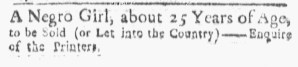
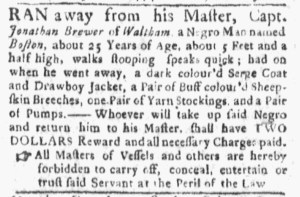
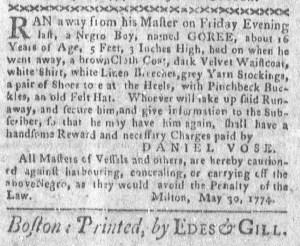
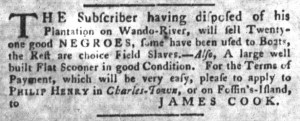
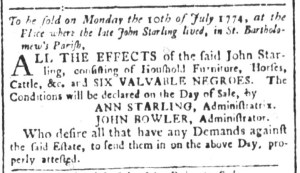
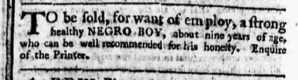
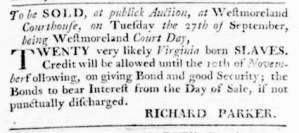
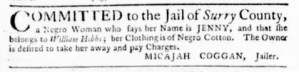
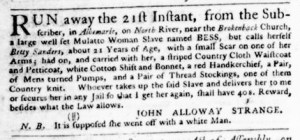
Boston Evening-Post (June 20, 1774).

**********

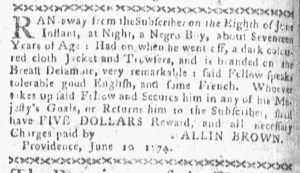
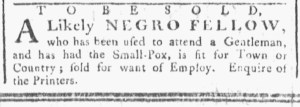
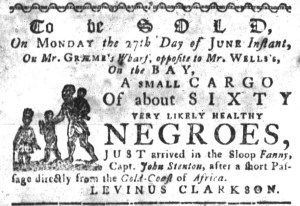
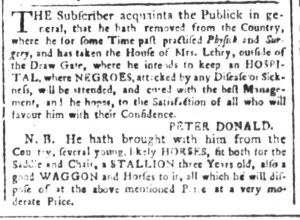
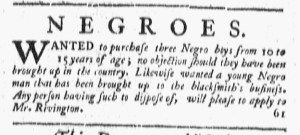
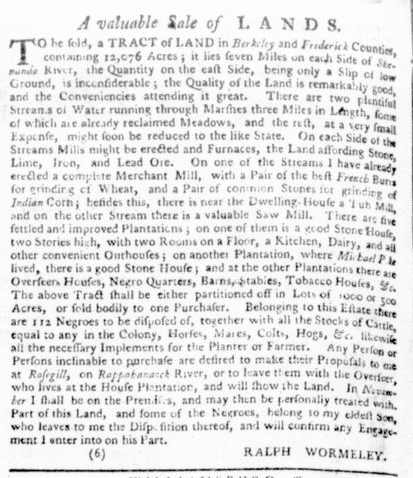
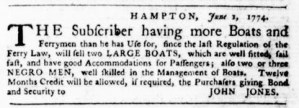
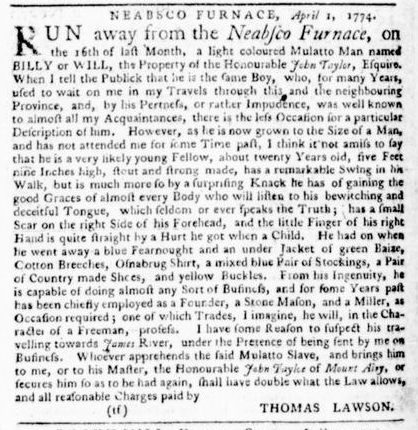
Boston Evening-Post (June 20, 1774).

**********
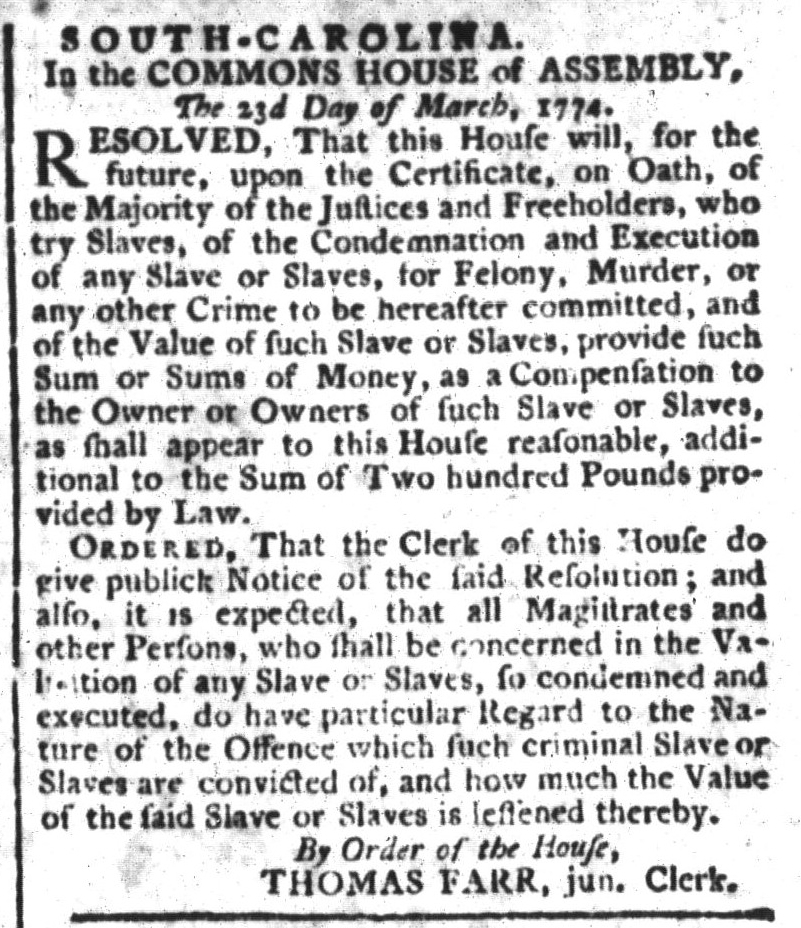
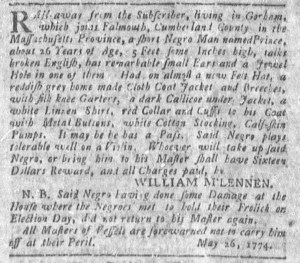
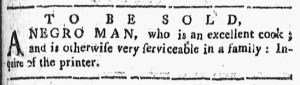
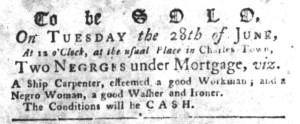
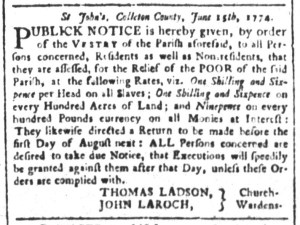
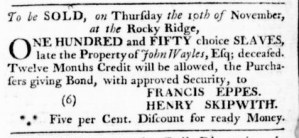
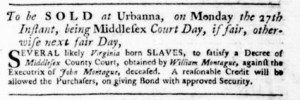
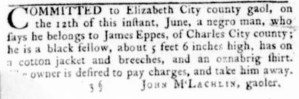
Boston Evening-Post (June 20, 1774).

**********
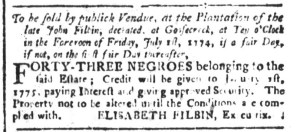
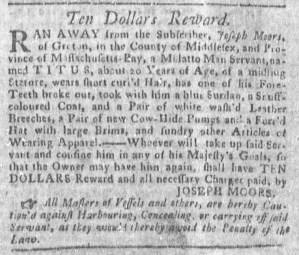
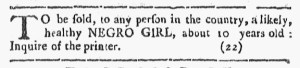
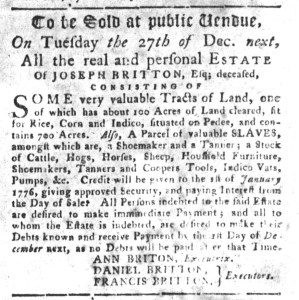
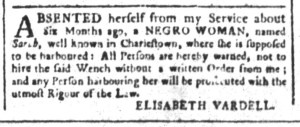
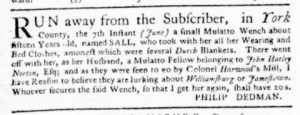
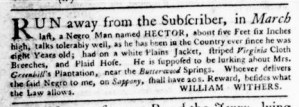
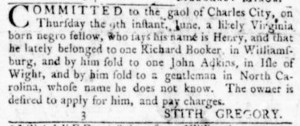
Boston-Gazette (June 20, 1774).

**********
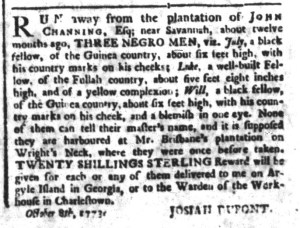
Boston-Gazette (June 20, 1774).

**********
Supplement to the Boston-Gazette (June 20, 1774).

**********
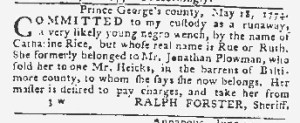
Supplement to the Boston-Gazette (June 20, 1774).

**********
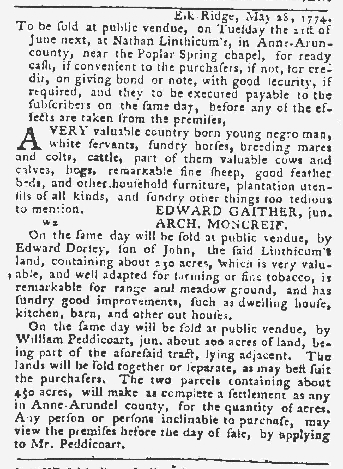
Supplement to the Boston-Gazette (June 20, 1774).

**********
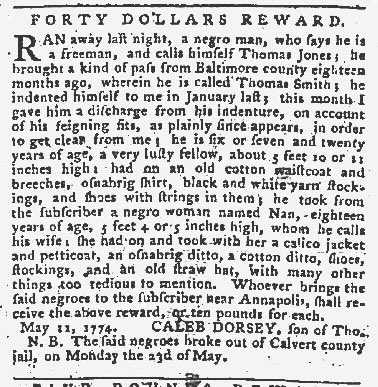
Massachusetts Gazette and Boston Post-Boy (June 20, 1774).

**********

Newport Mercury (June 20, 1774).

**********
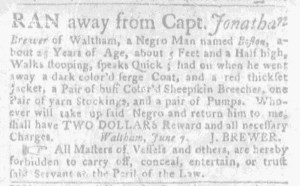
Newport Mercury (June 20, 1774).

**********
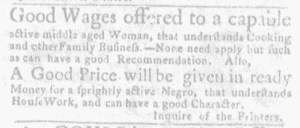
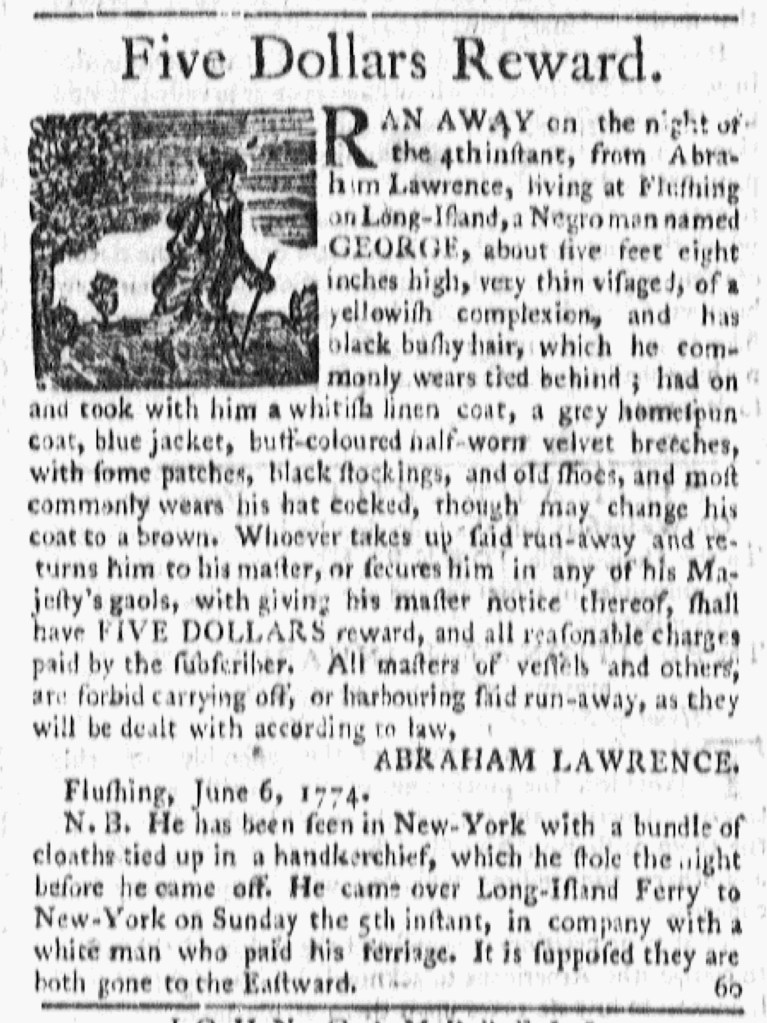
New-York Gazette and Weekly Mercury (June 20, 1774).

**********

New-York Gazette and Weekly Mercury (June 20, 1774).

**********

New-York Gazette and Weekly Mercury (June 20, 1774).

**********

New-York Gazette and Weekly Mercury (June 20, 1774).

**********

Supplement to the New-York Gazette and Weekly Mercury (June 20, 1774).

**********

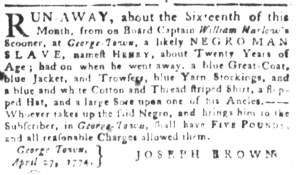
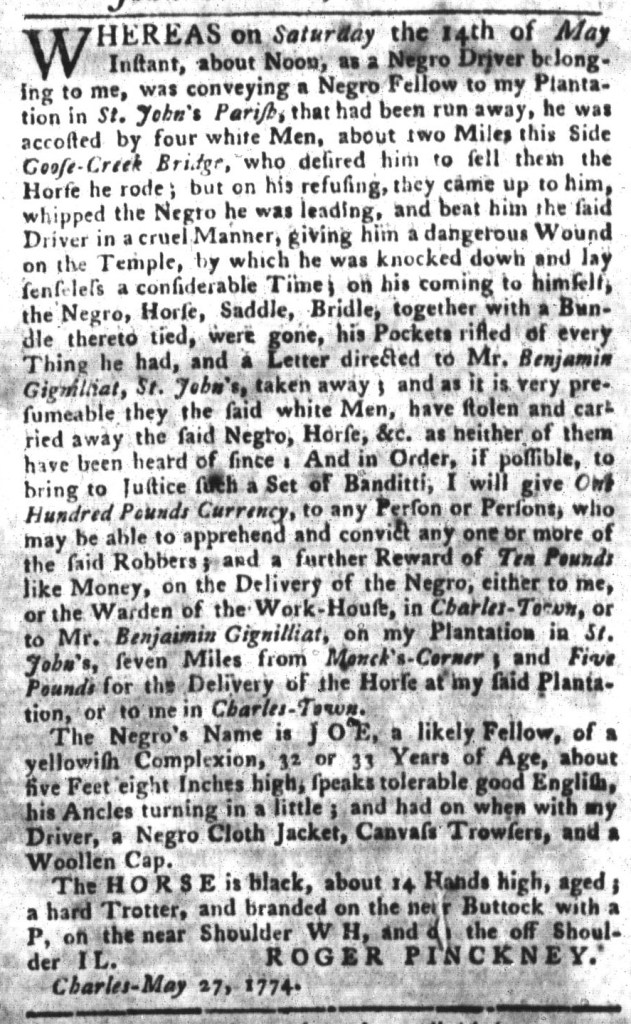
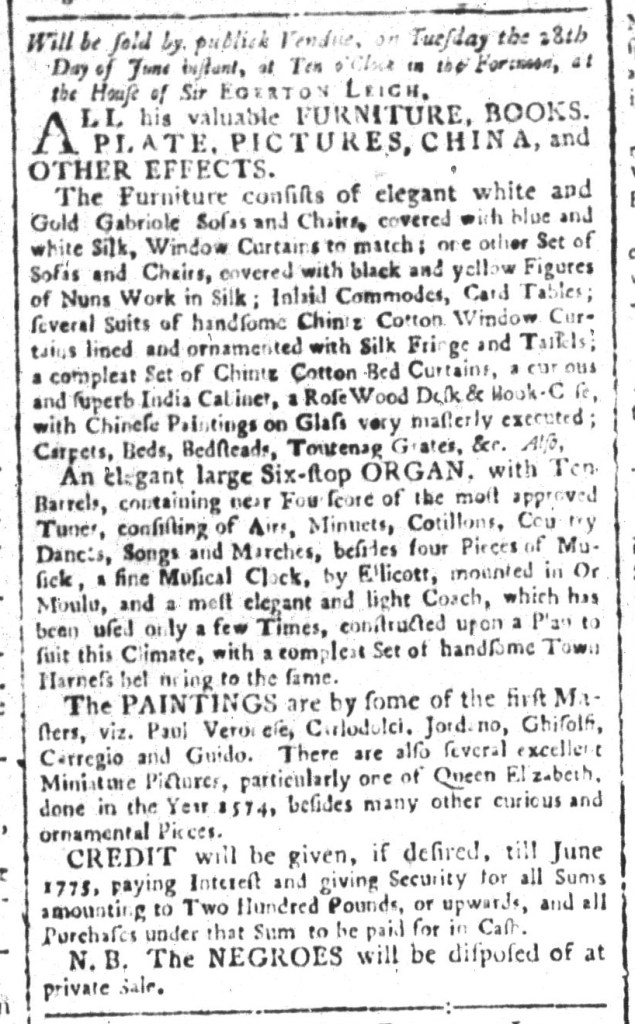
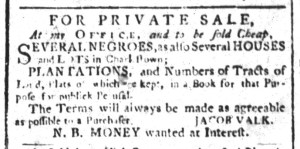
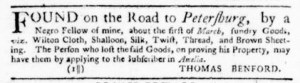
South-Carolina Gazette (June 20, 1774).

**********

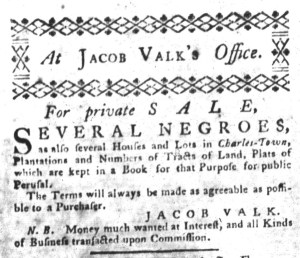
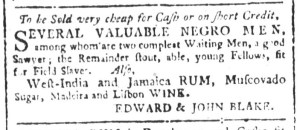
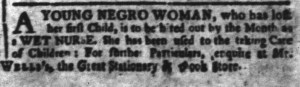
South-Carolina Gazette (June 20, 1774).

**********

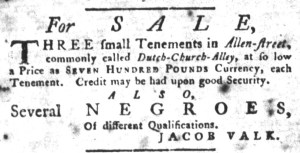
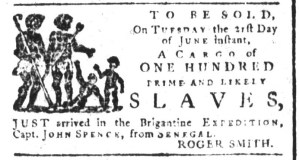
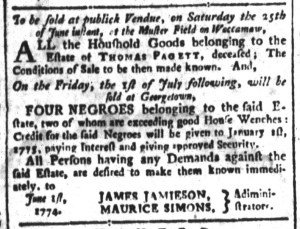
South-Carolina Gazette (June 20, 1774).

**********

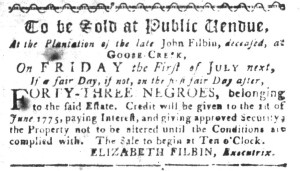
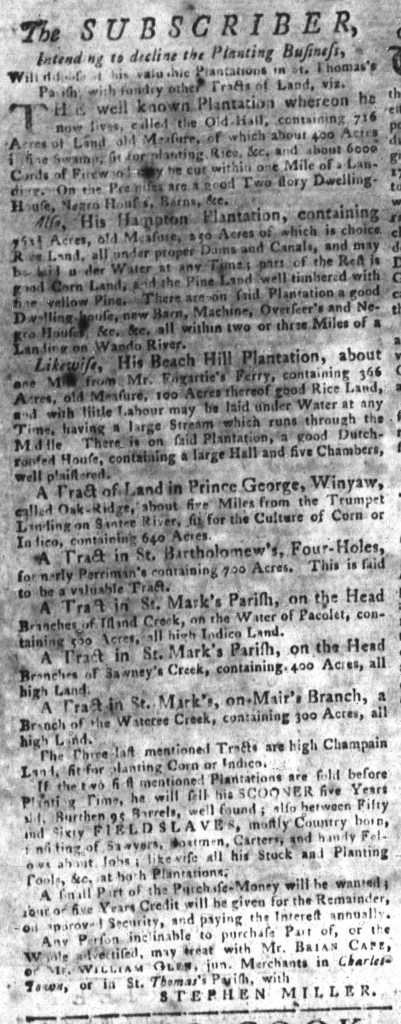
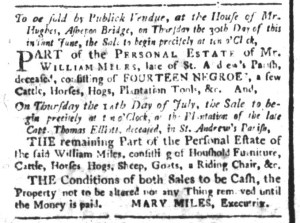
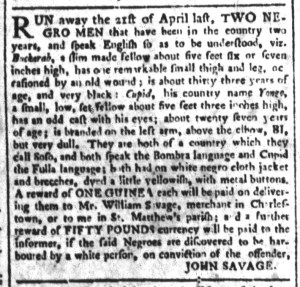
South-Carolina Gazette (June 20, 1774).

**********

South-Carolina Gazette (June 20, 1774).

**********

South-Carolina Gazette (June 20, 1774).

**********

South-Carolina Gazette (June 20, 1774).

**********

South-Carolina Gazette (June 20, 1774).

**********

South-Carolina Gazette (June 20, 1774).

**********

South-Carolina Gazette (June 20, 1774).

**********

Supplement to the South-Carolina Gazette (June 20, 1774).

**********

Supplement to the South-Carolina Gazette (June 20, 1774).

**********

Supplement to the South-Carolina Gazette (June 20, 1774).

**********

Supplement to the South-Carolina Gazette (June 20, 1774).

**********

Supplement to the South-Carolina Gazette (June 20, 1774).

**********

Supplement to the South-Carolina Gazette (June 20, 1774).

**********

Supplement to the South-Carolina Gazette (June 20, 1774).

**********

Supplement to the South-Carolina Gazette (June 20, 1774).

**********

Supplement to the South-Carolina Gazette (June 20, 1774).

**********

Supplement to the South-Carolina Gazette (June 20, 1774).

**********

Supplement to the South-Carolina Gazette (June 20, 1774).

**********

Supplement to the South-Carolina Gazette (June 20, 1774).

**********

Supplement to the South-Carolina Gazette (June 20, 1774).

**********

Supplement to the South-Carolina Gazette (June 20, 1774).

**********

Supplement to the South-Carolina Gazette (June 20, 1774).

**********

Supplement to the South-Carolina Gazette (June 20, 1774).

**********

Supplement to the South-Carolina Gazette (June 20, 1774).

**********

Supplement to the South-Carolina Gazette (June 20, 1774).

**********

Supplement to the South-Carolina Gazette (June 20, 1774).

June 19

What was advertised in a colonial American newspaper 250 years ago today?

New-York Journal (June 9, 1774).

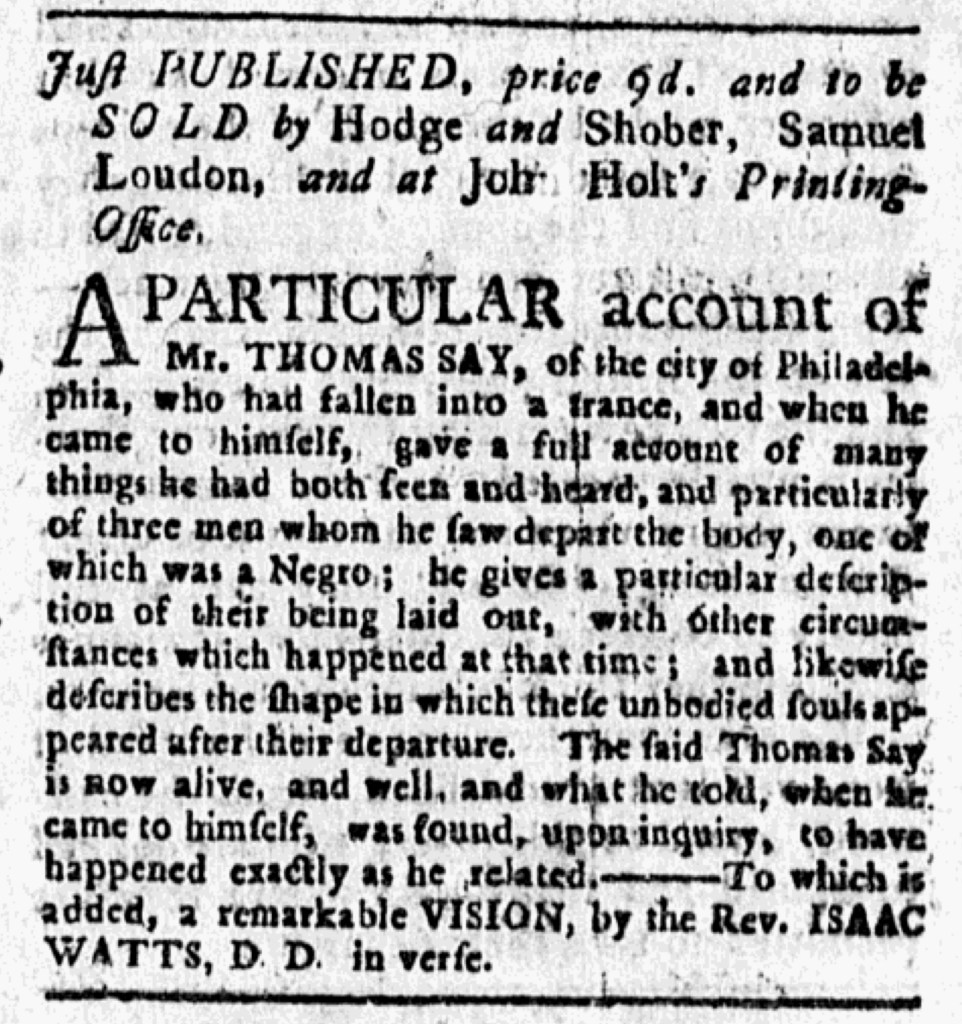
“A PARTICULAR account of Mr. THOMAS SAY … who had fallen into a trance.”

When William Mentz published The Visions of a Certain Thomas Say, of the City of Philadelphia, Which He Saw in a Trance without permission, Say placed an advertisement in the Pennsylvania Gazette to voice his objection.  He described the text as an “incorrect and imperfect” rendition of what he wished to reveal to the public, further asserting that “publishing any Thing in any Man’s Name without his Knowledge or Consent is, in my Opinion, very unjustifiable.”  He concluded with an appeal to “all Printers … not to aid or assist the said Mentz, or anyone else, in such wrong Proceedings.”

Unfortunately for Say, printers and booksellers in New York either did not see that advertisement or, if they did, chose to disregard it in favor of generating revenue by selling the pamphlet.  An advertisement in the June 16, 1774, edition of the New-York Journal described the contents of the work and noted that readers could purchase copies from printers Robert Hodge and Frederick Shober, bookseller Samuel Loudon, and John Holt, printer of the newspaper that carried the advertisement.  Mentz apparently shipped copies of The Visions of a Certain Thomas Say to New York, perhaps exchanging them for titles printed there.  Local agents felt the pamphlet merited a separate advertisement.  Loudon, for instance, simultaneously ran an advertisement for “BOOKS … TO BE SOLD ON THE LOWEST TERMS” that listed dozens of titles but did not mention The Visions of a Certain Thomas Say.  That advertisement also did not promote any books by providing summaries, unlike the advertisement about the pamphlet that Say wished to withdraw from circulation.

In his own advertisement, Say stated that he “never intended what I have wrote … should be published during my Life.”  More than two decades later, Benjamin Say, his son, published A Short Compilation of the Extraordinary Life and Writings of Thomas Say: In Which Is Faithfully Copied, from the Original Manuscript, the Uncommon Vision, Which He Had When a Young Man.  That work, released following Say’s death in 1796, presumably abided by his wishes for disseminating what he recorded of his vision.  During his lifetime, however, a public notice in the Pennsylvania Gazettehad not been enough to prevent the marketing of an unauthorized account.

June 18

What was advertised in a colonial American newspaper 250 years ago today?

Providence Gazette (June 18, 1774).

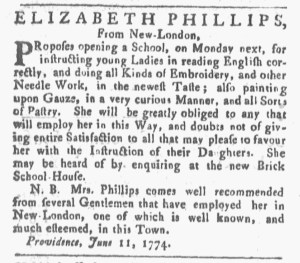
“Mrs. Phillips comes well recommended from several Gentlemen that have employed her in New-London.”

References upon request.  That was part of the marketing strategy deployed by Elizabeth Phillips when she relocated from New London to Providence.  Upon her arrival in Rhode Island, she placed an advertisement in the Providence Gazette to inform her new neighbors that she “PRoposes opening a School … for instructing young Ladies in reading English correctly, and doing all Kinds of Embroidery, and other Needle Work, in the newest Taste.”  Her curriculum also included “painting upon Gauze, in a very curious Manner, and [making] all Sorts of Pastry.”  Her pupils learned a variety of feminine arts.

The schoolmistress declared that she “will be greatly obliged to any that will employ her in this Way, and doubts not of giving entire Satisfaction to all that may please to favour her with the Instruction of their Daughters.”  Yet the newcomer realized that the public in Providence did not know her and lacked familiarity with her reputation for running a school. Phillips sought to counter that with a nota bene in which she claimed that she “comes well recommended from several Gentlemen that have employed her in New-London.”  Parents of prospective students did not have to take her word for it since “one of which is well known, and much esteemed, in this Town.”  Phillips did not reveal the identity of this gentleman in the public prints, but readers could learn more “by enquiring at the new Brick School-House.”  When they did, that gave the schoolmistress opportunities to share examples of the embroidery and painting she taught in addition to revealing who could speak on her behalf.  She likely supposed that engaging with the parents of prospective students in person would garner enrollments just as effectively as recommendations from previous employers, so offering references on request served as a means of initiating those interactions.

Slavery Advertisements Published June 18, 1774

The Slavery Adverts 250 Project chronicles the role of newspaper advertising in perpetuating slavery in the era of the American Revolution. The project seeks to reveal the ubiquity of slavery in eighteenth-century life from New England to Georgia by republishing advertisements about enslaved people – for sale as individuals or in groups, wanted to purchase or for hire for short periods, runaways who liberated themselves, and those who were subsequently captured and confined in jails and workhouses – in daily digests on this site as well as in real time via the @SlaveAdverts250 Twitter feed, utilizing twenty-first-century media to stand in for the print media of the eighteenth century.

The project aims to provide modern audiences with a sense of just how often colonizers encountered these advertisements in their daily lives. Enslaved men, women, and children appeared in print somewhere in the colonies almost every single day. Those advertisements served as a constant backdrop for social, cultural, economic, and political life in colonial and revolutionary America. Colonizers who did not purport to own enslaved people were still confronted with slavery as well as invited to maintain the system by purchasing enslaved men, women, and children or assisting in the capture of so-called “runaways” who sought to free themselves from bondage. The frequency of these newspaper advertisements suggests just how embedded slavery was in colonial and revolutionary American culture in everyday interactions beyond the printed page.

These advertisements also testify to the experiences of enslaved men, women, and children, though readers must consider that those experiences have been remediated through descriptions offered by enslavers rather than enslaved people themselves. Often unnamed in the advertisements, enslaved men, women, and children were not invisible or unimportant in early America.

These advertisements appeared in colonial American newspapers 250 years ago today.

Providence Gazette (June 18, 1774).

June 17

What was advertised in a colonial American newspaper 250 years ago today?

South-Carolina and American General Gazette (June 17, 1774).

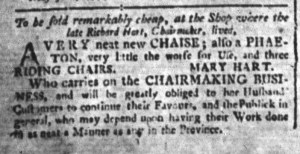
“MARY HART … will be greatly obliged to her Husband’s Customers to continue their Favours.”

When she took to the pages of the South-Carolina and American General Gazette in the summer of 1774, Mary Hart advertised several wheeled vehicles for sale “remarkably cheap, at the Shop where the late Richard Hart, Chairmaker, lived” in Charleston.  Her inventory included a “VERY neat new CHAISE,” described by the Oxford English Dictionaryas a “light open carriage for one or two persons, often having a top,” and a “PHAETON, very little the worse for Use,” described as a “light four-wheeled open carriage, usually drawn by a pair of horse, and having one or two seats facing forward.”  Like the modern automobile industry, Hart marketed both new and used vehicles.  She also had three “RIDING CHAIRS,” which public historians at George Washington’s Mount Vernon describe as a “wooden chair on a cart with two wheels … pulled by single horse.”  They explain that riding chairs “could travel country lanes and back roads more easily than bulkier four-wheeled chariots and coaches.”  Hart offered different kinds of wheeled vehicles to suit the needs, tastes, and budgets of her customers.

The widow did not merely seek to sell carriages previously produced by her late husband.  Instead, she announced that she “carries on the CHAIRMAKING BUSINESS.”  Eighteenth-century readers understood that she referred to making wheeled vehicles, not household furniture.  Her husband had cultivated a clientele for the family business, one that Hart wished to maintain and even expand.  She declared that she “will be greatly obliged to her Husband’s Customers to continue their Favours, and the Publick in general, who may depend upon having their Work done in as neat a Manner as any in the Province.”  Did Hart construct carriages herself?  Perhaps, though if that was the case it demonstrated what was possible rather than what was probable.  In a dissertation on “Women Shopkeepers, Tavernkeepers, and Artisans in Colonial Philadelphia,” Frances May Manges demonstrated that female entrepreneurs worked in a variety of trades.[1]  Hart may have worked alongside her husband before his death and then continued.  Rather than building carriages, she may have supervised employees in the workshop, running other aspects of the business both before and after her husband’s passing.  Either way, she confidently asserted that a workshop headed by a woman produced carriages equal in quality to any others made in the colony.  Out of necessity, Hart joined the ranks of widows who continued operating family businesses in colonial America.

**********

[1] Frances May Manges, “Women Shopkeepers, Tavernkeepers, and Artisans in Colonia Philadelphia” (Ph.D. diss., University of Pennsylvania, 1958).

Slavery Advertisements Published June 17, 1774

The Slavery Adverts 250 Project chronicles the role of newspaper advertising in perpetuating slavery in the era of the American Revolution. The project seeks to reveal the ubiquity of slavery in eighteenth-century life from New England to Georgia by republishing advertisements about enslaved people – for sale as individuals or in groups, wanted to purchase or for hire for short periods, runaways who liberated themselves, and those who were subsequently captured and confined in jails and workhouses – in daily digests on this site as well as in real time via the @SlaveAdverts250 Twitter feed, utilizing twenty-first-century media to stand in for the print media of the eighteenth century.

The project aims to provide modern audiences with a sense of just how often colonizers encountered these advertisements in their daily lives. Enslaved men, women, and children appeared in print somewhere in the colonies almost every single day. Those advertisements served as a constant backdrop for social, cultural, economic, and political life in colonial and revolutionary America. Colonizers who did not purport to own enslaved people were still confronted with slavery as well as invited to maintain the system by purchasing enslaved men, women, and children or assisting in the capture of so-called “runaways” who sought to free themselves from bondage. The frequency of these newspaper advertisements suggests just how embedded slavery was in colonial and revolutionary American culture in everyday interactions beyond the printed page.

These advertisements also testify to the experiences of enslaved men, women, and children, though readers must consider that those experiences have been remediated through descriptions offered by enslavers rather than enslaved people themselves. Often unnamed in the advertisements, enslaved men, women, and children were not invisible or unimportant in early America.

These advertisements appeared in colonial American newspapers 250 years ago today.

New-Hampshire Gazette (June 17, 1774).

**********

South-Carolina ad American General Gazette (June 17, 1774).

**********

South-Carolina ad American General Gazette (June 17, 1774).

**********

South-Carolina ad American General Gazette (June 17, 1774).

**********

South-Carolina ad American General Gazette (June 17, 1774).

**********

South-Carolina ad American General Gazette (June 17, 1774).

**********

South-Carolina ad American General Gazette (June 17, 1774).

**********

South-Carolina ad American General Gazette (June 17, 1774).

**********

South-Carolina ad American General Gazette (June 17, 1774).

**********

South-Carolina ad American General Gazette (June 17, 1774).

**********

South-Carolina ad American General Gazette (June 17, 1774).

**********

South-Carolina ad American General Gazette (June 17, 1774).

**********

South-Carolina ad American General Gazette (June 17, 1774).

**********

South-Carolina ad American General Gazette (June 17, 1774).

**********

South-Carolina ad American General Gazette (June 17, 1774).

**********

South-Carolina ad American General Gazette (June 17, 1774).

**********

South-Carolina ad American General Gazette (June 17, 1774).

**********

South-Carolina ad American General Gazette (June 17, 1774).

**********

South-Carolina ad American General Gazette (June 17, 1774).

**********

South-Carolina ad American General Gazette (June 17, 1774).

**********

South-Carolina ad American General Gazette (June 17, 1774).

**********

South-Carolina ad American General Gazette (June 17, 1774).

**********

South-Carolina ad American General Gazette (June 17, 1774).

**********

South-Carolina ad American General Gazette (June 17, 1774).

**********

South-Carolina ad American General Gazette (June 17, 1774).

**********

South-Carolina ad American General Gazette (June 17, 1774).

June 16

What was advertised in a colonial American newspaper 250 years ago today?

Massachusetts Spy (June 16, 1774).

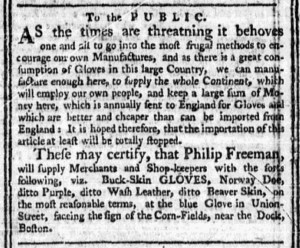
“It is hoped therefore, that the importation of this article at least will be totally stopped.”

Current events informed Philip Freeman’s marketing strategy as he attempted to sell gloves in the summer of 1774.  As colonizers from New England to Georgia discussed how to respond to Parliament closing Boston Harbor and other legislation passed following the Boston Tea Party, many proposed a new round of nonimportation agreements.  American merchants previously participated in boycotts to protest the Stamp Act and duties on several commodities imposed in the Townshend Acts, believing that disruptions to commerce served as an effective political tool.  Parliament relented, repealing the Stamp Act and duties on glass, lead, paint, and paper (but doubled down on tea with a new Tea Act in 1773).  A variety of other factors, including petitions and popular protests, played a role, so nonimportation agreements may not have had as much of an influence as intended.  Still, colonizers believed that boycotting goods imported from Britain effectively achieved their political goals.

Freeman believed that was the case and encouraged prospective customers of its veracity.  “As times are threatning,” he declared, “it behoves one and all to go into the most frugal methods to encourage our own Manufactures.”  He recognized “a great consumption of Gloves in this large Country,” yet proposed that “we can manufacture enough here, to supply the whole Continent.”  Such industry would have multiple benefits: it “will employ our own people, and keep a large sum of Money here, which is annually sent to England for Gloves.”  Furthermore, Freeman asserted that the gloves he made “are better and cheaper than can be imported from England.”  Not willing to wait for any sort of official nonimportation agreement enacted in Boston or throughout the colony or in cooperation with other colonies, Freeman implored that “the importation of this article at least will be totally stopped.”  In common cause, Freeman and his competitors in the colonies could meet demand without having to resort to imported gloves.  He did not direct his advertisement to consumers but rather the “Merchants and Shop-keepers” that he could supply with several different kinds of gloves “on the most reasonable terms.”  Working in concert, Freeman envisioned that glovemakers, retailers, and consumers could participate in politics via the decisions they made about production, consumption, and importing goods, starting immediately and informally with gloves and perhaps extending to other items through formal agreements as colonizers continued to organize in opposition to the Boston Port Act.

Slavery Advertisements Published June 16, 1774

The Slavery Adverts 250 Project chronicles the role of newspaper advertising in perpetuating slavery in the era of the American Revolution. The project seeks to reveal the ubiquity of slavery in eighteenth-century life from New England to Georgia by republishing advertisements about enslaved people – for sale as individuals or in groups, wanted to purchase or for hire for short periods, runaways who liberated themselves, and those who were subsequently captured and confined in jails and workhouses – in daily digests on this site as well as in real time via the @SlaveAdverts250 Twitter feed, utilizing twenty-first-century media to stand in for the print media of the eighteenth century.

The project aims to provide modern audiences with a sense of just how often colonizers encountered these advertisements in their daily lives. Enslaved men, women, and children appeared in print somewhere in the colonies almost every single day. Those advertisements served as a constant backdrop for social, cultural, economic, and political life in colonial and revolutionary America. Colonizers who did not purport to own enslaved people were still confronted with slavery as well as invited to maintain the system by purchasing enslaved men, women, and children or assisting in the capture of so-called “runaways” who sought to free themselves from bondage. The frequency of these newspaper advertisements suggests just how embedded slavery was in colonial and revolutionary American culture in everyday interactions beyond the printed page.

These advertisements also testify to the experiences of enslaved men, women, and children, though readers must consider that those experiences have been remediated through descriptions offered by enslavers rather than enslaved people themselves. Often unnamed in the advertisements, enslaved men, women, and children were not invisible or unimportant in early America.

These advertisements appeared in colonial American newspapers 250 years ago today.

Maryland Gazette (June 16, 1774).

**********

Maryland Gazette (June 16, 1774).

**********

Maryland Gazette (June 16, 1774).

**********

Massachusetts Gazette and Boston Weekly News-Letter (June 16, 1774).

**********

Massachusetts Gazette and Boston Weekly News-Letter (June 16, 1774).

**********

Massachusetts Gazette and Boston Weekly News-Letter (June 16, 1774).

**********

Massachusetts Gazette and Boston Weekly News-Letter (June 16, 1774).

**********

Massachusetts Spy (June 16, 1774).

**********

Massachusetts Spy (June 16, 1774).

**********

Supplement to the New-York Journal (June 16, 1774).

**********

Rivington’s New-York Gazetteer (June 16, 1774).

**********

Rivington’s New-York Gazetteer (June 16, 1774).

**********

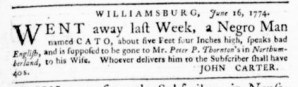
Virginia Gazette [Purdie and Dixon] (June 16, 1774).

**********

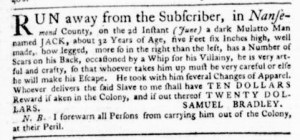
Virginia Gazette [Purdie and Dixon] (June 16, 1774).

**********

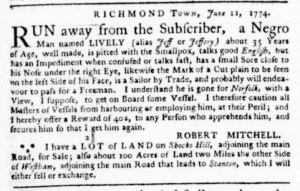
Virginia Gazette [Purdie and Dixon] (June 16, 1774).

**********

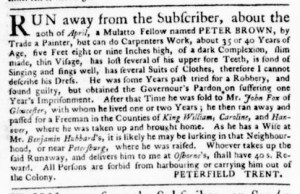
Virginia Gazette [Purdie and Dixon] (June 16, 1774).

**********

Virginia Gazette [Purdie and Dixon] (June 16, 1774).

**********

Virginia Gazette [Purdie and Dixon] (June 16, 1774).

**********

Virginia Gazette [Purdie and Dixon] (June 16, 1774).

**********

Virginia Gazette [Purdie and Dixon] (June 16, 1774).

**********

Virginia Gazette [Purdie and Dixon] (June 16, 1774).

**********

Virginia Gazette [Purdie and Dixon] (June 16, 1774).

**********

Virginia Gazette [Purdie and Dixon] (June 16, 1774).

**********

Virginia Gazette [Purdie and Dixon] (June 16, 1774).

**********

Virginia Gazette [Purdie and Dixon] (June 16, 1774).

**********

Virginia Gazette [Purdie and Dixon] (June 16, 1774).

**********

Virginia Gazette [Purdie and Dixon] (June 16, 1774).

**********

Virginia Gazette [Rind] (June 16, 1774).

**********

Virginia Gazette [Rind] (June 16, 1774).

**********

Virginia Gazette [Rind] (June 16, 1774).

**********

Virginia Gazette [Rind] (June 16, 1774).

**********

Virginia Gazette [Rind] (June 16, 1774).

June 15

What was advertised in a colonial American newspaper 250 years ago today?

Pennsylvania Journal (June 15, 1774).

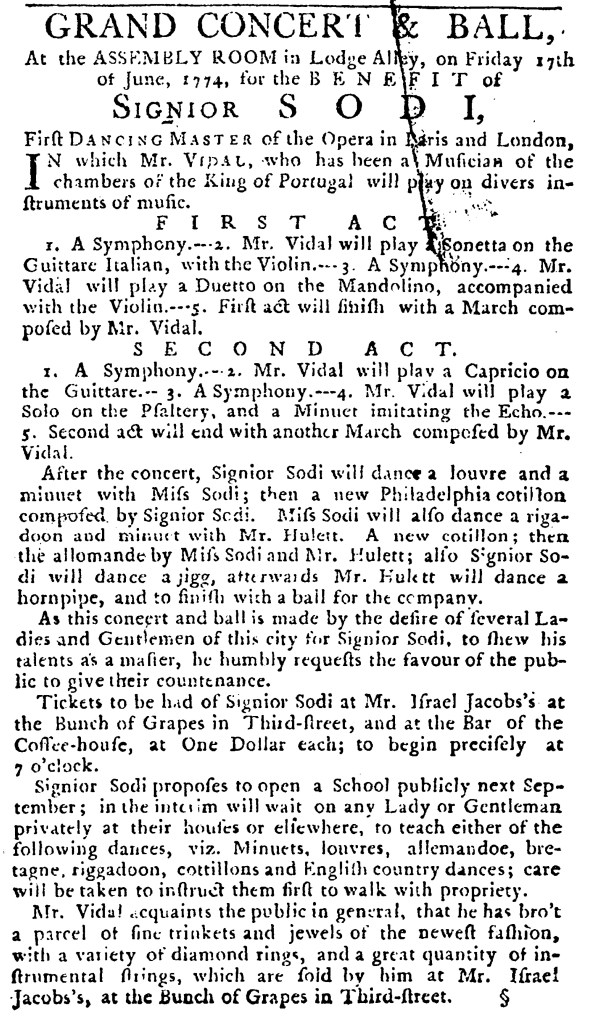
“This concert and ball is made by the desire of several Ladies and Gentlemen of this city.”

Genteel residents of Philadelphia did not want to miss the “GRAND CONCERT & BALL, At the ASSEMBLY TOOM in Lodge Alley” on June 17, 1774.  At least that was the intention of Signior Sodi, “First DANCING MASTER of the Opera in Paris and London,” when he advertised the event in the Pennsylvania Journal.  Sodi worked with “Mr. VIDAL, who has been a Musician of the chambers of the King of Portugal,” in putting together a program that included ten musical performances in two acts followed by demonstrations of Sodi’s dancing.  He claimed that he hosted the event “by the desire of several Ladies and Gentlemen of this city” who wished for him “to shew his talents as a master.”  For his part, he “humbly requests the favour of the public to give their countenance.”  To do that, the audience needed to purchase tickets, either from Sodi “at the Bunch of Grapes” on Third Street or “at the Bar” at the London Coffee House, a popular place for socializing and conducting business.

Whether or not “Ladies and Gentlemen of this city” encouraged Sodi to host a concert and ball, he used the opportunity to market other endeavors to support himself beyond ticket sales for that event.  He used the occasion to announce that he planned to “open a School” in September.  Until then, he “will wait on any Lady or Gentleman privately at their houses or elsewhere” to give lessons.  In addition to learning the steps for several dances, his students would also receive instruction “to walk with propriety.”  His pupils, Sodi suggested, would demonstrate more grace both on and off the dance floor, an important goal for colonizers anxious about so many aspects of their comportment.  Indeed, those interested in lessons from Sodi may have also taken note of lessons that Francis Daymon, “Master of the French and Latin Languages,” advertised in the same column in the Pennsylvania Journal.  Yet Sodi did not stake his entire livelihood on teaching the genteel and those aspiring to join their ranks to dance.  He also “acquaints the public in general” that he “bro’t a parcel of fine trinkets and jewels of the newest fashion, with a variety of diamond rings, and a great quantity of instrumental strings.”  He offered those items for sale at the Bunch of Grapes.  His “GRAND CONCERT & BALL” presented an opportunity for merchandising, not unlike the modern entertainment industry.

Slavery Advertisements Published June 15, 1774

The Slavery Adverts 250 Project chronicles the role of newspaper advertising in perpetuating slavery in the era of the American Revolution. The project seeks to reveal the ubiquity of slavery in eighteenth-century life from New England to Georgia by republishing advertisements about enslaved people – for sale as individuals or in groups, wanted to purchase or for hire for short periods, runaways who liberated themselves, and those who were subsequently captured and confined in jails and workhouses – in daily digests on this site as well as in real time via the @SlaveAdverts250 Twitter feed, utilizing twenty-first-century media to stand in for the print media of the eighteenth century.

The project aims to provide modern audiences with a sense of just how often colonizers encountered these advertisements in their daily lives. Enslaved men, women, and children appeared in print somewhere in the colonies almost every single day. Those advertisements served as a constant backdrop for social, cultural, economic, and political life in colonial and revolutionary America. Colonizers who did not purport to own enslaved people were still confronted with slavery as well as invited to maintain the system by purchasing enslaved men, women, and children or assisting in the capture of so-called “runaways” who sought to free themselves from bondage. The frequency of these newspaper advertisements suggests just how embedded slavery was in colonial and revolutionary American culture in everyday interactions beyond the printed page.

These advertisements also testify to the experiences of enslaved men, women, and children, though readers must consider that those experiences have been remediated through descriptions offered by enslavers rather than enslaved people themselves. Often unnamed in the advertisements, enslaved men, women, and children were not invisible or unimportant in early America.

These advertisements appeared in colonial American newspapers 250 years ago today.

Pennsylvania Gazette (June 15, 1774).

**********

Pennsylvania Gazette (June 15, 1774).

**********

Pennsylvania Gazette (June 15, 1774).

**********

Pennsylvania Gazette (June 15, 1774).

**********

Pennsylvania Journal (June 15, 1774).

**********

Pennsylvania Journal (June 15, 1774).

**********

Pennsylvania Journal (June 15, 1774).