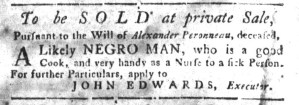
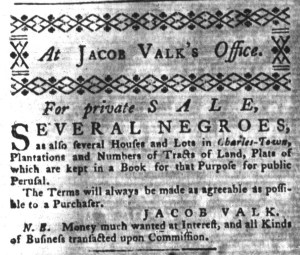
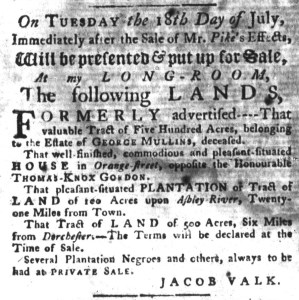
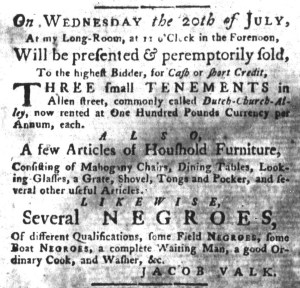
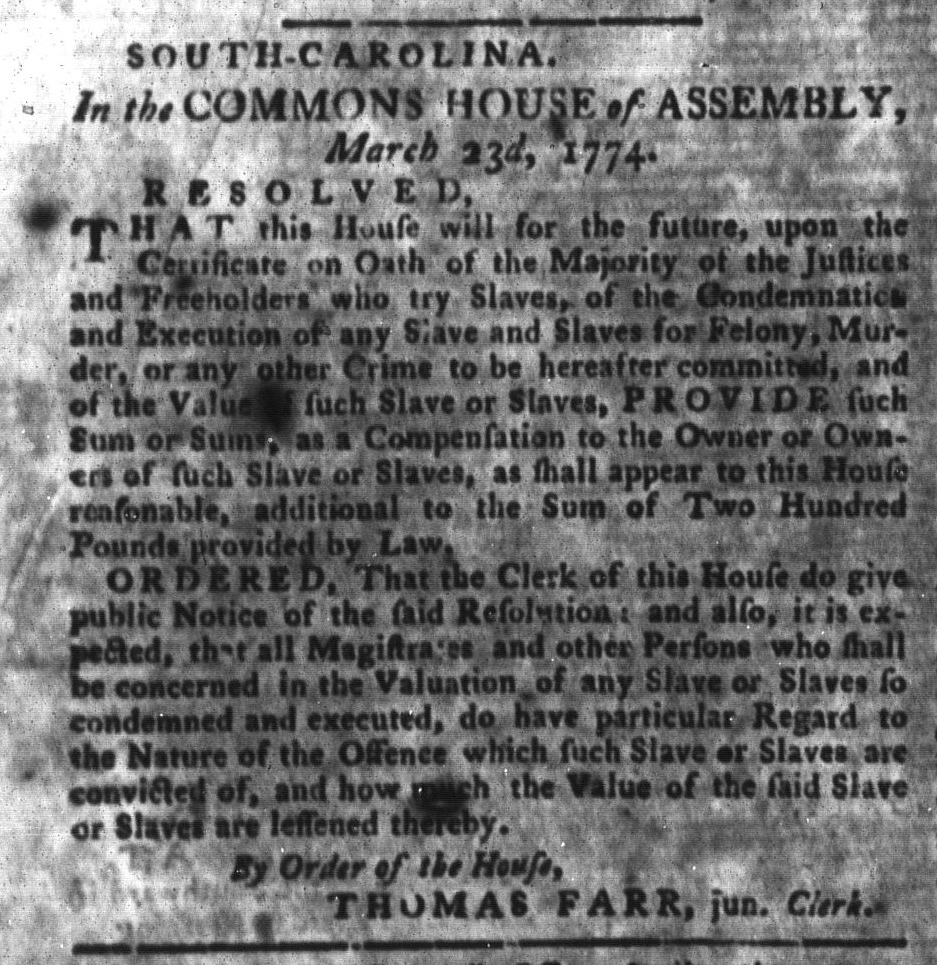
Slavery Advertisements Published July 14, 1774

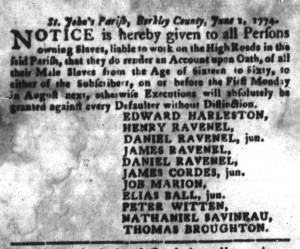
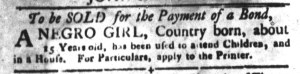
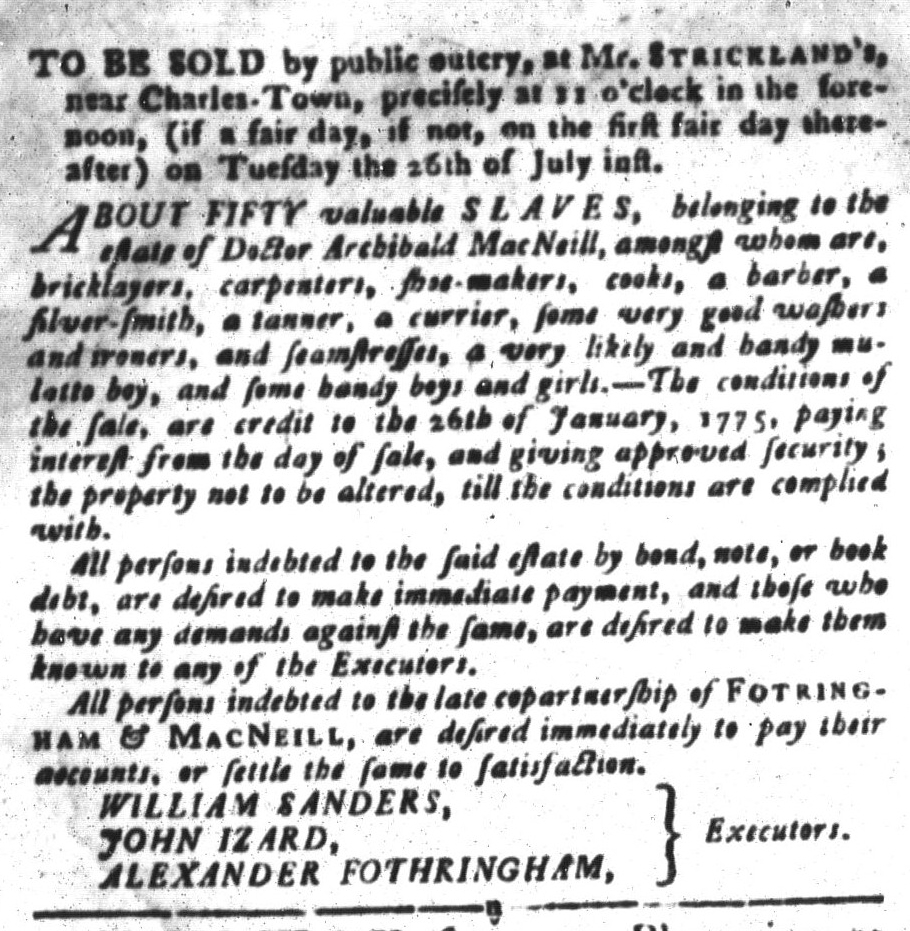
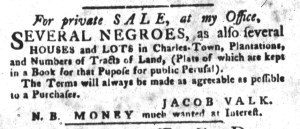
The Slavery Adverts 250 Project chronicles the role of newspaper advertising in perpetuating slavery in the era of the American Revolution. The project seeks to reveal the ubiquity of slavery in eighteenth-century life from New England to Georgia by republishing advertisements about enslaved people – for sale as individuals or in groups, wanted to purchase or for hire for short periods, runaways who liberated themselves, and those who were subsequently captured and confined in jails and workhouses – in daily digests on this site as well as in real time via the @SlaveAdverts250 Twitter feed, utilizing twenty-first-century media to stand in for the print media of the eighteenth century.

The project aims to provide modern audiences with a sense of just how often colonizers encountered these advertisements in their daily lives. Enslaved men, women, and children appeared in print somewhere in the colonies almost every single day. Those advertisements served as a constant backdrop for social, cultural, economic, and political life in colonial and revolutionary America. Colonizers who did not purport to own enslaved people were still confronted with slavery as well as invited to maintain the system by purchasing enslaved men, women, and children or assisting in the capture of so-called “runaways” who sought to free themselves from bondage. The frequency of these newspaper advertisements suggests just how embedded slavery was in colonial and revolutionary American culture in everyday interactions beyond the printed page.

These advertisements also testify to the experiences of enslaved men, women, and children, though readers must consider that those experiences have been remediated through descriptions offered by enslavers rather than enslaved people themselves. Often unnamed in the advertisements, enslaved men, women, and children were not invisible or unimportant in early America.

These advertisements appeared in colonial American newspapers 250 years ago today.
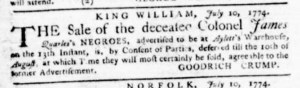
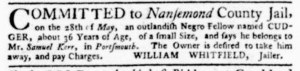
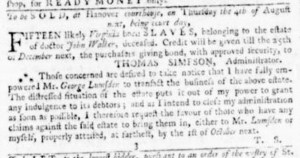
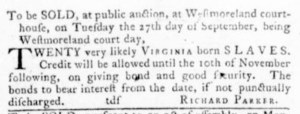
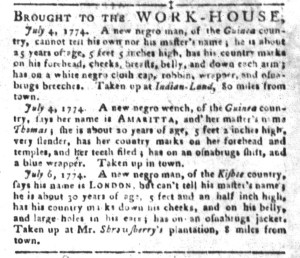
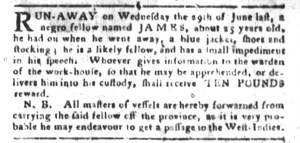
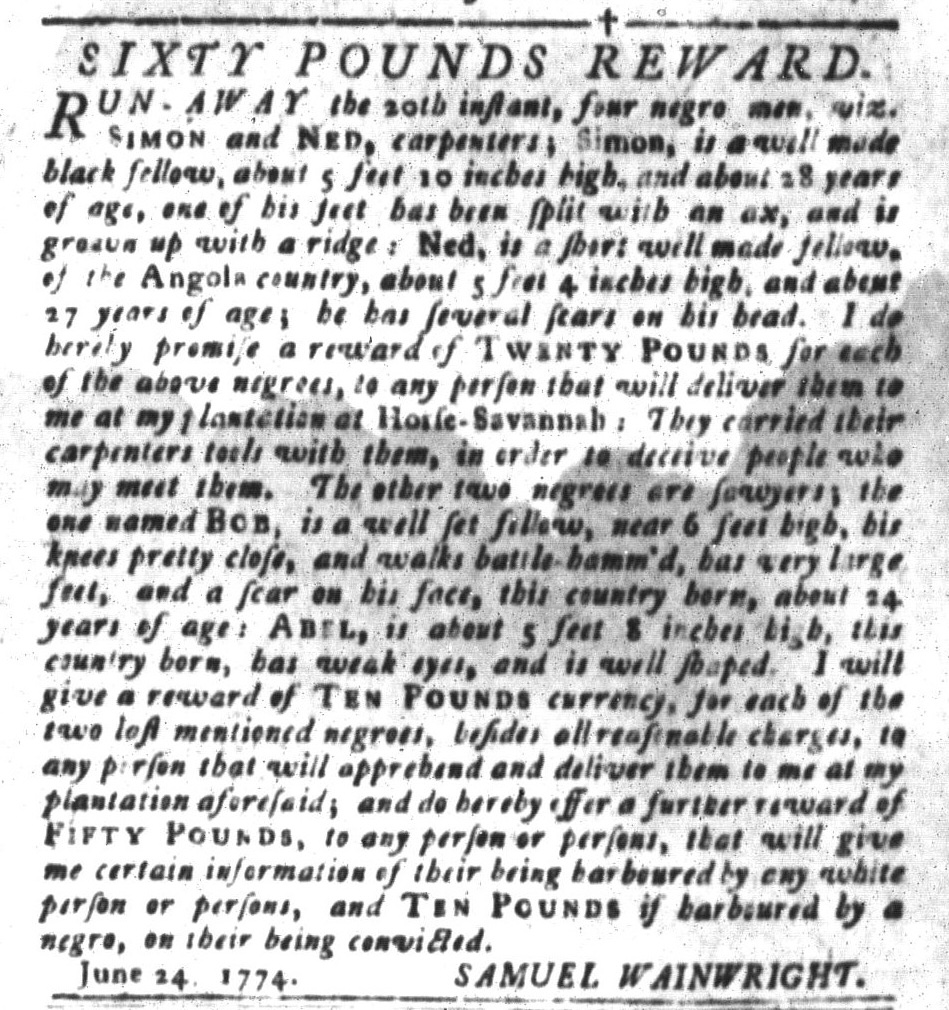
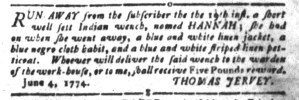
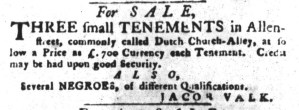
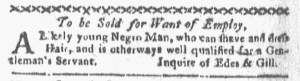
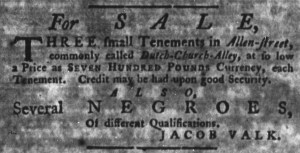
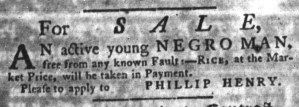
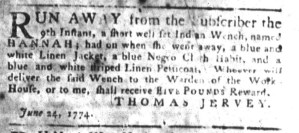
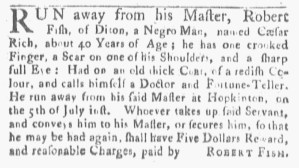
Maryland Gazette (July 14 1774).

**********
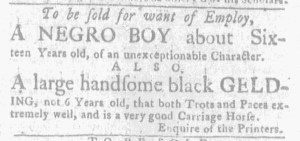
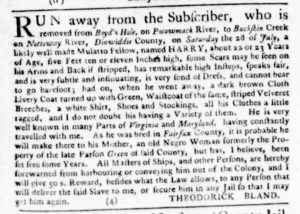
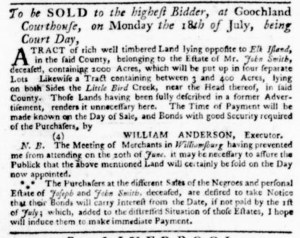
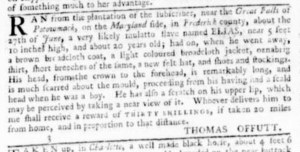
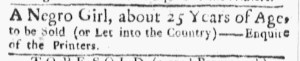
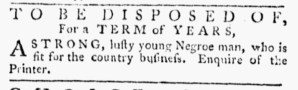
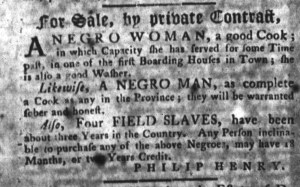
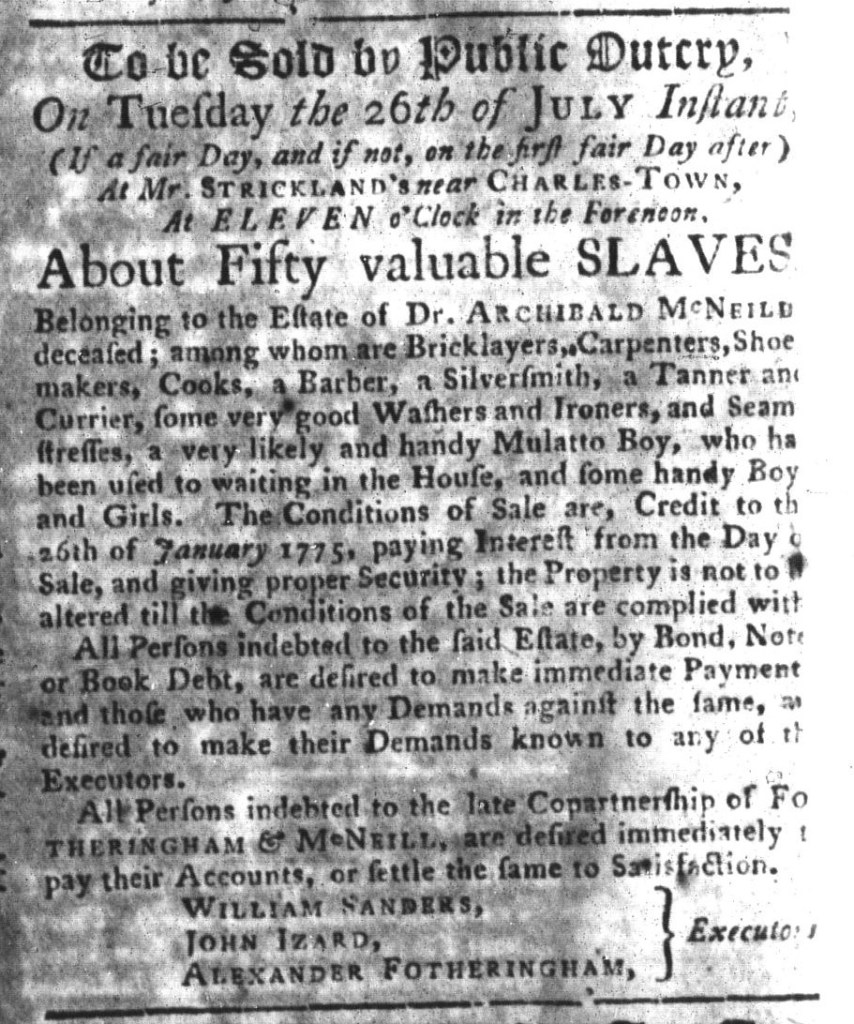
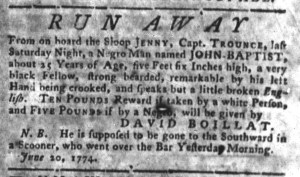
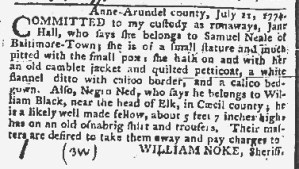
Massachusetts Gazette and Boston Weekly News-Letter (July 14 1774).

**********
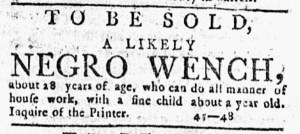
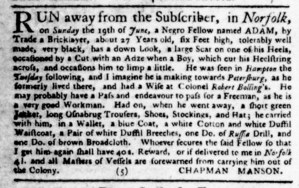
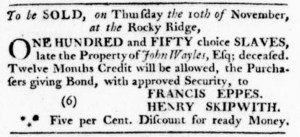
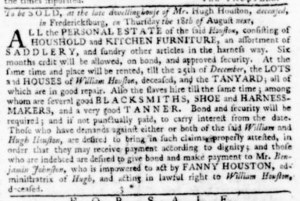
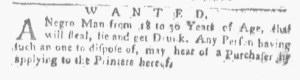
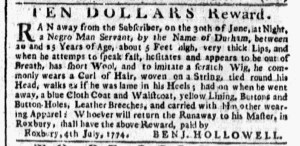
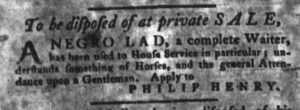
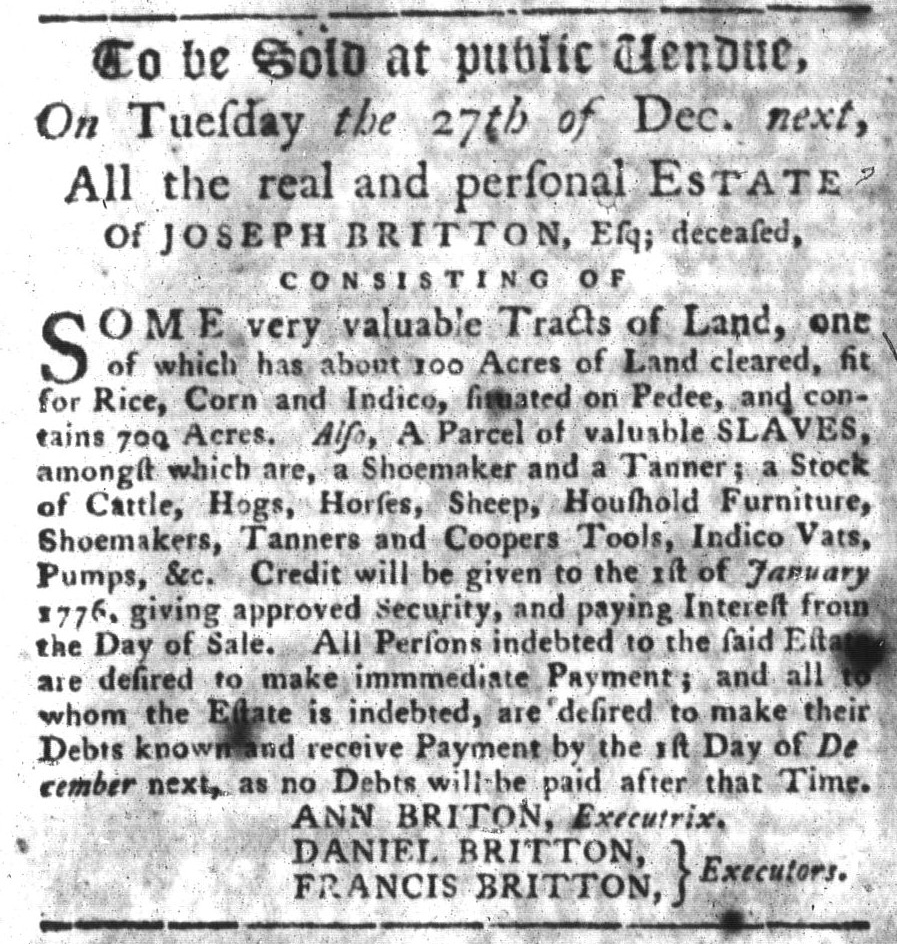
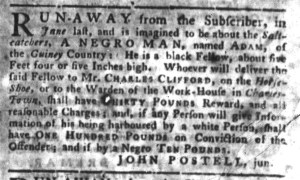
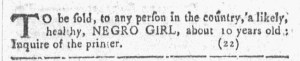
New-York Journal (July 14 1774).

**********
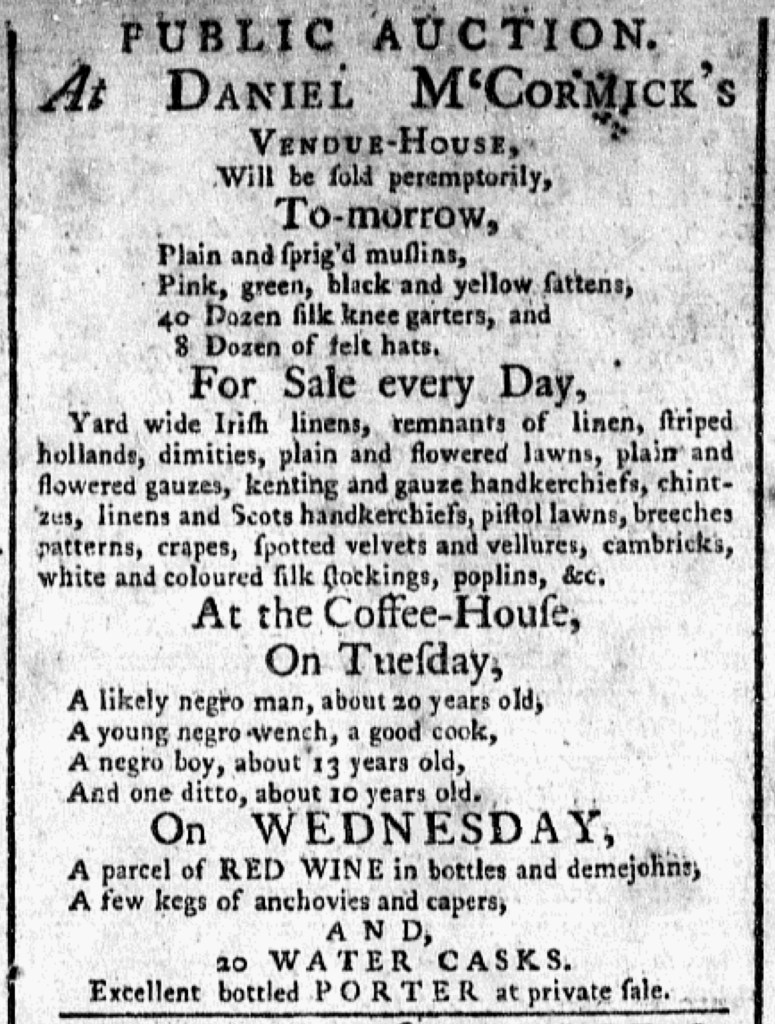
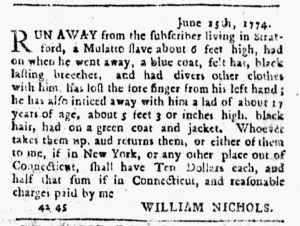
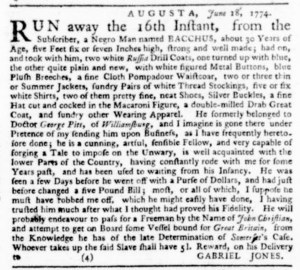
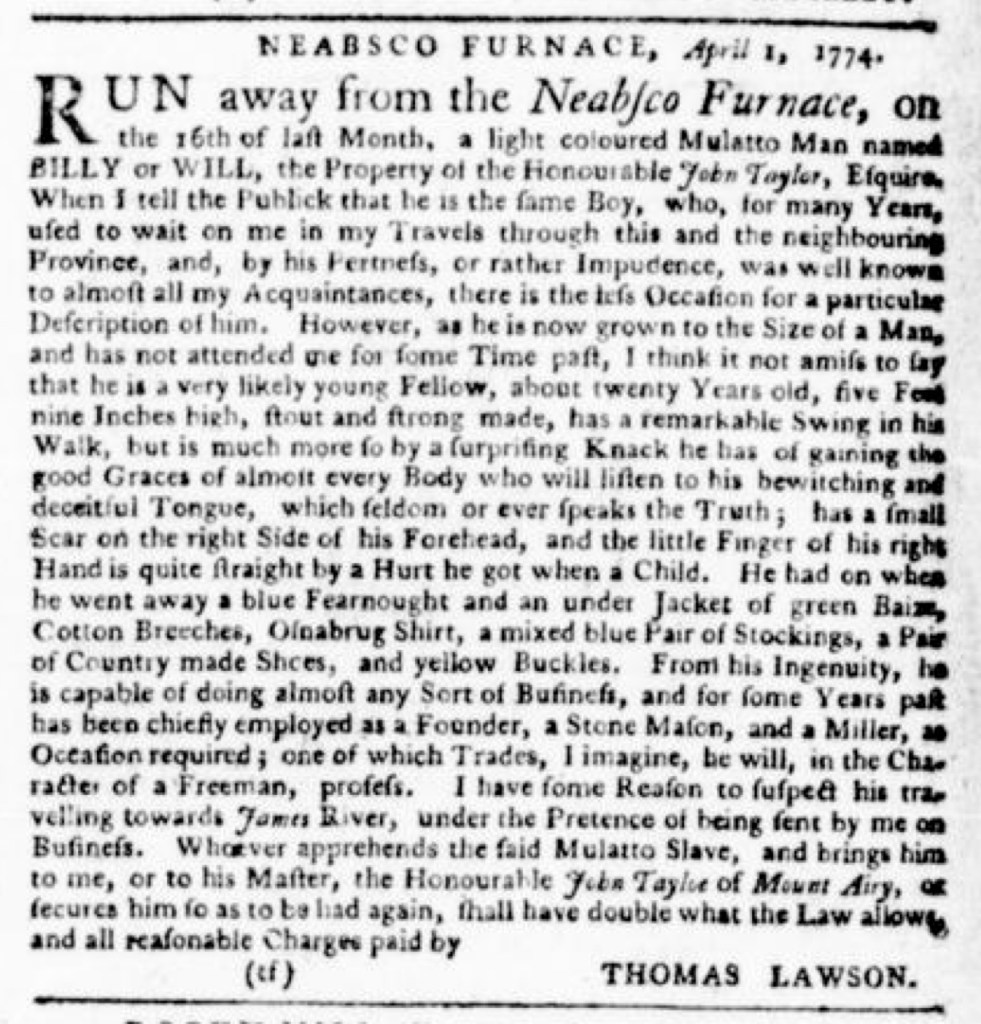
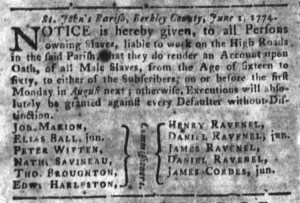
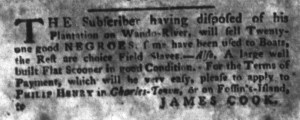
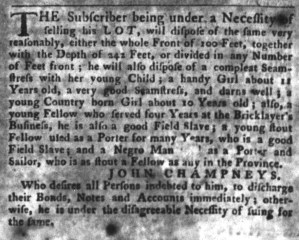
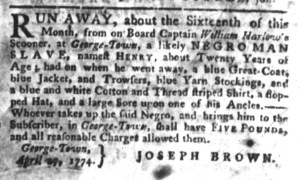
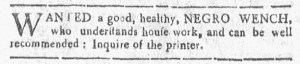
Supplement to the New-York Journal (July 14 1774).

**********
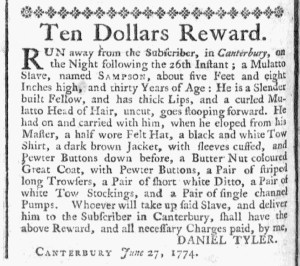
Norwich Packet (July 14 1774).

**********
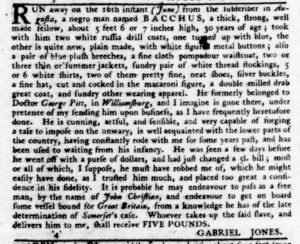
Virginia Gazette [Purdie and Dixon] (July 14 1774).

**********
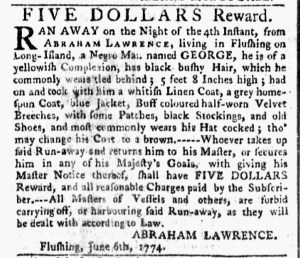
Virginia Gazette [Purdie and Dixon] (July 14 1774).

**********
Virginia Gazette [Purdie and Dixon] (July 14 1774).

**********
Virginia Gazette [Purdie and Dixon] (July 14 1774).

**********
Virginia Gazette [Purdie and Dixon] (July 14 1774).

**********
Virginia Gazette [Purdie and Dixon] (July 14 1774).

**********
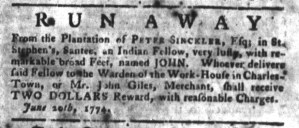
Virginia Gazette [Purdie and Dixon] (July 14 1774).

**********
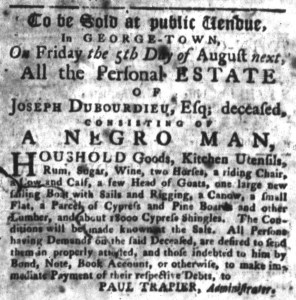
Virginia Gazette [Purdie and Dixon] (July 14 1774).

**********

Virginia Gazette [Purdie and Dixon] (July 14 1774).

**********

Virginia Gazette [Purdie and Dixon] (July 14 1774).

**********

Virginia Gazette [Rind] (July 14 1774).

**********

Virginia Gazette [Rind] (July 14 1774).

**********

Virginia Gazette [Rind] (July 14 1774).

**********

Virginia Gazette [Rind] (July 14 1774).

**********

Virginia Gazette [Rind] (July 14 1774).

**********

Virginia Gazette [Rind] (July 14 1774).

July 13

What was advertised in a colonial American newspaper 250 years ago today?

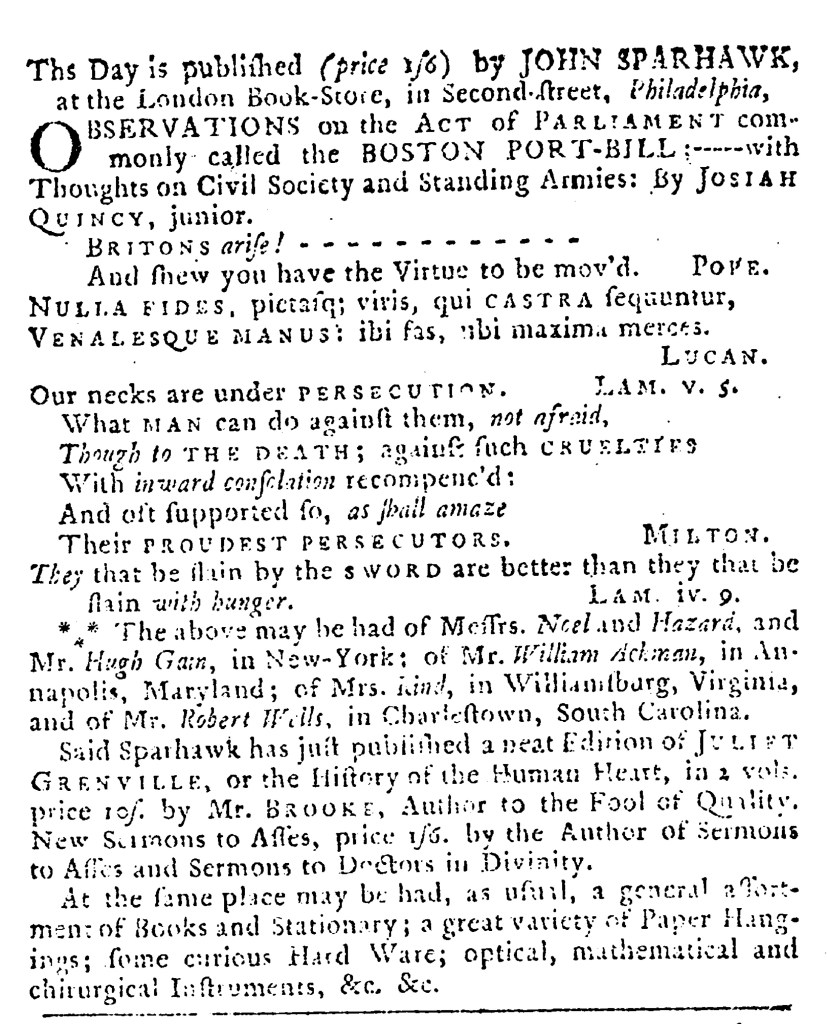
Pennsylvania Journal (July 13, 1774).

“OBSERVATIONS on the ACT of PARLIAMENT commonly called the BOSTON PORT-BILL … BY JOSIAH QUINCY, junior.”

In the spring of 1774, Josiah Quincy, Junior, of Boston, a prominent lawyer and noted patriot, penned Observations on the Act of Parliament Commonly Called the Boston Port-Bill: With Thoughts on Civil Society and Standing Armies.  In it, Quincy encouraged colonizers to unite in opposition to abuses perpetrated by Parliament, continuing work he had undertaken in 1773 when he visited South Carolina to strengthen ties among patriots in northern and southern colonies.  He had also published political essays in the Boston-Gazette, known for its support of the patriot cause, for several years. According to Daniel R. Coquillette and Neil Longley York, the editors of his major political and legal papers, the pamphlet “was the culmination of his thinking and writing about the problem of balancing imperial authority and colonial liberty.”

Benjamin Edes and John Gill printed the tract and advertised it in their newspaper, the Boston-Gazette, a publication known for advocating the patriot cause.  Soon, advertisements appeared widely in other newspapers published in Boston as well as newspapers in other towns in New England.  In general, they were brief announcements that merely named the title and author; Quincy’s reputation as writer, orator, and political philosopher was so well established that printers and booksellers did not consider it necessary to elaborate on what he had written to convince colonizers to purchase copies of the Observations.  Quincy’s pamphlet experienced even greater dissemination when John Sparhawk, a bookseller in Philadelphia, published an edition there and advertised it in the Pennsylvania Journal.  In addition to stocking it at his “London Book-Store,” Sparhawk advised readers that they could acquire copies from local agents, most of them printers and booksellers, in New York, Annapolis, Williamsburg, and Charleston.  That distribution network certainly made Quincy’s Observations more accessible to colonizers beyond New England, helping to explain how his “attempt to define and defend American rights” became, as Coquillette and York assert, “an essential part of the debate over rights in the empire.”

Slavery Advertisements Published July 13, 1774

The Slavery Adverts 250 Project chronicles the role of newspaper advertising in perpetuating slavery in the era of the American Revolution. The project seeks to reveal the ubiquity of slavery in eighteenth-century life from New England to Georgia by republishing advertisements about enslaved people – for sale as individuals or in groups, wanted to purchase or for hire for short periods, runaways who liberated themselves, and those who were subsequently captured and confined in jails and workhouses – in daily digests on this site as well as in real time via the @SlaveAdverts250 Twitter feed, utilizing twenty-first-century media to stand in for the print media of the eighteenth century.

The project aims to provide modern audiences with a sense of just how often colonizers encountered these advertisements in their daily lives. Enslaved men, women, and children appeared in print somewhere in the colonies almost every single day. Those advertisements served as a constant backdrop for social, cultural, economic, and political life in colonial and revolutionary America. Colonizers who did not purport to own enslaved people were still confronted with slavery as well as invited to maintain the system by purchasing enslaved men, women, and children or assisting in the capture of so-called “runaways” who sought to free themselves from bondage. The frequency of these newspaper advertisements suggests just how embedded slavery was in colonial and revolutionary American culture in everyday interactions beyond the printed page.

These advertisements also testify to the experiences of enslaved men, women, and children, though readers must consider that those experiences have been remediated through descriptions offered by enslavers rather than enslaved people themselves. Often unnamed in the advertisements, enslaved men, women, and children were not invisible or unimportant in early America.

These advertisements appeared in colonial American newspapers 250 years ago today.

Essex Journal (July 13, 1774).

July 12

What was advertised in a colonial American newspaper 250 years ago today?

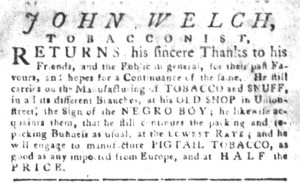
South-Carolina Gazette and Country Journal (July 13, 1774).

“The Sign of the NEGRO BOY.”

When John Welch, a tobacconist, advertised in the July 12, 1774, edition of the South-Carolina Gazette and Country Journal, he invited “his Friends, and the Public in general” to “his OLD SHOP in Union-street, the Sign of the NEGRO BOY.”  That emblem linked the commodity that Welch’s customers consumed to the enslaved men, women, and children who played such a significant role in producing it.  While Welch emphasized his role in the final stage of “the Manufacturing of TOBACCO and SNUFF, in all its different Branches” to make those items available on the market, the “Sign of the NEGRO BOY” merely hinted at the enslaved labor that raised tobacco on plantations.

South-Carolina Gazette and Country Journal (July 12, 1774).

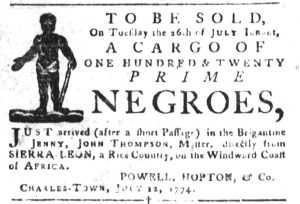
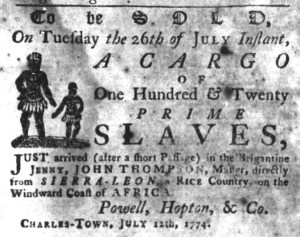
Welch’s sign was one more instance of putting Black bodies on display in the colonies during the era of the American Revolution.  At auctions and as they went about their daily lives, the bodies of enslaved people were scrutinized by colonizers.  Advertisements that provided descriptions of enslaved people who liberated themselves by running away from their enslavers and offered rewards for their capture and return encouraged even more careful observation of Black bodies.  Other advertisements announcing enslaved people for sale incorporated images of Black bodies.  Those woodcuts, stock images supplied by printers, were nondescript and interchangeable, further dehumanizing the people they represented in a system that treated them as commodities.  An image of a Black man accompanied an advertisement about “A CARGO OF ONE HUNDRED & TWENTY PRIME NEGROES … directly from SIERRA-LEON, a Rice Country, on the Windward Coast of AFRICA” in the same column as Welch’s advertisement.

Variations of the “Sign of the NEGRO BOY” marked the locations of shops in other towns.  In March 1766, August Deley advertised tobacco “At the Sign of the Black Boy … in Hartford” in the Connecticut Courant.  Jonathan Russell peddled a “NEW and FRESH Assortment of English and India GOODS … at the Sign of the BLACK-BOY” in Providence in May 1767.  In December 1768, he gave a different description, “the Sign of the Black Boy and Butt.”  Perhaps he had a new sign that incorporated a large barrel along with the boy, though he may have added a detail that he did not mention in his previous advertisement.  Several months later, Samuel Young promoted an “Assortment of European, East and West-India GOODS” in stock at his store at “the Sign of the Black Boy” in Providence.  Four years after that, he continued business “At the Sign of the Black Boy” in May 1773.  Jonathan Williams gave his location as “the Black Boy and Butt in Cornhill” in the Massachusetts Gazette and Boston Weekly News-Letter in September 1770 and in the Boston Evening-Post in April 1771.  Advertisers in northern colonies as well as southern ones deployed images of Black bodies in marking their locations.

Colonizers appropriated the labor of enslaved men, women, and children in producing commodities for market throughout the Atlantic world and beyond, but that was not the extent of the appropriation that took place.  They also appropriated images of Black bodies to market goods, to sell Black people they treated as commodities, and to encourage surveillance of Black people to determine whether they were fugitives for freedom who liberated themselves from their enslavers.

Slavery Advertisements Published July 12, 1774

The Slavery Adverts 250 Project chronicles the role of newspaper advertising in perpetuating slavery in the era of the American Revolution. The project seeks to reveal the ubiquity of slavery in eighteenth-century life from New England to Georgia by republishing advertisements about enslaved people – for sale as individuals or in groups, wanted to purchase or for hire for short periods, runaways who liberated themselves, and those who were subsequently captured and confined in jails and workhouses – in daily digests on this site as well as in real time via the @SlaveAdverts250 Twitter feed, utilizing twenty-first-century media to stand in for the print media of the eighteenth century.

The project aims to provide modern audiences with a sense of just how often colonizers encountered these advertisements in their daily lives. Enslaved men, women, and children appeared in print somewhere in the colonies almost every single day. Those advertisements served as a constant backdrop for social, cultural, economic, and political life in colonial and revolutionary America. Colonizers who did not purport to own enslaved people were still confronted with slavery as well as invited to maintain the system by purchasing enslaved men, women, and children or assisting in the capture of so-called “runaways” who sought to free themselves from bondage. The frequency of these newspaper advertisements suggests just how embedded slavery was in colonial and revolutionary American culture in everyday interactions beyond the printed page.

These advertisements also testify to the experiences of enslaved men, women, and children, though readers must consider that those experiences have been remediated through descriptions offered by enslavers rather than enslaved people themselves. Often unnamed in the advertisements, enslaved men, women, and children were not invisible or unimportant in early America.

These advertisements appeared in colonial American newspapers 250 years ago today.

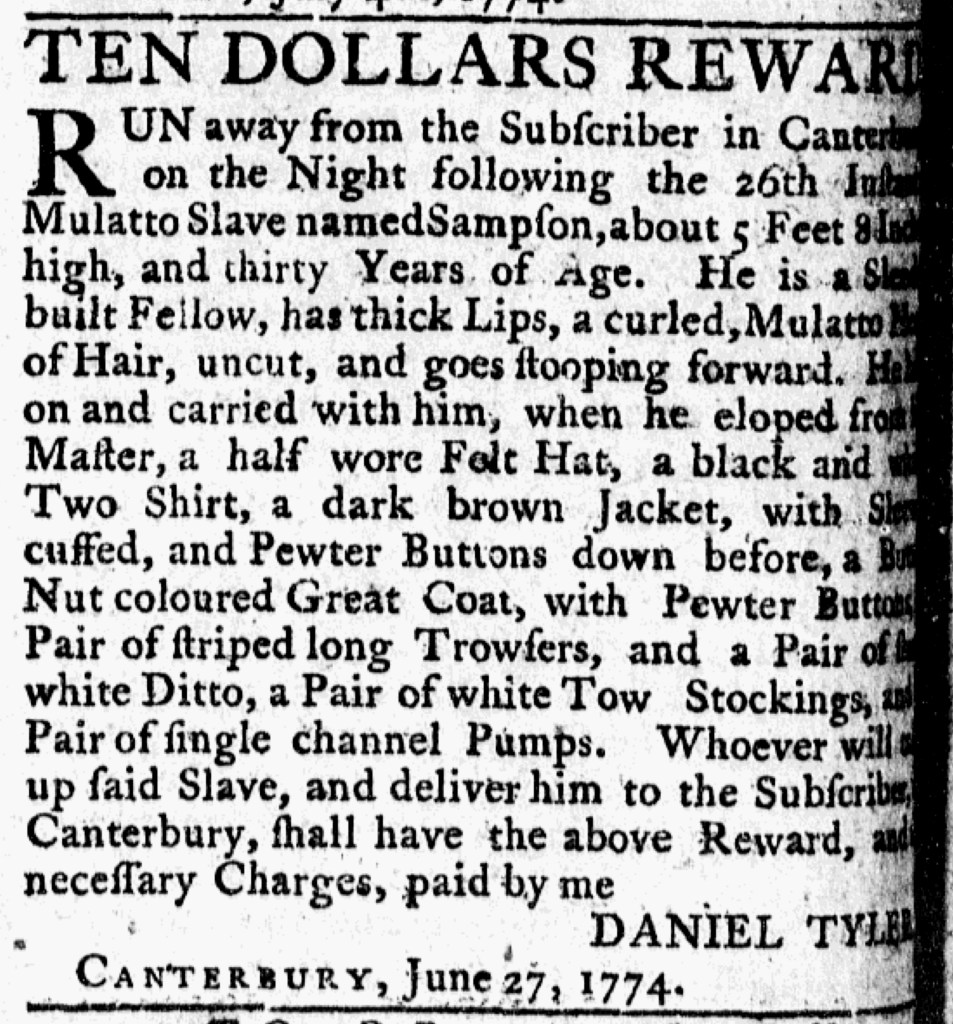
Connecticut Courant (July 12, 1774).

**********

South-Carolina Gazette and Country Journal (July 12, 1774).

**********

South-Carolina Gazette and Country Journal (July 12, 1774).

**********

South-Carolina Gazette and Country Journal (July 12, 1774).

**********

South-Carolina Gazette and Country Journal (July 12, 1774).

**********

South-Carolina Gazette and Country Journal (July 12, 1774).

**********

South-Carolina Gazette and Country Journal (July 12, 1774).

**********

South-Carolina Gazette and Country Journal (July 12, 1774).

**********

South-Carolina Gazette and Country Journal (July 12, 1774).

**********

South-Carolina Gazette and Country Journal (July 12, 1774).

**********

South-Carolina Gazette and Country Journal (July 12, 1774).

**********

South-Carolina Gazette and Country Journal (July 12, 1774).

**********

South-Carolina Gazette and Country Journal (July 12, 1774).

**********

South-Carolina Gazette and Country Journal (July 12, 1774).

**********

South-Carolina Gazette and Country Journal (July 12, 1774).

July 11

What was advertised in a colonial American newspaper 250 years ago today?

Boston Evening-Post (July 11, 1774).

“The Sign of the LEOPARD.”

When Daniel Scott advertised his “Medicine Store [at] the Sign of the LEOPARD, South End” in the July 11, 1774, edition of the Boston Evening-Post, he adorned his notice with a woodcut depicting that exotic animal.  The device that he chose to represent his store gave colonizers greater access to faraway places that were part of global networks of trade and (often involuntary) migration.  Residents of the busy port spotted the leopard when they passed by Scott’s store.  His advertisement disseminated an image of an animal native to Africa and Asia even more widely, reaching readers who encountered such creatures mainly through descriptions rather than images.  Something similar occurred with the “Sign of the ELEPHANT” that marked the location of “HILL’s ready Money Variety Store” in Providence and the woodcut of an elephant in Hill’s advertisements in the Providence Gazette in the spring and summer of 1774.  That these entrepreneurs used these animals as their emblems suggests that colonizers were familiar enough with their descriptions to recognize them when they saw them, yet the signs and woodcuts helped clarify their visualizations.

Colonizers did have some opportunities to view exotic animals transported to British North America.  In August 1768, for instance, Abraham Van Dyck advertised that he had on display “one of the most beautiful Animals, call’d, The LEOPARD” that had “JUST ARRIVED” in New York.  Assuming readers had limited familiarity with this large cat, Van Dyck provided a description: “adorned all over with very neat and different spots, black and white [and] much in Shape, Nature, and Colour, like unto a Panther.”  To further entice prospective audiences, he included a woodcut depicting the creature.  He also stated that he had “several other Animals” on display “in the Broad-Way,” but did not indicate which species.  Although colonizers in New York could pay one shilling for a “full View of the Leopard,” most did not have chances to observe this animal very often.  Their most regular access to visual images of leopards, elephants, and other exotic animals would have been shop signs and, occasionally, advertising media, such as trade cards and newspaper notices, that incorporated woodcuts.  Scott offered lengthy descriptions of some of the medicines he sold, but many readers may have considered the image of the leopard the most engaging part of his advertisement.

Slavery Advertisements Published July 11, 1774

The Slavery Adverts 250 Project chronicles the role of newspaper advertising in perpetuating slavery in the era of the American Revolution. The project seeks to reveal the ubiquity of slavery in eighteenth-century life from New England to Georgia by republishing advertisements about enslaved people – for sale as individuals or in groups, wanted to purchase or for hire for short periods, runaways who liberated themselves, and those who were subsequently captured and confined in jails and workhouses – in daily digests on this site as well as in real time via the @SlaveAdverts250 Twitter feed, utilizing twenty-first-century media to stand in for the print media of the eighteenth century.

The project aims to provide modern audiences with a sense of just how often colonizers encountered these advertisements in their daily lives. Enslaved men, women, and children appeared in print somewhere in the colonies almost every single day. Those advertisements served as a constant backdrop for social, cultural, economic, and political life in colonial and revolutionary America. Colonizers who did not purport to own enslaved people were still confronted with slavery as well as invited to maintain the system by purchasing enslaved men, women, and children or assisting in the capture of so-called “runaways” who sought to free themselves from bondage. The frequency of these newspaper advertisements suggests just how embedded slavery was in colonial and revolutionary American culture in everyday interactions beyond the printed page.

These advertisements also testify to the experiences of enslaved men, women, and children, though readers must consider that those experiences have been remediated through descriptions offered by enslavers rather than enslaved people themselves. Often unnamed in the advertisements, enslaved men, women, and children were not invisible or unimportant in early America.

These advertisements appeared in colonial American newspapers 250 years ago today.

Boston Evening-Post (July 11, 1774).

**********

Boston-Gazette (July 11, 1774).

**********

Boston-Gazette (July 11, 1774).

**********

Boston-Gazette (July 11, 1774).

**********

Supplement to Dunlap’s Pennsylvania Packet (July 11, 1774).

**********

Massachusetts Gazette and Boston Post-Boy (July 11, 1774).

**********

Newport Mercury (July 11, 1774).

**********

Newport Mercury (July 11, 1774).

**********

New-York Gazette and Weekly Mercury (July 11, 1774).

**********

Supplement to the New-York Gazette and Weekly Mercury (July 11, 1774).

**********

Supplement to the New-York Gazette and Weekly Mercury (July 11, 1774).

**********

Supplement to the New-York Gazette and Weekly Mercury (July 11, 1774).

**********

South-Carolina Gazette (July 11, 1774).

**********

South-Carolina Gazette (July 11, 1774).

**********

South-Carolina Gazette (July 11, 1774).

**********

South-Carolina Gazette (July 11, 1774).

**********

South-Carolina Gazette (July 11, 1774).

**********

South-Carolina Gazette (July 11, 1774).

**********

South-Carolina Gazette (July 11, 1774).

**********

South-Carolina Gazette (July 11, 1774).

**********

Supplement to the South-Carolina Gazette (July 11, 1774).

**********

Supplement to the South-Carolina Gazette (July 11, 1774).

**********

Supplement to the South-Carolina Gazette (July 11, 1774).

**********

Supplement to the South-Carolina Gazette (July 11, 1774).

**********

Supplement to the South-Carolina Gazette (July 11, 1774).

**********

Supplement to the South-Carolina Gazette (July 11, 1774).

**********

Supplement to the South-Carolina Gazette (July 11, 1774).

**********

Supplement to the South-Carolina Gazette (July 11, 1774).

**********

Supplement to the South-Carolina Gazette (July 11, 1774).

**********

Supplement to the South-Carolina Gazette (July 11, 1774).

**********

Supplement to the South-Carolina Gazette (July 11, 1774).

**********

Supplement to the South-Carolina Gazette (July 11, 1774).

**********

Supplement to the South-Carolina Gazette (July 11, 1774).

**********

Supplement to the South-Carolina Gazette (July 11, 1774).

**********

Supplement to the South-Carolina Gazette (July 11, 1774).

**********

Supplement to the South-Carolina Gazette (July 11, 1774).

**********

Supplement to the South-Carolina Gazette (July 11, 1774).

**********

Supplement to the South-Carolina Gazette (July 11, 1774).

July 10

What was advertised in a colonial American newspaper 250 years ago this week?

Rivington’s New-York Gazetteer (July 10, 1774).

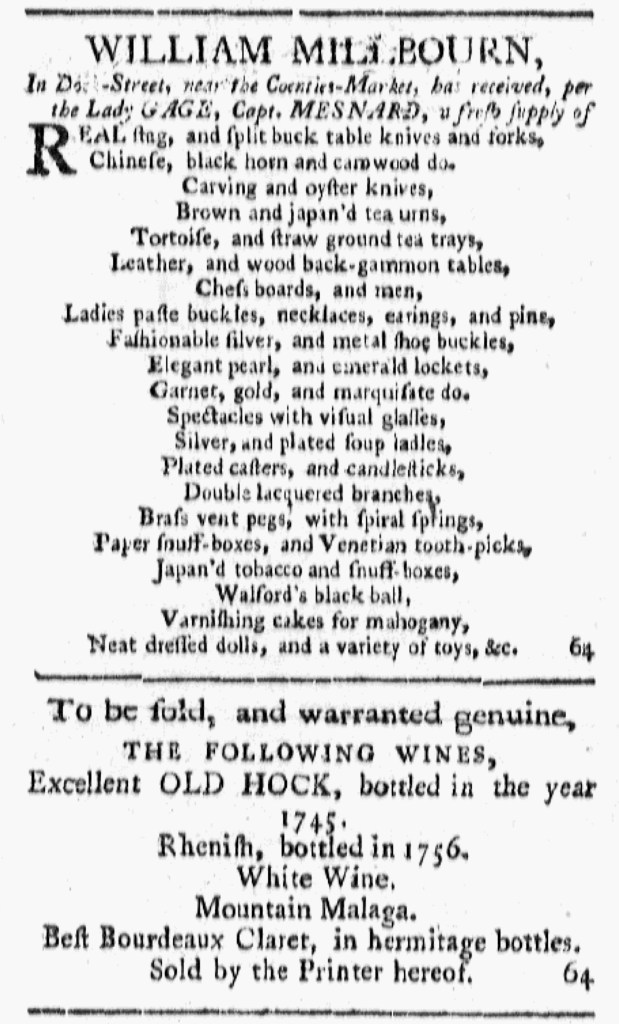
“Fashionable silver, and metal shoe buckles.”

Like other merchants and shopkeepers who advertised imported goods for sale in the July 7, 1774, edition of Rivington’s New-York Gazetteer, William Millbourn listed many of his wares to give consumers a sense of the array of choices available to them.  Yet Millbourn’s advertisement had a different format than most others in that issue.  In the process of giving an inventory of everything from “Carving and oyster knives” to “Chess boards, and men” to “Paper snuff-boxes, and Venetian tooth-picks” to “neat dressed dolls, and a variety of toys,” he named only two or three related items on each line and centered each line.  That gave Millbourn’s advertisement a distinctive appearance with white space on the left and right, ebbing and flowing depending on the length of each line.

Other advertisers deployed other design elements to draw attention to their notices.  James Webb adorned his advertisement for “FRENCH BURR MILL-STONES” with a woodcut depicting a millstone.  Others used headlines in much larger font than the rest of their copy, such as “MUSIC,” “BULL-BAITING,” “NEW RICE,” and “CHINA, GLASS, AND Earthen Ware.”  Below their headline for “IRISH LINENS,” Woodward and Kip gave descriptions in two columns, including “Purple, blue and red copperplate furniture calicoes” and “Black, blue, brown, green, yellow, straw-colour, crimson, garnet, pink and purple moreens.”  Most entries ran two or more lines, with the second and subsequent lines indented and all lines justified on the right.  The indentations introduced some white space into what would have been a dense paragraph, the method that John Haydock used for listing his wares.  Still, the format of Millbourn’s advertisement included much more white space than most others.  He likely submitted instructions concerning how he wished his advertisement to appear along with the copy.

The compositor, either James Rivington himself or someone working in his printing office, apparently liked the look of Millbourn’s advertisement and decided to apply it to a notice about “THE FOLLOWING WINES … Sold by the Printer hereof.”  Both had their initial appearance in the July 7 edition, the advertisement for wine running immediately below Millbourn’s notice.  That suggests that the compositor set the type for one right after the other.  Rather than competing with Millbourn’s advertisement, the second advertisement may have helped focus attention on both notices by extending the unusual use of white space, especially since paragraphs with little white space ran on the right and left as well as above and below.  The distinctiveness of the format had the potential to incite curiosity, increasing the chances that readers engaged with Millbourn’s advertisement.

July 9

What was advertised in a colonial American newspaper 250 years ago today?

Providence Gazette (July 9, 1774).

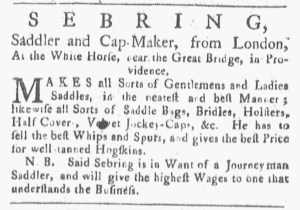
“MAKES all Sorts of Gentlemens and Ladies Saddles, in the neatest and best Manner.”

John Sebring, a “Saddler and Cap-Maker, from London,” once again took to the pages of the Providence Gazette in the summer of 1774.  As had been his practice in the past, he deployed solely his last name as a headline for his advertisement, presumably believing that a mononym gave him greater cachet with prospective customers.  He declared that he “MAKES all Sorts of Gentlemens and Ladies Saddles, in the neatest and best Manner” as well as “all Sorts of Saddle Bags, Bridles, Holsters, Half Covers, Velvet Jockey-Caps,” and other items.  He intended for readers to associate quality with the name Sebring.

In addition to the mononym, Sebring apparently believed that his experience in London enhanced the image he presented to the public, though it had been some time since he resided and worked in that cosmopolitan center of the empire.  When they proclaimed that they were “from London,” artisans often linked those origins to superior training or more intimate knowledge of current styles or both.  Sebring did in his previous newspaper notices.  By the time he placed his advertisement in the July 9, 1774, edition of the Providence Gazette, however, he had been in that town for at least twenty months.  That may have caused him to place less emphasis on his supposed knowledge of London fashions.  In previous advertisements, he used the phrase “newest Fashion” to describe the saddles and other items he made in his workshop “At the White Horse, near the Great Bridge,” implying that his connections to London gave him insight into the latest styles there.  He even included the phrase twice in a notice he ran the previous summer.  In this advertisement, however, he focused on quality instead of (rather than in addition to) fashion.  Perhaps Sebring realized that many prospective customers knew he had not worked in London recently so his familiarity with the styles there came secondhand.  The training and experience he gained in London, however, did not change as time passed, making it worthwhile to continue to remind prospective customers of his origins.

Slavery Advertisements Published July 9, 1774

The Slavery Adverts 250 Project chronicles the role of newspaper advertising in perpetuating slavery in the era of the American Revolution. The project seeks to reveal the ubiquity of slavery in eighteenth-century life from New England to Georgia by republishing advertisements about enslaved people – for sale as individuals or in groups, wanted to purchase or for hire for short periods, runaways who liberated themselves, and those who were subsequently captured and confined in jails and workhouses – in daily digests on this site as well as in real time via the @SlaveAdverts250 Twitter feed, utilizing twenty-first-century media to stand in for the print media of the eighteenth century.

The project aims to provide modern audiences with a sense of just how often colonizers encountered these advertisements in their daily lives. Enslaved men, women, and children appeared in print somewhere in the colonies almost every single day. Those advertisements served as a constant backdrop for social, cultural, economic, and political life in colonial and revolutionary America. Colonizers who did not purport to own enslaved people were still confronted with slavery as well as invited to maintain the system by purchasing enslaved men, women, and children or assisting in the capture of so-called “runaways” who sought to free themselves from bondage. The frequency of these newspaper advertisements suggests just how embedded slavery was in colonial and revolutionary American culture in everyday interactions beyond the printed page.

These advertisements also testify to the experiences of enslaved men, women, and children, though readers must consider that those experiences have been remediated through descriptions offered by enslavers rather than enslaved people themselves. Often unnamed in the advertisements, enslaved men, women, and children were not invisible or unimportant in early America.

These advertisements appeared in colonial American newspapers 250 years ago today.

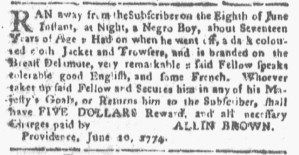
Providence Gazette (July 9, 1774).