July 8

What was advertised in a colonial American newspaper 250 years ago today?
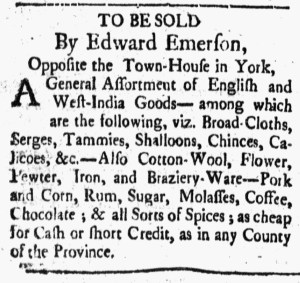
New-Hampshire Gazette (July 8, 1774).

“Molasses, Coffee, Chocolate; & all Sorts of Spices.”

In the summer of 1774, Edward Emerson advertised that he sold a “General Assortment of English and West-India Goods” at his shop “Opposite the Town-House” in York.  At the time, his town, about ten miles northeast of Portsmouth, New Hampshire, was in that portion of Massachusetts that eventually became Maine in 1820.  When Emerson declared that he set prices “as cheap … as in any County of the Province” in the New-Hampshire Gazette, the local newspaper for York, he left it to readers to decide if he made the comparison to Massachusetts or New Hampshire or both.

Emerson likely considered current events in both colonies important in determining how to present his business in the public prints, making it notable that among the groceries he stocked he listed “Pork and Corn, Rum, Sugar, Molasses, Coffee, Chocolate: & all Sorts of Spices,” but not tea.  Merchants and shopkeepers who advertised coffee and chocolate very often promoted tea at the same time, though many had stopped doing so following the Boston Tea Party in December 1773.  Emerson had been no stranger to selling tea in the past, including “TEA by the dozen or smaller quantity” along with “Coffee, Chocolate, and all sorts of Spices” in February 1771 and “Bohea TEA, and all sorts of GROCERIES” in July 1772.  Yet tea had become a much more problematic commodity in recent months …

… so problematic that that Daniel Fowle, the printer of the New-Hampshire Gazette, devoted the entire front page of the July 8, 1774, edition to reporting on “TWENTY-SEVEN Chests of India TEA … consigned to Mr. Parry” and landed in Portsmouth “before it was in fact generally known that any Tea had arrived in the ship.”  The coverage documented the “peaceable and prudent conduct of the inhabitants of Portsmouth” in the face of this crisis, their actions almost certainly influenced by the repercussions that Boston faced following the destruction of the tea there.  At a town meeting, “a committee of eleven respectable inhabitants, were elected to treat with the consignee, and to deliberate what would be most expedient to be done in a cause of so much difficulty and intricacy.”  They also voted to establish “a watch of twenty-five men … to take care and secure the tea” and prevent disorder and disturbances until the committee could devise a method to remove the tea from Portsmouth.  Just as they sought to avoid destroying the tea, they realized that they could not allow any of it to be sold due to “the dependence state of this town and province upon our sister colonies, even for necessary supplies, which would undoubtedly and justly be denied” should they “suffer the sale and consumption of said Tea.”  Once the tea had been safely sent away, the town meeting voted to create “a committee of Inspection to examine and find out if any Tea is imported here” and another committee to draft a measure “against the importation, use, consumption or sale of all Teas, in this town while the same are subject to a duty.”

Given the circumstances, Emerson made a savvy decision not to market tea in his advertisement in the New-Hampshire Gazette.  Not all merchants and shopkeepers refrained from advertising and selling tea at the time, but many decided to discontinue trading that commodity even before boycotts officially went into effect.
Slavery Advertisements Published July 8, 1774

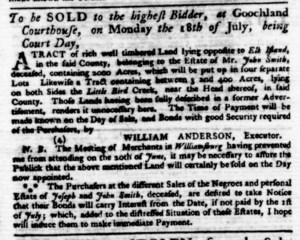
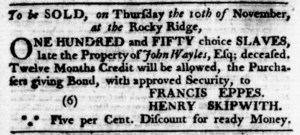
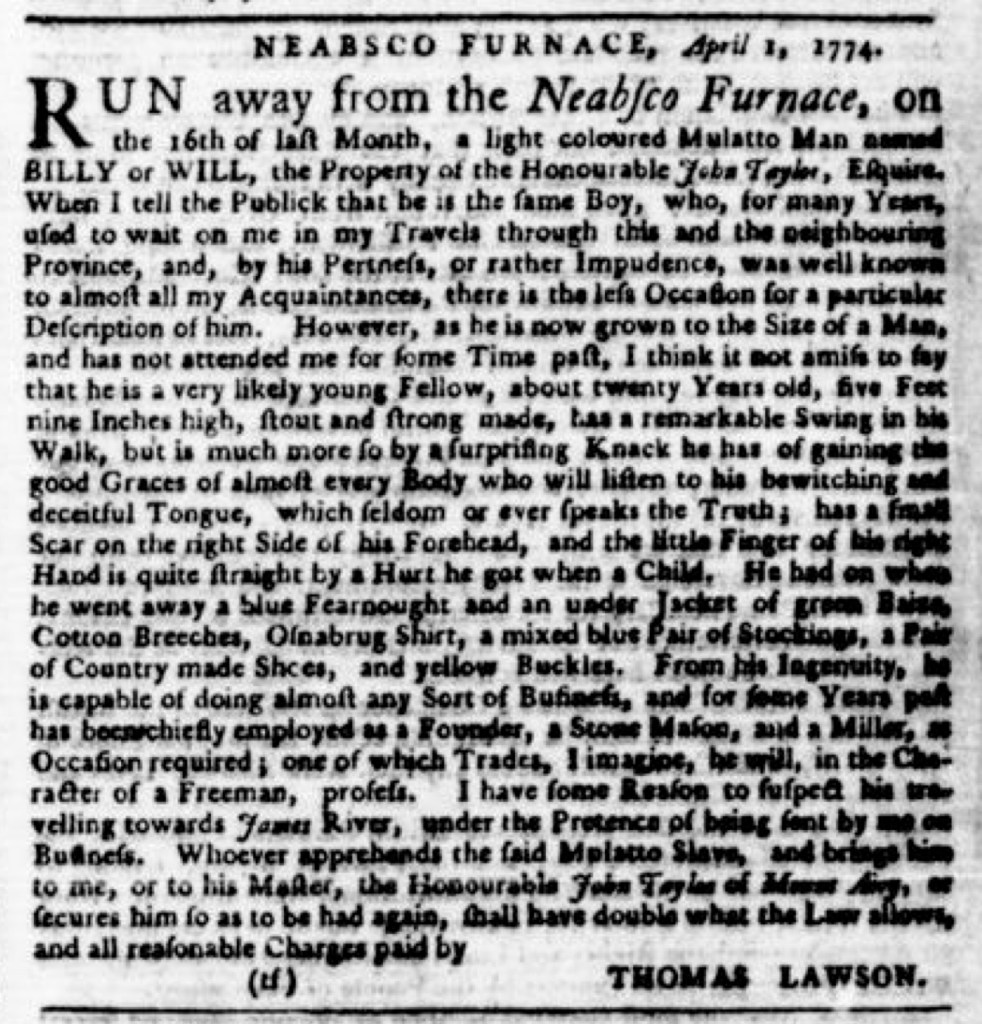
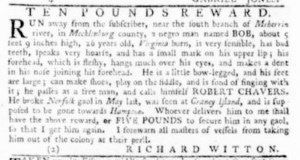
The Slavery Adverts 250 Project chronicles the role of newspaper advertising in perpetuating slavery in the era of the American Revolution. The project seeks to reveal the ubiquity of slavery in eighteenth-century life from New England to Georgia by republishing advertisements about enslaved people – for sale as individuals or in groups, wanted to purchase or for hire for short periods, runaways who liberated themselves, and those who were subsequently captured and confined in jails and workhouses – in daily digests on this site as well as in real time via the @SlaveAdverts250 Twitter feed, utilizing twenty-first-century media to stand in for the print media of the eighteenth century.

The project aims to provide modern audiences with a sense of just how often colonizers encountered these advertisements in their daily lives. Enslaved men, women, and children appeared in print somewhere in the colonies almost every single day. Those advertisements served as a constant backdrop for social, cultural, economic, and political life in colonial and revolutionary America. Colonizers who did not purport to own enslaved people were still confronted with slavery as well as invited to maintain the system by purchasing enslaved men, women, and children or assisting in the capture of so-called “runaways” who sought to free themselves from bondage. The frequency of these newspaper advertisements suggests just how embedded slavery was in colonial and revolutionary American culture in everyday interactions beyond the printed page.

These advertisements also testify to the experiences of enslaved men, women, and children, though readers must consider that those experiences have been remediated through descriptions offered by enslavers rather than enslaved people themselves. Often unnamed in the advertisements, enslaved men, women, and children were not invisible or unimportant in early America.

These advertisements appeared in colonial American newspapers 250 years ago today.

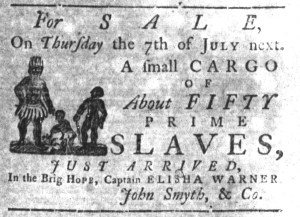
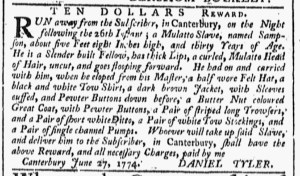
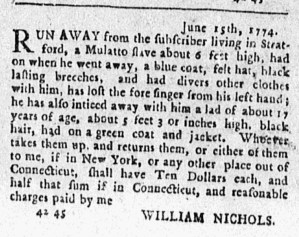
Connecticut Gazette (July 8, 1774).

**********

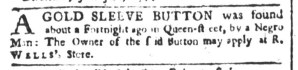
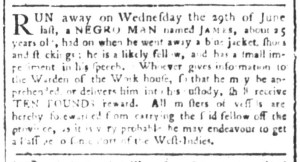
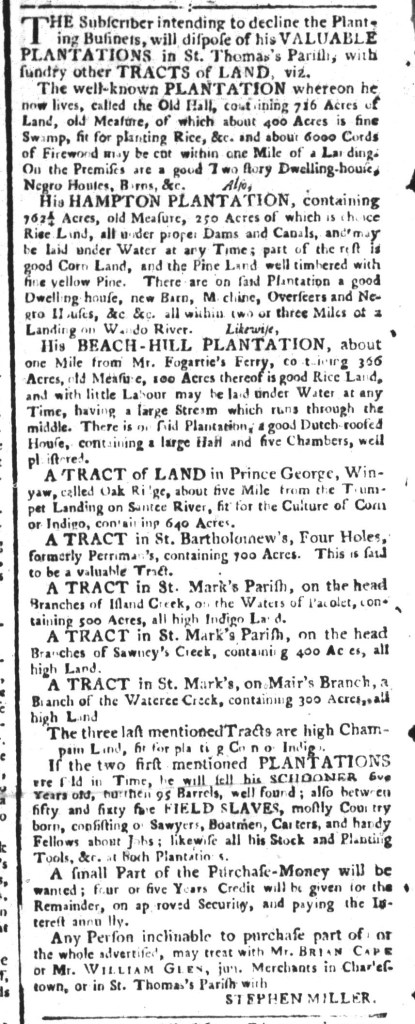
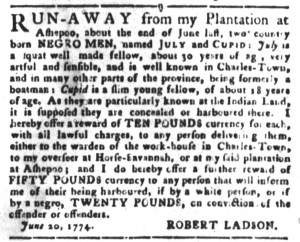
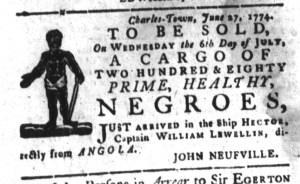
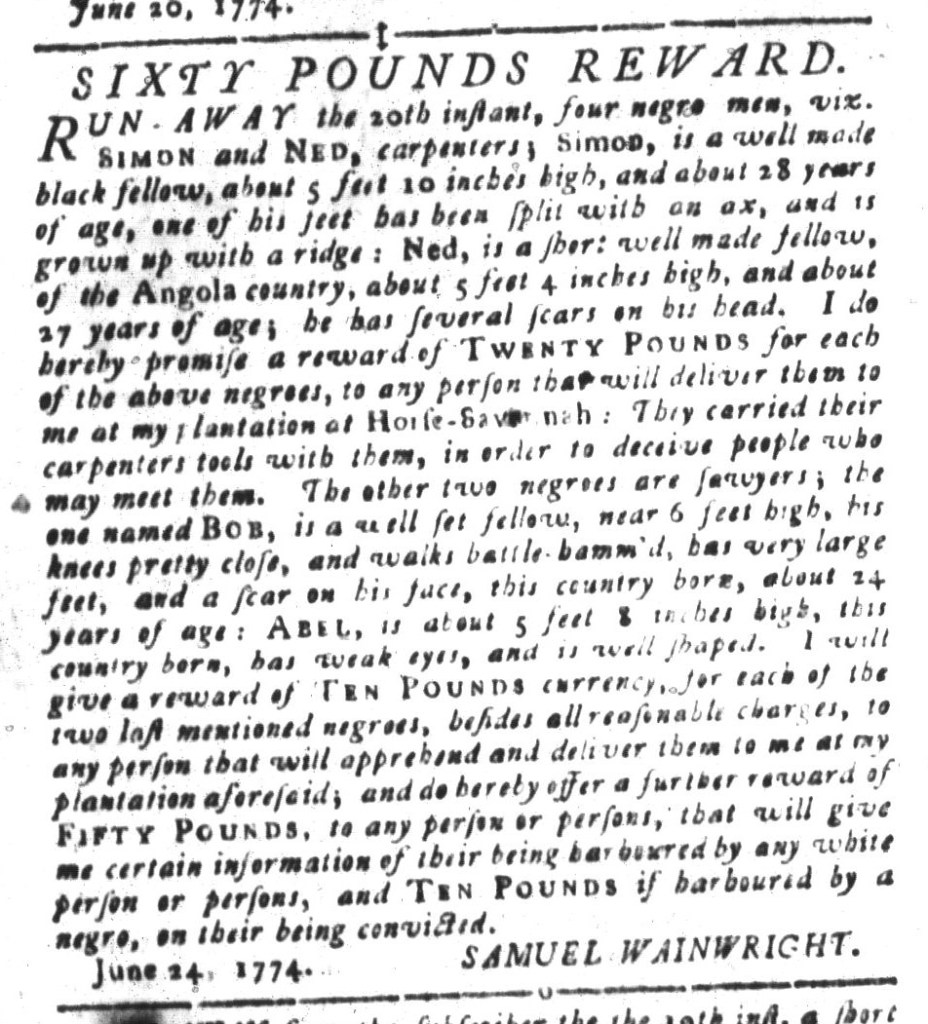
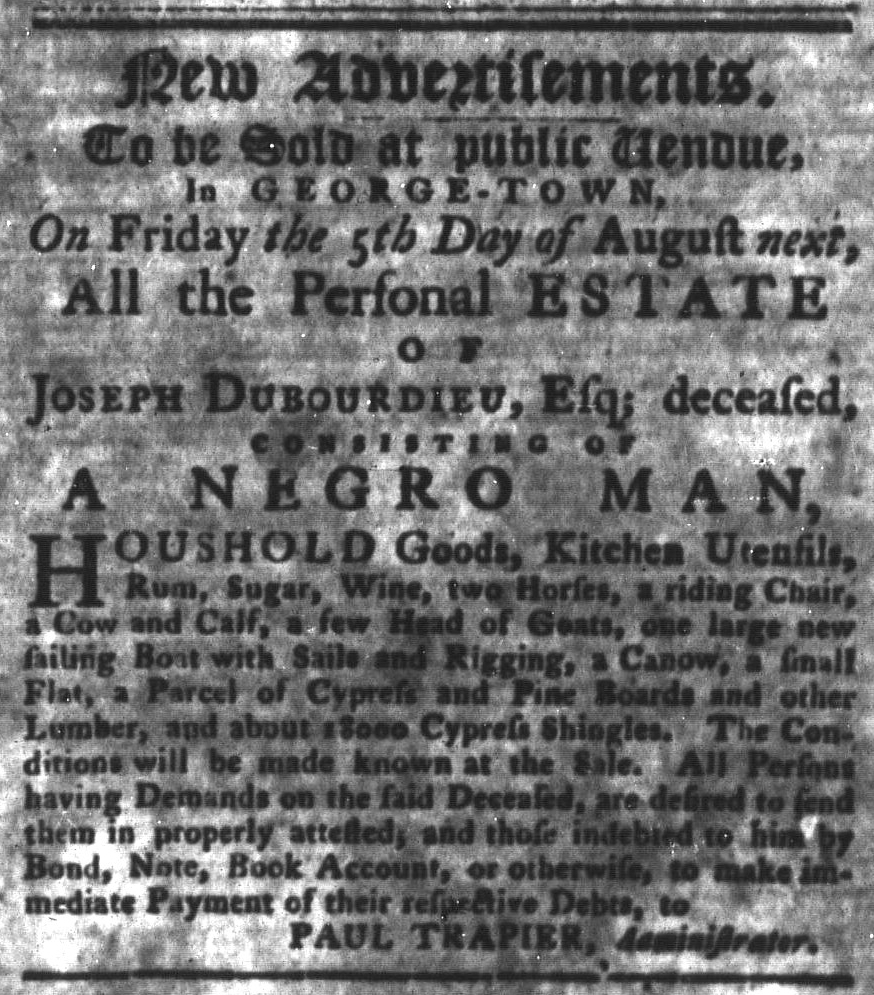
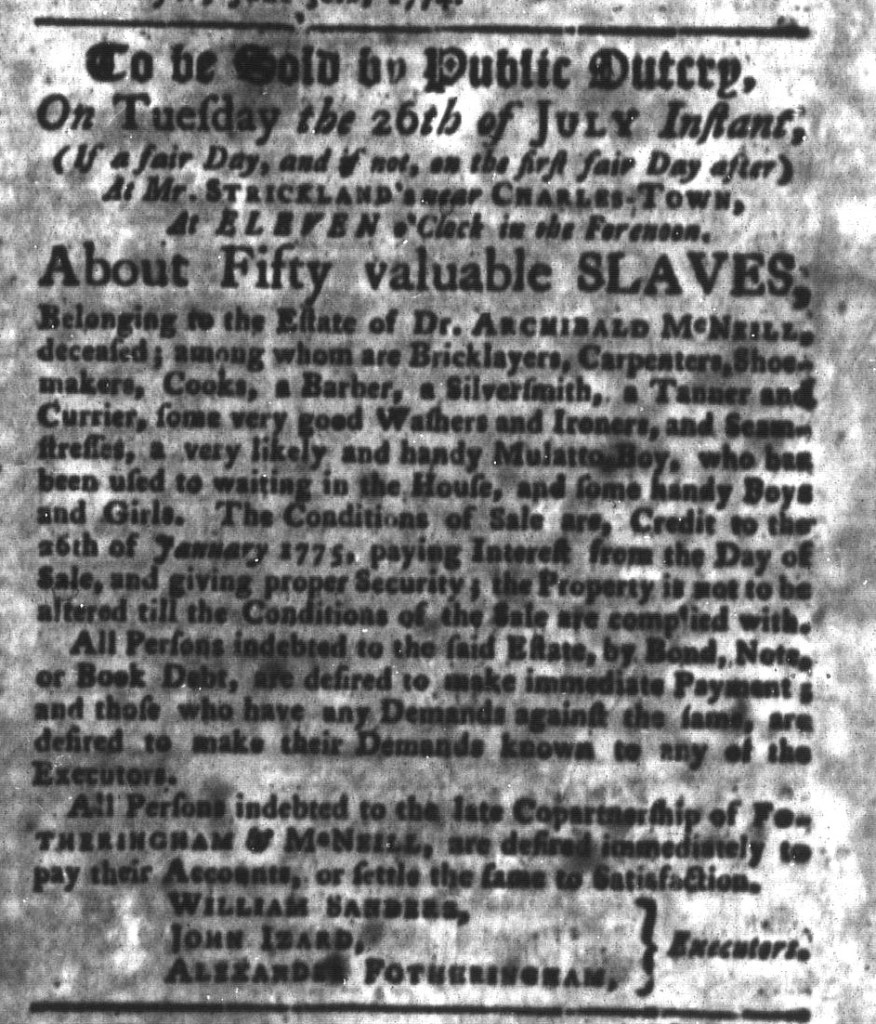
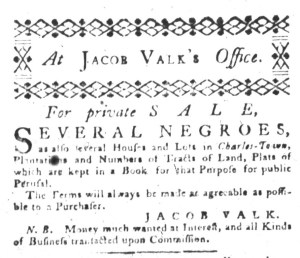
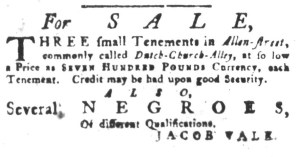
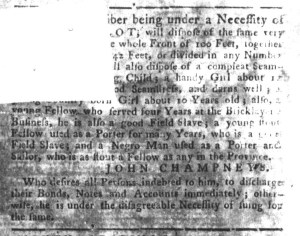
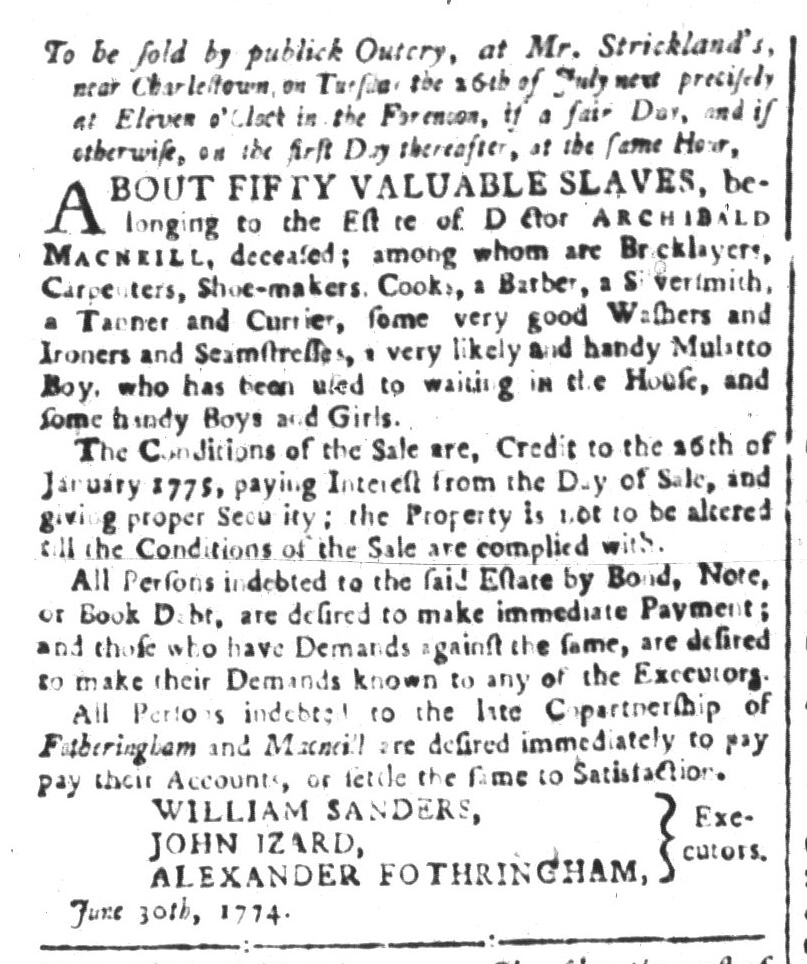
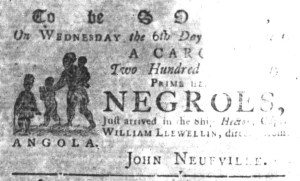
South-Carolina and American General Gazette (July 8, 1774).

**********

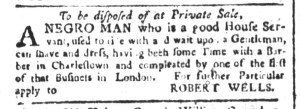
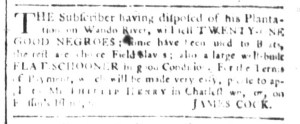
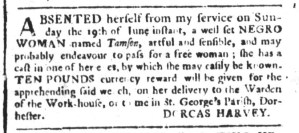
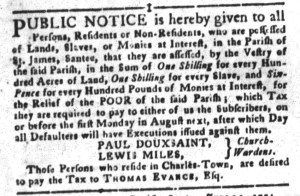
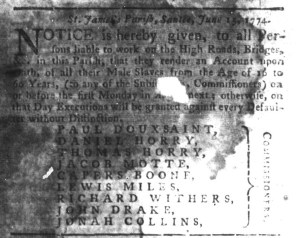
South-Carolina and American General Gazette (July 8, 1774).

**********

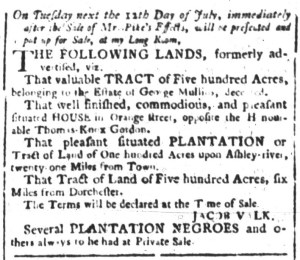
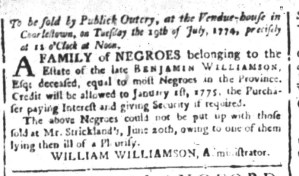
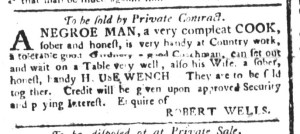
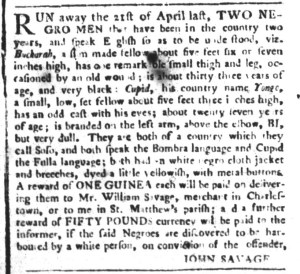
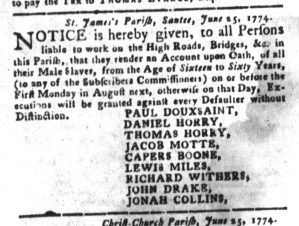
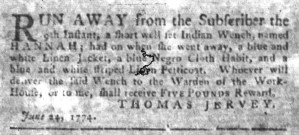
South-Carolina and American General Gazette (July 8, 1774).

**********

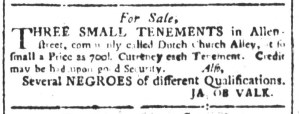
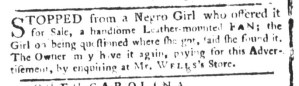
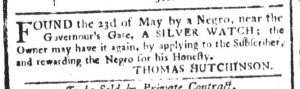
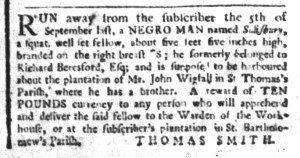
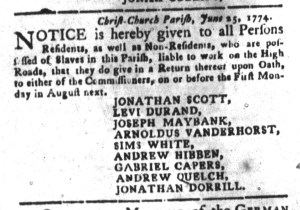
South-Carolina and American General Gazette (July 8, 1774).

**********

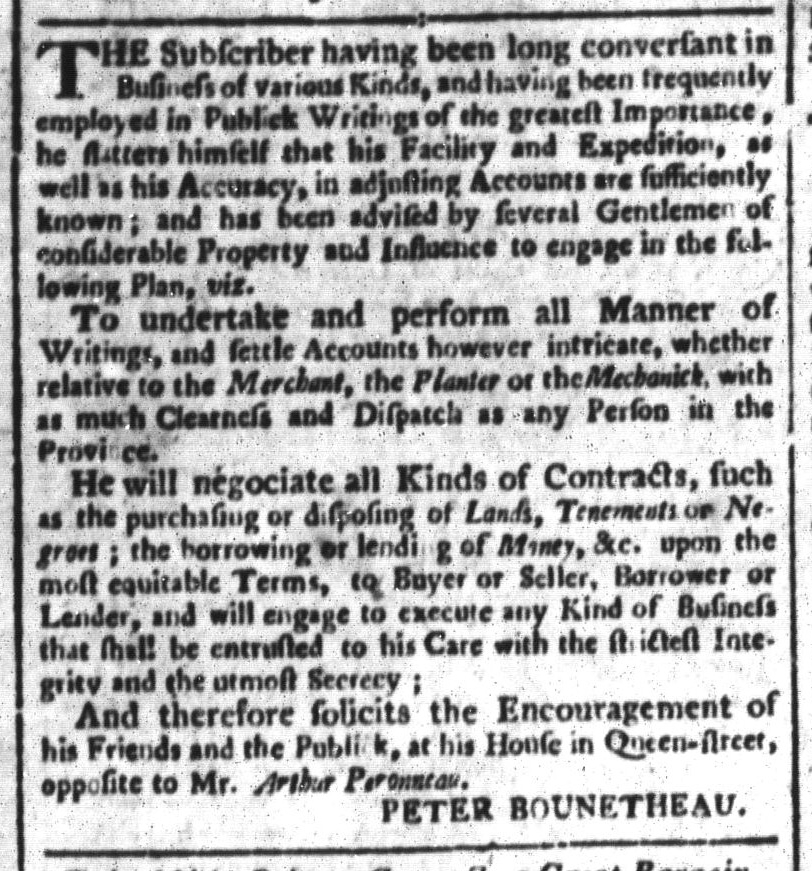
South-Carolina and American General Gazette (July 8, 1774).

**********

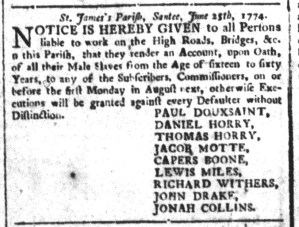
South-Carolina and American General Gazette (July 8, 1774).

**********

South-Carolina and American General Gazette (July 8, 1774).

**********

South-Carolina and American General Gazette (July 8, 1774).

**********

South-Carolina and American General Gazette (July 8, 1774).

**********

South-Carolina and American General Gazette (July 8, 1774).

**********

South-Carolina and American General Gazette (July 8, 1774).

**********

South-Carolina and American General Gazette (July 8, 1774).

**********

South-Carolina and American General Gazette (July 8, 1774).

**********

South-Carolina and American General Gazette (July 8, 1774).

**********

South-Carolina and American General Gazette (July 8, 1774).

**********

South-Carolina and American General Gazette (July 8, 1774).

**********

South-Carolina and American General Gazette (July 8, 1774).

**********

South-Carolina and American General Gazette (July 8, 1774).

**********

South-Carolina and American General Gazette (July 8, 1774).

**********

South-Carolina and American General Gazette (July 8, 1774).

**********

South-Carolina and American General Gazette (July 8, 1774).

**********

South-Carolina and American General Gazette (July 8, 1774).

**********

South-Carolina and American General Gazette (July 8, 1774).

**********

South-Carolina and American General Gazette (July 8, 1774).

**********

South-Carolina and American General Gazette (July 8, 1774).

**********

South-Carolina and American General Gazette (July 8, 1774).

**********

South-Carolina and American General Gazette (July 8, 1774).

**********

South-Carolina and American General Gazette (July 8, 1774).

July 7

What was advertised in a colonial American newspaper 250 years ago today?

Massachusetts Spy (July 7, 1774).

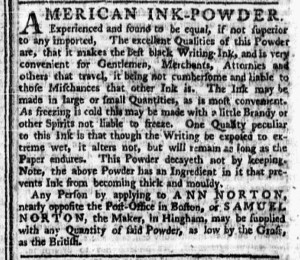
“AMERICAN INK-POWDER.”

In an advertisement in the July 7, 1774, edition of the Massachusetts Gazette, Ann Norton of Boston and Samuel Norton of Hingham heralded “AMERICAN INK-POWDER” made by Samuel.  They encouraged “Gentlemen, Merchants, Attornies and others that travel” to purchase this product “found to be equal, if not superior to any imported.”  Most of the advertisement described the various qualities of the ink powder that made it better than imported alternatives.  As colonizers in Boston and other towns considered enacting nonimportation agreements to protest the Boston Port Act, entrepreneurs like the Nortons seized the opportunity to present “domestic manufactures” or goods produced in the colonies as patriotic choices for consumers.  On the same page as the Nortons’ advertisement for “AMERICAN INK-POWDER,” Philip Freeman once again ran his notice asserting that “we can manufacture enough [gloves] here, to supply the whole Continent” and recommending that “the importation of this article at least will be totally stopped” during such “threatning” times.

Both advertisements ran in a newspaper that featured a new addition to its masthead: a snake in several segments facing a dragon.  The words “JOIN OR DIE” appeared above the snake and abbreviations for New England and other colonies accompanied each segment.  Readers understood that the snake represented the colonies and the dragon represented Great Britain.  As Isiah Thomas, the printer of the Massachusetts Spy, explained in his History of Printing in America(1810), “The head and tail of the snake were supplied with stings, for defence against the dragon, which appeared furious, and as bent on attacking the snake.”[1]  It was a more elaborate version of the “JOIN, OR DIE” emblem that ran in Benjamin Franklin’s Pennsylvania Gazette twenty years earlier and the “UNITE OR DIE” emblem added to the masthead of the New-York Journal just two weeks earlier.  With this image, Thomas made the threat to American liberty explicit with the addition of the dragon.  That “political device,” as Thomas called it, joined a quotation from Joseph Addison’s Cato that had been part of the masthead for many months: “DO THOU Great LIBERTY inspire our Souls – And make our Lives in THY Possession happy – Or, our Deaths glorious in THY just Defence.”  An assertion that the Massachusetts Spy was “Open to ALL Parties, but Influenced by None” disappeared from the masthead.  The combination of the quotation from Cato and the “political device” made the editorial perspective of the newspaper clear.  Thomas ceased publishing the Massachusetts Spy in Boston and left the city in April 1775 and soon after established the Massachusetts Spy; or, American Oracle of Liberty in Worcester.  Throughout the remainder of the newspaper’s publication in Boston, the snake defending itself against the dragon was part of the masthead, setting the tone for all the news, editorials, and advertisements that appeared below.
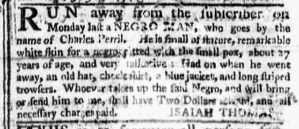
Massachusetts Spy (July 7, 1774).

**********

[1] Isaiah Thomas, The History of Printing in America: With a Biography of Printers and an Account of Newspapers (1810; New York: Weathervane Books, 1970), 273.

Slavery Advertisements Published July 7, 1774

The Slavery Adverts 250 Project chronicles the role of newspaper advertising in perpetuating slavery in the era of the American Revolution. The project seeks to reveal the ubiquity of slavery in eighteenth-century life from New England to Georgia by republishing advertisements about enslaved people – for sale as individuals or in groups, wanted to purchase or for hire for short periods, runaways who liberated themselves, and those who were subsequently captured and confined in jails and workhouses – in daily digests on this site as well as in real time via the @SlaveAdverts250 Twitter feed, utilizing twenty-first-century media to stand in for the print media of the eighteenth century.

The project aims to provide modern audiences with a sense of just how often colonizers encountered these advertisements in their daily lives. Enslaved men, women, and children appeared in print somewhere in the colonies almost every single day. Those advertisements served as a constant backdrop for social, cultural, economic, and political life in colonial and revolutionary America. Colonizers who did not purport to own enslaved people were still confronted with slavery as well as invited to maintain the system by purchasing enslaved men, women, and children or assisting in the capture of so-called “runaways” who sought to free themselves from bondage. The frequency of these newspaper advertisements suggests just how embedded slavery was in colonial and revolutionary American culture in everyday interactions beyond the printed page.

These advertisements also testify to the experiences of enslaved men, women, and children, though readers must consider that those experiences have been remediated through descriptions offered by enslavers rather than enslaved people themselves. Often unnamed in the advertisements, enslaved men, women, and children were not invisible or unimportant in early America.

These advertisements appeared in colonial American newspapers 250 years ago today.

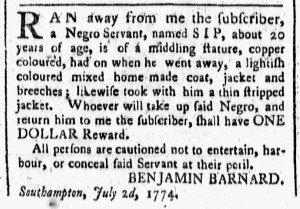
Maryland Gazette (July 7, 1774).

**********

Maryland Gazette (July 7, 1774).

**********

Maryland Gazette (July 7, 1774).

**********

Maryland Gazette (July 7, 1774).

**********

Massachusetts Gazette and Boston Weekly News-Letter (July 7, 1774).

**********

Massachusetts Gazette and Boston Weekly News-Letter (July 7, 1774).

**********

Massachusetts Spy (July 7, 1774).

**********

Supplement to the New-York Journal (July 7, 1774).

**********

Norwich Packet (July 7, 1774).

**********

Virginia Gazette [Purdie and Dixon] (July 7, 1774).

**********

Virginia Gazette [Purdie and Dixon] (July 7, 1774).

**********

Virginia Gazette [Purdie and Dixon] (July 7, 1774).

**********

Virginia Gazette [Purdie and Dixon] (July 7, 1774).

**********

Virginia Gazette [Purdie and Dixon] (July 7, 1774).

**********

Virginia Gazette [Purdie and Dixon] (July 7, 1774).

**********

Virginia Gazette [Purdie and Dixon] (July 7, 1774).

**********

Virginia Gazette [Purdie and Dixon] (July 7, 1774).

**********

Virginia Gazette [Purdie and Dixon] (July 7, 1774).

**********

Virginia Gazette [Rind] (July 7, 1774).

**********

Virginia Gazette [Rind] (July 7, 1774).

**********

Virginia Gazette [Rind] (July 7, 1774).

**********

Virginia Gazette [Rind] (July 7, 1774).

**********

Virginia Gazette [Rind] (July 7, 1774).

**********

Virginia Gazette [Rind] (July 7, 1774).

July 6

What was advertised in a colonial American newspaper 250 years ago today?

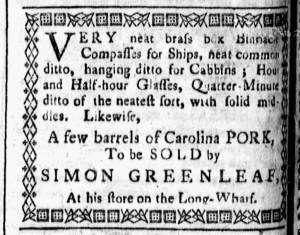
Essex Journal (July 6, 1774).

“Hour and Half-hour Glasses … of the neatest sort.”

Simon Greenleaf advertised “VERY neat brass box Binnacle Compasses for Ships” and hourglasses “of the neatest sort” for sale at his store “on the Long-Wharf” in Newburyport in the summer of 1774.  He also hawked a “few barrels of Carolina PORK” in his advertisement in the Essex Journal.  Readers likely considered the decorative border that enclosed Greenleaf’s notice the most distinctive aspect of his marketing efforts.  It certainly distinguished his notice from the other advertisements in the July 6 edition and had done so since its first appearance on June 22.

Greenleaf apparently made a request when he submitted his copy to the printing office or met with the printer, Henry-Walter Tinges, to work out an arrangement for this enhancement to his advertisement.  Tinges and Isaiah Thomas commenced publication of the Essex Journal seven months earlier, with Tinges running the printing office in Newburyport while Thomas continued publishing the Massachusetts Spy in Boston.  Had Thomas overseen the Essex Journal, Greenleaf might not have managed to have the border included in his advertisement.  In the past, Thomas seemingly had not been amenable to such flourishes in the Massachusetts Spy, even when advertisers managed to have borders included with their notices published simultaneously in other newspapers.  Ultimately, graphic design depended not only on the imagination of advertisers and compositors but also the preferences of printers who published colonial newspapers.
For the Essex Journal, Greenleaf’s advertisement was a milestone.  It was the first that incorporated decorative type.  Tinges had experiments with using ornaments to as dividers between news items and in the headline for the “POETS-CORNER” on the final page of the newspaper.  Occasionally, he placed the first letter of the first word in an article or letter within a decorative border, but this was the first time that a border enclosed any content, whether news or advertising.  In addition, Tinges did not provide any of the common stock images, such as ships or houses, for the use of advertisers.  Throughout the publication of the Essex Gazette to that point, the only visual images appeared in the masthead, the coat of arms of the colony on the left of the title and a packet ship on the right.  That made Greenleaf’s advertisement even more noteworthy and memorable when readers encountered it since its appearance differed from anything else in that newspaper.

Slavery Advertisements Published July 6, 1774

The Slavery Adverts 250 Project chronicles the role of newspaper advertising in perpetuating slavery in the era of the American Revolution. The project seeks to reveal the ubiquity of slavery in eighteenth-century life from New England to Georgia by republishing advertisements about enslaved people – for sale as individuals or in groups, wanted to purchase or for hire for short periods, runaways who liberated themselves, and those who were subsequently captured and confined in jails and workhouses – in daily digests on this site as well as in real time via the @SlaveAdverts250 Twitter feed, utilizing twenty-first-century media to stand in for the print media of the eighteenth century.

The project aims to provide modern audiences with a sense of just how often colonizers encountered these advertisements in their daily lives. Enslaved men, women, and children appeared in print somewhere in the colonies almost every single day. Those advertisements served as a constant backdrop for social, cultural, economic, and political life in colonial and revolutionary America. Colonizers who did not purport to own enslaved people were still confronted with slavery as well as invited to maintain the system by purchasing enslaved men, women, and children or assisting in the capture of so-called “runaways” who sought to free themselves from bondage. The frequency of these newspaper advertisements suggests just how embedded slavery was in colonial and revolutionary American culture in everyday interactions beyond the printed page.

These advertisements also testify to the experiences of enslaved men, women, and children, though readers must consider that those experiences have been remediated through descriptions offered by enslavers rather than enslaved people themselves. Often unnamed in the advertisements, enslaved men, women, and children were not invisible or unimportant in early America.

These advertisements appeared in colonial American newspapers 250 years ago today.

Essex Journal (July 6, 1774).

**********

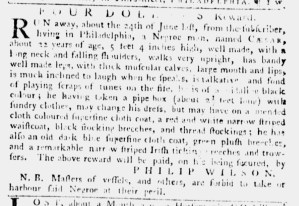
Pennsylvania Gazette (July 6, 1774).

**********

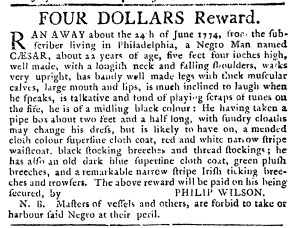
Pennsylvania Gazette (July 6, 1774).

**********

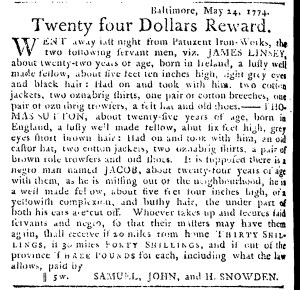
Pennsylvania Journal (July 6, 1774).

**********

Pennsylvania Journal (July 6, 1774).

**********

Pennsylvania Journal (July 6, 1774).

July 5

What was advertised in a colonial American newspaper 250 years ago today?

South-Carolina Gazette and Country Journal (July 5, 1774).

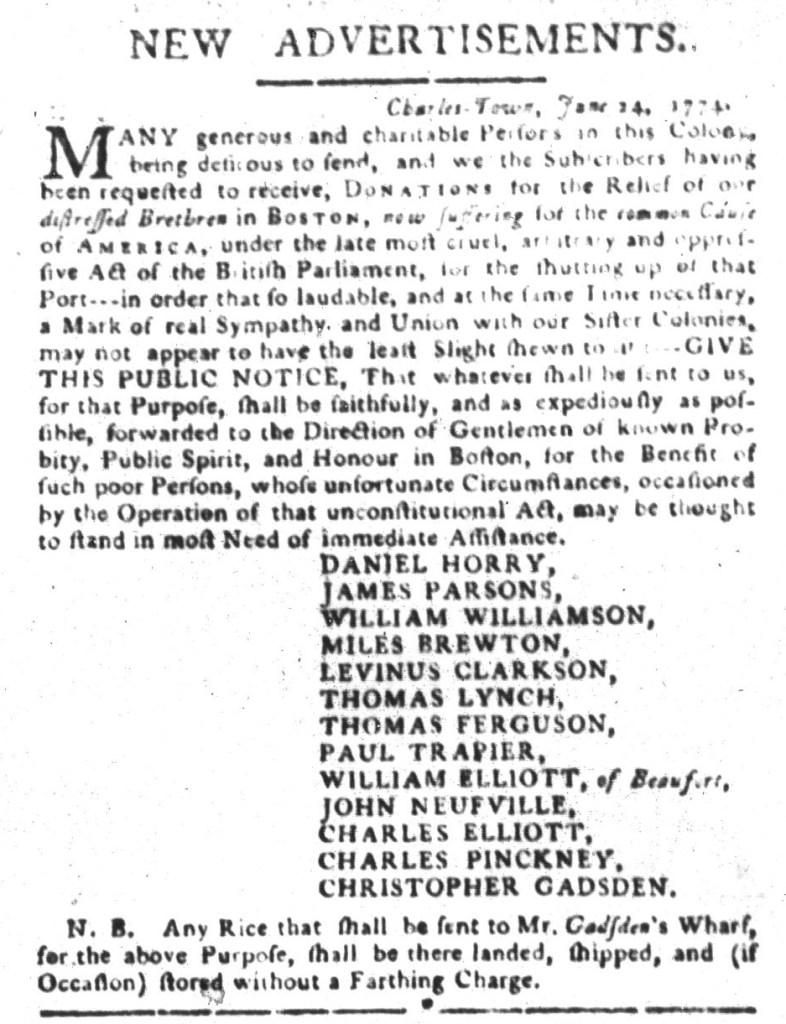
“DONATIONS for the Relief of our distressed Brethren in BOSTON, now suffering for the common Cause of AMERICA.”

Parliament intended to punish Boston when it closed and blockaded the harbor, effective June 1, 1774, as punishment for the destruction of the tea the previous December, yet colonizers from New England to Georgia protested what some described as “that unconstitutional Act.”  The Boston Port Act halted trade in what had been a bustling port city.  In early July, a dozen prominent residents of Charleston and other towns in South Carolina published an advertisement that outlined their plans to send aid to Massachusetts.  They described how “MANY generous and charitable Persons in this Colony” were “desirous to send … DONATIONS for the Relief of our distressed Brethren in BOSTON, now suffering for the common Cause of AMERICA.”  Parliament had miscalculated if it believed that other colonies would not react to the Boston Port Act and the other Coercive Acts.  As many colonizers mobilized to protest, contemplating measures that included nonimportation agreements, some directed their attention to assisting the people of Boston whose patriotic spirit put them in the position of enduring Parliament’s retribution.  Bostonians had acted in the interests of all colonizers, so they had earned the support of colonizers near and far.

The committee that collected donations in Charleston described the Boston Port Act as the “most cruel, arbitrary and oppressive Act of the British Parliament.”  As they explained in their advertisement, it prompted them to organize a “laudable” and “necessary” plan to collect donations “for the Benefit of such poor Persons, whose unfortunate Circumstances, occasioned by the Operation of that unconstitutional Act, may be through to stand in most Need of immediate Assistance.”  The committee encouraged other to participate in this endeavor as “a Mark of real Sympathy and Union with our Sister colonies.”  They made that appeal at the same time that John Holt incorporated a “JOIN OR DIE” emblem into the masthead of the New-York Journal, another testament to belief in the “common cause of AMERICA.”  The committee pledged to “faithfully, and as expediously as possible” send donations to “Gentlemen of known Probity, Public Spirit, and Honour in Boston” to distribute as they deemed appropriate.  One member of the committee, Christopher Gadsden, even offered to store and ship rice donated in support of the people of Boston, likely hoping that gesture would inspire others to similar generosity.

News coverage of reactions to the Boston Port Act appeared elsewhere in the July 5 edition of the South-Carolina Gazette ad Country Journal, though the appeal from the committee ran among “NEW ADVERTISEMENTS.”  Throughout the imperial crisis, advertisements often relayed news and opinion that supplemented articles and editorials.  In this instance, the committee collecting aid for Boston made a forceful argument about politics and attempted to shape public opinion concerning current events.  Their advertisement bolstered commentary that readers encountered throughout the newspaper, not solely in the portion for “freshest Advices, both Foreign and Domestic” selected by the printer.

Slavery Advertisements Published July 5, 1774

The Slavery Adverts 250 Project chronicles the role of newspaper advertising in perpetuating slavery in the era of the American Revolution. The project seeks to reveal the ubiquity of slavery in eighteenth-century life from New England to Georgia by republishing advertisements about enslaved people – for sale as individuals or in groups, wanted to purchase or for hire for short periods, runaways who liberated themselves, and those who were subsequently captured and confined in jails and workhouses – in daily digests on this site as well as in real time via the @SlaveAdverts250 Twitter feed, utilizing twenty-first-century media to stand in for the print media of the eighteenth century.

The project aims to provide modern audiences with a sense of just how often colonizers encountered these advertisements in their daily lives. Enslaved men, women, and children appeared in print somewhere in the colonies almost every single day. Those advertisements served as a constant backdrop for social, cultural, economic, and political life in colonial and revolutionary America. Colonizers who did not purport to own enslaved people were still confronted with slavery as well as invited to maintain the system by purchasing enslaved men, women, and children or assisting in the capture of so-called “runaways” who sought to free themselves from bondage. The frequency of these newspaper advertisements suggests just how embedded slavery was in colonial and revolutionary American culture in everyday interactions beyond the printed page.

These advertisements also testify to the experiences of enslaved men, women, and children, though readers must consider that those experiences have been remediated through descriptions offered by enslavers rather than enslaved people themselves. Often unnamed in the advertisements, enslaved men, women, and children were not invisible or unimportant in early America.

These advertisements appeared in colonial American newspapers 250 years ago today.

Connecticut Courant (July 5, 1774).

**********

South-Carolina Gazette and Country Journal (July 5, 1774).

**********

South-Carolina Gazette and Country Journal (July 5, 1774).

**********

South-Carolina Gazette and Country Journal (July 5, 1774).

**********

South-Carolina Gazette and Country Journal (July 5, 1774).

**********

South-Carolina Gazette and Country Journal (July 5, 1774).

**********

South-Carolina Gazette and Country Journal (July 5, 1774).

**********

South-Carolina Gazette and Country Journal (July 5, 1774).

**********

South-Carolina Gazette and Country Journal (July 5, 1774).

**********

South-Carolina Gazette and Country Journal (July 5, 1774).

**********

South-Carolina Gazette and Country Journal (July 5, 1774).

**********

South-Carolina Gazette and Country Journal (July 5, 1774).

**********

South-Carolina Gazette and Country Journal (July 5, 1774).

**********

South-Carolina Gazette and Country Journal (July 5, 1774).

**********

South-Carolina Gazette and Country Journal (July 5, 1774).

July 4

Who was the subject of an advertisement in a colonial American newspaper 250 years ago today?

New-York Gazette and Weekly Mercury (July 4, 1774).

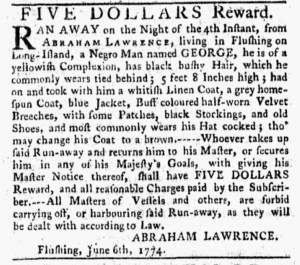
“RAN AWAY … a Negro Man named GEORGE.”

On June 4, 1774, a “Negro Man named GEORGE” liberated himself from his enslaver, Abraham Lawrence of “Flushing on Long-Island,” by running away.  In hopes of recovering George and returning him to slavery, Lawrence ran an advertisement in the New-York Gazette and Weekly Mercury.  It first appeared in the June 13 edition and continued for several issues, including the one published on July 4.  The enslaver hoped to enlist the aid of the public, offering “FIVE DOLLARS Reward” and providing a description of George so readers could identify him as they engaged in surveillance of Black men they encounter.  Lawrence also issued a standard warning: “All Masters of Vessels and others, are forbid carrying off, or harbouring said Run-away, as they will be dealt with according to Law.”  Already utilizing the power of the press, Lawrence was prepared to deploy the power of the state to return George to slavery and punish anyone who assisted this fugitive from slavery.

Lawrence’s description of George differed significantly from how George would have described himself, focusing on physical characteristics.  According to the enslaver, George “is of a yellowish Complexion, has black bushy Hair, which he commonly wears tied behind; 5 feet 8 Inches high.”  Lawrence did not indicate George’s approximate age, which language(s) he spoke, any skills he possessed or trades he followed, or whether he had been born in the colonies or Africa, nor did he mention any relations with other enslaved people.  Other advertisements often included such details.  Lawrence devoted the most attention to George’s clothing: “a whitish Linen Coat, a grey homespun Coat, blue Jacket, Buff coloured half-worn Velvet Breeches, with some Patches, black Stockings, and old Shoes.”  The enslaver reporter that George “most commonly wears his Hat cocked” and suspected that he “may change his Coat to a brown.”  In so doing, Lawrence acknowledged that George was clever, but condemned him for applying his intelligence to what the enslaver considered nefarious purposes.

Quite possibly, this may be the only trace of George that survives in the historical record, an account of his escape from slavery written not by himself but by an enslaver seeking his capture and return.  It tells an exceptionally truncated account of George’s life.  Despite the intentions of its author, this advertisement tells a story of courage, resilience, and resistance during the era of the American Revolution.  News coverage and editorials elsewhere in the July 4, 1774, edition of the New-York Gazette and Weekly Mercury focused on the imperial crisis, especially the aftermath of the Boston Port Act devised as punishment for the Boston Tea Party.  George may or may not have heard rumblings about that.  Either way, he made his own declaration of independence on June 4, 1774, much to the dismay of his enslaver.

For other stories of enslaved people liberating themselves originally published on July 4 during the era of the American Revolution, see:

Slavery Advertisements Published July 4, 1774

The Slavery Adverts 250 Project chronicles the role of newspaper advertising in perpetuating slavery in the era of the American Revolution. The project seeks to reveal the ubiquity of slavery in eighteenth-century life from New England to Georgia by republishing advertisements about enslaved people – for sale as individuals or in groups, wanted to purchase or for hire for short periods, runaways who liberated themselves, and those who were subsequently captured and confined in jails and workhouses – in daily digests on this site as well as in real time via the @SlaveAdverts250 Twitter feed, utilizing twenty-first-century media to stand in for the print media of the eighteenth century.

The project aims to provide modern audiences with a sense of just how often colonizers encountered these advertisements in their daily lives. Enslaved men, women, and children appeared in print somewhere in the colonies almost every single day. Those advertisements served as a constant backdrop for social, cultural, economic, and political life in colonial and revolutionary America. Colonizers who did not purport to own enslaved people were still confronted with slavery as well as invited to maintain the system by purchasing enslaved men, women, and children or assisting in the capture of so-called “runaways” who sought to free themselves from bondage. The frequency of these newspaper advertisements suggests just how embedded slavery was in colonial and revolutionary American culture in everyday interactions beyond the printed page.

These advertisements also testify to the experiences of enslaved men, women, and children, though readers must consider that those experiences have been remediated through descriptions offered by enslavers rather than enslaved people themselves. Often unnamed in the advertisements, enslaved men, women, and children were not invisible or unimportant in early America.

These advertisements appeared in colonial American newspapers 250 years ago today.

Boston Evening-Post (July 4, 1774).

**********

Boston-Gazette (July 4, 1774).

**********

Massachusetts Gazette and Boston Post-Boy (July 4, 1774).

**********

Newport Mercury (July 4, 1774).

**********

Newport Mercury (July 4, 1774).

**********

Newport Mercury (July 4, 1774).

**********

New-York Gazette and Weekly Mercury (July 4, 1774).

**********

New-York Gazette and Weekly Mercury (July 4, 1774).

**********

Supplement to the New-York Gazette and Weekly Mercury (July 4, 1774).

**********

Supplement to the New-York Gazette and Weekly Mercury (July 4, 1774).

**********

South-Carolina Gazette (July 4, 1774).

**********

South-Carolina Gazette (July 4, 1774).

**********

South-Carolina Gazette (July 4, 1774).

**********

South-Carolina Gazette (July 4, 1774).

**********

South-Carolina Gazette (July 4, 1774).

**********

South-Carolina Gazette (July 4, 1774).

**********

Supplement to the South-Carolina Gazette (July 4, 1774).

**********

Supplement to the South-Carolina Gazette (July 4, 1774).

**********

Supplement to the South-Carolina Gazette (July 4, 1774).

**********

Supplement to the South-Carolina Gazette (July 4, 1774).

**********

Supplement to the South-Carolina Gazette (July 4, 1774).

**********

Supplement to the South-Carolina Gazette (July 4, 1774).

**********

Supplement to the South-Carolina Gazette (July 4, 1774).

**********

Supplement to the South-Carolina Gazette (July 4, 1774).

**********

Supplement to the South-Carolina Gazette (July 4, 1774).

**********

Supplement to the South-Carolina Gazette (July 4, 1774).

**********

Supplement to the South-Carolina Gazette (July 4, 1774).

**********

Supplement to the South-Carolina Gazette (July 4, 1774).

**********

Supplement to the South-Carolina Gazette (July 4, 1774).

**********

Supplement to the South-Carolina Gazette (July 4, 1774).

**********

Supplement to the South-Carolina Gazette (July 4, 1774).