October 7

What was advertised in a colonial American newspaper 250 years ago today?
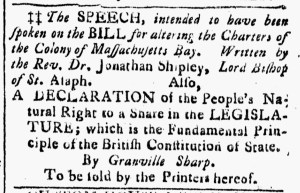
Connecticut Journal (October 7, 1774).

The SPEECH, intended to have been spoken on the BILL for altering the Charters of the Colony of Massachusetts Bay.”

Among the other advertisements that appeared in the October 7, 1774, edition of the Connecticut Journal and New-Haven Post-Boy, Thomas Green and Samuel Green inserted a notice for two political pamphlets “To be sold by the Printers hereof.”  They stocked “The SPEECH, intended to have been spoken on the BILL for altering the Charters of the Colony of Massachusetts Bay.  Written by the Rev. Dr. Jonathan Shipley, Lord Bishop of St. Asaph” as well as “A DECLARATION of the People’s Natural Right to Share in the LEGISLATURE; which is the Fundamental Principle of the British Constitution of State.  By Granville Sharp.”

Both pamphlets supported the American cause against abuses perpetrated by Parliament.  The first critiqued the Massachusetts Government Act, legislation that revoked the colony’s charter, gave greater authority to a governor appointed by the king, and prohibited town meetings without prior approval.  As a bishop of the Church of England, Shipley was a member of Parliament.  He intended to object to the Massachusetts Government Act, one of the Coercive Acts passed in retaliation for the Boston Tea Party, but was not allowed to deliver it.  Instead, he had it published.  Although it had little effect in England, the speech circulated widely and to great acclaim in the colonies.  In addition to imported editions sold by booksellers, colonial printers produced at least eleven American editions in Salem, Boston, Newport, Hartford, New York, Philadelphia, Lancaster, and Williamsburg.  The Massachusetts Gazette and Boston Post-Boy reprinted the speech in a supplement that accompanied its September 12, 1774, edition.  In addition, Daboll’s New-England Almanack, for the Year 1775 included the “Celebrated Speech” and a portrait of Shipley on the title page.  The bishop achieved great acclaim among colonizers for his support during their plight.

The Greens advertised and sold Shipley’s speech, but they did not publish their own edition.  They were so eager to disseminate the pamphlet to their customers that they first advertised it in the outer margin of the second page of the September 30 edition of the Connecticut Journal.  A single line declared, “The celebrated SPEECH, of the Bishop of St. Asaph, on the Bill for altering the Charter of the Colony of Massachusetts-Bay.  To be sold by the Printers, and Nathan Hicok, jun. price 4d.”  Hicok was a post rider who joined the ranks of post riders who not only delivered letters and newspapers but also sold political tracts that advocated for the rights of the colonies.  It appears that the Greens may have received copies of the bishop’s speech shortly before taking the September 30 edition to press, but rather than wait an entire week to promote it in the next issue they instead opted to squeeze it into the margin.  They then converted it into a regular advertisement to continue promoting it to readers.  The advertisements do not reveal how many customers purchased and read the pamphlet, but they do indicate that printers and post riders actively worked to distribute it widely.
Slavery Advertisements Published October 7, 1774

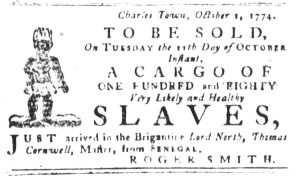
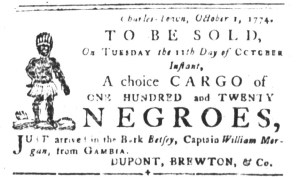
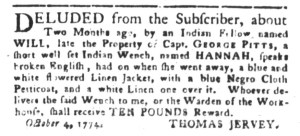
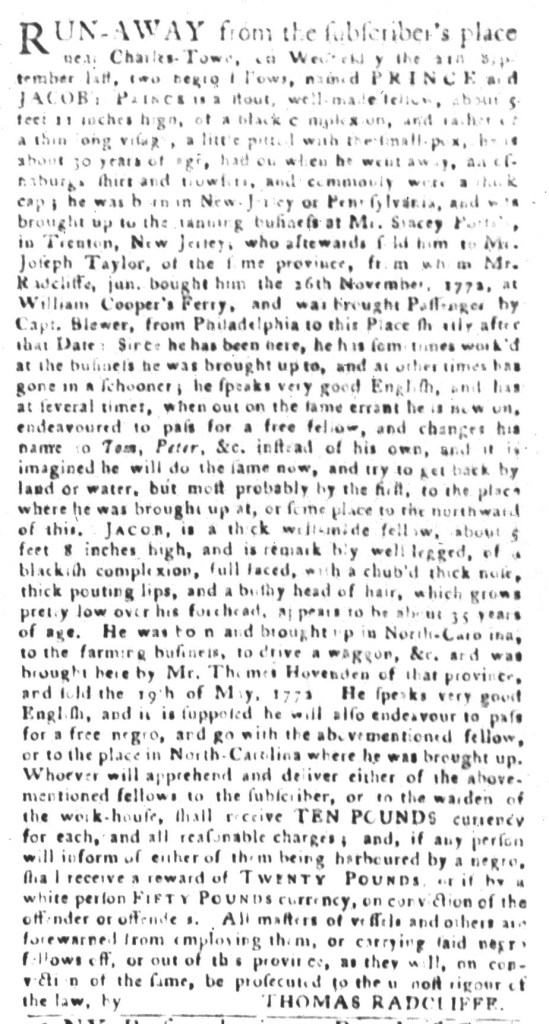
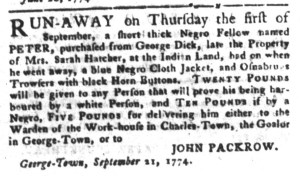
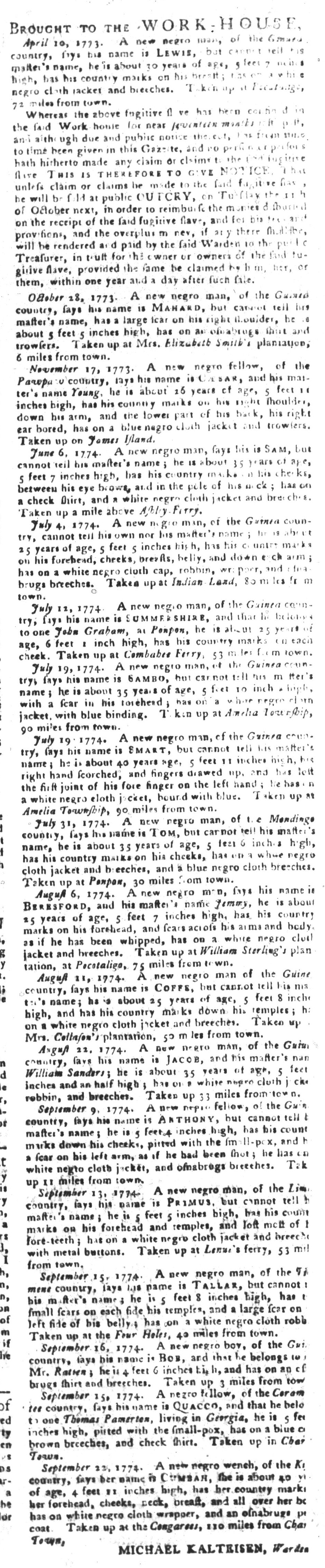
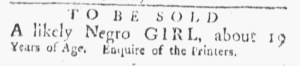
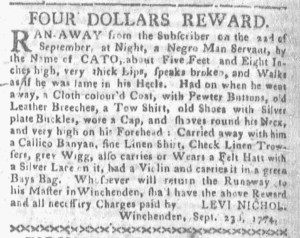
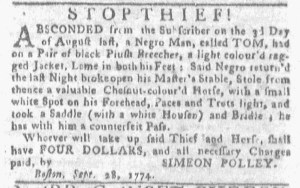
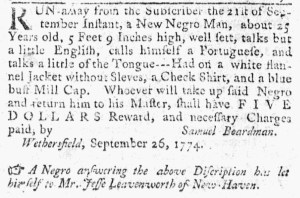
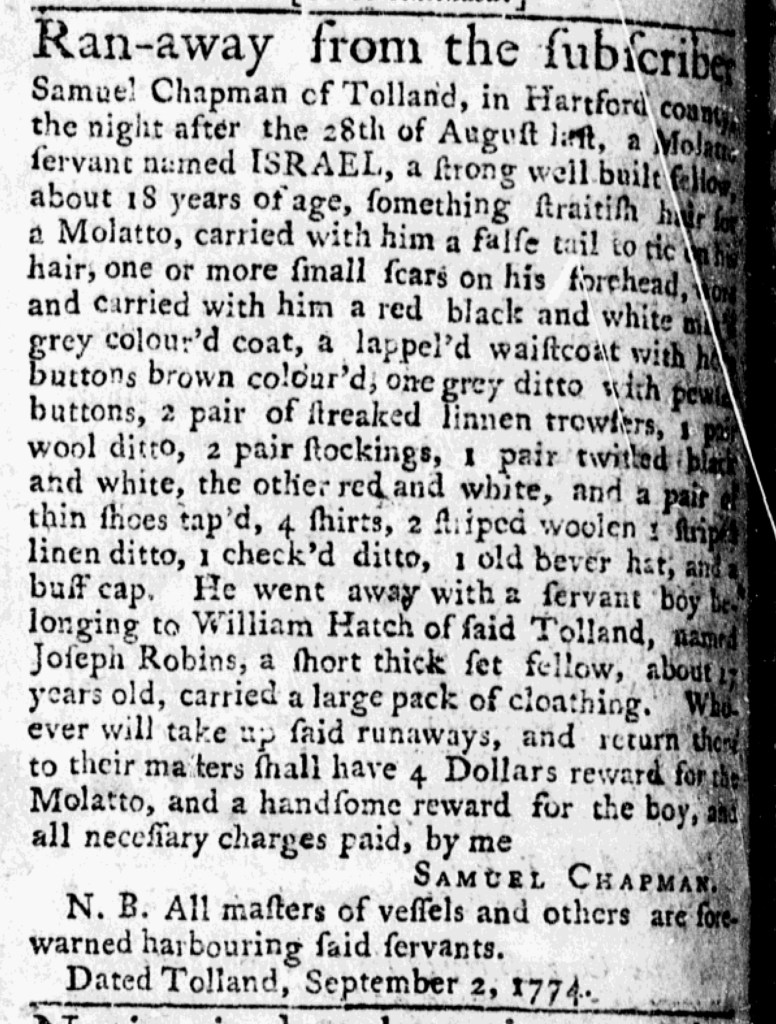
The Slavery Adverts 250 Project chronicles the role of newspaper advertising in perpetuating slavery in the era of the American Revolution. The project seeks to reveal the ubiquity of slavery in eighteenth-century life from New England to Georgia by republishing advertisements about enslaved people – for sale as individuals or in groups, wanted to purchase or for hire for short periods, runaways who liberated themselves, and those who were subsequently captured and confined in jails and workhouses – in daily digests on this site as well as in real time via the @SlaveAdverts250 Twitter feed, utilizing twenty-first-century media to stand in for the print media of the eighteenth century.
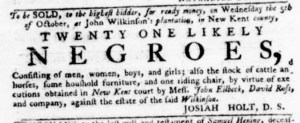
The project aims to provide modern audiences with a sense of just how often colonizers encountered these advertisements in their daily lives. Enslaved men, women, and children appeared in print somewhere in the colonies almost every single day. Those advertisements served as a constant backdrop for social, cultural, economic, and political life in colonial and revolutionary America. Colonizers who did not purport to own enslaved people were still confronted with slavery as well as invited to maintain the system by purchasing enslaved men, women, and children or assisting in the capture of so-called “runaways” who sought to free themselves from bondage. The frequency of these newspaper advertisements suggests just how embedded slavery was in colonial and revolutionary American culture in everyday interactions beyond the printed page.
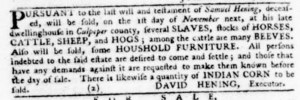
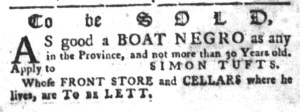
These advertisements also testify to the experiences of enslaved men, women, and children, though readers must consider that those experiences have been remediated through descriptions offered by enslavers rather than enslaved people themselves. Often unnamed in the advertisements, enslaved men, women, and children were not invisible or unimportant in early America.

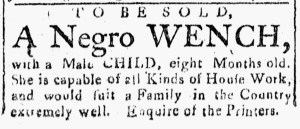
These advertisements appeared in colonial American newspapers 250 years ago today.

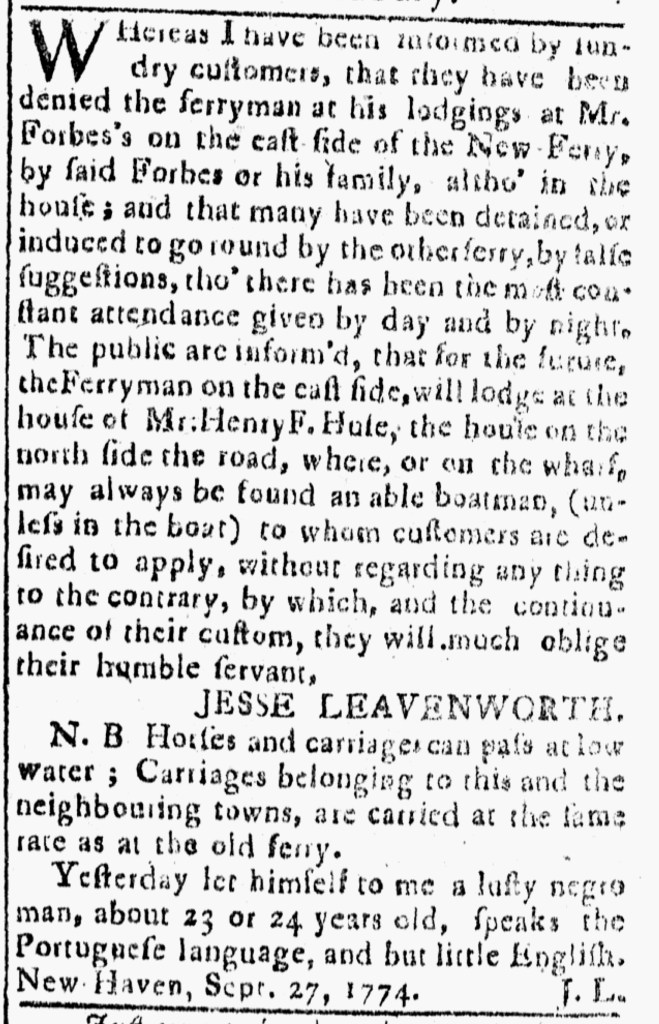
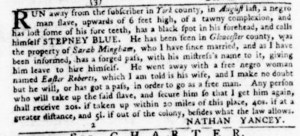
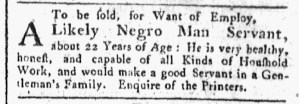
Connecticut Journal (October 7, 1774).

**********

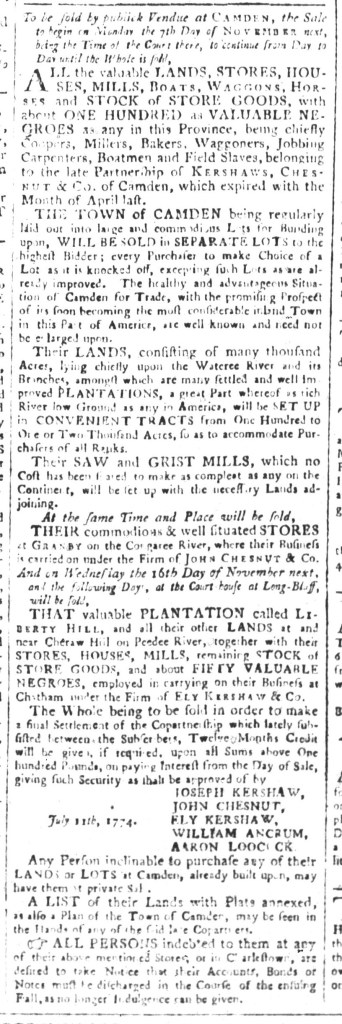
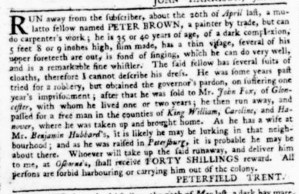
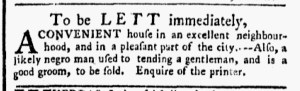
Connecticut Journal (October 7, 1774).

**********

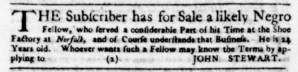
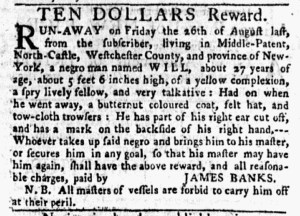
Connecticut Journal (October 7, 1774).

**********

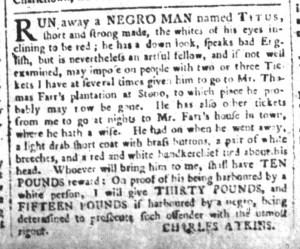
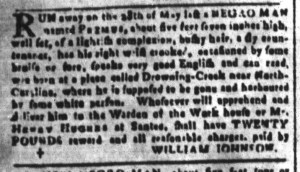
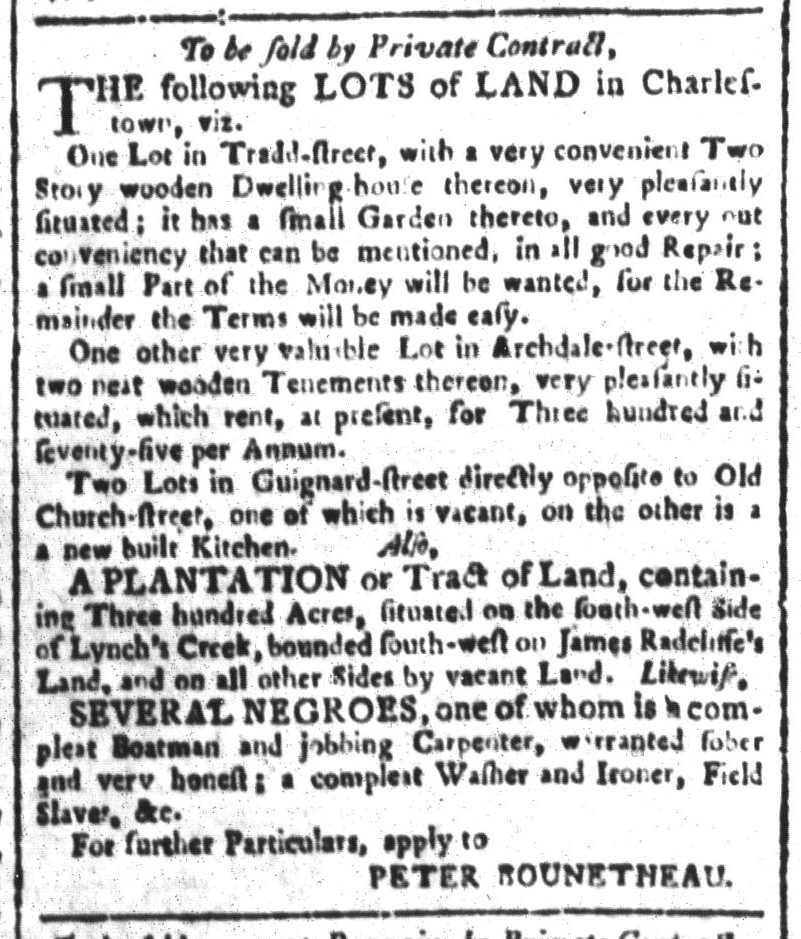
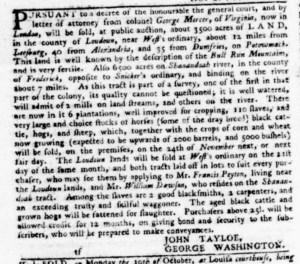
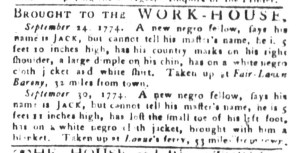
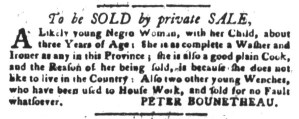
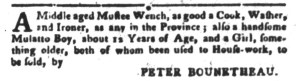
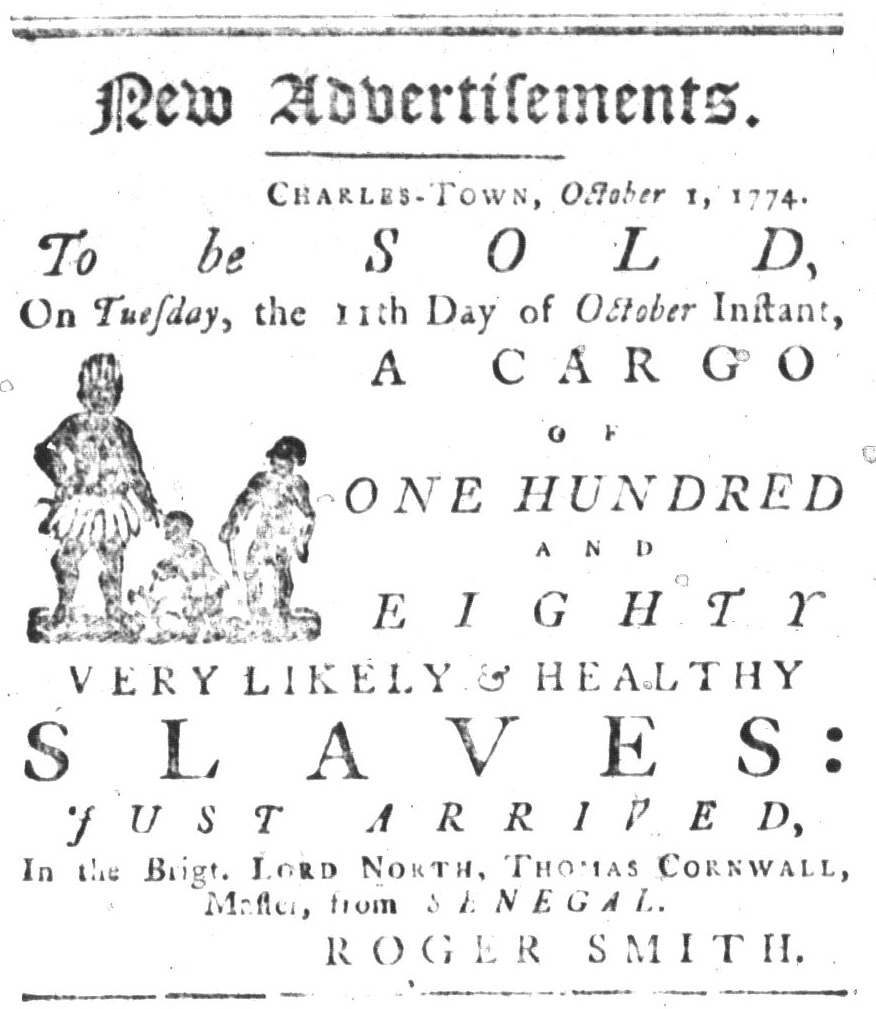
South-Carolina and American General Gazette (October 7, 1774).

**********

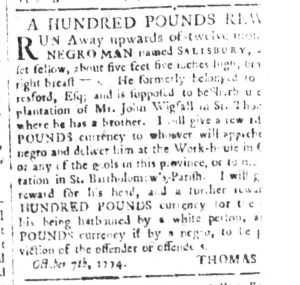
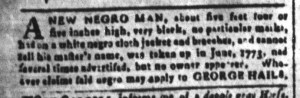
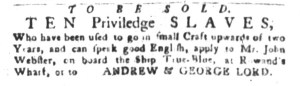
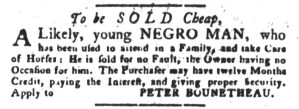
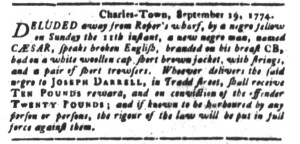
South-Carolina and American General Gazette (October 7, 1774).

**********

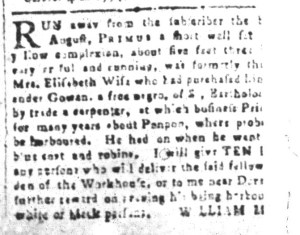
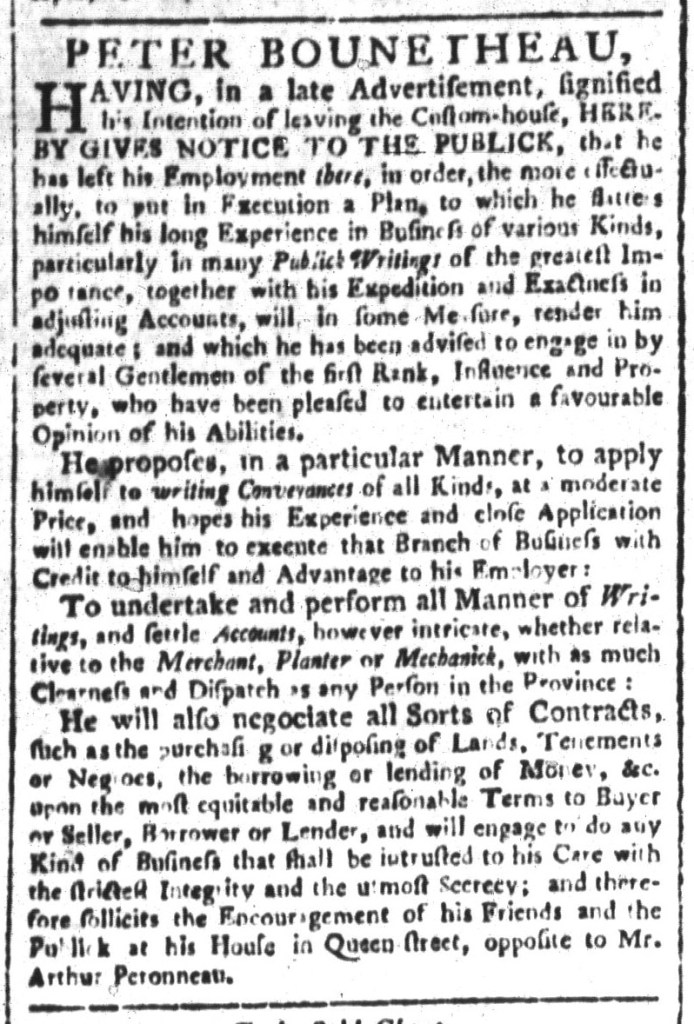
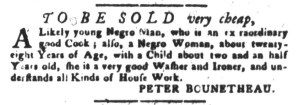
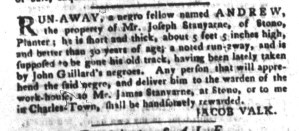
South-Carolina and American General Gazette (October 7, 1774).

**********

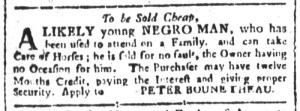
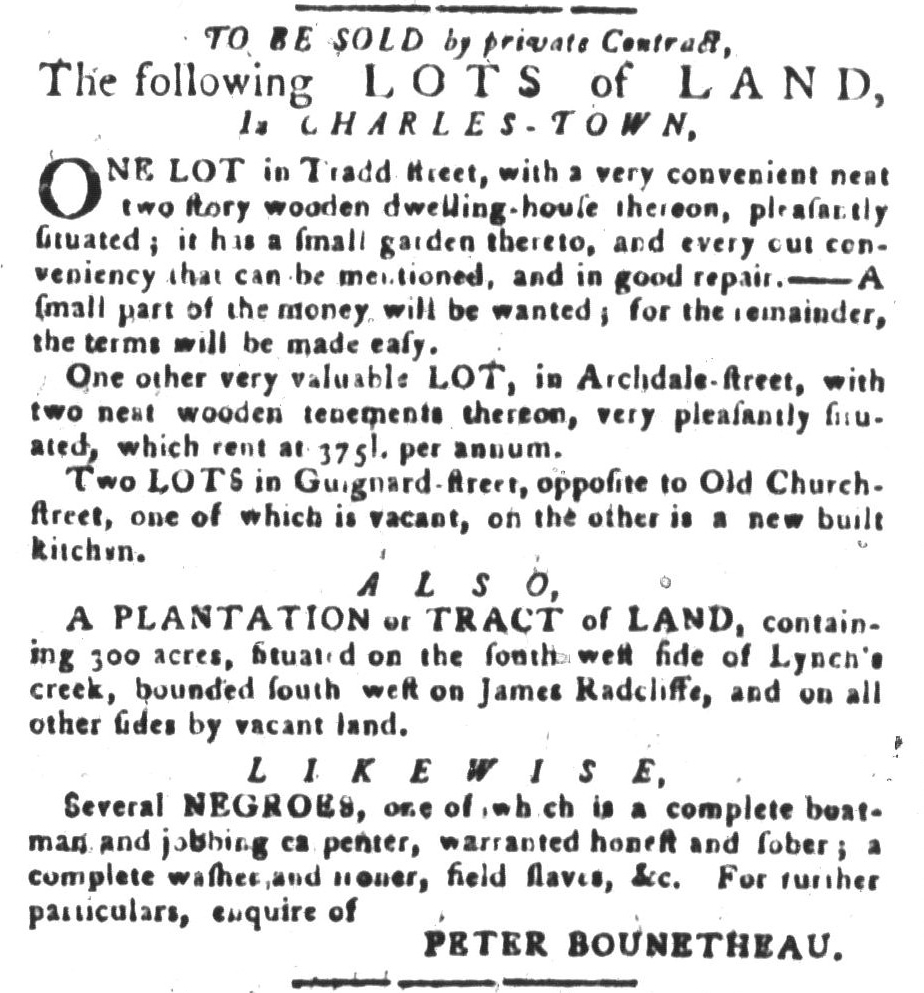
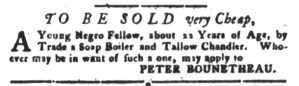
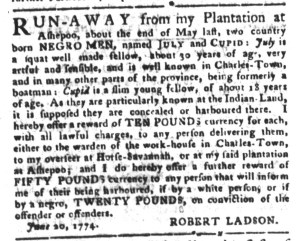
South-Carolina and American General Gazette (October 7, 1774).

**********

South-Carolina and American General Gazette (October 7, 1774).

**********

South-Carolina and American General Gazette (October 7, 1774).

**********

South-Carolina and American General Gazette (October 7, 1774).

**********

South-Carolina and American General Gazette (October 7, 1774).

**********

South-Carolina and American General Gazette (October 7, 1774).

**********

South-Carolina and American General Gazette (October 7, 1774).

**********

South-Carolina and American General Gazette (October 7, 1774).

**********

South-Carolina and American General Gazette (October 7, 1774).

**********

South-Carolina and American General Gazette (October 7, 1774).

**********

South-Carolina and American General Gazette (October 7, 1774).

**********

South-Carolina and American General Gazette (October 7, 1774).

**********

South-Carolina and American General Gazette (October 7, 1774).

**********

South-Carolina and American General Gazette (October 7, 1774).

**********

South-Carolina and American General Gazette (October 7, 1774).

October 6

What was advertised in a colonial American newspaper 250 years ago today?

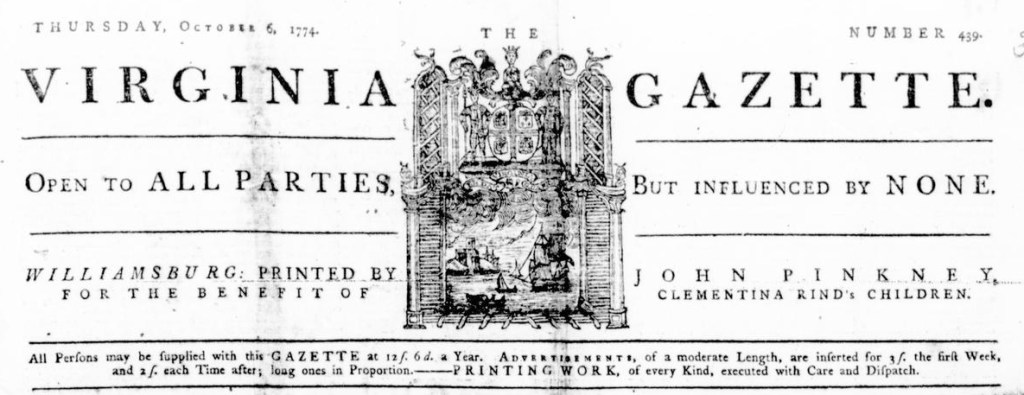
Virginia Gazette [Pinkney] (October 6, 1774).

“ADVERTISEMENTS, of a moderate Length, are inserted for 3s. the first Week.”

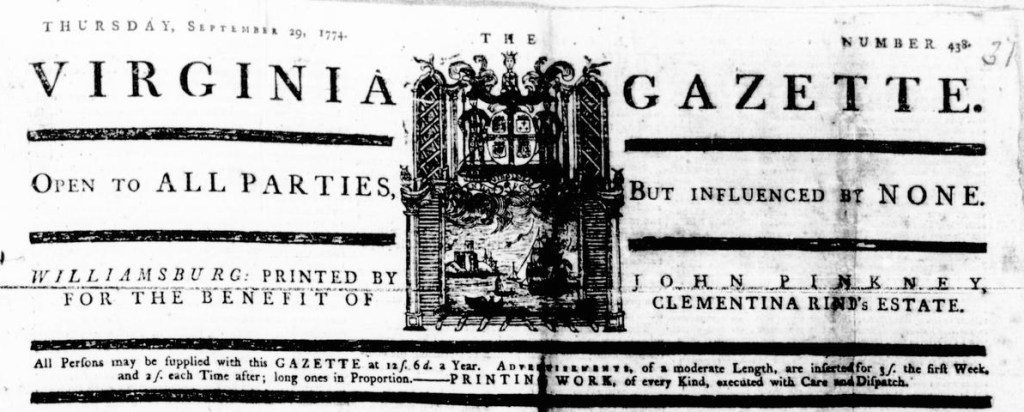
It was the third version of the masthead for the Virginia Gazette in three weeks.  Clementina Rind had been printing the newspaper for more than a year since her husband, William, died in August 1773.  During that time, the masthead included the title and the motto, “OPEN TO ALL PARTIES, BUT INFLUENCED BY NONE,” as well as the colophon.  It also incorporated an advertisement for subscribing, placing advertisements, and job printing undertaken in the printing office.  Placing the colophon with the masthead aided in distinguishing Rind’s Virginia Gazette from a newspaper of the same name printed by Alexander Purdie and John Dixon.  For their part, Rind’s competitors similarly presented their names in the masthead of their newspaper rather than placing the colophon at the bottom of the last page.  They did, however, reserve that space for an advertisement about subscriptions, advertisements, and job printing.

On September 22, 1774, the colophon for Rind’s Virginia Gazette stated, “PRINTED BY CLEMENTINA RIND,” for the last time.  The following week, it read, “PRINTED BY JOHN PINKNEY, FOR THE BENEFIT OF CLEMENTINA RIND’s ESTATE.”  At a glance, readers knew that a death had occurred: the thin lines that usually separated the title, motto, colophon, and advertisement had been replaced with much thicker lines that resembled the mourning borders that often appeared in early American newspapers.  Pinkney reverted to the thin lines for the October 6 edition, also updating the colophon once again.  Now it declared, “PRINTED BY JOHN PINKNEY, FOR THE BENEFIT OF CLEMENTINA RIND’s CHILDREN.”  The local news included a poem, “ON THE DEATH OF MRS. RIND,” submitted by a “CONSTANT READER.”

The conditions for subscribing remained the same.  Pinkney charged twelve shilling and six pence per year, the same price as Purdie and Dixon’s Virginia Gazette.  The fees for advertising also continued.  Customers could place notices “of a moderate Length” for three shillings for the first week and two shillings for each additional insertion.  The extra shilling in the first week covered the costs for setting the type.  As was the case in newspapers throughout the colonies, the rate changed for lengthier advertisements: “long ones in Proportion” to the base price.  Purdie and Dixon charged the same prices for advertising in their newspaper.  The advertisement in the masthead also advised, “PRINTING WORK, of every Kind, executed with Care and Dispatch.”  Publication of the Virginia Gazette continued with little disruption to subscribers and advertisers despite the death of the printer.  Pinkney had likely worked in the printing office with Rind during her tenure as printer, ready to assume responsibility for the business when she died.

Virginia Gazette [Pinkney] (September 20, 1774).

Slavery Advertisements Published October 6, 1774

The Slavery Adverts 250 Project chronicles the role of newspaper advertising in perpetuating slavery in the era of the American Revolution. The project seeks to reveal the ubiquity of slavery in eighteenth-century life from New England to Georgia by republishing advertisements about enslaved people – for sale as individuals or in groups, wanted to purchase or for hire for short periods, runaways who liberated themselves, and those who were subsequently captured and confined in jails and workhouses – in daily digests on this site as well as in real time via the @SlaveAdverts250 Twitter feed, utilizing twenty-first-century media to stand in for the print media of the eighteenth century.

The project aims to provide modern audiences with a sense of just how often colonizers encountered these advertisements in their daily lives. Enslaved men, women, and children appeared in print somewhere in the colonies almost every single day. Those advertisements served as a constant backdrop for social, cultural, economic, and political life in colonial and revolutionary America. Colonizers who did not purport to own enslaved people were still confronted with slavery as well as invited to maintain the system by purchasing enslaved men, women, and children or assisting in the capture of so-called “runaways” who sought to free themselves from bondage. The frequency of these newspaper advertisements suggests just how embedded slavery was in colonial and revolutionary American culture in everyday interactions beyond the printed page.

These advertisements also testify to the experiences of enslaved men, women, and children, though readers must consider that those experiences have been remediated through descriptions offered by enslavers rather than enslaved people themselves. Often unnamed in the advertisements, enslaved men, women, and children were not invisible or unimportant in early America.

These advertisements appeared in colonial American newspapers 250 years ago today.

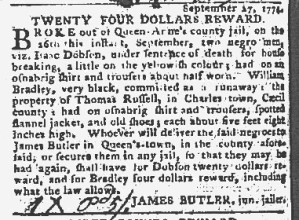
Maryland Gazette (October 6, 1774).

**********

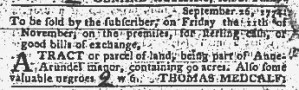
Maryland Gazette (October 6, 1774).

**********

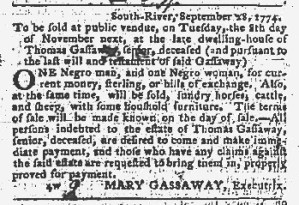
Maryland Gazette (October 6, 1774).

**********

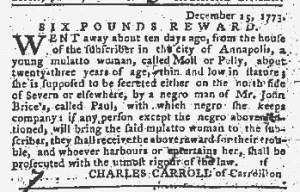
Maryland Gazette (October 6, 1774).

**********

Maryland Gazette (October 6, 1774).

**********

Maryland Gazette (October 6, 1774).

**********

Massachusetts Gazette and Boston Weekly News-Letter (October 6, 1774).

**********

Massachusetts Gazette and Boston Weekly News-Letter (October 6, 1774).

**********

Supplement to the New-York Journal (October 6, 1774).

**********

Rivington’s New-York Gazetteer (October 6, 1774).

**********

Virginia Gazette [Pinkney] (October 6, 1774).

**********

Virginia Gazette [Pinkney] (October 6, 1774).

**********

Virginia Gazette [Pinkney] (October 6, 1774).

**********

Virginia Gazette [Pinkney] (October 6, 1774).

**********

Virginia Gazette [Pinkney] (October 6, 1774).

**********

Virginia Gazette [Pinkney] (October 6, 1774).

**********

Virginia Gazette [Pinkney] (October 6, 1774).

**********

Virginia Gazette [Pinkney] (October 6, 1774).

**********

Virginia Gazette [Pinkney] (October 6, 1774).

**********

Virginia Gazette [Purdie and Dixon] (October 6, 1774).

**********

Virginia Gazette [Purdie and Dixon] (October 6, 1774).

**********

Virginia Gazette [Purdie and Dixon] (October 6, 1774).

**********

Virginia Gazette [Purdie and Dixon] (October 6, 1774).

**********

Virginia Gazette [Purdie and Dixon] (October 6, 1774).

**********

Virginia Gazette [Purdie and Dixon] (October 6, 1774).

**********

Virginia Gazette [Purdie and Dixon] (October 6, 1774).

**********

Virginia Gazette [Purdie and Dixon] (October 6, 1774).

**********

Virginia Gazette [Purdie and Dixon] (October 6, 1774).

**********

Virginia Gazette [Purdie and Dixon] (October 6, 1774).

**********

Virginia Gazette [Purdie and Dixon] (October 6, 1774).

Slavery Advertisements Published October 5, 1774

The Slavery Adverts 250 Project chronicles the role of newspaper advertising in perpetuating slavery in the era of the American Revolution. The project seeks to reveal the ubiquity of slavery in eighteenth-century life from New England to Georgia by republishing advertisements about enslaved people – for sale as individuals or in groups, wanted to purchase or for hire for short periods, runaways who liberated themselves, and those who were subsequently captured and confined in jails and workhouses – in daily digests on this site as well as in real time via the @SlaveAdverts250 Twitter feed, utilizing twenty-first-century media to stand in for the print media of the eighteenth century.

The project aims to provide modern audiences with a sense of just how often colonizers encountered these advertisements in their daily lives. Enslaved men, women, and children appeared in print somewhere in the colonies almost every single day. Those advertisements served as a constant backdrop for social, cultural, economic, and political life in colonial and revolutionary America. Colonizers who did not purport to own enslaved people were still confronted with slavery as well as invited to maintain the system by purchasing enslaved men, women, and children or assisting in the capture of so-called “runaways” who sought to free themselves from bondage. The frequency of these newspaper advertisements suggests just how embedded slavery was in colonial and revolutionary American culture in everyday interactions beyond the printed page.

These advertisements also testify to the experiences of enslaved men, women, and children, though readers must consider that those experiences have been remediated through descriptions offered by enslavers rather than enslaved people themselves. Often unnamed in the advertisements, enslaved men, women, and children were not invisible or unimportant in early America.

These advertisements appeared in colonial American newspapers 250 years ago today.

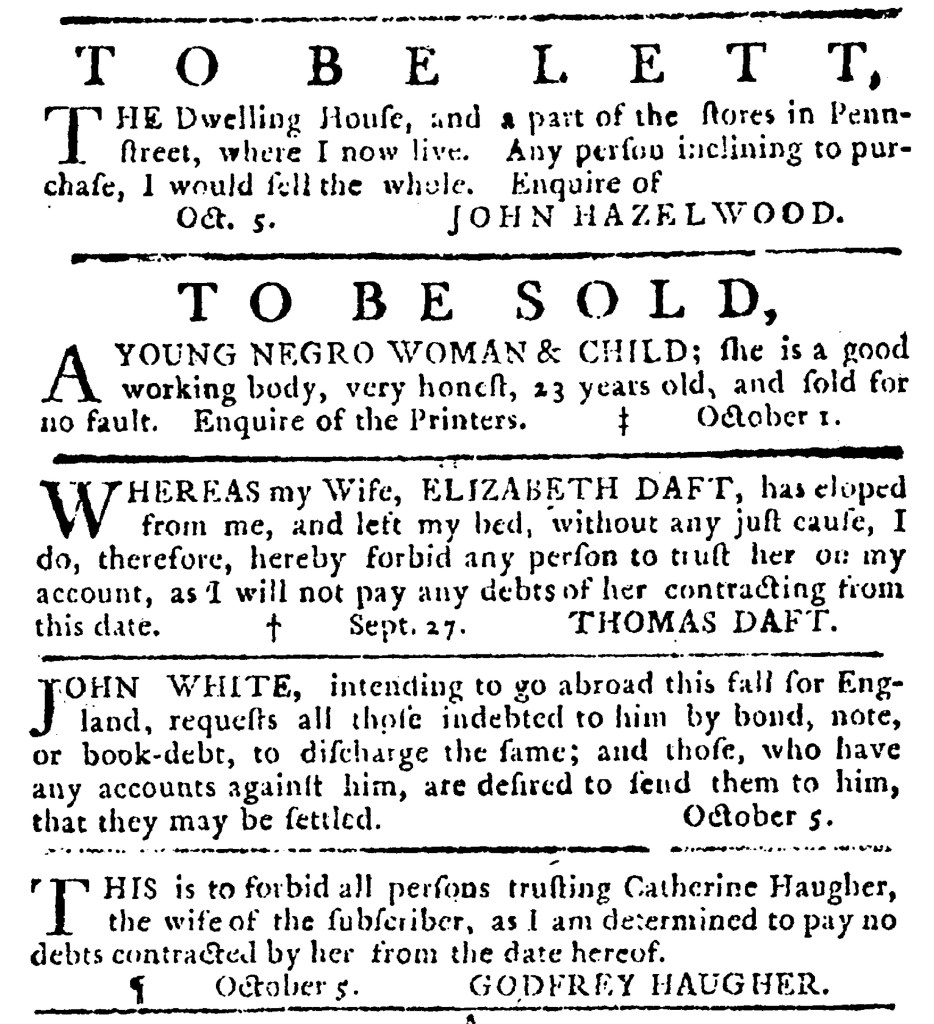
Essex Journal (October 5, 1774).

**********

Pennsylvania Gazette (October 5, 1774).

**********

Supplement to the Pennsylvania Journal (October 5, 1774).

**********

Supplement to the Pennsylvania Journal (October 5, 1774).

**********

Pennsylvania Journal (October 5, 1774).

**********

Pennsylvania Journal (October 5, 1774).

October 4

What was advertised in a colonial American newspaper 250 years ago today?

Essex Gazette (October 4, 1774).

“Forgive my Error [and] restore me to their Favour and Friendship.”

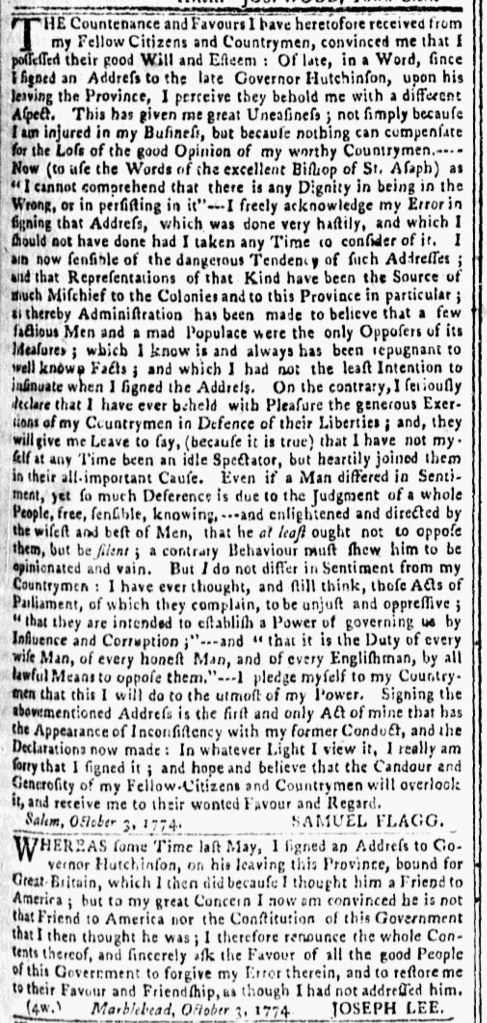
Samuel Flagg of Salem and Joseph Lee of Marblehead needed to do damage control and rehabilitate their reputations after signing “an Address to Governor Hutchinson, on his leaving this Province” in May 1774.  Like Thomas Kidder had done in July, they took to the public prints to confess their error and beg for the forgiveness of their friends and neighbors who believed they did not support the American cause.  The reaction they experienced became so overwhelming that they recanted a position that they claimed they never firmly held.  Lee, for instance, stated that he signed the address because at the time he “thought [Hutchinson] a Friend to America,” yet he had since reconsidered.  He expressed “great Concern” while confessing that “I am now convinced he is not that Friend to America nor the Constitution of this Government that I then thought he was.”  To that end, Lee renounced the entire address and “sincerely ask[ed] the Favour of all the good People of this Government to forgive my Error therein, and to restore me to their Favour and Friendship.”  His plea, dated October 3, first appeared in the October 4 edition of the Essex Gazette, with a notation that it would run for four weeks.  Rather than submitting a letter to the printer that might get printed once, Lee paid to run an advertisement that would present his story and his apology to readers multiple times.

Lee’s notice was brief compared to the one that Flagg inserted on the same day.  He had formerly been in good standing in the community, having the “good Will and Esteem” of his “Fellow Citizens and Countrymen,” but perceived “they behold me with a different aspect” after he signed an address in honor of the Governor Hutchinson upon his return to England.  Flagg confessed that this “has given me great Uneasiness; not simply because I am injured in my Business, but because nothing can compensate for the Loss of the good Opinion of my worthy Countrymen.”  Flagg acknowledged that his livelihood had suffered; apparently customers refused to shop at his store in Salem.  Yet participating in the marketplace was not the only or even the primary reason that Flagg wished to correct the record.  He desired the “Favour and Regard” that he had once enjoyed in relationships with other colonizers, plus he wanted to assure the public that he indeed supported the patriot cause.  He admitted his error while disavowing the address as “the Source of much Mischief to the Colonies and to this Province in particular,” but did not end there.  “I seriously declare,” he wrote, “that I have ever beheld with Pleasure the generous Exertions of my Countrymen in Defence of their Liberties.”  Furthermore, Flagg claimed that “I have note myself at any Time been an idle Spectator, but heartily joined them in their all-important Cause.”  In his advertisement for an “Assortment of ENGLISH and INDIA GOODS” on the next page, he indicated that he “is determined not to import any more Goods at Present,” signaling his support for nonimportation agreements as a means of protesting the Coercive Acts.

Beyond his confession and apology, Flagg incorporated an editorial into his advertisement seeking forgiveness from his “Fellow Citizens and Countrymen.”  He asserted, “I do not differ in Sentiment from my Countrymen; I have ever thought, and still think, those Acts of Parliament, of which they complain, to be unjust and oppressive.”  To demonstrate that point, he inserted quotations that made familiar arguments: “‘that they are intended to establish a Power of governing us by Influence and Corruption’” and “‘that it is the Duty of every wise Man, of every honest Man, and of every Englishman, by all lawful Means to oppose them.’”  Flagg thus had a duty to fulfill, prompting him to “pledge myself to my Countrymen that this I will do to the utmost of my Power.”  He reiterated that he regretted signing the “abovementioned Address,” insisting that it was “the first and only Act of mine that has the Appearance of Inconsistency with my former Conduct, and the Declarations now made.”  He apologized once again, requesting the “Candour and Generosity” of others in overlooking the entire incident.

Signing the address to Governor Hutchinson had been a lapse in judgment; at least that was how some of those who signed it depicted their actions when they repeatedly encountered hostile reactions.  Both Flagg and Lee sought to remedy the damage done to their reputations by placing advertisements in which they confessed their error.  Flagg did even more: he spilled a lot of ink in support of the American cause, hoping that doing so would convince the public of his sincerity and return him to their good graces.  News and editorials could not contain the politics of the period. Instead, advertisements became sites for participating in debates and controversies as the imperial crisis intensified in 1774.

Slavery Advertisements Published October 4, 1774

The Slavery Adverts 250 Project chronicles the role of newspaper advertising in perpetuating slavery in the era of the American Revolution. The project seeks to reveal the ubiquity of slavery in eighteenth-century life from New England to Georgia by republishing advertisements about enslaved people – for sale as individuals or in groups, wanted to purchase or for hire for short periods, runaways who liberated themselves, and those who were subsequently captured and confined in jails and workhouses – in daily digests on this site as well as in real time via the @SlaveAdverts250 Twitter feed, utilizing twenty-first-century media to stand in for the print media of the eighteenth century.

The project aims to provide modern audiences with a sense of just how often colonizers encountered these advertisements in their daily lives. Enslaved men, women, and children appeared in print somewhere in the colonies almost every single day. Those advertisements served as a constant backdrop for social, cultural, economic, and political life in colonial and revolutionary America. Colonizers who did not purport to own enslaved people were still confronted with slavery as well as invited to maintain the system by purchasing enslaved men, women, and children or assisting in the capture of so-called “runaways” who sought to free themselves from bondage. The frequency of these newspaper advertisements suggests just how embedded slavery was in colonial and revolutionary American culture in everyday interactions beyond the printed page.

These advertisements also testify to the experiences of enslaved men, women, and children, though readers must consider that those experiences have been remediated through descriptions offered by enslavers rather than enslaved people themselves. Often unnamed in the advertisements, enslaved men, women, and children were not invisible or unimportant in early America.

These advertisements appeared in colonial American newspapers 250 years ago today.

Essex Gazette (October 4, 1774).

**********

South-Carolina Gazette and Country Journal (October 4, 1774).

**********

South-Carolina Gazette and Country Journal (October 4, 1774).

**********

South-Carolina Gazette and Country Journal (October 4, 1774).

**********

South-Carolina Gazette and Country Journal (October 4, 1774).

**********

South-Carolina Gazette and Country Journal (October 4, 1774).

**********

South-Carolina Gazette and Country Journal (October 4, 1774).

**********

South-Carolina Gazette and Country Journal (October 4, 1774).

**********

South-Carolina Gazette and Country Journal (October 4, 1774).

**********

South-Carolina Gazette and Country Journal (October 4, 1774).

**********

Supplement to the South-Carolina Gazette and Country Journal (October 4, 1774).

**********

Supplement to the South-Carolina Gazette and Country Journal (October 4, 1774).

**********

Supplement to the South-Carolina Gazette and Country Journal (October 4, 1774).

**********

Supplement to the South-Carolina Gazette and Country Journal (October 4, 1774).

**********

Supplement to the South-Carolina Gazette and Country Journal (October 4, 1774).

**********

Supplement to the South-Carolina Gazette and Country Journal (October 4, 1774).

**********

Supplement to the South-Carolina Gazette and Country Journal (October 4, 1774).

**********

Supplement to the South-Carolina Gazette and Country Journal (October 4, 1774).

**********

Supplement to the South-Carolina Gazette and Country Journal (October 4, 1774).

**********

Supplement to the South-Carolina Gazette and Country Journal (October 4, 1774).

**********

Supplement to the South-Carolina Gazette and Country Journal (October 4, 1774).

**********

Supplement to the South-Carolina Gazette and Country Journal (October 4, 1774).

October 3

What was advertised in a colonial American newspaper 250 years ago today?

Massachusetts Gazette and Boston Post-Boy (October 3, 1774)

“I beg the Favour of such Tavern Keepers to send their Names immediately to MILLS and HICKS.”

The first advertisement in the October 3, 1774, edition of the Massachusetts Gazette and Boston Post-Boy, purportedly placed by Isaac Bickerstaff, announced the impending publication of an “ALMANACK for 1775.”  Bickerstaff, however, was a pseudonym.  Benjamin West provided the astronomical calculations, though Nathaniel Mills and John Hicks, the printers of both the newspaper and the almanac, likely compiled the rest of the content for Bickerstaff’s Boston Almanack, for the Year of Our Redemption 1775.  That explains the privileged place the advertisement received.

Yet Mills and Hicks did not insert this notice immediately after the news merely in hopes of increasing sales for the almanac once it went to press.  They also deployed it as a means of crowdsourcing some of the contents.  Writing as Bickerstaff, the printers requested, “If any new Houses of Entertainment have been opened, or if any were omitted in my last ALMANACK, I beg the Favour of such Tavern Keepers to send their Names immediately to MILLS and HICKS.”  The printers would then pass along those entries to “Bickerstaff” to incorporate into “his” forthcoming almanac, but any proprietors who wished to have their establishments included needed to act quickly or risk missing out on the opportunity.

This advertisement previewed some of the useful contents of the almanac for prospective buyers, including those who lived outside Boston but might have occasion to visit.  Yet Mills and Hicks did not provide a list of taverns only to direct readers to “Houses of Entertainment” where they could eat, drink, and socialize.  Instead, they put together a guide to places where customers could expect to discuss politics and learn more about current events, realizing that taverns were popular places for stoking political engagement during the imperial crisis.  At the time Mills and Hicks published their advertisement, the harbor was closed due to the Boston Port Act and the other Coercive Acts enraged residents of city.  Mills and Hicks disseminated news and opinion via their weekly newspaper, but they also knew that a lot of information circulated among patrons gathered in taverns.  A list of “Houses of Entertainment” served as a compendium of places for discussing politics and hearing the latest updates before they appeared in print.

Slavery Advertisements Published October 3, 1774

The Slavery Adverts 250 Project chronicles the role of newspaper advertising in perpetuating slavery in the era of the American Revolution. The project seeks to reveal the ubiquity of slavery in eighteenth-century life from New England to Georgia by republishing advertisements about enslaved people – for sale as individuals or in groups, wanted to purchase or for hire for short periods, runaways who liberated themselves, and those who were subsequently captured and confined in jails and workhouses – in daily digests on this site as well as in real time via the @SlaveAdverts250 Twitter feed, utilizing twenty-first-century media to stand in for the print media of the eighteenth century.

The project aims to provide modern audiences with a sense of just how often colonizers encountered these advertisements in their daily lives. Enslaved men, women, and children appeared in print somewhere in the colonies almost every single day. Those advertisements served as a constant backdrop for social, cultural, economic, and political life in colonial and revolutionary America. Colonizers who did not purport to own enslaved people were still confronted with slavery as well as invited to maintain the system by purchasing enslaved men, women, and children or assisting in the capture of so-called “runaways” who sought to free themselves from bondage. The frequency of these newspaper advertisements suggests just how embedded slavery was in colonial and revolutionary American culture in everyday interactions beyond the printed page.

These advertisements also testify to the experiences of enslaved men, women, and children, though readers must consider that those experiences have been remediated through descriptions offered by enslavers rather than enslaved people themselves. Often unnamed in the advertisements, enslaved men, women, and children were not invisible or unimportant in early America.

These advertisements appeared in colonial American newspapers 250 years ago today.

Boston Evening-Post (October 3, 1774).

**********

Boston-Gazette (October 3, 1774).

**********

Boston-Gazette (October 3, 1774).

**********

Boston-Gazette (October 3, 1774).

**********

Connecticut Courant (October 3, 1774).

**********

Connecticut Courant (October 3, 1774).

**********

Massachusetts Gazette and Boston Post-Boy (October 3, 1774).

**********

New-York Gazette and Weekly Mercury (October 3, 1774).

**********

Supplement to the New-York Gazette and Weekly Mercury (October 3, 1774).

**********

South-Carolina Gazette (October 3, 1774).

**********

South-Carolina Gazette (October 3, 1774).

**********

South-Carolina Gazette (October 3, 1774).

**********

South-Carolina Gazette (October 3, 1774).

**********

South-Carolina Gazette (October 3, 1774).