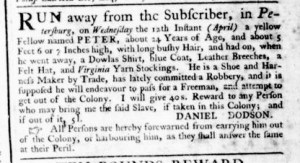
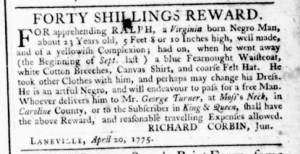
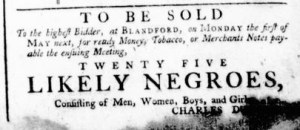
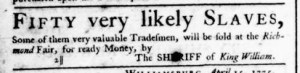
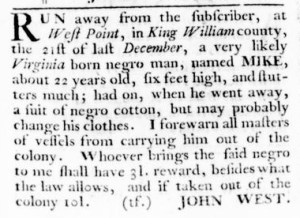
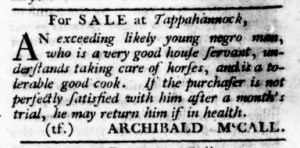
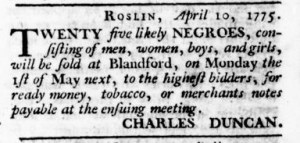
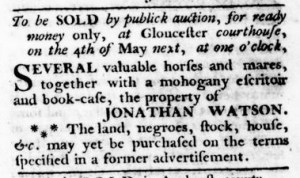
Slavery Advertisements Published April 25, 1775

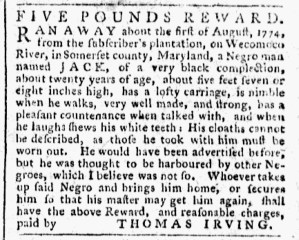
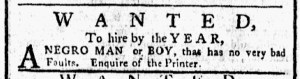
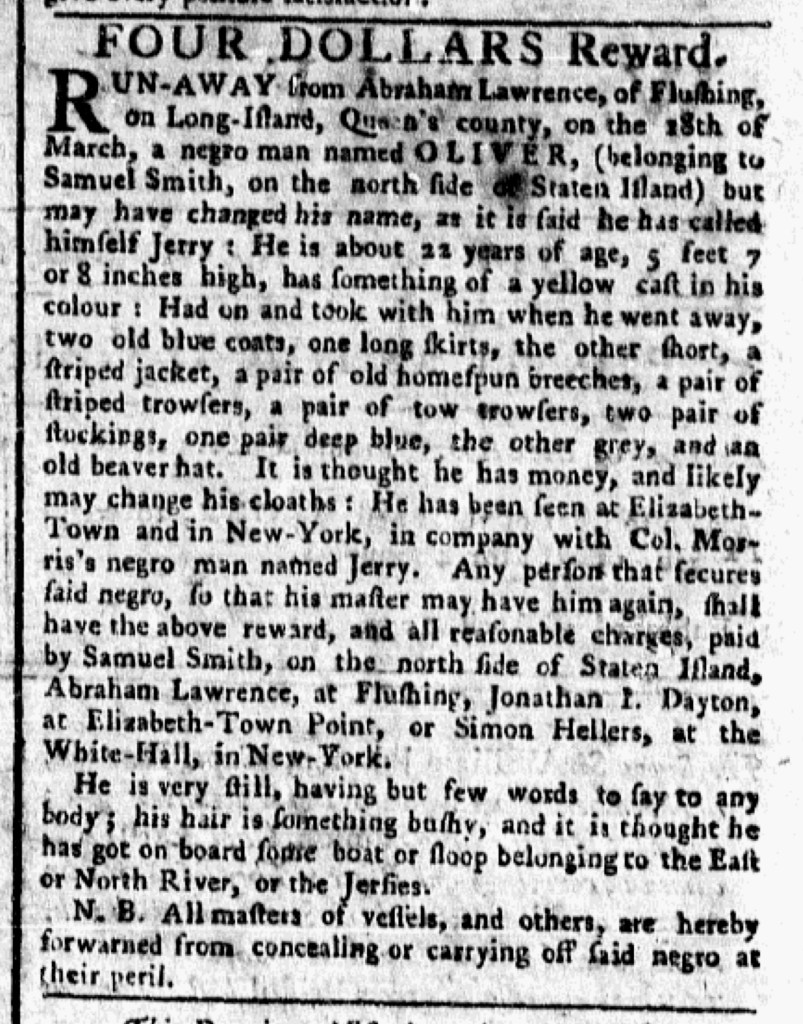
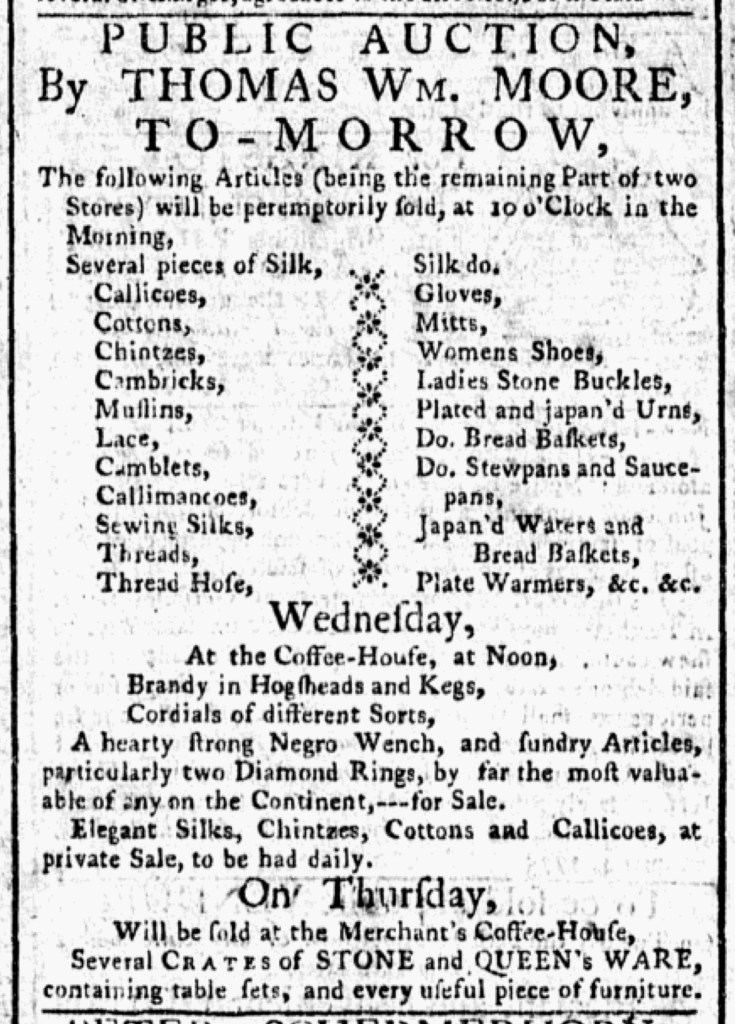
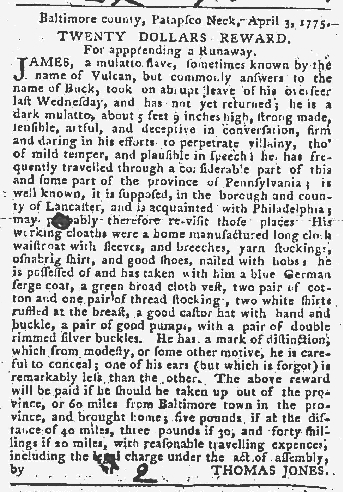
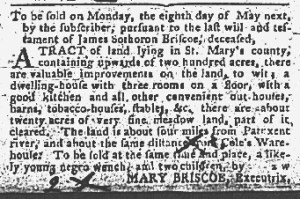
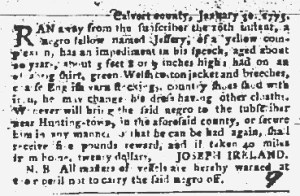
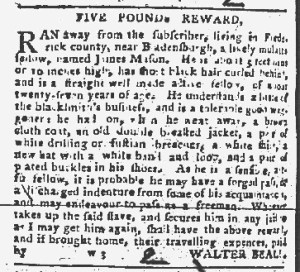
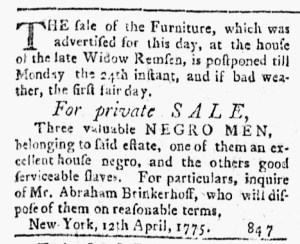
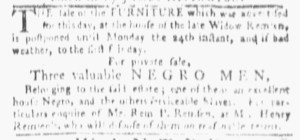
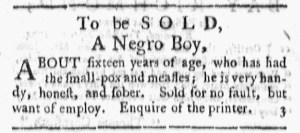
The Slavery Adverts 250 Project chronicles the role of newspaper advertising in perpetuating slavery in the era of the American Revolution. The project seeks to reveal the ubiquity of slavery in eighteenth-century life from New England to Georgia by republishing advertisements about enslaved people – for sale as individuals or in groups, wanted to purchase or for hire for short periods, runaways who liberated themselves, and those who were subsequently captured and confined in jails and workhouses – in daily digests on this site as well as in real time via the @SlaveAdverts250 Twitter feed, utilizing twenty-first-century media to stand in for the print media of the eighteenth century.

The project aims to provide modern audiences with a sense of just how often colonizers encountered these advertisements in their daily lives. Enslaved men, women, and children appeared in print somewhere in the colonies almost every single day. Those advertisements served as a constant backdrop for social, cultural, economic, and political life in colonial and revolutionary America. Colonizers who did not purport to own enslaved people were still confronted with slavery as well as invited to maintain the system by purchasing enslaved men, women, and children or assisting in the capture of so-called “runaways” who sought to free themselves from bondage. The frequency of these newspaper advertisements suggests just how embedded slavery was in colonial and revolutionary American culture in everyday interactions beyond the printed page.

These advertisements also testify to the experiences of enslaved men, women, and children, though readers must consider that those experiences have been remediated through descriptions offered by enslavers rather than enslaved people themselves. Often unnamed in the advertisements, enslaved men, women, and children were not invisible or unimportant in early America.

These advertisements appeared in colonial American newspapers 250 years ago today.

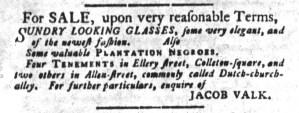
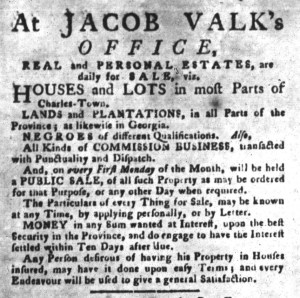
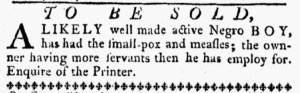
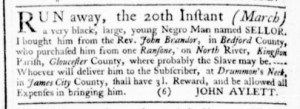
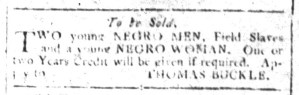
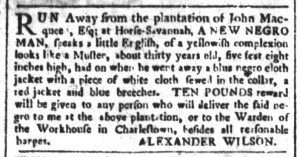
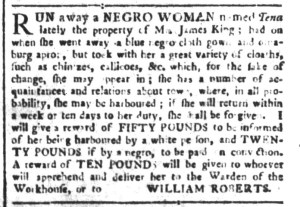
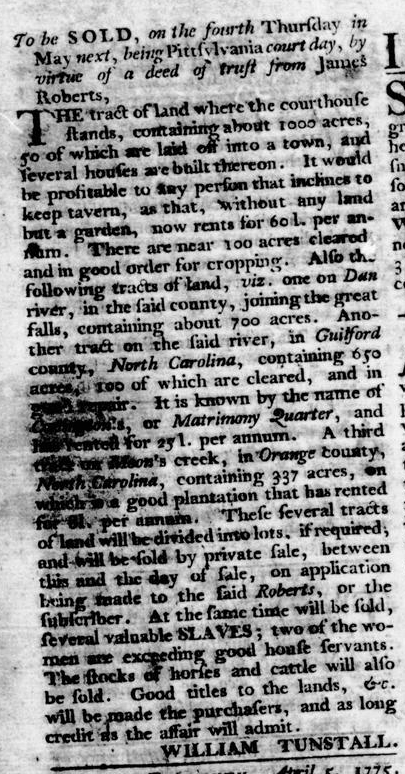
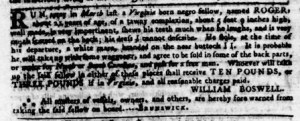
South-Carolina Gazette and Country Journal (April 25, 1775).

**********
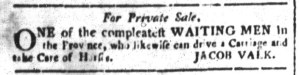
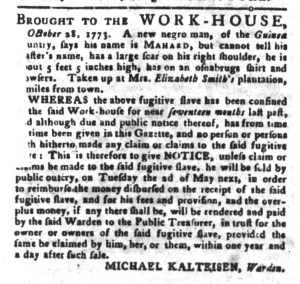
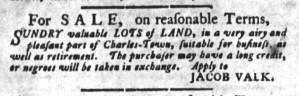
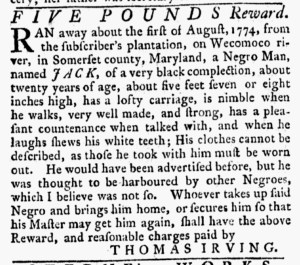
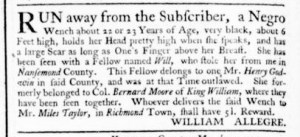
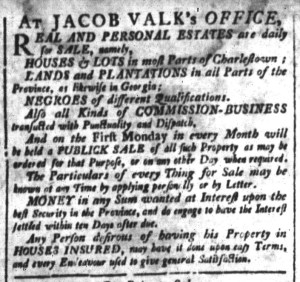
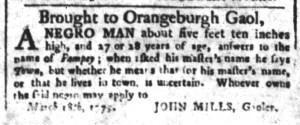
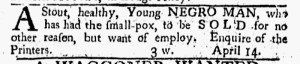
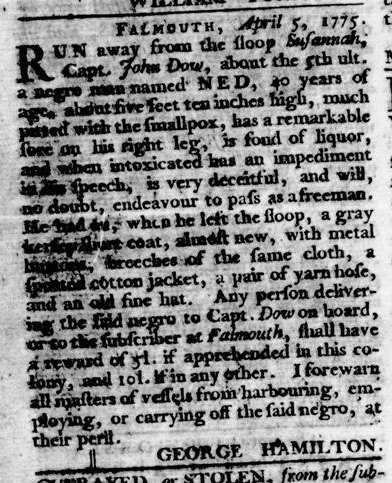
South-Carolina Gazette and Country Journal (April 25, 1775).

**********
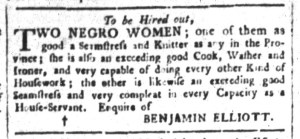
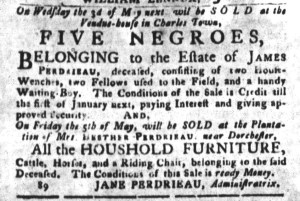
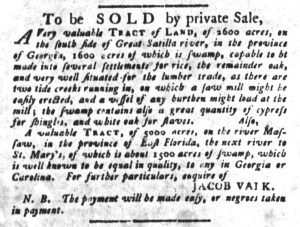
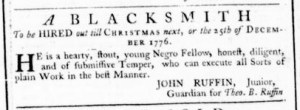
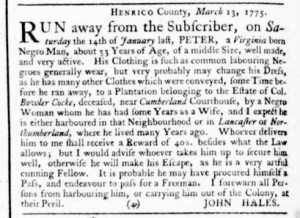
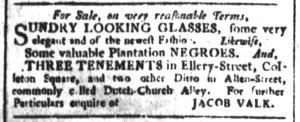
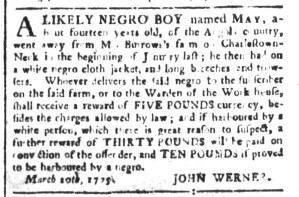
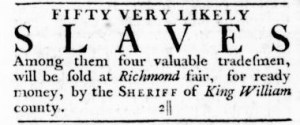
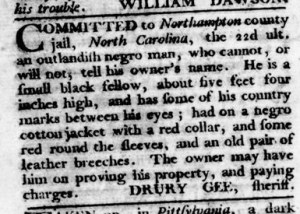
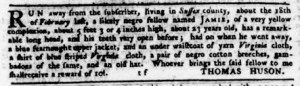
South-Carolina Gazette and Country Journal (April 25, 1775).

**********
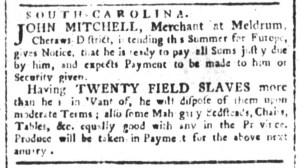
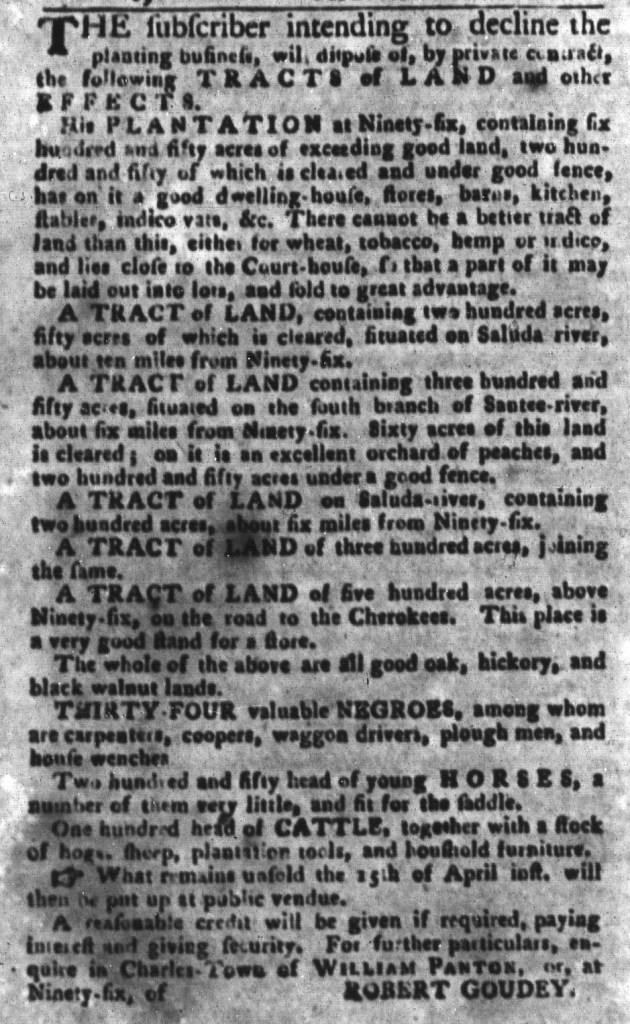
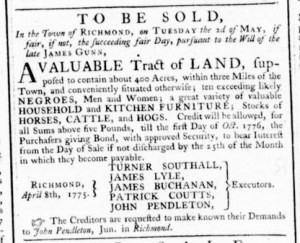
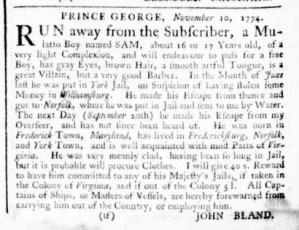
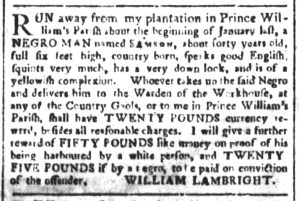
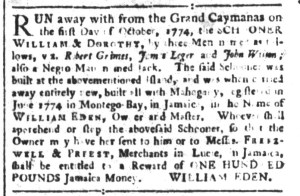
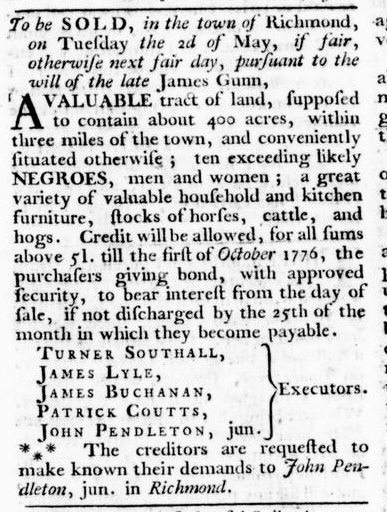
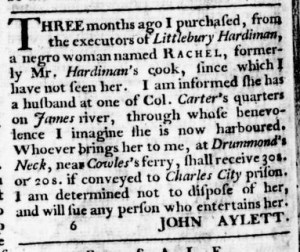
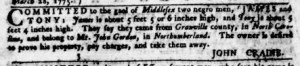
South-Carolina Gazette and Country Journal (April 25, 1775).

**********
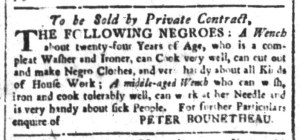
South-Carolina Gazette and Country Journal (April 25, 1775).

**********

South-Carolina Gazette and Country Journal (April 25, 1775).

**********
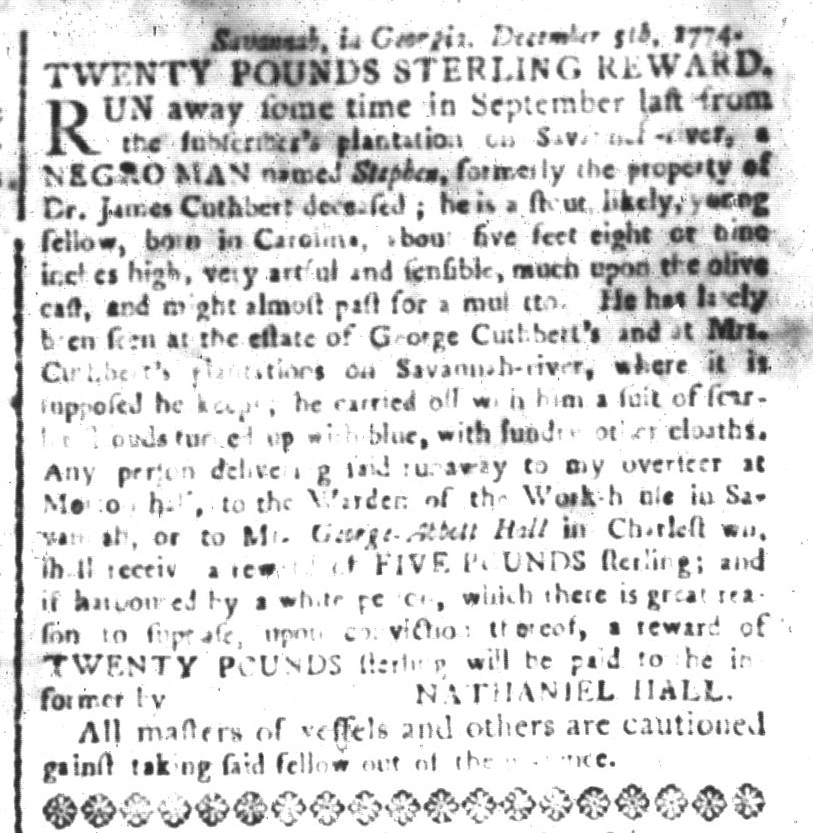
South-Carolina Gazette and Country Journal (April 25, 1775).

**********
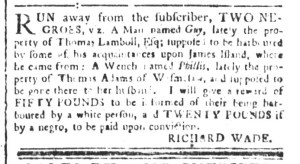
South-Carolina Gazette and Country Journal (April 25, 1775).

April 24

What was advertised in a revolutionary American newspaper 250 years ago today?

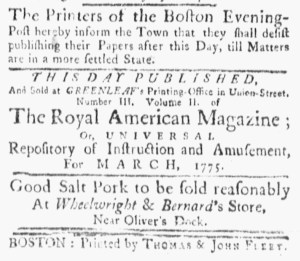
Boston Evening-Post (April 24, 1775).

“They shall desist publishing their Papers after this Day, till Matters are in a more settled State.”

The printers and the public did not know it yet, but the April 24, 1775, edition of the Boston Evening-Post would be the last issue of that newspaper.  Thomas Fleet established the newspaper in August 1735.  His sons, Thomas and John, continued publishing the Boston Evening-Post after their father’s death in 1758.  They even disseminated issues while the Stamp Act was in effect from November 1765 through May 1766, though they did not include their names in the colophon.  The events at Lexington and Concord, however, were too much of a disruption to continue.  The Fleets initially intended to suspend the newspaper and continue publication at some point in the future.  The April 24 issue included only three advertisements, the first one from the printers to “inform the Town that they shall desist publishing their Papers after this Day, till Matters are in a more settled State.”  A newspaper that had served Boston for just shy of forty years ended with “NUMB. 2065.”

By that time, Isaiah Thomas, the printer of the Massachusetts Spy, had already published the final issue of that newspaper in Boston on April 6 and headed to Worcester.  He revived it as the Massachusetts Spy: Or, American Oracle of Liberty in early May.  Nathaniel Mills and John Hicks distributed the last known issue of the Massachusetts Gazette and Boston Post-Boy on April 17.  The April 20 edition of the Massachusetts Gazette and Boston Weekly News-Letter was the last for a month.  Margaret Draper and John Boyle resumed publication of that newspaper on May 19, though they published issues sporadically for the next several months before turning the newspaper over to John Howe.  The February 29, 1776, edition may have been the last; it is the last known issue.  Benjamin Edes and John Gill suspended the Boston-Gazette with the April 17, 1775, edition.  Edes went to Watertown and resumed publication there on June 5.  He remained in Watertown until the end of October 1776.  At that time, he returned to Boston and continued publication in November. His sons became partners in 1779.  The Boston-Gazette did not close until September 1798.

At the beginning of April 1775, five newspapers served Boston, yet the beginning of the Revolutionary War in nearby Lexington and Concord on April 19 had a dramatic impact on those newspapers.  Two folded immediately, even though they hoped to resume when “Matters are in a more settled state.”  One suspended publication for a month and then limped along for less than a year.  Another relocated to Worcester and experienced success there.  Only the Boston-Gazette survived the war and resumed publication in that city.  Other newspapers eventually filled the void, commencing publication during the war, but for some time the town that long had more newspapers than any other in the colonies adapted to new circumstances that limited publication of news (and advertisements).

Slavery Advertisements Published April 24, 1775

The Slavery Adverts 250 Project chronicles the role of newspaper advertising in perpetuating slavery in the era of the American Revolution. The project seeks to reveal the ubiquity of slavery in eighteenth-century life from New England to Georgia by republishing advertisements about enslaved people – for sale as individuals or in groups, wanted to purchase or for hire for short periods, runaways who liberated themselves, and those who were subsequently captured and confined in jails and workhouses – in daily digests on this site as well as in real time via the @SlaveAdverts250 Twitter feed, utilizing twenty-first-century media to stand in for the print media of the eighteenth century.

The project aims to provide modern audiences with a sense of just how often colonizers encountered these advertisements in their daily lives. Enslaved men, women, and children appeared in print somewhere in the colonies almost every single day. Those advertisements served as a constant backdrop for social, cultural, economic, and political life in colonial and revolutionary America. Colonizers who did not purport to own enslaved people were still confronted with slavery as well as invited to maintain the system by purchasing enslaved men, women, and children or assisting in the capture of so-called “runaways” who sought to free themselves from bondage. The frequency of these newspaper advertisements suggests just how embedded slavery was in colonial and revolutionary American culture in everyday interactions beyond the printed page.

These advertisements also testify to the experiences of enslaved men, women, and children, though readers must consider that those experiences have been remediated through descriptions offered by enslavers rather than enslaved people themselves. Often unnamed in the advertisements, enslaved men, women, and children were not invisible or unimportant in early America.

These advertisements appeared in colonial American newspapers 250 years ago today.

Dunlap’s Pennsylvania Packet (April 24, 1775).

**********
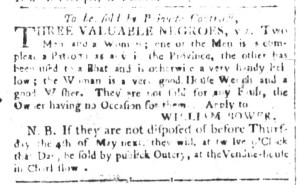
New-York Gazette and Weekly Mercury (April 24, 1775).

**********
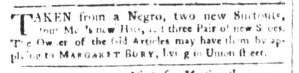
New-York Gazette and Weekly Mercury (April 24, 1775).

**********
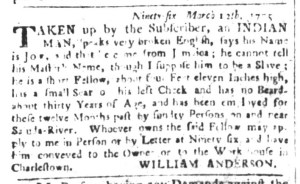
New-York Gazette and Weekly Mercury (April 24, 1775).

**********
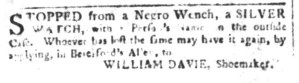
New-York Gazette and Weekly Mercury (April 24, 1775).

**********
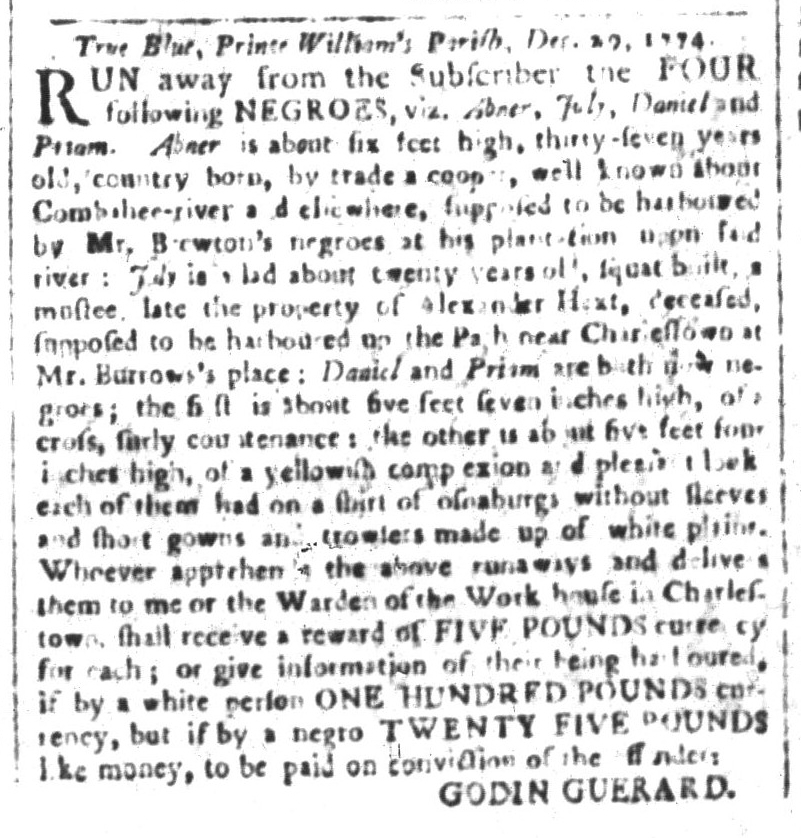
New-York Gazette and Weekly Mercury (April 24, 1775).

April 23

What was advertised in a revolutionary American newspaper 250 years ago this week?

Rivington’s New-York Gazetteer (April 20, 1775).

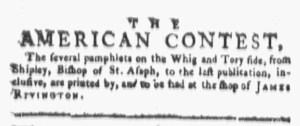
“Several pamphlets on the Whig and Tory side.”

Many Patriots did not care for the editorial stance that James Rivington took in his newspaper.  They considered him a Loyalist even though he declared in the masthead that he operated an “OPEN and UNINFLUENCED PRESS” that represented all views.  Similarly, he printed, advertised, and sold political pamphlets about “THE AMERICAN CONTEST … on the Whig and Tory side.”  Rivington aimed to keep colonizers informed and intended to generate revenue while doing so, believing that controversy could be good for business during the imperial crisis.

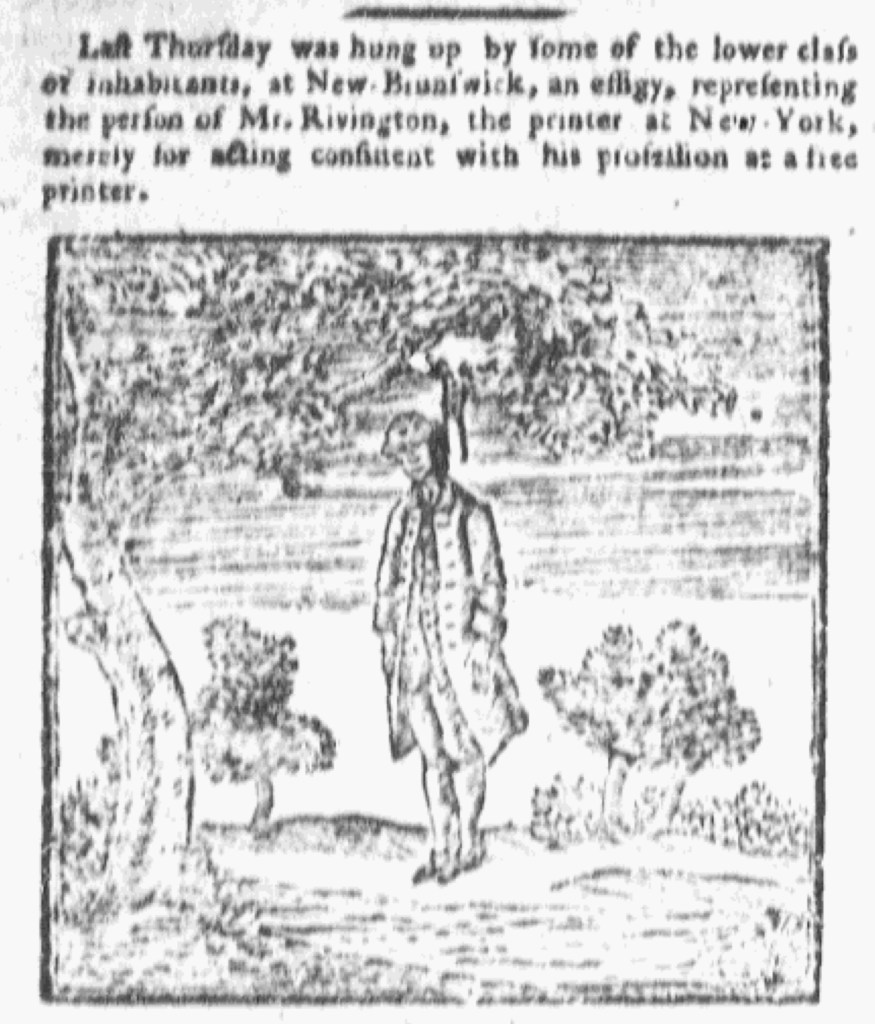
Late in 1774 and throughout the first months of 1775, Rivington regularly ran advertisements that listed the variety of political pamphlets available at his printing office.  He inserted an abbreviated version in the April 20, 1775, edition.  Colonizers in New York had not yet received word of the events at Lexington and Concord the previous morning.  Rivington instead published other news, including a recent instance of “some of the lower class of inhabitants, at New-Brunswick” hanging “an effigy, representing the person of Mr. Rivington … merely for acting consistent with his profession as a free printer.”  He not only covered that story but also illustrated it with a woodcut depicting the effigy hanging from a tree.

Rivington’s New-York Gazetteer (April 20, 1775).

The image almost certainly attracted attention, in part because news items in eighteenth-century newspapers so rarely featured illustrations of any sort.  Elsewhere in the same issue, readers encountered only five other images.  The masthead contained the coat of arms of Great Britain, as usual, and the drop cap for a letter to the editor appeared within a smaller version of the coat of arms.  A stock image of a ship adorned an announcement that the Earl of Dunmore would soon sail for London.  Similarly, a stock image of a horse being led by a man helped promote the stud services of Lath, Match ‘Em, Pilgrim, and Bashaw.  Abraham Delanoy’s woodcut depicting lobster traps was the only other image created to match the content of an advertisement or a news item.

The scarcity of images made the scene of the effigy even more conspicuous.  Rivington wrote a sarcastic description of the event and then affirmed “that his press has been open to publications from ALL PARTIES.”  He challenged “his enemies to produce an instance to the contrary,” noting that he treated his role as printer like “a public office” and reasoned that “every man has a right to have recourse” via his press.  “But the moment he ventured to publish sentiments which were opposed to the dangerous views and designs of certain demagogues,” Rivington asserted, “he found himself held up as an enemy to his country.”  His support for “LIBERTY OF THE PRESS” made him a target for “a most cruel tyranny,” as demonstrated by “very recent transactions” that included the effigy in New Brunswick.  His description of how some Patriots comported themselves along with his insistence on continuing to sell political pamphlets “on the Whig and Tory side” did not endear Rivington to “his enemies.”  Within in a month, a mob of Sons of Liberty would attack his printing office and destroy his press.  Rivington escaped, seeking refuge on a British naval ship in the harbor.

April 22

What was advertised in a revolutionary American newspaper 250 years ago today?

Virginia Gazette [Dixon and Hunter] (April 22, 1775).

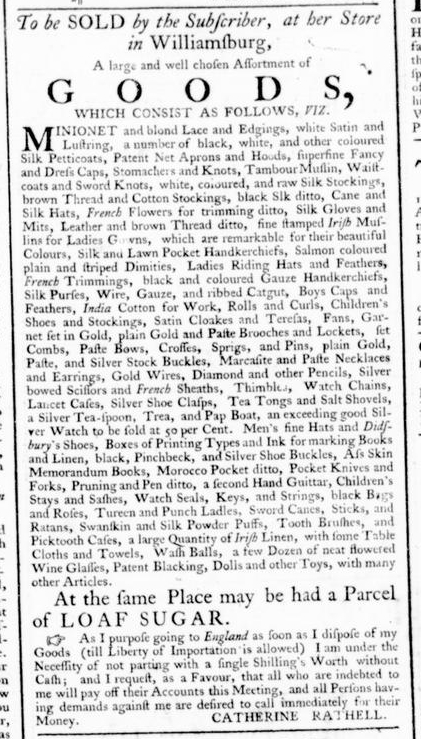
“I purpose going to England as soon as I dispose of my Goods (till Liberty of Importation is allowed).”

In the spring of 1775, Catherine Rathell advertised a “large and well chosen Assortment of GOODS” available at her store in Williamsburg in John Dixon and William Hunter’s Virginia Gazette.  She demonstrated the choices available to consumers with a lengthy list that included “black, white, and other coloured Silk Petticoats,” “fine stamped Irish Muslims for Ladies Gowns, which are remarkable for their beautiful Colours,” “plain Gold and Paste Brooches and Lockets,” “a few Dozen of neat flowered Wine Glasses,” and “Dolls and other Toys.”

Rathell did not mention when she acquired her merchandise.  Taglines that proclaimed, “Just Imported,” or some variation of that sentiment no longer appeared in American newspapers as often as they had in recent years.  The Continental Association, a nonimportation agreement devised by the First Continental Congress in response to the Coercive Acts, had been in effect since December 1, 1774.  The shopkeeper did not state that her inventory arrived in the colony before that date, yet she suggested that was the case when she declared that she planned to go to England “as soon as I dispose of my Goods (till Liberty of Importation is allowed).”  In acknowledging the Continental Association, Rathell implied that she abided by it.

She also indicated the effect it had on her business.  She did not consider it viable to continue operating her store in Williamsburg.  She planned to close it as soon as she could liquidate her wares and visit England until regular trade resumed, not knowing when she composed her advertisement that a war for independence would disrupt commerce even more significantly.  For the moment, she insisted on cash sales instead of credit, “not parting with a single Shilling’s Worth” with payment in hand, and settling accounts with both those indebted to her and others “having demands against” her.  Except for “an exceeding good Silver Watch to be sold at 50 per Cent,” Rathell did not mention any discounts, but prospective customers may have recognized an opportunity to bargain with a shopkeeper determined to leave the colony.

Slavery Advertisements Published April 22, 1775

The Slavery Adverts 250 Project chronicles the role of newspaper advertising in perpetuating slavery in the era of the American Revolution. The project seeks to reveal the ubiquity of slavery in eighteenth-century life from New England to Georgia by republishing advertisements about enslaved people – for sale as individuals or in groups, wanted to purchase or for hire for short periods, runaways who liberated themselves, and those who were subsequently captured and confined in jails and workhouses – in daily digests on this site as well as in real time via the @SlaveAdverts250 Twitter feed, utilizing twenty-first-century media to stand in for the print media of the eighteenth century.

The project aims to provide modern audiences with a sense of just how often colonizers encountered these advertisements in their daily lives. Enslaved men, women, and children appeared in print somewhere in the colonies almost every single day. Those advertisements served as a constant backdrop for social, cultural, economic, and political life in colonial and revolutionary America. Colonizers who did not purport to own enslaved people were still confronted with slavery as well as invited to maintain the system by purchasing enslaved men, women, and children or assisting in the capture of so-called “runaways” who sought to free themselves from bondage. The frequency of these newspaper advertisements suggests just how embedded slavery was in colonial and revolutionary American culture in everyday interactions beyond the printed page.

These advertisements also testify to the experiences of enslaved men, women, and children, though readers must consider that those experiences have been remediated through descriptions offered by enslavers rather than enslaved people themselves. Often unnamed in the advertisements, enslaved men, women, and children were not invisible or unimportant in early America.

These advertisements appeared in colonial American newspapers 250 years ago today.

Pennsylvania Ledger (April 22, 1775).

**********

Pennsylvania Ledger (April 22, 1775).

**********

Virginia Gazette [Dixon and Hunter] (April 22, 1775).

**********

Virginia Gazette [Dixon and Hunter] (April 22, 1775).

**********

Virginia Gazette [Dixon and Hunter] (April 22, 1775).

**********

Virginia Gazette [Dixon and Hunter] (April 22, 1775).

**********

Virginia Gazette [Dixon and Hunter] (April 22, 1775).

**********

Virginia Gazette [Dixon and Hunter] (April 22, 1775).

**********

Virginia Gazette [Dixon and Hunter] (April 22, 1775).

**********

Virginia Gazette [Dixon and Hunter] (April 22, 1775).

**********

Virginia Gazette [Dixon and Hunter] (April 22, 1775).

**********

Virginia Gazette [Dixon and Hunter] (April 22, 1775).

April 21

What was advertised in a revolutionary American newspaper 250 years ago today?

New-Hampshire Gazette (April 21, 1775).

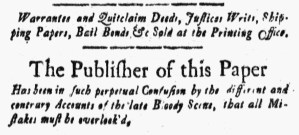
Warrantee and Quitclaim Deeds, Justices Writs … Sold at the Printing Office.”

Daniel Fowle, the printer of the New-Hampshire Gazette, used one of his own advertisements to fill the space near the bottom of the last column on the final page of the April 21, 1775, edition.  He devoted two lines to announcing, “Warrantee and Quitclaim Deeds, Justices Writs, Shipping Papers, Bail Bonds &c Sold at the Printing Office.”  Many printers adopted a similar strategy, promoting goods they sold and services they provided when they had extra space in their newspapers.

Yet that advertisement was not the last word from the printer in that issue of the New-Hampshire Gazette.  Fowle followed it with a notice that stated, “The Publisher of this Paper Has been in such perpetual Confusion by the different and contrary Accounts of the late Bloody Scene, that all Mistakes must be overlook’d.”  He referred to the skirmishes at Lexington and Concord that occurred two days earlier on April 19.  As the masthead proclaimed, Fowle published the “Freshest ADVICES,” but that meant going to press with the information that he received even if some reports contradicted others.  Fowle anticipated that he would offer a clear account of events over time.  For the moment, however, he did his best with the “different and contrary” stories to keep readers informed of what he recognized as momentous events even if all the details were not yet clear.

New-Hampshire Gazette (April 21, 1775).

To that end, the first column on the first page not only began with a rare headline but one that demanded attention: “BLOODY NEWS.”  In an introductory note, the printer explained that “Early this Morning,” on April 20, “we were alarmed with an Express from Newbury-Port, with the following Letter, to the Chairman of the Committee of Correspondence in this Town.”  That letter relayed “Reports of the TROOPS having marched out of Boston to make some Attack in the Country.”  Those reports “in general concur, in part, in [British troops] having been at Lexington.—And it is very generally said they have been at Concord.”  The rider who brought that letter supplement it with his own version of what he had heard.  Fowle also published updated information from two other express riders who arrived in Portsmouth on April 20, one in the afternoon and the other in the evening.  He devoted an entire column to breaking news from Lexington and Concord.

Many of the readers that Fowle hoped would purchase the various printed blanks that he advertised had no doubt heard that something had happened at Lexington and Concord before they saw the April 21 edition of the New-Hampshire Gazette, yet they would have looked to it for confirmation and additional details.  Fowle gave them more details, but stopped short of confirming the accuracy of all of them.  In the coming weeks, he would sift through even more accounts as events continued to unfold, chronicling the Revolutionary War as it happened.

Slavery Advertisements Published April 21, 1775

The Slavery Adverts 250 Project chronicles the role of newspaper advertising in perpetuating slavery in the era of the American Revolution. The project seeks to reveal the ubiquity of slavery in eighteenth-century life from New England to Georgia by republishing advertisements about enslaved people – for sale as individuals or in groups, wanted to purchase or for hire for short periods, runaways who liberated themselves, and those who were subsequently captured and confined in jails and workhouses – in daily digests on this site as well as in real time via the @SlaveAdverts250 Twitter feed, utilizing twenty-first-century media to stand in for the print media of the eighteenth century.

The project aims to provide modern audiences with a sense of just how often colonizers encountered these advertisements in their daily lives. Enslaved men, women, and children appeared in print somewhere in the colonies almost every single day. Those advertisements served as a constant backdrop for social, cultural, economic, and political life in colonial and revolutionary America. Colonizers who did not purport to own enslaved people were still confronted with slavery as well as invited to maintain the system by purchasing enslaved men, women, and children or assisting in the capture of so-called “runaways” who sought to free themselves from bondage. The frequency of these newspaper advertisements suggests just how embedded slavery was in colonial and revolutionary American culture in everyday interactions beyond the printed page.

These advertisements also testify to the experiences of enslaved men, women, and children, though readers must consider that those experiences have been remediated through descriptions offered by enslavers rather than enslaved people themselves. Often unnamed in the advertisements, enslaved men, women, and children were not invisible or unimportant in early America.

These advertisements appeared in colonial American newspapers 250 years ago today.

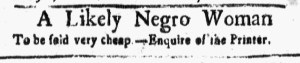
New-Hampshire Gazette (April 21, 1775).

**********

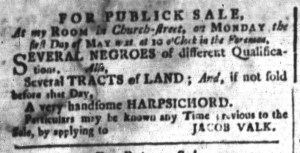
South-Carolina and American General Gazette (April 21, 1775).

**********

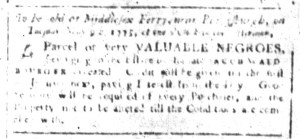
South-Carolina and American General Gazette (April 21, 1775).

**********

South-Carolina and American General Gazette (April 21, 1775).

**********

South-Carolina and American General Gazette (April 21, 1775).

**********

South-Carolina and American General Gazette (April 21, 1775).

**********

South-Carolina and American General Gazette (April 21, 1775).

**********

South-Carolina and American General Gazette (April 21, 1775).

**********

South-Carolina and American General Gazette (April 21, 1775).

**********

South-Carolina and American General Gazette (April 21, 1775).

**********

South-Carolina and American General Gazette (April 21, 1775).

**********

South-Carolina and American General Gazette (April 21, 1775).

**********

South-Carolina and American General Gazette (April 21, 1775).

**********

South-Carolina and American General Gazette (April 21, 1775).

**********

South-Carolina and American General Gazette (April 21, 1775).

**********

South-Carolina and American General Gazette (April 21, 1775).

**********

South-Carolina and American General Gazette (April 21, 1775).

**********

South-Carolina and American General Gazette (April 21, 1775).

**********

South-Carolina and American General Gazette (April 21, 1775).

**********

South-Carolina and American General Gazette (April 21, 1775).

**********

South-Carolina and American General Gazette (April 21, 1775).

**********

South-Carolina and American General Gazette (April 21, 1775).

**********

South-Carolina and American General Gazette (April 21, 1775).

**********

South-Carolina and American General Gazette (April 21, 1775).

**********

Story and Humphreys’s Pennsylvania Mercury (April 21, 1775).

**********

Virginia Gazette [Purdie] (April 21, 1775).

**********

Virginia Gazette [Purdie] (April 21, 1775).

**********

Virginia Gazette [Purdie] (April 21, 1775).

**********

Virginia Gazette [Purdie] (April 21, 1775).

**********

Virginia Gazette [Purdie] (April 21, 1775).

**********

Virginia Gazette [Purdie] (April 21, 1775).

**********

Virginia Gazette [Purdie] (April 21, 1775).

**********

Virginia Gazette [Purdie] (April 21, 1775).

**********

Virginia Gazette [Purdie] (April 21, 1775).

**********

Virginia Gazette [Purdie] (April 21, 1775).

April 20

What was advertised in colonial American newspaper 250 years ago today?

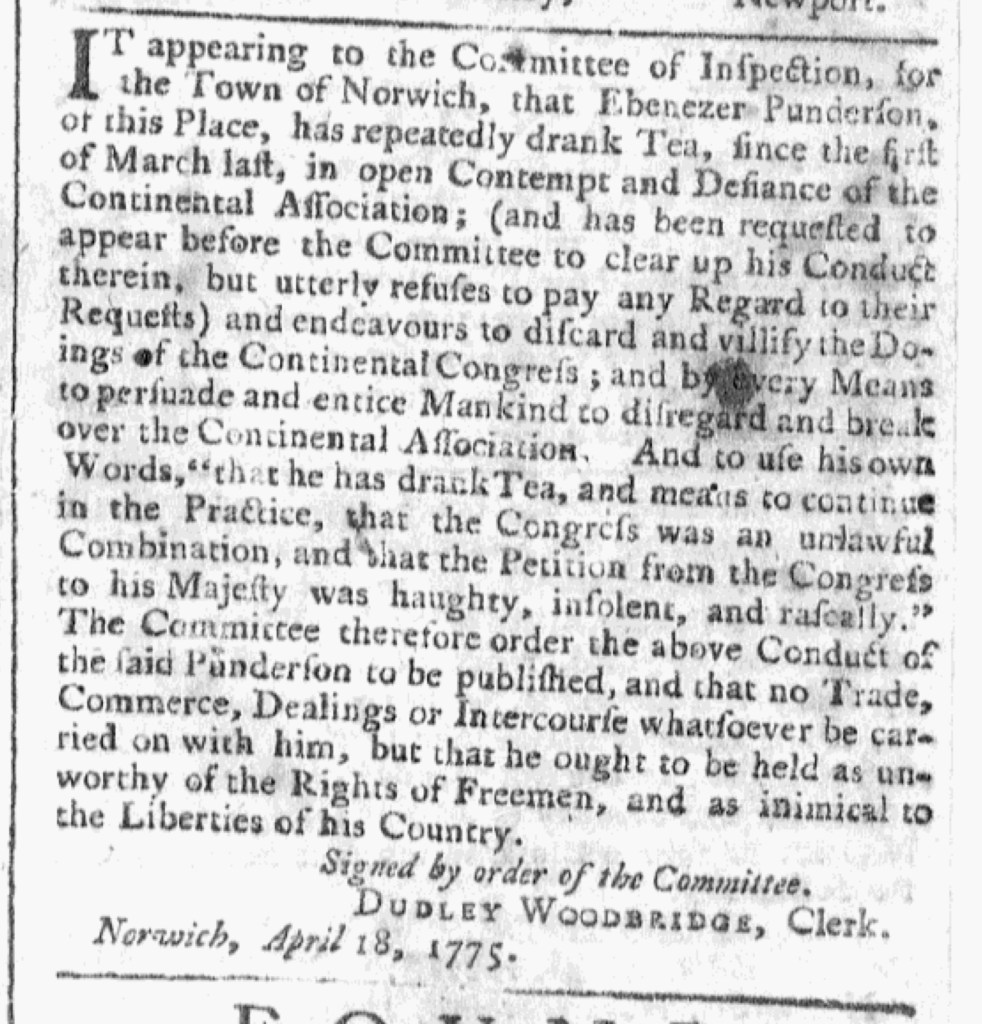
Norwich Packet (April 20, 1775).

“Ebenezer Punderson … has repeatedly drank Tea … in open Contempt and Defiance of the Continental Association.”

Ebenezer Punderson went too far and now it was time for consequences.  He brazenly and repeatedly violated the Continental Association, the nonimportation and nonconsumption agreement enacted by the Continental Congress in response to the Coercive Acts.  As a result of his actions, the Committee of Inspection in Norwich, Connecticut, placed an advertisement in the April 20, 1775, edition of the Norwich Packet to document his behavior and advise the community to shun Punderson.

The committee reported that Punderson “has repeatedly drank Tea … in open Contempt and Defiance of the Continental Association.”  When the committee sought to investigate the matter, he “utterly refuse[d] to pay any Regard to their Requests” to appear before it.  Even worse, he “endeavours to discard and vilify the Doings of the Continental Congress; and by every Means to persuade and entice Mankind to disregard and break over the Continental Association.”  His refusal to abide by the Continental Association damaged the movement and had the potential to do even more harm by inspiring others to ignore it as well.  In addition, he stridently declared that he had no intention of adhering to the agreement, insulting the Continental Congress in the process:  “to use his own words, ‘that he has drank Tea, and means to continue in that Practice, that the Congress was an unlawful Combination, and that the Petition from the Congress to his Majesty was haughty, insolent, and rascally.’”

The Committee of Inspection, in turn, determined that it was Punderson who was haughty, insolent, and rascally.  It ordered that the “Conduct of the said Punderson be published, and that no Trade, Commerce, Dealings or Intercourse whatsoever be carried on with him.”  Furthermore, the committee declared that “he ought to be held as unworthy of the Rights of Freemen, and as inimical to the Liberties of his Country.”  Punderson acted in opposition to the patriot cause.  The Committee of Inspection intended to see him pay for his transgressions.

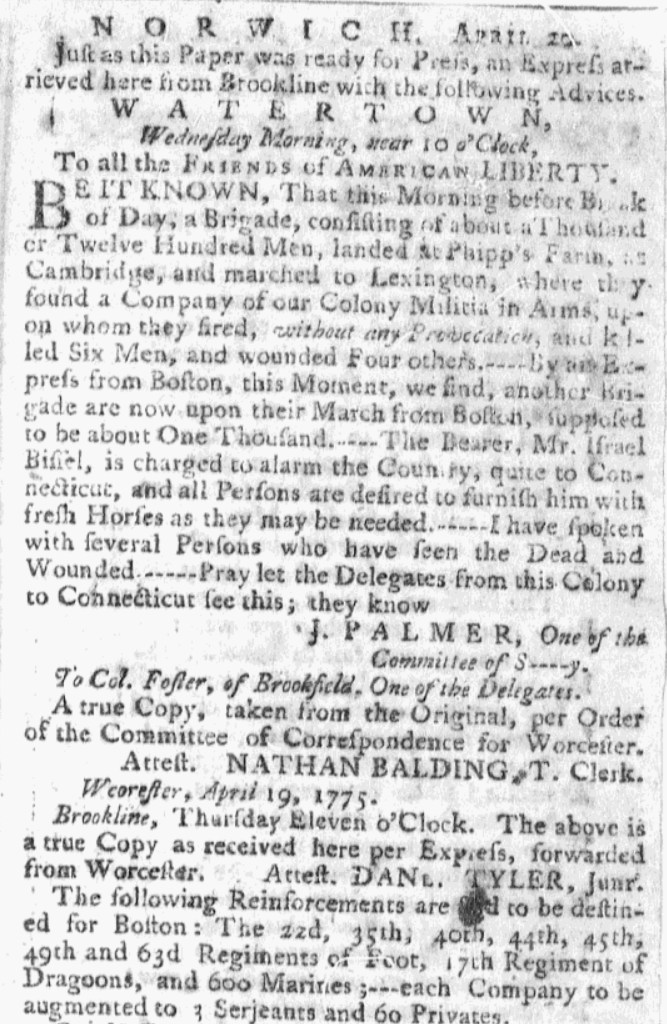
Norwich Packet (April 20, 1775).

Punderson chose the wrong time to draw attention to himself.  Some of the first coverage of the battle at Lexington to appear in American newspapers ran at the top of the column that featured the advertisement about his offenses.  “Just as this Paper was ready for Press,” the printers declared, “an Express arrived here from Brookline with the following Advices” from J. Palmer, “One of the Committee of S[afet]y,” and dispatched to “Col. Foster, of Brookfield.”  The missive reported that before dawn on the morning of April 19 “a Brigade [of British troops] … marched to Lexington, where they found a Company of our Colony Militia in Arms, upon whom they fired, without any Provocation, and killed Six Men, and wounded Four others.”  Palmer stated that he had “spoken with several Persons who have seen the Dead and Wounded.”  He also relayed news that another Brigade “are now on their March from Boston.”  Israel Bissell carried the message, “charged to alarm the Country” in western Massachusetts all the way to Connecticut.  The printers published this account from a “true Copy, taken from the Original, per Order of the Committee of Correspondence for Worcester.”  The details were sparse, yet the “FRIENDS of AMERICAN LIBERTY” reading the Norwich Packet now knew that fighting had commenced near Boston.  That news quite likely had an impact on their attitude when they read about Punderson’s offenses further down the column.

Slavery Advertisements Published April 20, 1775

The Slavery Adverts 250 Project chronicles the role of newspaper advertising in perpetuating slavery in the era of the American Revolution. The project seeks to reveal the ubiquity of slavery in eighteenth-century life from New England to Georgia by republishing advertisements about enslaved people – for sale as individuals or in groups, wanted to purchase or for hire for short periods, runaways who liberated themselves, and those who were subsequently captured and confined in jails and workhouses – in daily digests on this site as well as in real time via the @SlaveAdverts250 Twitter feed, utilizing twenty-first-century media to stand in for the print media of the eighteenth century.

The project aims to provide modern audiences with a sense of just how often colonizers encountered these advertisements in their daily lives. Enslaved men, women, and children appeared in print somewhere in the colonies almost every single day. Those advertisements served as a constant backdrop for social, cultural, economic, and political life in colonial and revolutionary America. Colonizers who did not purport to own enslaved people were still confronted with slavery as well as invited to maintain the system by purchasing enslaved men, women, and children or assisting in the capture of so-called “runaways” who sought to free themselves from bondage. The frequency of these newspaper advertisements suggests just how embedded slavery was in colonial and revolutionary American culture in everyday interactions beyond the printed page.

These advertisements also testify to the experiences of enslaved men, women, and children, though readers must consider that those experiences have been remediated through descriptions offered by enslavers rather than enslaved people themselves. Often unnamed in the advertisements, enslaved men, women, and children were not invisible or unimportant in early America.

These advertisements appeared in colonial American newspapers 250 years ago today.

Maryland Gazette (April 20, 1775).

**********

Maryland Gazette (April 20, 1775).

**********

Maryland Gazette (April 20, 1775).

**********

Maryland Gazette (April 20, 1775).

**********

Maryland Gazette (April 20, 1775).

**********

Maryland Gazette (April 20, 1775).

**********

Maryland Gazette (April 20, 1775).

**********

Supplement to the New-York Journal (April 20, 1775).

**********

Rivington’s New-York Gazetteer (April 20, 1775).

**********

Supplement to the Rivington’s New-York Gazetteer (April 20, 1775).

**********

Virginia Gazette [Pinkney] (April 20, 1775).

**********

Virginia Gazette [Pinkney] (April 20, 1775).

**********

Virginia Gazette [Pinkney] (April 20, 1775).

**********

Virginia Gazette [Pinkney] (April 20, 1775).