Slavery Advertisements Published November 25, 1775

GUEST CURATOR: Massimo Sgambati

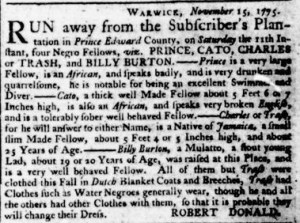
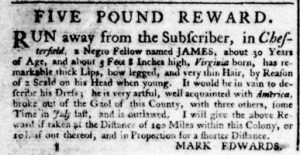
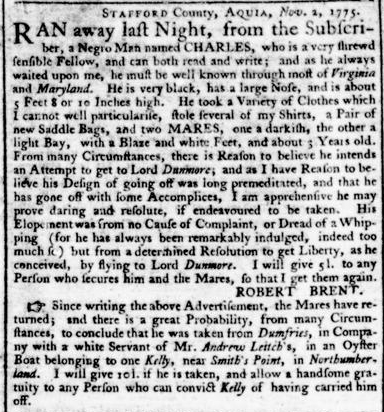
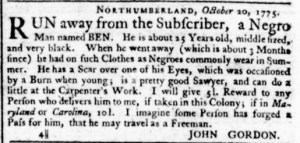
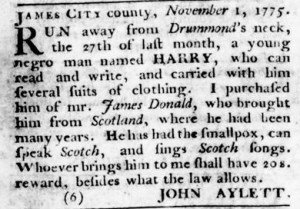
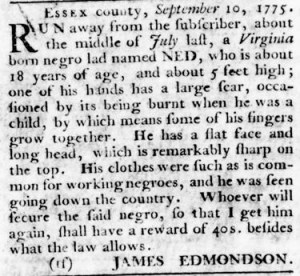
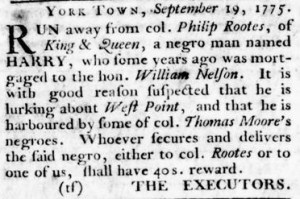
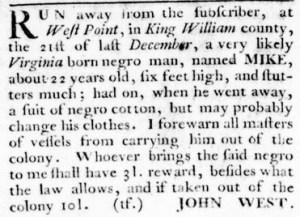
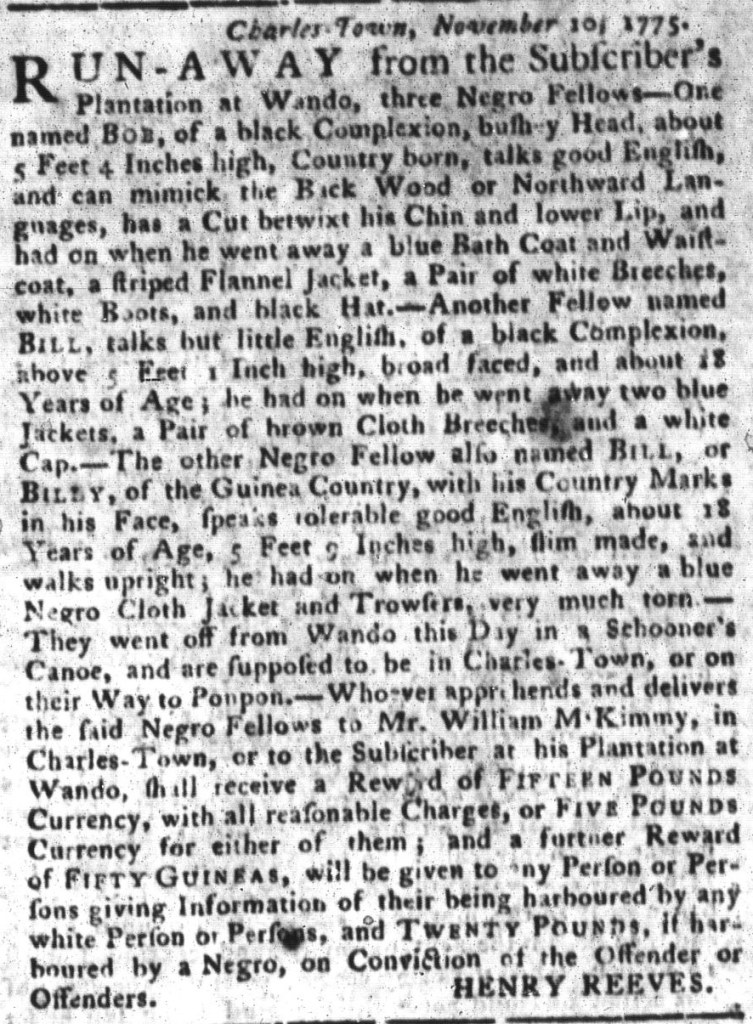
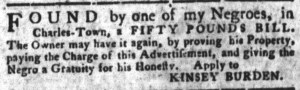
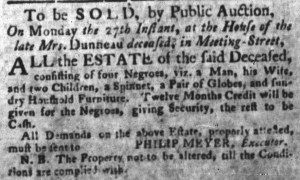
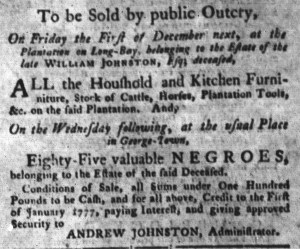
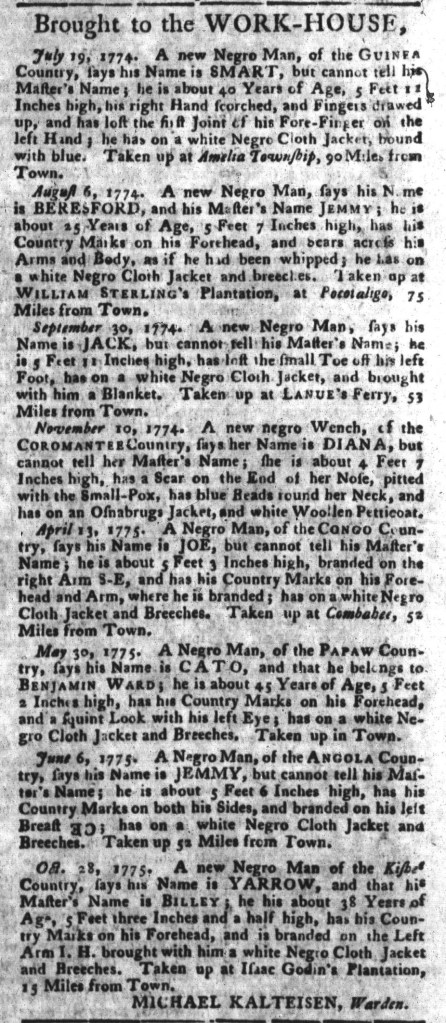
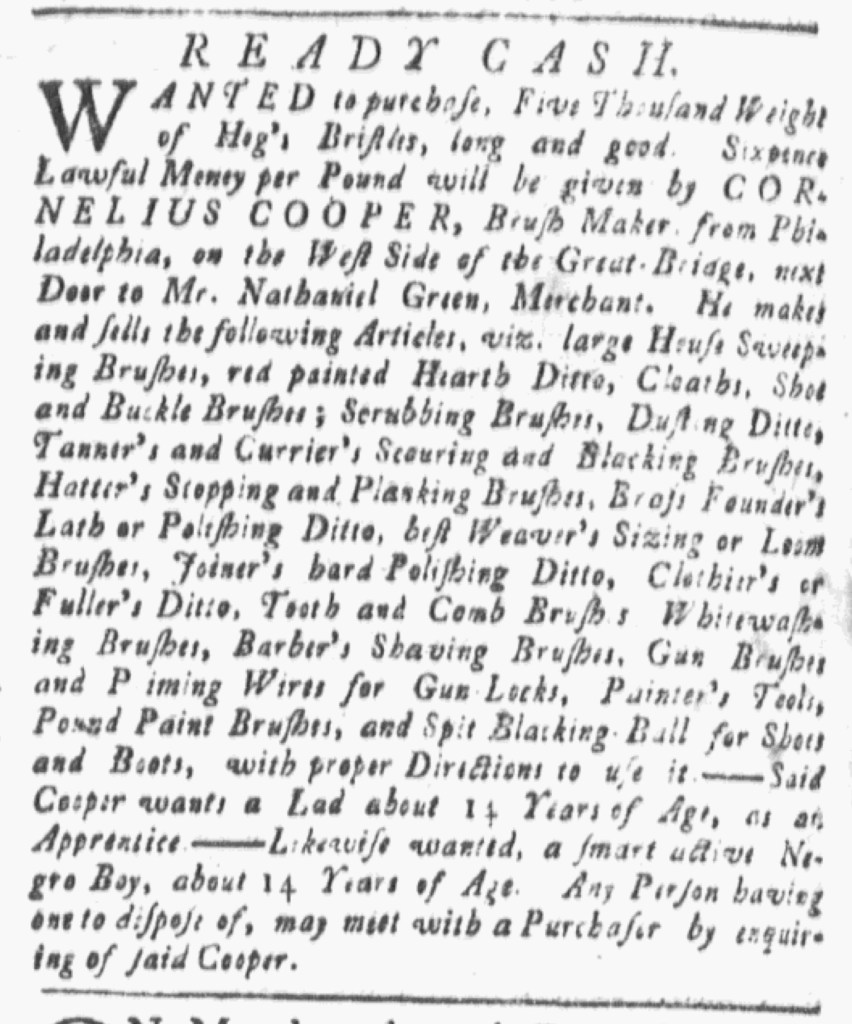
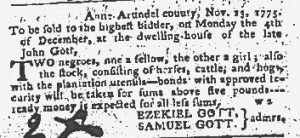
The Slavery Adverts 250 Project chronicles the role of newspaper advertising in perpetuating slavery in the era of the American Revolution. The project seeks to reveal the ubiquity of slavery in eighteenth-century life from New England to Georgia by republishing advertisements about enslaved people – for sale as individuals or in groups, wanted to purchase or for hire for short periods, runaways who liberated themselves, and those who were subsequently captured and confined in jails and workhouses – in daily digests on this site as well as in real time via the @SlaveAdverts250 Twitter feed, utilizing twenty-first-century media to stand in for the print media of the eighteenth century.

The project aims to provide modern audiences with a sense of just how often colonizers encountered these advertisements in their daily lives. Enslaved men, women, and children appeared in print somewhere in the colonies almost every single day. Those advertisements served as a constant backdrop for social, cultural, economic, and political life in colonial and revolutionary America. Colonizers who did not purport to own enslaved people were still confronted with slavery as well as invited to maintain the system by purchasing enslaved men, women, and children or assisting in the capture of so-called “runaways” who sought to free themselves from bondage. The frequency of these newspaper advertisements suggests just how embedded slavery was in colonial and revolutionary American culture in everyday interactions beyond the printed page.

These advertisements also testify to the experiences of enslaved men, women, and children, though readers must consider that those experiences have been remediated through descriptions offered by enslavers rather than enslaved people themselves. Often unnamed in the advertisements, enslaved men, women, and children were not invisible or unimportant in early America.

From compiling an archive of digitized eighteenth-century newspapers to identifying advertisements about enslaved men, women, and children in those newspapers to preparing images of each advertisement to posting this daily digest, Massimo Sgambati served as guest curator for this entry. He completed this work as part of the Summer Scholars Program, funded by a fellowship from the D’Amour College of Liberal Arts and Sciences at Assumption University in Worcester, Massachusetts, in Summer 2025.

These advertisements appeared in colonial American newspapers 250 years ago today.
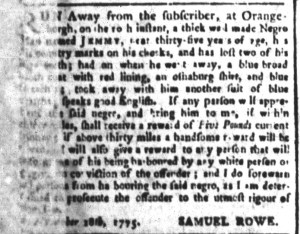
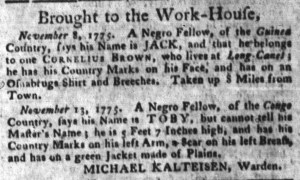
Providence Gazette (November 25, 1775).

**********

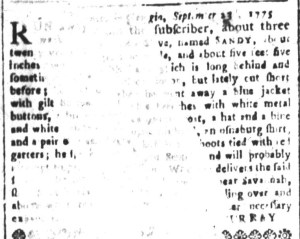
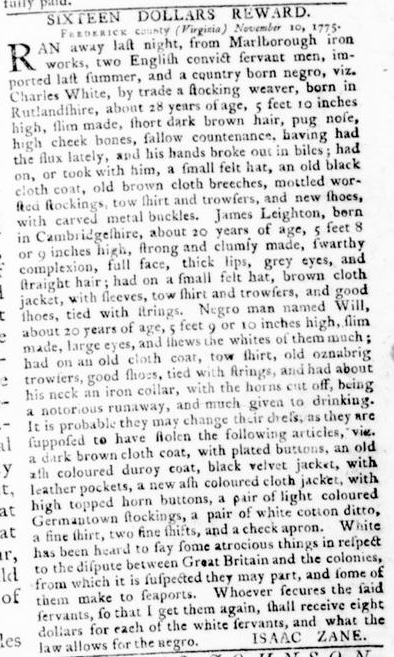
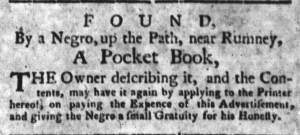
Virginia Gazette [Dixon and Hunter] (November 25, 1775)

**********

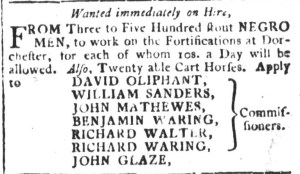
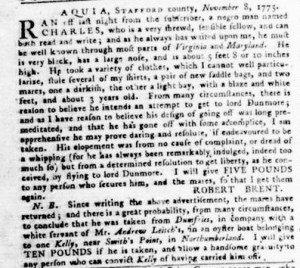
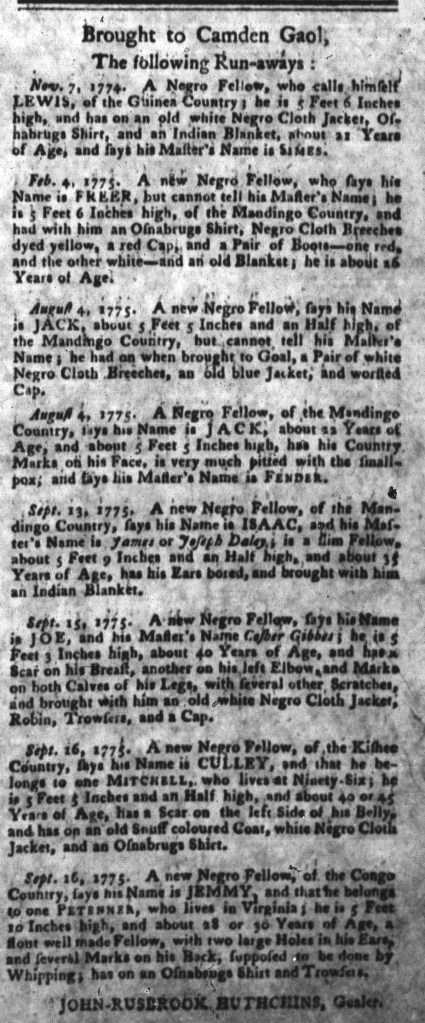
Virginia Gazette [Dixon and Hunter] (November 25, 1775)

**********
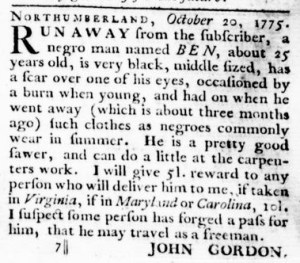
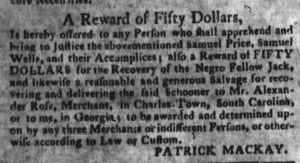
Virginia Gazette [Dixon and Hunter] (November 25, 1775)

**********
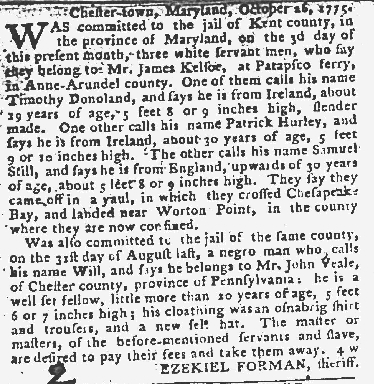
Virginia Gazette [Dixon and Hunter] (November 25, 1775)

**********
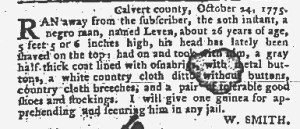
Virginia Gazette [Dixon and Hunter] (November 25, 1775)

**********
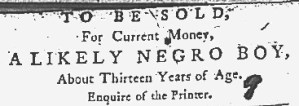
Virginia Gazette [Dixon and Hunter] (November 25, 1775)

November 24

What was advertised in a revolutionary American newspaper 250 years ago today?

Thomas’s Massachusetts Spy (November 24, 1775).

“This Almanack contains … a very particular Account of … the Battle of Lexington.”

In the fall of 1775, Isaiah Thomas promoted “The NORTH-AMERICAN’s ALMANACK, For the Year 1776.”  He advertised the handy reference manual in the November 24 edition of his newspaper, Thomas’s Massachusetts Spy, Or, American Oracle of Liberty.  According to the imprint on the title page, the almanac was printed in “MASSACHUSETTS-BAY … by I[SAIAH] THOMAS, in WORCESTER, B[ENJAMIN] EDES,” the printer of the Boston-Gazette, “in WATERTOWN; and S[AMUEL] & E[BENEZER] HALL,” the printers of the New-England Chronicle, “in CAMBRIDGE.”  The advertisement also indicated that each of those printing offices stocked and sold the almanac.

Each of those printers earned reputations for their support of the American cause.  In this instance, their marketing efforts reflected their politics.  The advertisement noted that the almanac included “many interesting and entertaining matters” in addition to “what is necessary and useful,” singling out “a very particular Account of the commencement of Hostilities between Great-Britain and America, and the Battle of Lexington, by the Rev. Wm. Gordon.”  The contents listed on the title page included other items that resonated with current events, including “Description of a Tory and a Whig,” “Directions for preserving the Health of the Soldiers in the Camp,” and “Sir Richard Rum’s advice to the Soldiers, shewing the good effects of Spirituous Liquors when they are used with moderation, and their pernicious effects when they are used to excess, with a cure for Drunkenness.”  Such moral lessons often appeared in almanacs, but it had new significance as the siege of Boston continued.

Thomas and his fellow printers considered the account of the Battle of Lexington “worthy to be preserved by every American,” signaling that their almanac featured more than just “interesting and entertaining matters.”  Readers had a patriotic duty to purchase The North-American’s Almanack and then commemorate the first battle of the Revolutionary War and renew their commitment to defending American liberties each time they consulted the almanac.  The printers sought to disseminate it widely, selling it “by the Thousand, Hundred, Groce, Dozen or single,” intending that retailers purchase in volume for resale.  The price on the title page offered a discount, “6 Coppers Single, and 20 Shillings the Dozen,” and the printers may have negotiated even better deals for those purchasing in even greater quantity.  At the same time that they earned their livelihoods by selling almanacs, they also seized an opportunity to commemorate the Battle of Lexington.  Consumers, they asserted, had a patriotic duty to choose this almanac over any of the alternatives.

Slavery Advertisements Published November 24, 1775

GUEST CURATOR: Massimo Sgambati

The Slavery Adverts 250 Project chronicles the role of newspaper advertising in perpetuating slavery in the era of the American Revolution. The project seeks to reveal the ubiquity of slavery in eighteenth-century life from New England to Georgia by republishing advertisements about enslaved people – for sale as individuals or in groups, wanted to purchase or for hire for short periods, runaways who liberated themselves, and those who were subsequently captured and confined in jails and workhouses – in daily digests on this site as well as in real time via the @SlaveAdverts250 Twitter feed, utilizing twenty-first-century media to stand in for the print media of the eighteenth century.

The project aims to provide modern audiences with a sense of just how often colonizers encountered these advertisements in their daily lives. Enslaved men, women, and children appeared in print somewhere in the colonies almost every single day. Those advertisements served as a constant backdrop for social, cultural, economic, and political life in colonial and revolutionary America. Colonizers who did not purport to own enslaved people were still confronted with slavery as well as invited to maintain the system by purchasing enslaved men, women, and children or assisting in the capture of so-called “runaways” who sought to free themselves from bondage. The frequency of these newspaper advertisements suggests just how embedded slavery was in colonial and revolutionary American culture in everyday interactions beyond the printed page.

These advertisements also testify to the experiences of enslaved men, women, and children, though readers must consider that those experiences have been remediated through descriptions offered by enslavers rather than enslaved people themselves. Often unnamed in the advertisements, enslaved men, women, and children were not invisible or unimportant in early America.

From compiling an archive of digitized eighteenth-century newspapers to identifying advertisements about enslaved men, women, and children in those newspapers to preparing images of each advertisement to posting this daily digest, Massimo Sgambati served as guest curator for this entry. He completed this work as part of the Summer Scholars Program, funded by a fellowship from the D’Amour College of Liberal Arts and Sciences at Assumption University in Worcester, Massachusetts, in Summer 2025.

These advertisements appeared in colonial American newspapers 250 years ago today.

Connecticut Gazette (November 24, 1775)

**********
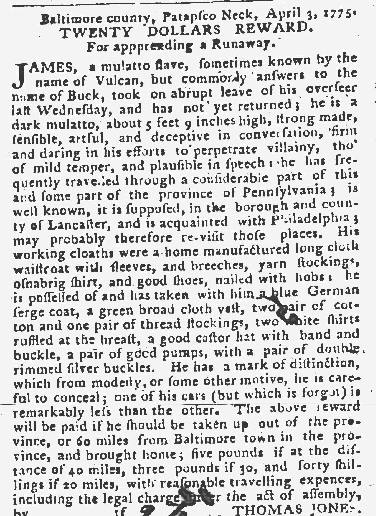
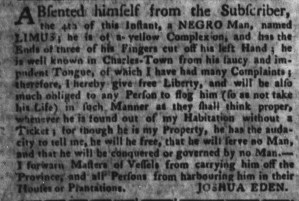
South-Carolina and American General Gazette (November 24, 1775)

**********
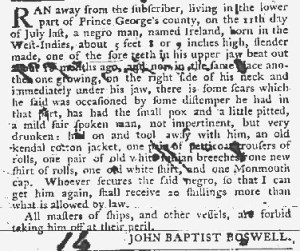
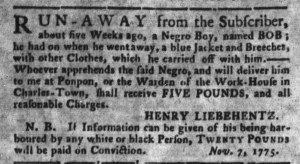
South-Carolina and American General Gazette (November 24, 1775)

**********
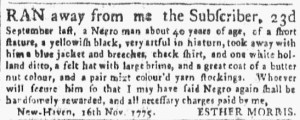
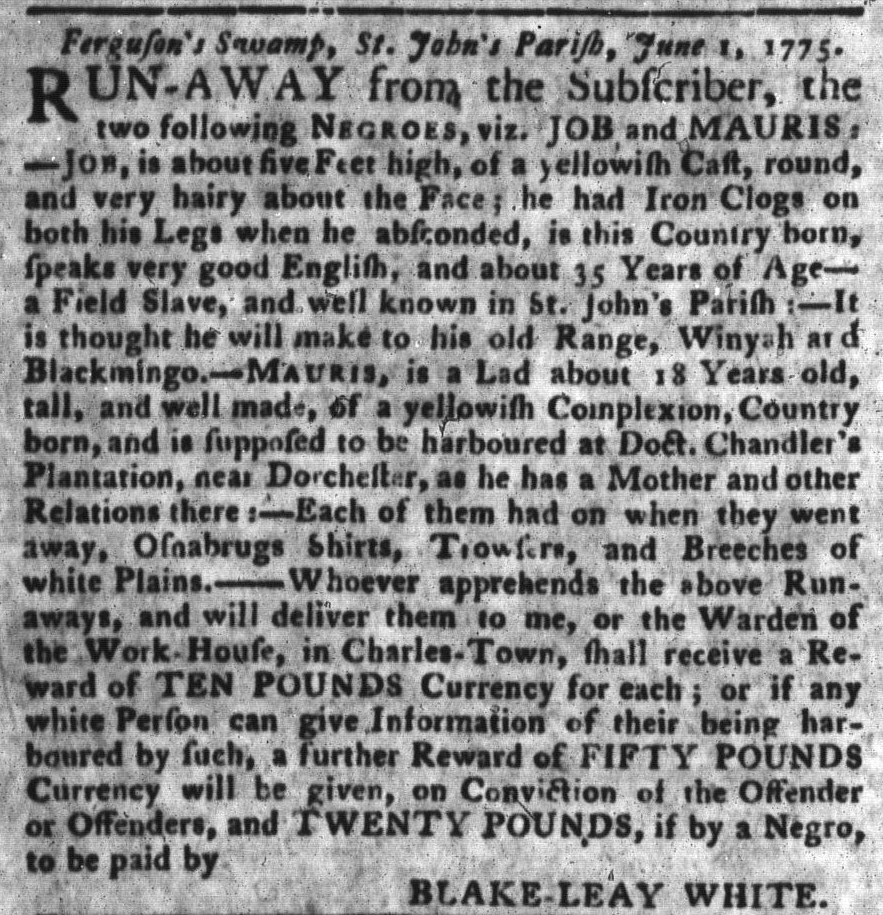
South-Carolina and American General Gazette (November 24, 1775)

**********
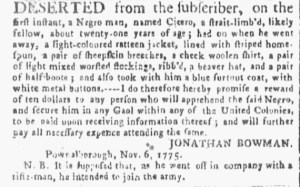
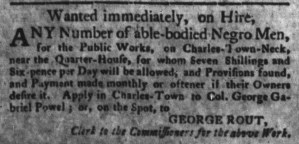
South-Carolina and American General Gazette (November 24, 1775)

**********

South-Carolina and American General Gazette (November 24, 1775)

**********
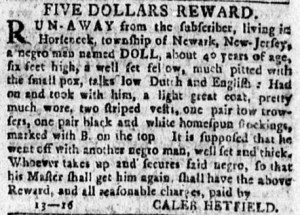
South-Carolina and American General Gazette (November 24, 1775)

**********

South-Carolina and American General Gazette (November 24, 1775)

**********

South-Carolina and American General Gazette (November 24, 1775)

**********

South-Carolina and American General Gazette (November 24, 1775)

**********

Virginia Gazette [Purdie] (November 24, 1775)

**********

Virginia Gazette [Purdie] (November 24, 1775)

**********

Virginia Gazette [Purdie] (November 24, 1775)

**********

Virginia Gazette [Purdie] (November 24, 1775)

**********

Virginia Gazette [Purdie] (November 24, 1775)

**********

Virginia Gazette [Purdie] (November 24, 1775)

**********

Virginia Gazette [Purdie] (November 24, 1775)

**********

Virginia Gazette [Purdie] (November 24, 1775)

**********

Virginia Gazette [Purdie] (November 24, 1775)

**********

Virginia Gazette [Purdie] (November 24, 1775)

**********

Virginia Gazette [Purdie] (November 24, 1775)

**********

Virginia Gazette [Purdie] (November 24, 1775)

**********

Virginia Gazette [Purdie] (November 24, 1775)

**********

Virginia Gazette Supplement [Purdie] (November 24, 1775)

November 23

What was advertised in a revolutionary American newspaper 250 years ago today?

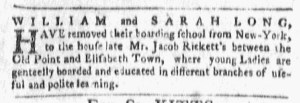
Rivington’s New-York Gazetteer (November 23, 1775).

“WILLIAM and SARAH LONG, HAVE removed their boarding school from New-York.”

Late in November 1775, William and Sarah Long placed an advertisement for their boarding school “where young Ladies are genteelly boarded and educated in different branches of useful and polite learning” in the final edition of Rivington’s New-York Gazetteer, though they did not know that it would be the last issue.  They advised prospective students and their parents that they “removed … from New-York, to the house late Mr. Jacob Rickett’s between the Old Point and Elisabeth Town” in New Jersey.  What prompted the Longs to relocate outside the city?  With the siege of Boston continuing, the uncertainty of where and when British soldiers would attempt to assert their authority likely played a role in their decision.  A few months earlier, Andrew Wilson ran an advertisement for his grammar school in Morristown, New Jersey, emphasizing its distance from the coast.  He invoked the “dangerous and alarming times [for] the inhabitants of large cities” and suggested that they “may wish to have their children educated in the interior parts of the country, at a distance from probable, sudden danger and confusion.”  Similar thoughts may have inspired the Longs when they “removed” their school from New York.

On November 27, “sudden danger and confusion” did indeed occur at James Rivington’s printing office on Hanover Square.  Angry with the Tory perspective that Rivington often expressed in his newspaper, the Sons of Liberty attacked his printing office.  It was not the first time, but the damage was much more significant than the previous attack.  The Sons of Liberty destroyed Rivington’s press and type, preventing him from continuing to publish his newspaper or anything else.  The printer decided to leave the city, sailing for London.  He returned in 1777, during the British occupation of New York, and established Rivington’s New-York Gazette.  It continued the numbering of Rivington’s New-York Gazetteer.  That tile lasted for only two issues before he updated it to Rivington’s New York Loyal Gazette for several weeks and then the Royal Gazette throughout the remainder of the war.  Rivington’s newspaper changed names one more time, becoming Rivington’s New-York Gazette for just over a month before ceasing publication with the December 31, 1783, edition.  In his History of Printing in America (1810), patriot printer Isaiah Thomas noted that “for some time Rivington conducted his paper with as much impartiality as most of the editors of that period.”[1]  Adhering to that impartiality longer than other printers contributed to the perception that Rivington favored Tory sentiments when he claimed that he merely exercised freedom of the press.  Earlier in 1775, he advertised “Pamphlets published on both sides, in the unhappy dispute with Great-Britain.”  In addition to the Longs’ advertisement about their boarding school, the final issue of Rivington’s New-York Gazetteer also carried an advertisement for the Constitutional Post Office in New York.  The Second Continental Congress authorized the Constitutional Post as an alternative to the imperial system.

William and Sarah Long and their students “removed” from New York before “sudden danger and confusion” found them.  James Rivington, on the other hand, fled the city after repeated attacks on his printing office made it impossible for him to continue printing his newspaper.

**********

[1] Isaiah Thomas, The History of Printing in America: With a Biography of Printers and an Account of Newspapers (1810; New York: Weathervane Books, 1970), 511.

Slavery Advertisements Published November 23, 1775

GUEST CURATOR: Massimo Sgambati

The Slavery Adverts 250 Project chronicles the role of newspaper advertising in perpetuating slavery in the era of the American Revolution. The project seeks to reveal the ubiquity of slavery in eighteenth-century life from New England to Georgia by republishing advertisements about enslaved people – for sale as individuals or in groups, wanted to purchase or for hire for short periods, runaways who liberated themselves, and those who were subsequently captured and confined in jails and workhouses – in daily digests on this site as well as in real time via the @SlaveAdverts250 Twitter feed, utilizing twenty-first-century media to stand in for the print media of the eighteenth century.

The project aims to provide modern audiences with a sense of just how often colonizers encountered these advertisements in their daily lives. Enslaved men, women, and children appeared in print somewhere in the colonies almost every single day. Those advertisements served as a constant backdrop for social, cultural, economic, and political life in colonial and revolutionary America. Colonizers who did not purport to own enslaved people were still confronted with slavery as well as invited to maintain the system by purchasing enslaved men, women, and children or assisting in the capture of so-called “runaways” who sought to free themselves from bondage. The frequency of these newspaper advertisements suggests just how embedded slavery was in colonial and revolutionary American culture in everyday interactions beyond the printed page.

These advertisements also testify to the experiences of enslaved men, women, and children, though readers must consider that those experiences have been remediated through descriptions offered by enslavers rather than enslaved people themselves. Often unnamed in the advertisements, enslaved men, women, and children were not invisible or unimportant in early America.

From compiling an archive of digitized eighteenth-century newspapers to identifying advertisements about enslaved men, women, and children in those newspapers to preparing images of each advertisement to posting this daily digest, Massimo Sgambati served as guest curator for this entry. He completed this work as part of the Summer Scholars Program, funded by a fellowship from the D’Amour College of Liberal Arts and Sciences at Assumption University in Worcester, Massachusetts, in Summer 2025.

These advertisements appeared in colonial American newspapers 250 years ago today.

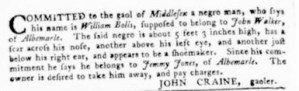
Maryland Gazette (November 23, 1775)

**********

Maryland Gazette (November 23, 1775)

**********

Maryland Gazette (November 23, 1775)

**********

Maryland Gazette (November 23, 1775)

**********

Maryland Gazette (November 23, 1775)

**********

Maryland Gazette (November 23, 1775)

**********

Maryland Gazette (November 23, 1775)

**********

Maryland Gazette (November 23, 1775)

**********

New-England Chronicle (November 23, 1775)

**********

New-England Chronicle (November 23, 1775)

**********

New-York Journal (November 23, 1775)

**********

New-York Journal (November 23, 1775)

**********

Rivington’s New-York Gazetteer (November 23, 1775)

**********

Virginia Gazette [Pinkney] (November 23, 1775)

**********

Virginia Gazette [Pinkney] (November 23, 1775)

**********

Virginia Gazette [Pinkney] (November 23, 1775)

**********

Virginia Gazette [Pinkney] (November 23, 1775)

**********

Virginia Gazette [Pinkney] (November 23, 1775)

**********

Virginia Gazette [Pinkney] (November 23, 1775)

**********

Virginia Gazette [Pinkney] (November 23, 1775)

**********

Virginia Gazette [Pinkney] (November 23, 1775)

November 22

What was advertised in a revolutionary American newspaper 250 years ago today?

Pennsylvania Gazette (November 22, 1775).

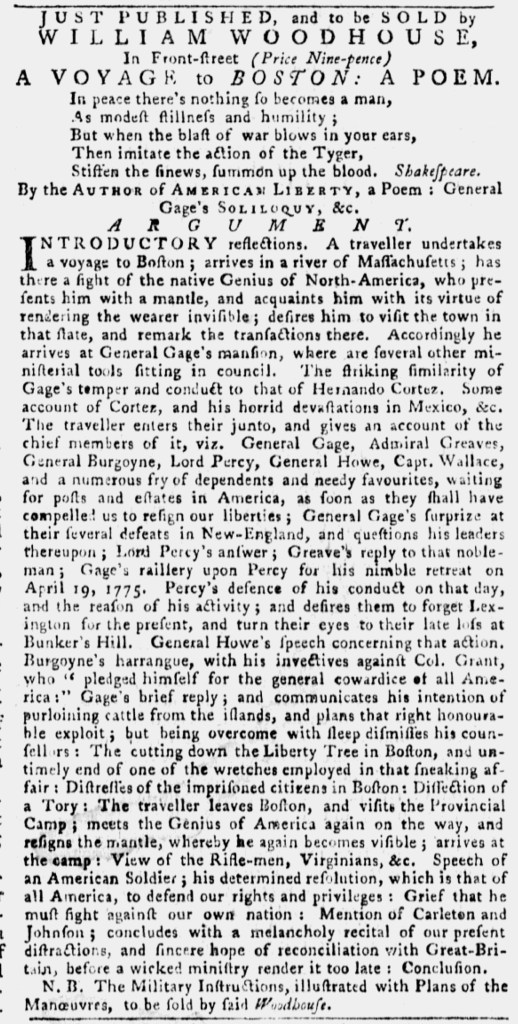
“A VOYAGE to BOSTON: A POEM.”

An advertisement for a new publication, “A Voyage to Boston: A Poem,” appeared on the front page of the November 18, 1775, edition of the Pennsylvania Ledger.  William Woodhouse, a bookseller, stationer, and bookbinder marketed a work that historians attribute to the pen of Philip Freneau and the press of Benjamin Towne.  The imprint on the title page merely stated, “Philadelphia: Sold by William Woodhouse, in Front-Street.”  The advertisement did advise that “A Voyage to Boston” was “By the same Author of AMERICAN LIBERTY: A Poem. General Gage’s SOLILOQUY, &c.”  A similar note appeared on the title page.  Woodhouse likely hoped that associating this publication with ones already familiar to readers would aid in inciting demand for the work.  He also inserted five lines about peace and war from Shakespeare, transcribing them from the title page of the pamphlet.

Four days later, he published a much more extensive advertisement in the Pennsylvania Gazette.  It contained all the content from the version in the Pennsylvania Ledger, including a nota bene that announced, “The Military Instructions, illustrated with Plans of the Manœuvres, to be sold by said Woodhouse.”  The new advertisement also featured the “ARGUMENT” of the poem.  That summary provided an overview of recent events as observed by an imaginary “traveller [who] undertakes a voyage to Boston” and, after being bestowed with a cloak of invisibility by the “Genius of North-America,” entered the city and witnessed General Thomas Gage and “several other ministerial tools sitting in council” as they discussed the battles at Lexington and Concord and “their late loss at Bunker’s Hill,” the “cutting down of the Liberty Tree in Boston,” and the “Distresses of the imprisoned citizens in Boston” as the siege of the city continued.  The traveler departed from Boston, visited “the Provincial Camp,” returned the cloak, saw “the Rifle-men, Virginians,” and others who supported the American cause, and listened to the “Speech of an American Soldier,” delivered with “determined resolution, which is that of all America, to defend our rights and privileges.”  The poem concluded with a “sincere hope of reconciliation with Great-Britain, before a wicked ministry render it too late.”  Most colonizers still sought a redress of grievances rather than separating from the British Empire.  In adding this lengthy “ARGUMENT” to the advertisement, Woodhouse did not compose original copy.  Instead, just as the lines from Shakespeare came from the title page of the pamphlet, the “ARGUMENT” filled two pages of the pamphlet preceding the poem.  Although he did not write the copy, Woodhouse apparently decided that providing more information about the contents of the poem would help to increase sales.

Slavery Advertisements Published November 22, 1775

GUEST CURATOR: Massimo Sgambati

The Slavery Adverts 250 Project chronicles the role of newspaper advertising in perpetuating slavery in the era of the American Revolution. The project seeks to reveal the ubiquity of slavery in eighteenth-century life from New England to Georgia by republishing advertisements about enslaved people – for sale as individuals or in groups, wanted to purchase or for hire for short periods, runaways who liberated themselves, and those who were subsequently captured and confined in jails and workhouses – in daily digests on this site as well as in real time via the @SlaveAdverts250 Twitter feed, utilizing twenty-first-century media to stand in for the print media of the eighteenth century.

The project aims to provide modern audiences with a sense of just how often colonizers encountered these advertisements in their daily lives. Enslaved men, women, and children appeared in print somewhere in the colonies almost every single day. Those advertisements served as a constant backdrop for social, cultural, economic, and political life in colonial and revolutionary America. Colonizers who did not purport to own enslaved people were still confronted with slavery as well as invited to maintain the system by purchasing enslaved men, women, and children or assisting in the capture of so-called “runaways” who sought to free themselves from bondage. The frequency of these newspaper advertisements suggests just how embedded slavery was in colonial and revolutionary American culture in everyday interactions beyond the printed page.

These advertisements also testify to the experiences of enslaved men, women, and children, though readers must consider that those experiences have been remediated through descriptions offered by enslavers rather than enslaved people themselves. Often unnamed in the advertisements, enslaved men, women, and children were not invisible or unimportant in early America.

From compiling an archive of digitized eighteenth-century newspapers to identifying advertisements about enslaved men, women, and children in those newspapers to preparing images of each advertisement to posting this daily digest, Massimo Sgambati served as guest curator for this entry. He completed this work as part of the Summer Scholars Program, funded by a fellowship from the D’Amour College of Liberal Arts and Sciences at Assumption University in Worcester, Massachusetts, in Summer 2025.

These advertisements appeared in colonial American newspapers 250 years ago today.

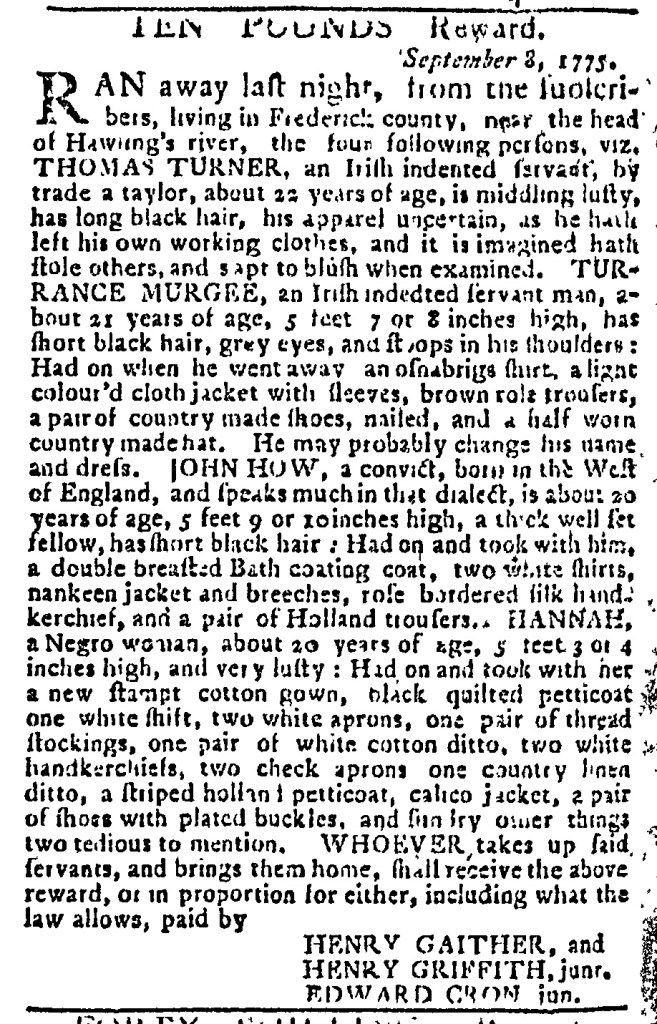
Maryland Journal (November 22, 1775)

**********

Maryland Journal (November 22, 1775)

**********

Pennsylvania Gazette (November 22, 1775)

**********

Pennsylvania Journal (November 22, 1775)

November 21

What was advertised in a revolutionary American newspaper 250 years ago today?

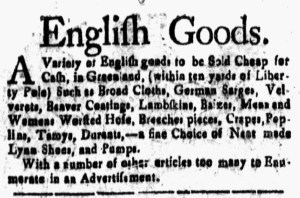
New-Hampshire Gazette (November 21, 1775).

“English Goods … within ten yards of Liberty Pole.”

An anonymous advertiser hawked “A Variety of English goods” in the November 21, 1775, edition of the New-Hampshire Gazette.  The notice included a short list of imported items, mostly textiles, such as “Broad Cloths, … Velverets, … Poplins, Tamys, [and] Durants,” as well as “Mens and Womens Worsted Hose [and] Breeches pieces.”  That list apparently did not cover everything available for sale; the advertisement concluded with a note about “a number of other articles too many to Enumerate in an Advertisement.”

That may have been the advertiser’s choice since some merchants and shopkeepers did occasionally resort to similar language, though it may have been a decision influenced by the printer, Daniel Fowle.  That issue of the New-Hampshire Gazette consisted of only two pages instead of the usual four.  It was the first issue of the New-Hampshire Gazette since November 8.  The printer did not produce and circulate an issue the previous week.  The Adverts 250 Project has tracked apparent disruptions in the supply of paper that had an impact on the New-Hampshire Gazette, yet that was not the only difficulty the printer faced.  In the monumental History and Bibliography of American Newspapers, 1690-1820, Clarence S. Brigham notes that Fowle announced that he printed the November 2 edition “‘with great difficulty’ because of the threatened British attack on Portsmouth” and that the printer “stated that the press ‘is removed to Greenland, about six miles from Portsmouth.”[1]  Those circumstances may have played a role in the decision to publish an abbreviated advertisement that promised a greater selection of goods than appeared in print.

The advertisement presents other questions about consumer culture during the era of the American Revolution.  The Continental Association, a nonimportation and nonconsumption agreement devised by the First Continental Congress, was in effect, yet the unnamed advertiser boldly marketed imported goods.  The headline, “English Goods,” appeared in a larger font than anything else in that issue except for the title of the newspaper in the masthead.  The advertiser conveniently did not mention when the goods had arrived in the colonies, whether they had been transported and delivered before the boycott went into effect.  Yet the advertiser did acknowledge current events when giving the location to purchase the imported goods: “within ten yards of [the] Liberty Pole” in Greenland.  In his recent book on the consumption and politics of tea during the era of the American Revolution, James R. Fichter argues that many tea retailers did not face repercussions while tea importers certainly did.  He further contends that advertisements revealed the reality of local commerce compared to the propaganda that appeared in news articles and editorials about tea.[2]  Perhaps something similar occurred with these “English Goods” in Greenland in the late fall of 1775.

**********

[1] Clarence S. Brigham, History and Bibliography of American Newspapers, 1690-1820 (American Antiquarian Society, 1947), 471.

[2] James Fichter, “Truth in Advertising,” in Tea: Consumption, Politics, and Revolution, 1773-1776 (Cornell University Press, 2023), 132-157.

Slavery Advertisements Published November 21, 1775

GUEST CURATOR: Massimo Sgambati

The Slavery Adverts 250 Project chronicles the role of newspaper advertising in perpetuating slavery in the era of the American Revolution. The project seeks to reveal the ubiquity of slavery in eighteenth-century life from New England to Georgia by republishing advertisements about enslaved people – for sale as individuals or in groups, wanted to purchase or for hire for short periods, runaways who liberated themselves, and those who were subsequently captured and confined in jails and workhouses – in daily digests on this site as well as in real time via the @SlaveAdverts250 Twitter feed, utilizing twenty-first-century media to stand in for the print media of the eighteenth century.

The project aims to provide modern audiences with a sense of just how often colonizers encountered these advertisements in their daily lives. Enslaved men, women, and children appeared in print somewhere in the colonies almost every single day. Those advertisements served as a constant backdrop for social, cultural, economic, and political life in colonial and revolutionary America. Colonizers who did not purport to own enslaved people were still confronted with slavery as well as invited to maintain the system by purchasing enslaved men, women, and children or assisting in the capture of so-called “runaways” who sought to free themselves from bondage. The frequency of these newspaper advertisements suggests just how embedded slavery was in colonial and revolutionary American culture in everyday interactions beyond the printed page.

These advertisements also testify to the experiences of enslaved men, women, and children, though readers must consider that those experiences have been remediated through descriptions offered by enslavers rather than enslaved people themselves. Often unnamed in the advertisements, enslaved men, women, and children were not invisible or unimportant in early America.

From compiling an archive of digitized eighteenth-century newspapers to identifying advertisements about enslaved men, women, and children in those newspapers to preparing images of each advertisement to posting this daily digest, Massimo Sgambati served as guest curator for this entry. He completed this work as part of the Summer Scholars Program, funded by a fellowship from the D’Amour College of Liberal Arts and Sciences at Assumption University in Worcester, Massachusetts, in Summer 2025.

These advertisements appeared in colonial American newspapers 250 years ago today.

New-Hampshire Gazette (November 21, 1775)

**********

New-Hampshire Gazette (November 21, 1775)

**********

South-Carolina Gazette (November 21, 1775)

**********

South-Carolina Gazette (November 21, 1775)

**********

South-Carolina Gazette (November 21, 1775)

**********

South-Carolina Gazette (November 21, 1775)

**********

South-Carolina Gazette (November 21, 1775)

**********

South-Carolina Gazette (November 21, 1775)

**********

South-Carolina Gazette (November 21, 1775)

**********

South-Carolina Gazette (November 21, 1775)

**********

South-Carolina Gazette (November 21, 1775)

**********

South-Carolina Gazette (November 21, 1775)

**********

South-Carolina Gazette (November 21, 1775)

**********

South-Carolina Gazette (November 21, 1775)

**********

South-Carolina Gazette (November 21, 1775)

November 20

What was advertised in a revolutionary American newspaper 250 years ago today?

Boston-Gazette (November 20, 1775).

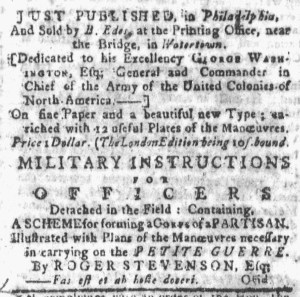
“MILITARY INSTRUCTIONS for officers Detached in the Field.”

On November 20, 1775, Benjamin Edes, the printer of the Boston-Gazette, ran an advertisement for a military manual “JUST PUBLISHED, in Philadelphia,” and available at his printing office in Watertown.  The printer had relocated there shortly after the battles at Lexington and Concord, though he did not update the name of his newspaper.  He advertised an edition of Roger Stevenson’s Military Instructions for Officers Detached in the Field published by Robert Aitken.  Although the advertisement proclaimed that the book had been “JUST PUBLISHED,” another edition had been available in Philadelphia since June.  At the time that Aitken advertised it, he noted that “A new Edition of this Book, with some Additions, is now in the Press and will soon be published.”  That likely referred to the edition that Edes stocked, especially considering that the appeals in his advertisement paralleled the advertisement that Aitken published in the Pennsylvania Ledger in August.

Both advertisements opened with an announcement that the book had been published and where to acquire copies, followed by a note that this edition was “Dedicated to his Excellency GEORGE WASHINGTON, Esq; General and Commander in Chief of the Army of the United Colonies of North-America.”  Next, both advertisements commented on the material aspects of the book, noting the “fine Paper and a beautiful new Type” as well as the “12 useful Plates [or illustrations] of the Manœuvres.”  The price in the local currency followed, along with a comparison to the price of a bound London edition.”  As was so often the case in advertisements for books, all that preamble appeared before the title of the book.  Aitken’s much longer advertisement then presented an address “TO THE PUBLIC” drawn from the preface.  Edes did not devote that much space to his advertisement in the Boston-Gazette.  Instead, he inserted a quotation from Ovid: “Fas est et ab roste doceri” (It is right to be taught from the pulpit).  That phrase invoked Stevenson’s experience as a British officer.  Edes did not devise it on his own.  Instead, he borrowed it from the title page.  Overall, Edes did not generate original copy for his advertisement for a military manual printed in Philadelphia.  Instead, he borrowed heavily from Aitken’s advertisement, revising the location where customers could purchase the book and the price in local currency.  He also substituted the quotation on the title page for an excerpt from the preface but did not compose anything new for his advertisement.  The marketing for the book in the Boston-Gazette thus replicated the strategies that Aitken introduced in the public prints in Philadelphia months earlier.  He may even have dispatched a clipping of the advertisement with the copies he sent to Edes.