Slavery Advertisements Published March 12, 1767

The Slavery Adverts 250 Project chronicles the role of newspaper advertising in perpetuating slavery in the era of the American Revolution. The project seeks to reveal the ubiquity of slavery in eighteenth-century life from New England to Georgia by republishing advertisements about enslaved people – for sale as individuals or in groups, wanted to purchase or for hire for short periods, runaways who liberated themselves, and those who were subsequently captured and confined in jails and workhouses – in daily digests on this site as well as in real time via the @SlaveAdverts250 Twitter feed, utilizing twenty-first-century media to stand in for the print media of the eighteenth century.

The project aims to provide modern audiences with a sense of just how often colonizers encountered these advertisements in their daily lives. Enslaved men, women, and children appeared in print somewhere in the colonies almost every single day. Those advertisements served as a constant backdrop for social, cultural, economic, and political life in colonial and revolutionary America. Colonizers who did not purport to own enslaved people were still confronted with slavery as well as invited to maintain the system by purchasing enslaved men, women, and children or assisting in the capture of so-called “runaways” who sought to free themselves from bondage. The frequency of these newspaper advertisements suggests just how embedded slavery was in colonial and revolutionary American culture in everyday interactions beyond the printed page.

These advertisements also testify to the experiences of enslaved men, women, and children, though readers must consider that those experiences have been remediated through descriptions offered by enslavers rather than enslaved people themselves. Often unnamed in the advertisements, enslaved men, women, and children were not invisible or unimportant in early America.

These advertisements appeared in colonial American newspapers 250 years ago today.

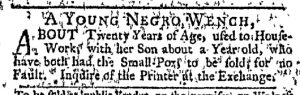
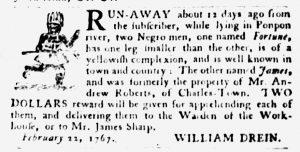
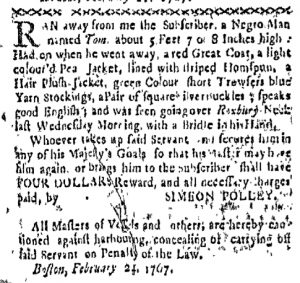
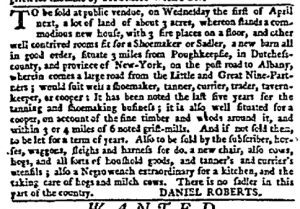
Mar 12 - Massachusetts Gazette Slavery 1
Massachusetts Gazette (March 12, 1767).

**********
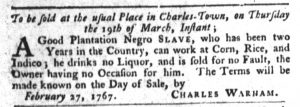
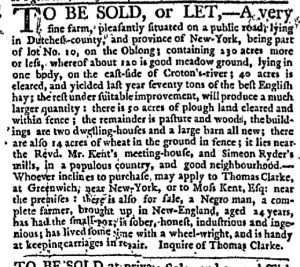
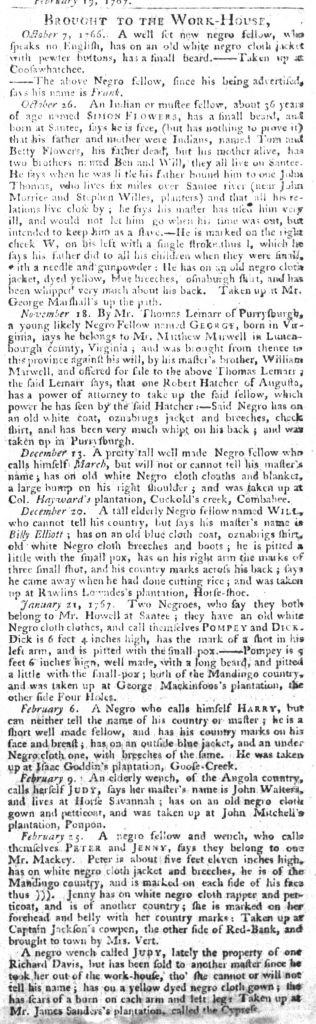
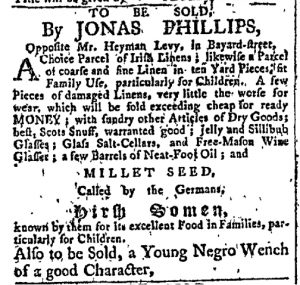
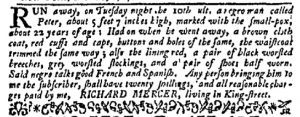
Mar 12 - New-York Gazette Weekly Post-Boy Slavery 1
New-York Gazette: Or, the Weekly Post-Boy (March 12, 1767).

**********

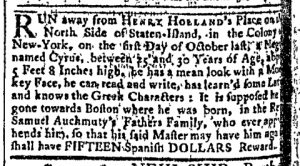
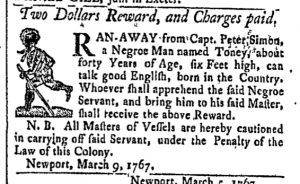
Mar 12 - New-York Journal Slavery 1
New-York Journal (March 12, 1767).

**********

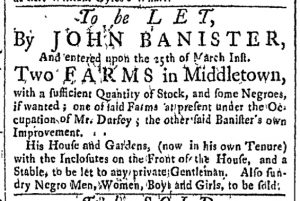
Mar 12 - New-York Journal Supplement Slavery 1
Supplement to the New-York Journal (March 12, 1767).

**********

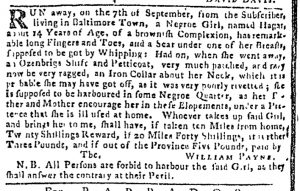
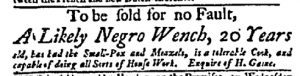
Mar 12 - Pennsylvania Gazette Slavery 1
Pennsylvania Gazette (March 12, 1767).

**********

Mar 12 - Pennsylvania Gazette Slavery 2
Pennsylvania Gazette (March 12, 1767).

**********
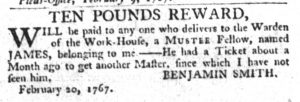
Mar 12 - Pennsylvania Gazette Slavery 3
Pennsylvania Gazette (March 12, 1767).

**********
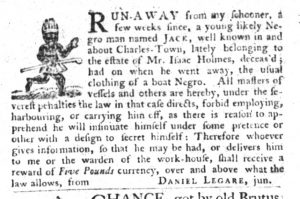
Mar 12 - Pennsylvania Gazette Slavery 4
Pennsylvania Gazette (March 12, 1767).

**********
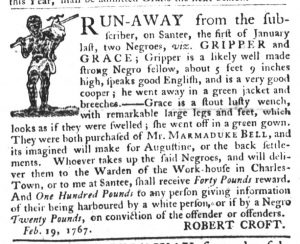
Mar 12 - Pennsylvania Gazette Supplement Slavery 1
Supplement to the Pennsylvania Gazette (March 12, 1767).

**********

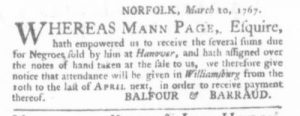
Mar 12 - Virginia Gazette (Purdie & Dixon) Slavery 1
Virginia Gazette [Purdie and Dixon] (March 12, 1767).

**********

Mar 12 - Virginia Gazette (Purdie & Dixon) Slavery 2
Virginia Gazette [Purdie and Dixon] (March 12, 1767).

**********

Mar 12 - Virginia Gazette (Purdie & Dixon) Slavery 3
Virginia Gazette [Purdie and Dixon] (March 12, 1767).

**********

Mar 12 - Virginia Gazette (Purdie & Dixon) Slavery 4
Virginia Gazette [Purdie and Dixon] (March 12, 1767).

**********

Mar 12 - Virginia Gazette (Rind) Slavery 1
Virginia Gazette [Rind] (March 12, 1767).

**********

Mar 12 - Virginia Gazette (Rind) Slavery 2
Virginia Gazette [Rind] (March 12, 1767).

**********

Mar 12 - Virginia Gazette (Rind) Slavery 3
Virginia Gazette [Rind] (March 12, 1767).

**********

Mar 12 - Virginia Gazette (Rind) Slavery 4
Virginia Gazette [Rind] (March 12, 1767).

March 11

What was advertised in a colonial American newspaper 250 years ago today?

Mar 11 - 3:11:1767 Georgia Gazette
Georgia Gazette (March 11, 1767).

“THOMAS LEE jun. House-Carpenter and Joiner.”

Thomas Lee, Jr. most likely placed this advertisement to introduce himself to residents of Savannah. As far as introductions went, it was brief but covered a lot of ground. In a single sentence, Lee assured “gentlemen who will be pleased to employ him, that they may depend upon having their work done in the best manner and at the most reasonable rates, with the utmost dispatch.” In so doing, Lee incorporated two of the most common appeals made in advertisements for consumer goods in the eighteenth century. Artisans and others who offered services often adapted those appeals to their own purposes. An appeal to price (“at the most reasonable rates”) required little shift in the meaning, but an appeal to quality (“”having their work done in the best manner”) moved the focus away from merchandise to the skills possessed by the advertiser offering the service. Lee added another appeal sometimes advanced by shopkeepers but more often deployed by artisans. When he pledged to complete work “with the utmost dispatch,” he promised attentiveness and efficiency. Then and now, customers hiring artisans (or contractors) to work on their homes value jobs completed in a timely manner. Similarly, Lee provided “estimations and plans” so customers could hold him accountable for the work he was hired to do.

In describing himself as a “House-Carpenter and Joiner,” Lee informed potential clients that he was a versatile craftsman. Like carpenters, joiners worked with wood, but they specialized in lighter and more ornamental work. Lee was qualified to work on the structure of a building or make and repair any of the fittings that adorned it. Those fittings might include simple doors and windows or they could include intricate pediments and mantels. That being the case, he addressed his introduction “to all gentlemen” in Savannah because affluent merchants and other members of the local gentry would have been most likely to hire (and afford) his services for more ornate work. As the consumer revolution placed an increasing number of goods in the hands of all sorts of colonists, the elite used architectural adornment to express their tastes and attempt to assert distinctions between themselves and others who sometimes mimicked their fashions.

At first glance, Lee’s advertisement looks like a simple notice, but the savvy “House-Carpenter and Joiner” actually incorporated several types of appeals to make a good first impression when introducing himself and his services to residents of Savannah.

Summary of Slavery Advertisements Published March 5-11, 1767

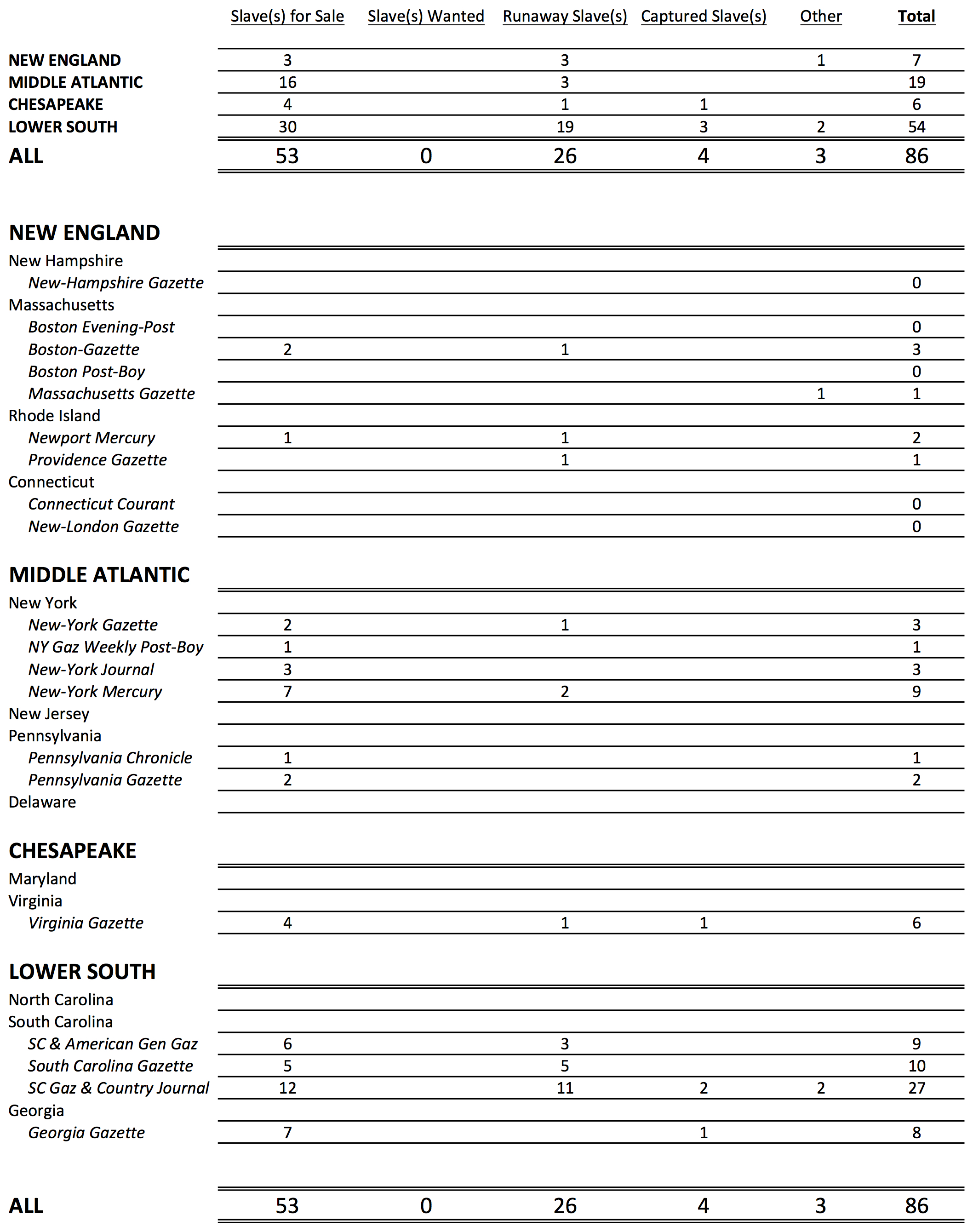
These tables indicate how many advertisements for slaves appeared in colonial American newspapers during the week of March 5-11, 1767.

Note:  These tables are as comprehensive as currently digitized sources permit, but they may not be an exhaustive account.  They includes all newspapers that have been digitized and made available via Accessible Archives, Colonial Williamsburg’s Digital Library, and Readex’s America’s Historical Newspapers.  There are several reasons some newspapers may not have been consulted:

  • Issues that are no longer extant;
  • Issues that are extant but have not yet been digitized (including the Pennsylvania Journal); and
  • Newspapers published in a language other than English (including the Wochentliche Philadelphische Staatsbote).

**********

Slavery Advertisements Published March 5-11, 1767:  By Date

Slavery Adverts Tables 1767 By Date Mar 5

**********

Slavery Advertisements Published March 5-11, 1767:  By Region

Slavery Adverts Tables 1767 By Region Mar 5

Slavery Advertisements Published March 11, 1767

The Slavery Adverts 250 Project chronicles the role of newspaper advertising in perpetuating slavery in the era of the American Revolution. The project seeks to reveal the ubiquity of slavery in eighteenth-century life from New England to Georgia by republishing advertisements about enslaved people – for sale as individuals or in groups, wanted to purchase or for hire for short periods, runaways who liberated themselves, and those who were subsequently captured and confined in jails and workhouses – in daily digests on this site as well as in real time via the @SlaveAdverts250 Twitter feed, utilizing twenty-first-century media to stand in for the print media of the eighteenth century.

The project aims to provide modern audiences with a sense of just how often colonizers encountered these advertisements in their daily lives. Enslaved men, women, and children appeared in print somewhere in the colonies almost every single day. Those advertisements served as a constant backdrop for social, cultural, economic, and political life in colonial and revolutionary America. Colonizers who did not purport to own enslaved people were still confronted with slavery as well as invited to maintain the system by purchasing enslaved men, women, and children or assisting in the capture of so-called “runaways” who sought to free themselves from bondage. The frequency of these newspaper advertisements suggests just how embedded slavery was in colonial and revolutionary American culture in everyday interactions beyond the printed page.

These advertisements also testify to the experiences of enslaved men, women, and children, though readers must consider that those experiences have been remediated through descriptions offered by enslavers rather than enslaved people themselves. Often unnamed in the advertisements, enslaved men, women, and children were not invisible or unimportant in early America.

These advertisements appeared in colonial American newspapers 250 years ago today.

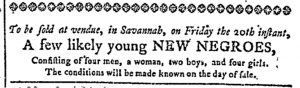
mar-11-georgia-gazette-slavery-1
Georgia Gazette (March 11, 1767).

**********

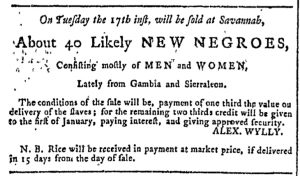
mar-11-georgia-gazette-slavery-2
Georgia Gazette (March 11, 1767).

**********

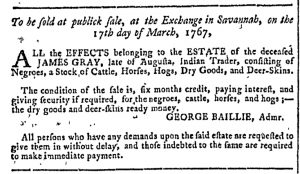
mar-11-georgia-gazette-slavery-3
Georgia Gazette (March 11, 1767).

**********

mar-11-georgia-gazette-slavery-4
Georgia Gazette (March 11, 1767).

**********

mar-11-georgia-gazette-slavery-5
Georgia Gazette (March 11, 1767).

**********

mar-11-georgia-gazette-slavery-6
Georgia Gazette (March 11, 1767).

**********

mar-11-georgia-gazette-slavery-7
Georgia Gazette (March 11, 1767).

**********

mar-11-georgia-gazette-slavery-8
Georgia Gazette (March 11, 1767).

March 10

What was advertised in a colonial American newspaper 250 years ago today?

Mar 10 - 3:10:1767 South-Carolina Gazette and Country Journal Page 6
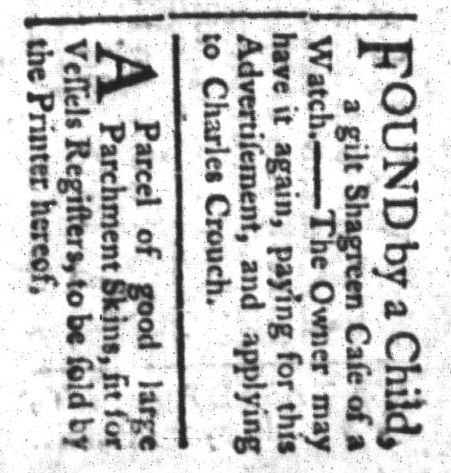
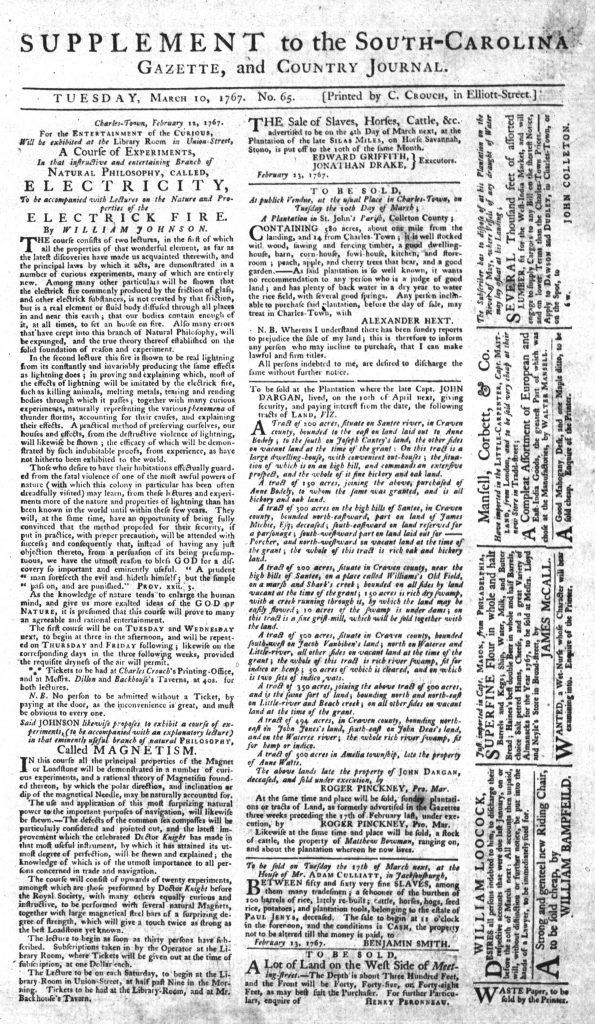
This is the orientation of these advertisements in the Supplement to the South-Carolina Gazette and Country Journal (March 10, 1767).

“A Parcel of good large Parchment Skins, for for Vessels Registers, to be sold by the Printer hereof.”

Advertising supplements were a fairly common feature of newspapers in the 1760s, especially publications printed in the largest American cities. Between news items, commercial notices, and paid announcements of various sorts, printers frequently ran out of space in the standard four-page issue. It made a lot of sense to distribute two-page supplements comprised solely of advertisements since it was advertising, rather than subscription fees, which really paid the bills.

Still, printers had to be careful in allocating resources to the advertising supplements. They had to weight the labor, time, and supplies they would expend against how quickly for frequently they published advertisements. Sometimes printers had more material than would fit in the standard issue but not enough to justify devoting an entire half sheet to a supplement. In such instances, they could opt to print the supplement on smaller sheets.

Mar 10 - South-Carolina Gazette and Country Journal Page 5
First page of Supplement to the South-Carolina Gazette and Country Journal (March 10, 1767).

Such appears to have been the case with the Supplement to the South-Carolina Gazette and Country Journal from March 10, 1767. It is impossible to say so definitively based solely on digitized images of the newspaper from Accessible Archives. No provider of digital surrogates of eighteenth-century newspapers includes metadata concerning the dimensions of the page or columns relative to individual images. Doing so would be time consuming and prohibitively expensive, resulting in scholars and others having significantly less access to digitized sources at all.

Although I do not have access to original copies of the South-Carolina Gazette and Country Journal from 1767, the layout of the March 10 supplement contains all the indications of a smaller sheet that I have been able to confirm when working between digital surrogates and original copies of other newspapers. The regular issue contains three columns, but the supplement has two columns along with a third column of advertisements rotated to fit in the remaining space. The rotated advertisements are the same width as the others, indicating that type had not been reset, nor would it need to be reset to move any of the advertisements back into future editions of the regular issue.

Mar 10 - South-Carolina Gazette and Country Journal Page 6
Second Page of the Supplement to the South-Carolina Gazette and Country Journal (March 10, 1767).

In this instance, however, Charles Crouch engaged in even greater economy of space than his counterparts who adopted this trick in other newspapers. Rather than provide space between the rotated advertisements in the third column, he squeezed them together in order to fit in very short advertisements. On the front of the supplement, this resulted in a two-line advertisement oriented in a different direction than the others in the third column. On the other side, where he did not have to take space for the masthead into consideration, Crouch found room for two advertisements rotated in the same direction as the others in the additional column.

Charles Crouch worked to fill the March 10 supplement of his newspaper with as much advertising as he could possible fit on its pages. In so doing, he made room to promote products he sold (“WASTE Paper” and “good large Parchment Skins”) that otherwise would not have fit in the regular issue or the supplement.

Slavery Advertisements Published March 10, 1767

The Slavery Adverts 250 Project chronicles the role of newspaper advertising in perpetuating slavery in the era of the American Revolution. The project seeks to reveal the ubiquity of slavery in eighteenth-century life from New England to Georgia by republishing advertisements about enslaved people – for sale as individuals or in groups, wanted to purchase or for hire for short periods, runaways who liberated themselves, and those who were subsequently captured and confined in jails and workhouses – in daily digests on this site as well as in real time via the @SlaveAdverts250 Twitter feed, utilizing twenty-first-century media to stand in for the print media of the eighteenth century.

The project aims to provide modern audiences with a sense of just how often colonizers encountered these advertisements in their daily lives. Enslaved men, women, and children appeared in print somewhere in the colonies almost every single day. Those advertisements served as a constant backdrop for social, cultural, economic, and political life in colonial and revolutionary America. Colonizers who did not purport to own enslaved people were still confronted with slavery as well as invited to maintain the system by purchasing enslaved men, women, and children or assisting in the capture of so-called “runaways” who sought to free themselves from bondage. The frequency of these newspaper advertisements suggests just how embedded slavery was in colonial and revolutionary American culture in everyday interactions beyond the printed page.

These advertisements also testify to the experiences of enslaved men, women, and children, though readers must consider that those experiences have been remediated through descriptions offered by enslavers rather than enslaved people themselves. Often unnamed in the advertisements, enslaved men, women, and children were not invisible or unimportant in early America.

These advertisements appeared in colonial American newspapers 250 years ago today.

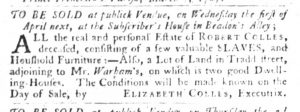
mar-10-south-carolina-gazette-and-country-journal-slavery-1
South-Carolina Gazette and Country Journal (March 10, 1767).

**********

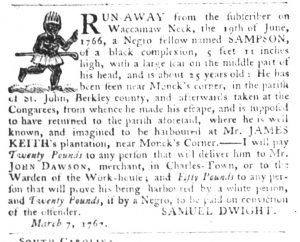
mar-10-south-carolina-gazette-and-country-journal-slavery-2
South-Carolina Gazette and Country Journal (March 10, 1767).

**********

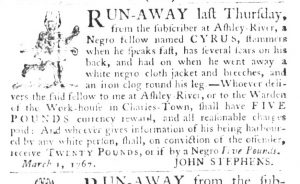
mar-10-south-carolina-gazette-and-country-journal-slavery-3
South-Carolina Gazette and Country Journal (March 10, 1767).

**********

mar-10-south-carolina-gazette-and-country-journal-slavery-4
South-Carolina Gazette and Country Journal (March 10, 1767).

**********

mar-10-south-carolina-gazette-and-country-journal-slavery-5
South-Carolina Gazette and Country Journal (March 10, 1767).

**********

mar-10-south-carolina-gazette-and-country-journal-slavery-6
South-Carolina Gazette and Country Journal (March 10, 1767).

**********

mar-10-south-carolina-gazette-and-country-journal-slavery-7
South-Carolina Gazette and Country Journal (March 10, 1767).

**********

mar-10-south-carolina-gazette-and-country-journal-slavery-8
South-Carolina Gazette and Country Journal (March 10, 1767).

**********

mar-10-south-carolina-gazette-and-country-journal-slavery-9
South-Carolina Gazette and Country Journal (March 10, 1767).

**********

mar-10-south-carolina-gazette-and-country-journal-slavery-10
South-Carolina Gazette and Country Journal (March 10, 1767).

**********

mar-10-south-carolina-gazette-and-country-journal-slavery-11
South-Carolina Gazette and Country Journal (March 10, 1767).

**********

mar-10-south-carolina-gazette-and-country-journal-slavery-12
South-Carolina Gazette and Country Journal (March 10, 1767).

**********

mar-10-south-carolina-gazette-and-country-journal-slavery-13
South-Carolina Gazette and Country Journal (March 10, 1767).

**********

mar-10-south-carolina-gazette-and-country-journal-slavery-14
South-Carolina Gazette and Country Journal (March 10, 1767).

**********

mar-10-south-carolina-gazette-and-country-journal-slavery-15
South-Carolina Gazette and Country Journal (March 10, 1767).

**********

mar-10-south-carolina-gazette-and-country-journal-slavery-16
South-Carolina Gazette and Country Journal (March 10, 1767).

**********

mar-10-south-carolina-gazette-and-country-journal-slavery-17
South-Carolina Gazette and Country Journal (March 10, 1767).

**********

mar-10-south-carolina-gazette-and-country-journal-slavery-18
South-Carolina Gazette and Country Journal (March 10, 1767).

**********

mar-10-south-carolina-gazette-and-country-journal-slavery-19
South-Carolina Gazette and Country Journal (March 10, 1767).

**********

mar-10-south-carolina-gazette-and-country-journal-slavery-20
South-Carolina Gazette and Country Journal (March 10, 1767).

**********

mar-10-south-carolina-gazette-and-country-journal-slavery-21
South-Carolina Gazette and Country Journal (March 10, 1767).

**********

mar-10-south-carolina-gazette-and-country-journal-supplement-slavery-1
Supplement to the South-Carolina Gazette and Country Journal (March 10, 1767).

**********

mar-10-south-carolina-gazette-and-country-journal-supplement-slavery-2
Supplement to the South-Carolina Gazette and Country Journal (March 10, 1767).

**********

mar-10-south-carolina-gazette-and-country-journal-supplement-slavery-3
Supplement to the South-Carolina Gazette and Country Journal (March 10, 1767).

**********

mar-10-south-carolina-gazette-and-country-journal-supplement-slavery-4
Supplement to the South-Carolina Gazette and Country Journal (March 10, 1767).

**********

mar-10-south-carolina-gazette-and-country-journal-supplement-slavery-5
Supplement to the South-Carolina Gazette and Country Journal (March 10, 1767).

**********

mar-10-south-carolina-gazette-and-country-journal-supplement-slavery-6
Supplement to the South-Carolina Gazette and Country Journal (March 10, 1767).

March 9

What was advertised in a colonial American newspaper 250 years ago today?

Mar 9 - 3:9:1767 Boston-Gazette
Boston-Gazette (March 9, 1767).

“Red and white Clover, Red Top and Herds Grass Seed, warranted to be of last Year’s Growth.”

Compared to their male counterparts, women who pursued their own businesses placed advertisements in eighteenth-century newspapers much less frequently. Even though they comprised a sizeable minority of shopkeepers in urban ports, they tended not to inject themselves into the marketplace via the public prints.

For one type of female entrepreneur, however, that changed, at least temporarily, in Boston for several weeks in late winter and early spring in the 1760s. Women who specialized in selling seeds placed advertisements in Boston’s newspapers and competed with each other for customers as the time for planting gardens approached.

Consider the March 9, 1767, issues of the Boston-Gazette. Susanna Renken’s advertisement appeared on the first page. Notices placed by four other female seed sellers (and one male competitor who, unlike the women, described his occupation as “Gardener”) filled almost an entire column on the final page of the supplement devoted solely to advertising. Just as Renken stated in her advertisement, Bethiah Oliver, Elizabeth Clark, Lydia Dyar, and Elizabeth Greenleaf noted that they imported seeds from London and listed the varieties they stocked. Each had advertised the previous year as well.

Clark, Dyar, and the appropriately named Greenleaf confined their advertising to seeds, but Renken also promoted “all Sorts of English GOODS and China Ware” and Oliver stocked “a general Assortment of Glass, Delph and Stone Ware, Lynn Shoes, best Bohea Tea, Coffee, Chocolate, and all other Groceries.” Their advertisements suggest that Renken and Oliver ran operations much more extensive than peddling seeds, which may explain why those two also inserted advertisements in the Boston Post-Boy on the same day. Clark, Dyar, and Greenleaf may have also stocked various imported housewares and groceries, despite not making an indication in their own advertisements. None of these five women who ran advertisements for the seeds they sold in successive springs, however, placed advertisements at other times during the year.

What explains the prominence of advertisements by women selling seeds amid the scarcity of advertising by other women in colonial Boston’s marketplace? Why did the women in this occupation turn to advertising when other women who operated other sorts of businesses did not? Why did Renken and Oliver only advertise their other wares at the conclusion of their advertisements for seeds and not in separate advertisements throughout the rest of the year? These advertisements demonstrate women’s activity in the marketplace as sellers, not just consumers, but they also raise a series of questions about the limits of that participation captured in print during the period.

Slavery Advertisements Published March 9, 1767

The Slavery Adverts 250 Project chronicles the role of newspaper advertising in perpetuating slavery in the era of the American Revolution. The project seeks to reveal the ubiquity of slavery in eighteenth-century life from New England to Georgia by republishing advertisements about enslaved people – for sale as individuals or in groups, wanted to purchase or for hire for short periods, runaways who liberated themselves, and those who were subsequently captured and confined in jails and workhouses – in daily digests on this site as well as in real time via the @SlaveAdverts250 Twitter feed, utilizing twenty-first-century media to stand in for the print media of the eighteenth century.

The project aims to provide modern audiences with a sense of just how often colonizers encountered these advertisements in their daily lives. Enslaved men, women, and children appeared in print somewhere in the colonies almost every single day. Those advertisements served as a constant backdrop for social, cultural, economic, and political life in colonial and revolutionary America. Colonizers who did not purport to own enslaved people were still confronted with slavery as well as invited to maintain the system by purchasing enslaved men, women, and children or assisting in the capture of so-called “runaways” who sought to free themselves from bondage. The frequency of these newspaper advertisements suggests just how embedded slavery was in colonial and revolutionary American culture in everyday interactions beyond the printed page.

These advertisements also testify to the experiences of enslaved men, women, and children, though readers must consider that those experiences have been remediated through descriptions offered by enslavers rather than enslaved people themselves. Often unnamed in the advertisements, enslaved men, women, and children were not invisible or unimportant in early America.

These advertisements appeared in colonial American newspapers 250 years ago today.

mar-9-boston-gazette-slavery-1
Boston-Gazette (March 9, 1767).

**********

mar-9-boston-gazette-slavery-2
Supplement to the Boston-Gazette (March 9, 1767).

**********

mar-9-boston-gazette-supplement-slavery-1
Supplement to the Boston-Gazette (March 9, 1767).

**********

mar-9-new-york-gazette-slavery-1
New-York Gazette (March 9, 1767).

**********

mar-9-new-york-gazette-slavery-2
New-York Gazette (March 9, 1767).

**********

mar-9-new-york-gazette-slavery-3
New-York Gazette (March 9, 1767).

**********

mar-9-new-york-mercury-slavery-1
New-York Mercury (March 9, 1767).

**********

mar-9-new-york-mercury-slavery-2
New-York Mercury (March 9, 1767).

**********

mar-9-new-york-mercury-slavery-3
New-York Mercury (March 9, 1767).

**********

mar-9-new-york-mercury-slavery-6
Supplement to the New-York Mercury (March 9, 1767).

**********

mar-9-new-york-mercury-supplement-slavery-1
Supplement to the New-York Mercury (March 9, 1767).

**********

mar-9-new-york-mercury-supplement-slavery-2
Supplement to the New-York Mercury (March 9, 1767).

**********

mar-9-new-york-mercury-supplement-slavery-3
Supplement to the New-York Mercury (March 9, 1767).

**********

mar-9-new-york-mercury-supplement-slavery-4
Supplement tot he New-York Mercury (March 9, 1767).

**********

mar-9-new-york-mercury-supplement-slavery-5
Supplement to the New-York Mercury (March 9, 1767).

**********

mar-9-newport-mercury-slavery-1
Newport Mercury (March 9, 1767).

**********

mar-9-newport-mercury-slavery-2
Newport Mercury (March 9, 1767).

**********

mar-9-pennsylvania-chronicle-slavery-1
Pennsylvania Chronicle (March 9, 1767).

**********

mar-9-south-carolina-gazette-slavery-1
South Carolina Gazette (March 9, 1767).

**********

mar-9-south-carolina-gazette-slavery-2
South Carolina Gazette (March 9, 1767).

**********

mar-9-south-carolina-gazette-slavery-3
South Carolina Gazette (March 9, 1767).

**********

mar-9-south-carolina-gazette-slavery-4
South Carolina Gazette (March 9, 1767).

**********

mar-9-south-carolina-gazette-slavery-5
South Carolina Gazette (March 9, 1767).

**********

mar-9-south-carolina-gazette-slavery-6
South Carolina Gazette (March 9, 1767).

**********

mar-9-south-carolina-gazette-slavery-7
South Carolina Gazette (March 9, 1767).

**********

mar-9-south-carolina-gazette-slavery-8
South Carolina Gazette (March 9, 1767).

**********

mar-9-south-carolina-gazette-supplement-slavery-1
Supplement to the South-Carolina Gazette (March 9, 1767).

**********

mar-9-south-carolina-gazette-supplement-slavery-2
Supplement to the South-Carolina Gazette (March 9, 1767).

March 8

What was advertised in a colonial American newspaper 250 years ago this week?

mar-8-381767-part-1-south-carolina-and-american-general-gazette

mar-8-381767-part-2-south-carolina-and-american-general-gazette
South-Carolina and American General Gazette (March 6, 1767).

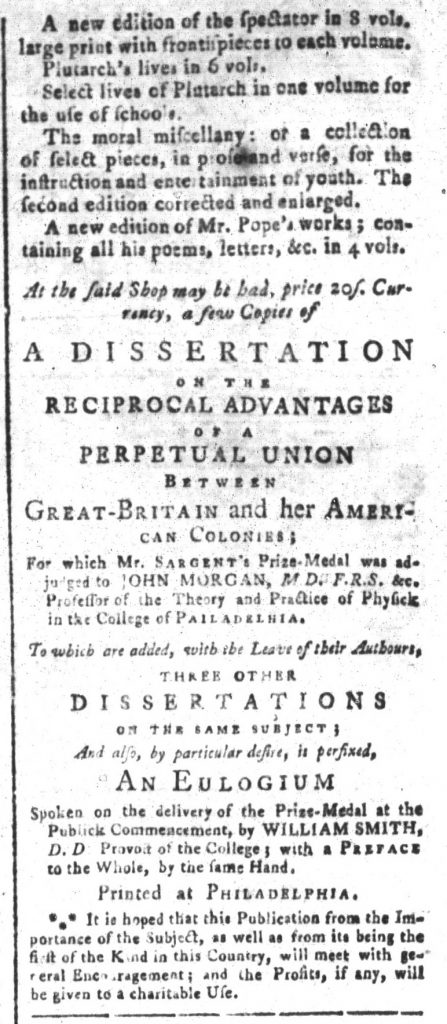
“A DISSERTATION ON THE RECIPROCAL ADVANTAGES OF A PERPETUAL UNION BETWEEN GREAT BRITAIN and her AMERICAN COLONIES.”


Robert Wells stocked a variety of items at “the great Stationary and Book Shop on the Bay” in Charleston. Among the wares he imported from England, he first listed “LARGE and elegant prints of Mr. PITT and LORD CAMDEN,” members of Parliament considered friendly to the American cause during the Stamp Act crisis. Wells concluded this advertisement by devoting significant space to a book printed in Philadelphia, a volume which included four “DISSERTATIONS” on the “RECIPROCAL ADVANTAGES OF A PERPETUAL UNION BETWEEN GREAT-BRITAIN and her AMERICAN COLONIES.” The first, authored by John Morgan, won “Mr. Sargent’s Prize Medal,” awarded at commencement exercises for the College of Philadelphia (now the University of Pennsylvania).

This advertisement provides valuable insight concerning how most colonists interpreted their relationship with Great Britain in the first months of 1767, still fairly early in the imperial crisis that eventually – over the course of more than a decade – led to the colonies declaring independence. One of the challenges of teaching about the American Revolution lies in helping students understand that it was not an instantaneous event but rather a long process that involved a transition from resistance to Parliamentary overreach while seeking redress of grievances to, eventually, revolutionary rhetoric and actions when Americans determined that they had exhausted all other options.

In early 1767 continued to underscore the “RECIPROCAL ADVANTAGES” of being part of the British Empire. In his “DISSERTATION,” Morgan ranked commerce and trade among some of the most significant advantages. By this time the Stamp Act had been passed and repealed, in large part due to the protests and petitions of the colonists but also thanks to advocacy by merchants and politicians, like Pitt and Camden, in England. The Americans had discovered means for having their grievances addressed, though they did not particularly care for the Declaratory Act that accompanied repeal of the Stamp Act. Still, the rupture in relations did not seem insurmountable. Indeed, most Americans believed it foolish not to attempt to make amends.

The “DISSERTATIONS” written and published in Philadelphia served to cement colonists’ understanding of their place and privileges within the British Empire, but they also reminded English observers of the benefits of amicable relations between parent country and colonies. This publication simultaneously shored up British identity among colonists while alerting those in England that it was not in anyone’s best interest to attempt to take advantage of the colonies, a warning that Parliament did not heed when it promulgated the Townshend Acts later in 1767.

Return once again to the prints of Pitt and Camden that led the list of goods Wells stocked. They set the tone for the rest of the advertisement, especially the “DISSERTATIONS” that appeared at the end. Colonists considered themselves Britons, so much so that Wells expected consumers would display images of English politicians – especially those who understood and advocated for the proper sort of relationship between Great Britain and the American colonies – in public and private spaces. Most Americans had not yet been radicalized in favor of independence in early 1767, at least not according to the merchandise Robert Wells expected to sell at his shop in Charleston.

March 7

What was advertised in a colonial American newspaper 250 years ago today?

Mar 7 - 3:7:1767 Providence Gazette
Providence Gazette (March 7, 1767).

“A fresh Assortment of English and West-India Goods.”

The March 7, 1767, issue of the Providence Gazette included several advertisements already familiar to subscribers and other readers, including commercial notices from Joseph and William Russellat the Sign of the Golden Eagle” and Benjamin and Edward Thurber at “the Signs of the Bunch of Grapes and Brazen Lion” as well as notices inserted by the printers. One of those peddled printed blanks and another encouraged readers to provide the Providence Paper Manufactory with “Linen Rags of any Sort.”

Among these familiar notices, newer advertisements from Knight Dexter, Samuel Chace, Nathan Angel, Nathaniel Jacobs, and the Proprietors of the Providence Library appeared. Not all of these were published for the first time in that issue, but each advertiser had only recently joined the Russells and the Thurbers in turning to the Providence Gazette to inform customers and patrons of the goods and services they provided. The dearth of advertising Sarah Goddard and Company experienced during the winter of 1766 and 1767 had been disrupted, at least temporarily. Guest curators from my Revolutionary America course will examine most of these newer advertisements, but Nathaniel Jacobs’ notice receives consideration today.

In just twelve lines, Jacobs pursued two goals. The first half of his advertisement did not market goods or services at all. Instead, it called on former customers who bought on credit and had not yet paid their bills “to make speedy Payment, that he may avoid the disagreeable Necessity of troubling them.” Shopkeepers, merchants, printers, and others regularly placed such notices in eighteenth-century newspapers. Extensive and generous credit practically made them a necessity. However gently or politely stated, readers knew that “the disagreeable Necessity of troubling them” amounted to more than posting letters or knocking on doors. Jacobs, like so many of his counterparts, was prepared to sue.

It was only in the second half of the notice that the shopkeeper turned to attracting customers for the merchandise he currently stocked. Other than naming “best French Indigo” and three popular beverages (coffee, tea, and chocolate), he offered few details beyond promising “a fresh Assortment of English and West-India Goods.” Still, in making allusions to consumer choice among that “Assortment” as well as pledging to “sell as cheap for Cash as any person in Providence” Jacobs utilized some of the most common strategies for marketing his wares even though his advertisement was relatively short compared to many others.