Slavery Advertisements Published March 18, 1771

The Slavery Adverts 250 Project chronicles the role of newspaper advertising in perpetuating slavery in the era of the American Revolution. The project seeks to reveal the ubiquity of slavery in eighteenth-century life from New England to Georgia by republishing advertisements about enslaved people – for sale as individuals or in groups, wanted to purchase or for hire for short periods, runaways who liberated themselves, and those who were subsequently captured and confined in jails and workhouses – in daily digests on this site as well as in real time via the @SlaveAdverts250 Twitter feed, utilizing twenty-first-century media to stand in for the print media of the eighteenth century.

The project aims to provide modern audiences with a sense of just how often colonists encountered these advertisements in their daily lives. Enslaved men, women, and children appeared in print somewhere in the colonies almost every single day. Those advertisements served as a constant backdrop for social, cultural, economic, and political life in colonial and revolutionary America. Colonists who did not purport to own enslaved people were still confronted with slavery as well as invited to maintain the system by purchasing enslaved men, women, and children or assisting in the capture of so-called “runaways” who sought to free themselves from bondage. The frequency of these newspaper advertisements suggests just how embedded slavery was in colonial and revolutionary American culture in everyday interactions beyond the printed page.

These advertisements also testify to the experiences of enslaved men, women, and children, though readers must consider that those experiences have been remediated through descriptions offered by enslavers rather than enslaved people themselves. Often unnamed in the advertisements, enslaved men, women, and children were not invisible or unimportant in early America.

These advertisements appeared in colonial American newspapers 250 years ago today.

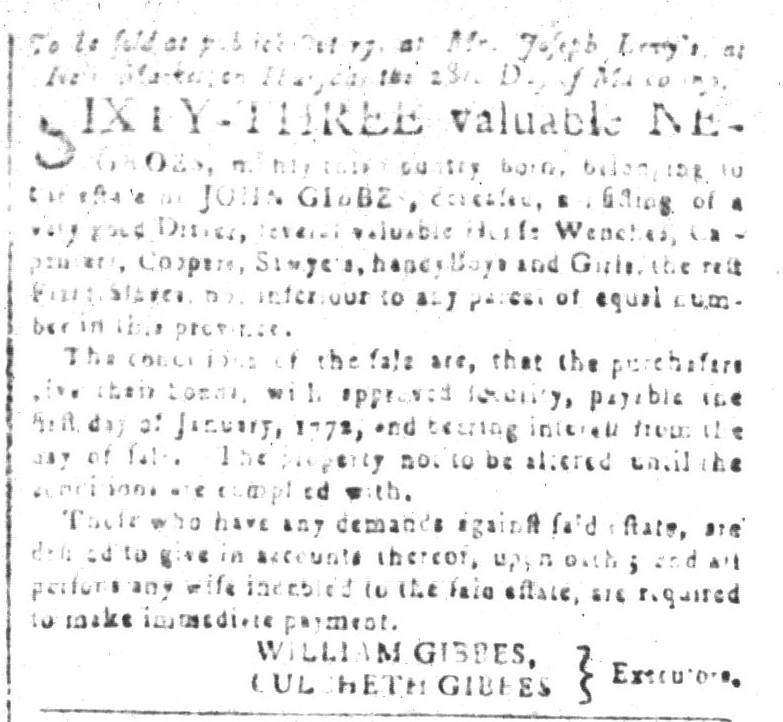
New-York Gazette and Weekly Mercury (March 18, 1771).

**********

New-York Gazette and Weekly Mercury (March 18, 1771).

**********

Supplement to the New-York Gazette and Weekly Mercury (March 18, 1771).

**********

Supplement to the New-York Gazette and Weekly Mercury (March 18, 1771).

**********

Supplement to the New-York Gazette and Weekly Mercury (March 18, 1771).

**********

Supplement to the New-York Gazette and Weekly Mercury (March 18, 1771).

**********

Pennsylvania Chronicle (March 18, 1771).

**********

Pennsylvania Chronicle (March 18, 1771).

**********

Pennsylvania Chronicle (March 18, 1771).

**********

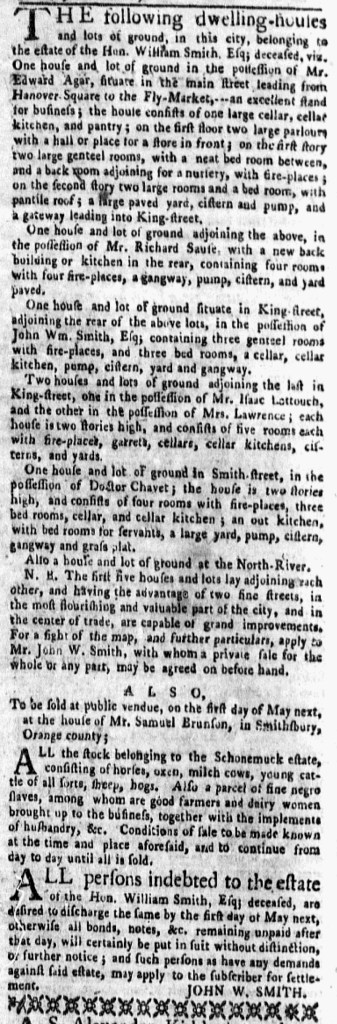
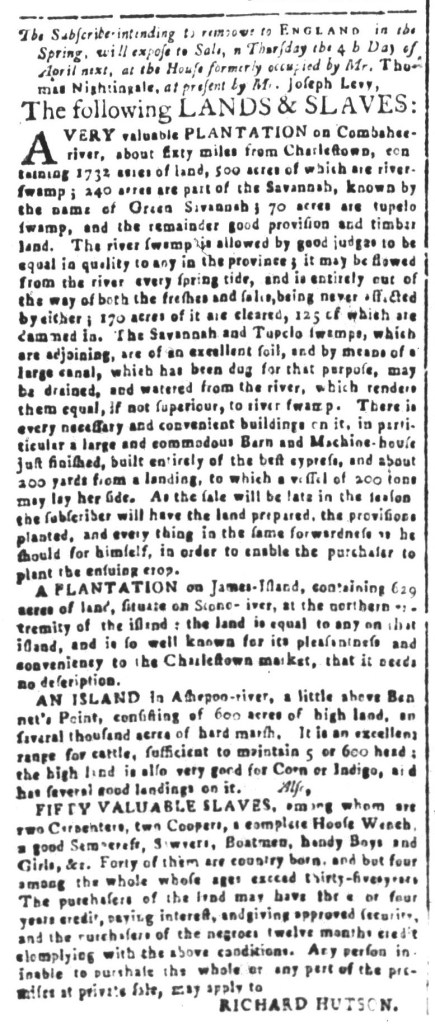
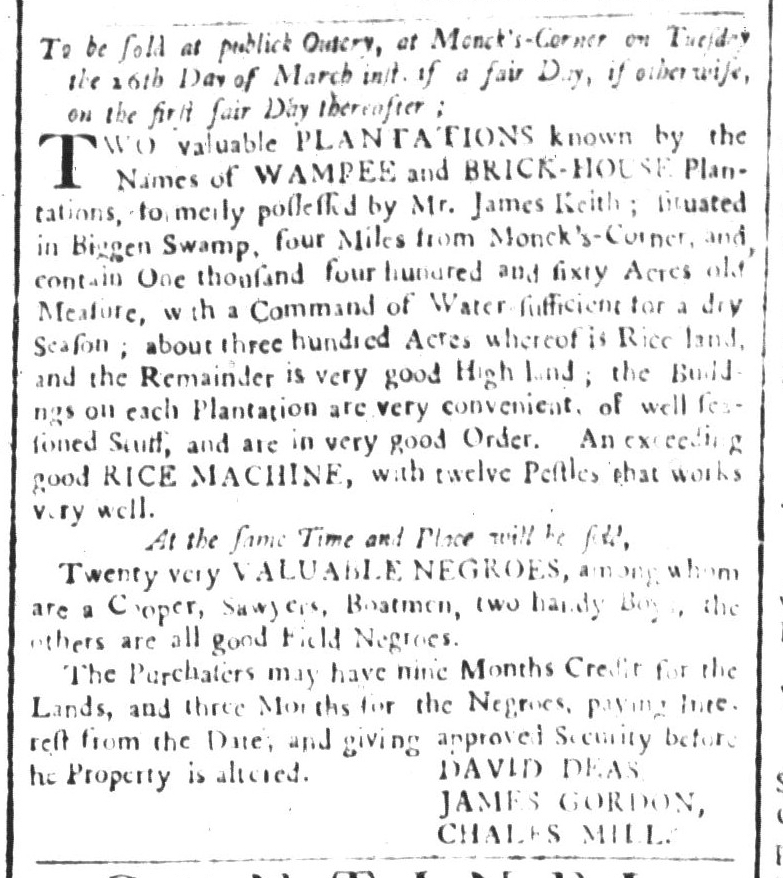
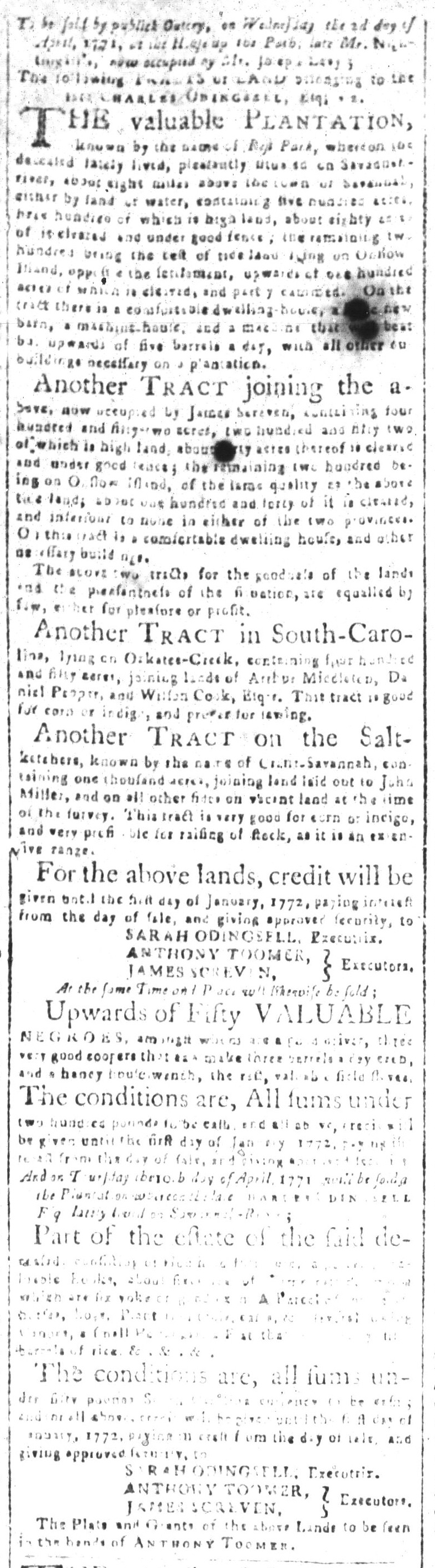
South-Carolina and American General Gazette (March 18, 1771).

**********

South-Carolina and American General Gazette (March 18, 1771).

**********

South-Carolina and American General Gazette (March 18, 1771).

**********

South-Carolina and American General Gazette (March 18, 1771).

**********

South-Carolina and American General Gazette (March 18, 1771).

**********

South-Carolina and American General Gazette (March 18, 1771).

**********

South-Carolina and American General Gazette (March 18, 1771).

**********

South-Carolina and American General Gazette (March 18, 1771).

**********

South-Carolina and American General Gazette (March 18, 1771).

March 17

What was advertised in a colonial American newspaper 250 years ago today?

South-Carolina Gazette (March 14, 1771).

“New Advertisements.”

Colonial American newspapers were vehicles for disseminating advertising.  Some newspapers published in the largest port cities frequently included supplements devoted entirely to advertising, even when advertising filled more space than news accounts in the standard issues.  Peter Timothy, printer of the South-Carolina Gazette, did not bother with an advertising supplement to accompany the March 14, 1771, edition, but neither did he print much news.  Paid notices filled more than three quarters of the twelve columns spread over four pages.

When readers perused that issue, they first encountered “New Advertisements” immediately below the masthead. Advertisements filled the first two columns of the first page, but Timothy have over the third column to news accounts and a letter to the editor.  That column concluded with a note to “Turn to the last Page” to continue reading the news.  Indeed, advertising consumed all three columns on the second page and all three columns on the third page.  A bit more news appeared in the first column of the fourth page as well as two regular features, the “Charles-Town Price Current, Of South Carolina Produce and Manufactures” and “Timothy’s Marine List.”  The printer branded the shipping news from the customs house.  In this instance, the extensive list of vessels filled the better part of a column, overflowing into the second column.  More “New Advertisements” immediately followed “Timothy’s Marine List.”  While Timothy did not organize the advertisements according to purpose or genre, he did distinguish among those that previously appeared in the pages of the South-Carolina Gazette and those that readers had not previously seen.

Timothy had two competitors, the South-Carolina and American General Gazette printed by Robert Wells and the South-Carolina Gazette and Country Journal printed by Charles Crouch.  That same week, those newspapers published similar proportions of news and advertising.  Apparently, Timothy did not need to worry about his subscribers expressing discontent that they received less news in their newspapers compared to others.  They may have considered the news accounts that the printer did insert along with the information contained in the advertisements sufficient for staying informed until another edition devoted more space to news accounts rather than paid notices.

March 16

What was advertised in a colonial American newspaper 250 years ago today?

Providence Gazette (March 16, 1771).

“Both the above Houses are well situated for Business.”

Location, location, location!  Several real estate notices ran in the March 16, 1771, edition of the Providence Gazette, many of them noting locations conducive to commercial activities.  The partnership of Thompson and Arnold, for instance, advertised several properties, including a “NEW House and Lot of Land in Providence, with a Wharff a Warehouse theron” and “another new House and Lot in Providence.”  Thompson and Arnold noted that “Both the above Houses are well situated for Business.”  Elizabeth Arnold inserted an estate notice concerning her husband, Oliver.  In addition to calling on “all Persons who are indebted to the Estate” and “all Persons who have just Demands against said Deceased” to settle accounts, she advertised a property to lease.  Arnold provided a description of a “large and commodious Lot directly opposite the Court-House, … situate in the most convenient Part of the Town for Stores or Shops.”

Others advertised properties outside of Providence, noting each location’s potential for pursuing various commercial enterprises.  Sylvanus Sayles listed a farm with one hundred acres for sale or lease.  In addition to a “large Dwelling-House,” it also had “a Number of Out-Buildings, among which are a Shop and Store” located “on the Post Road to Boston.”  Sayles implied that purchasers or renters could depend on prospective customers regularly passing by the shop and store as they traveled between the two cities.  Hezekiah Carpenter advertised “a Tract of Land … lying in Hopkinton, 16 Miles West of Newport.”  It included a house that needed some repair.  Instead of shops and stores already on the property, he emphasized the potential for other kinds of enterprises, noting that “a large Stream of Water runs through the Land, with good Falls, very convenient for erecting Mills.”  Furthermore, the property “lies near and Iron-Work, so that making of Coal would be very profitable to the Purchaser.”

Whether in Providence or beyond, many advertisers who offered real estate for sale or lease did not focus exclusively on residential aspects in their efforts to incite interest.  Instead, they also explained the potential for conducting commercial activities, acknowledging that each property doubled as home and workplace.  Whether purchasers planned to run a shop or operate a mill, advertisers understood that location mattered and structured their notices accordingly.

March 15

What was advertised in a colonial American newspaper 250 years ago today?

New-London Gazette (March 15, 1771).

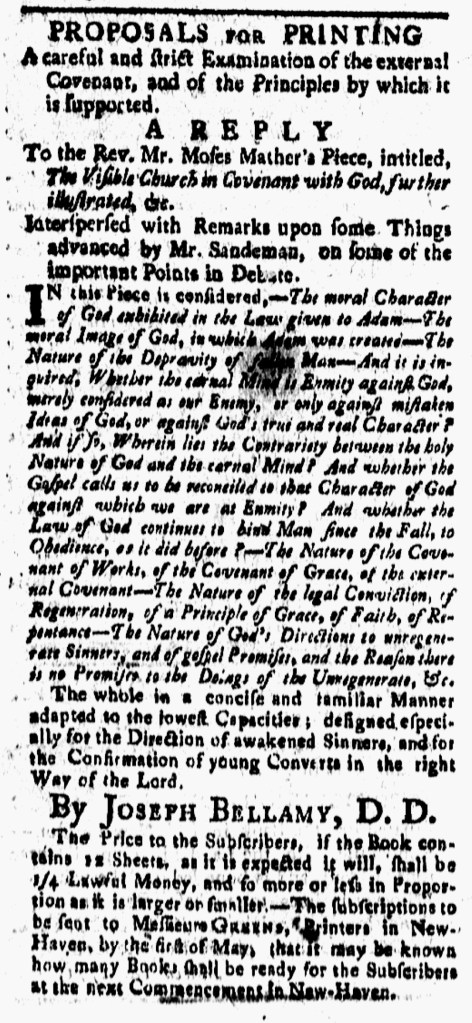
“PROPOSALS FOR PRINTING.”

Thomas Green and Samuel Green, printers of the Connecticut Journal in New Haven, planned to publish “A careful and strict Examination of the external Covenant, and of the Principles by which it is supported.  A REPLY To the Rev. Mr. Moses Mather’s Piece, intitled, The Visible Church on Covenant with God, further illustrated” in the spring of 1771.  Before taking the book to press, however, they sought to gauge demand in order to determine how many copies to print.  To that end, they distributed subscription notices, including “PROPOSALS FOR PRINTING” in the March 15, 1771, edition of the New-London Gazette.  The Greens requested that those interested in reserving copies become “Subscribers” by submitting their names by May 1.  In turn, the Greens guaranteed the price of the book to those who ordered copies in advance.  Other customers who purchased surplus copies risked paying higher prices.

In addition to seeking subscribers in New Haven, the Greens attempted to incite demand in other towns.  Timothy Green, printer of the New-London Gazette, not only inserted the “PROPOSALS FOR PRINTING” in his newspaper but likely also served as a local agent who collected subscriptions and sent the list to the printing office in New Haven.  The Greens devoted most of subscription notice to the lengthy title of the book and a list of its contents, demonstrating to prospective subscribers the various theological arguments presented by Joseph Bellamy.  They also listed the price, one shilling and four pence, contingent on how many pages were in the book.  They anticipated printing on twelve sheets, but would adjust the price higher or lower if they used more or less paper.  The Greens also established a timeline for receiving subscriptions and printing the book, stating that subscribers and local agents should contact them by May 1 so “it may be known how many Books shall be ready for the Subscribers at the next Commencement in New-Haven.”  The Greens planned to distribute the book at the same time as graduates of Yale College gathered.

Colonial printers often relied on networks of booksellers, local agents, and fellow printers in the marketing and distribution of books they printed.  Two other notices in the same edition of the New-London Gazette concluded with such lists.  One, another subscription notice, listed seven local agents in seven towns in Connecticut.  The other, an advertisement for a book already published, named eleven local agents in seven towns as well as a postrider who served several of those places.  Subscription notices and local agents played a vital role in determining the viability of proposed books in eighteenth-century America.

March 14

What was advertised in a colonial American newspaper 250 years ago today?

Massachusetts Gazette and Boston Weekly News-Letter (March 14, 1771).

“Near LIBERTY TREE, BOSTON.”

Purveyors of goods and services in Boston used a variety of means to specify their locations in 1771.  William Taylor and Peter Hughes merely listed King Street as their addresses.  Similarly, Andrew Brimmer stated that his shop was located in the “South-End, BOSTON,” but did not elaborate beyond that.  Joshua Gardner sold “a Fine Assortment of ENGLISH GOODS … at his Shop in Cornhill, just above the Post-Office.”  John Hunt carried a variety of merchandise at his shop “next door Northward to the Heart and Crown,” the printing office where Thomas Fleet and John Fleet published the Boston Evening-Post.  Bartholomew Kneeland also used that printing office as a landmark, giving his location as “the Fourth to the Northward of School-Street, and nearly opposite to the Heart & Crown in Cornhill.”  Samuel Franklin sold razors and a variety of cutlery at the Sign of the Razor and Crown.  Ziphion Thayer stocked paper hangings (or wallpaper) at the Sign of the “Golden Lyon.”  George Leonard hawked grains and chocolate at “the New Mills, near the Mill-Bridge.”  Bethiah Oliver peddled seeds at her shop “opposite the Old South Meeting-House.”  John Coleman sold beer and operated a “House of Entertainment” at “the Sign of the General Wolfe, North-side Faneuil-Hall Market.”

Massachusetts Gazette and Boston Weekly News-Letter (March 14, 1771).

All of these descriptions for locations appeared in advertisements on the third page of the March 14, 1771, edition of the Massachusetts Gazette and Boston Weekly News-Letter.  Some of the shop signs invoked British identity and celebrated being part of the empire, especially those that included crowns.  The Sign of the General Wolfe honored one of the heroes of the Seven Years War who gloriously died on the battlefield after breaking the siege of Quebec in 1759.  Some advertisers expressed pride in other aspects of British history and culture in the directions they gave to their shops.  John Gore, Jr., sold a variety of goods “Opposite LIBERTY-TREE, Boston.”  Rosannah Moore stocked a “general Assortment of Wines” at “her Wine-Cellar near LIBERTY TREE, BOSTON.”  These retailers invoked traditional English liberties while simultaneously commemorating recent abuses perpetrated against colonists by Parliament and soldiers quartered in Boston.  The Liberty Tree stood as a symbol of resistance to the Stamp Act, the duties on imported goods in the Townshend Acts, and the murder of colonists during the Boston Massacre.  Gore and Moore both choose to associate their businesses with that recent history of resistance.  As the variety of means of giving directions in other advertisements demonstrate, Gore and Moore could have formulated many other means for instructing customers how to find their shops.  They purposefully selected the Liberty Tree, their advertisements for consumer goods resonating with political overtones as a result.

Slavery Advertisements Published March 14, 1771

The Slavery Adverts 250 Project chronicles the role of newspaper advertising in perpetuating slavery in the era of the American Revolution. The project seeks to reveal the ubiquity of slavery in eighteenth-century life from New England to Georgia by republishing advertisements about enslaved people – for sale as individuals or in groups, wanted to purchase or for hire for short periods, runaways who liberated themselves, and those who were subsequently captured and confined in jails and workhouses – in daily digests on this site as well as in real time via the @SlaveAdverts250 Twitter feed, utilizing twenty-first-century media to stand in for the print media of the eighteenth century.

The project aims to provide modern audiences with a sense of just how often colonists encountered these advertisements in their daily lives. Enslaved men, women, and children appeared in print somewhere in the colonies almost every single day. Those advertisements served as a constant backdrop for social, cultural, economic, and political life in colonial and revolutionary America. Colonists who did not purport to own enslaved people were still confronted with slavery as well as invited to maintain the system by purchasing enslaved men, women, and children or assisting in the capture of so-called “runaways” who sought to free themselves from bondage. The frequency of these newspaper advertisements suggests just how embedded slavery was in colonial and revolutionary American culture in everyday interactions beyond the printed page.

These advertisements also testify to the experiences of enslaved men, women, and children, though readers must consider that those experiences have been remediated through descriptions offered by enslavers rather than enslaved people themselves. Often unnamed in the advertisements, enslaved men, women, and children were not invisible or unimportant in early America.

These advertisements appeared in colonial American newspapers 250 years ago today.

Maryland Gazette (March 14, 1771).

**********

Maryland Gazette (March 14, 1771).

**********

Maryland Gazette (March 14, 1771).

**********

Maryland Gazette (March 14, 1771).

**********

Massachusetts Gazette and Boston Weekly News-Letter (March 14, 1771).

**********

Massachusetts Gazette and Boston Weekly News-Letter (March 14, 1771).

**********

New-York Journal (March 14, 1771).

**********

New-York Journal (March 14, 1771).

**********

New-York Journal (March 14, 1771).

**********

Pennsylvania Gazette (March 14, 1771).

**********

Pennsylvania Gazette (March 14, 1771).

**********

Pennsylvania Journal (March 14, 1771).

**********

Pennsylvania Journal (March 14, 1771).

**********

Pennsylvania Journal (March 14, 1771).

**********

South-Carolina Gazette (March 14, 1771).

**********

South-Carolina Gazette (March 14, 1771).

**********

South-Carolina Gazette (March 14, 1771).

**********

South-Carolina Gazette (March 14, 1771).

**********

South-Carolina Gazette (March 14, 1771).

**********

South-Carolina Gazette (March 14, 1771).

**********

South-Carolina Gazette (March 14, 1771).

**********

South-Carolina Gazette (March 14, 1771).

**********

South-Carolina Gazette (March 14, 1771).

**********

South-Carolina Gazette (March 14, 1771).

**********

South-Carolina Gazette (March 14, 1771).

**********

South-Carolina Gazette (March 14, 1771).

**********

South-Carolina Gazette (March 14, 1771).

**********

South-Carolina Gazette (March 14, 1771).

**********

South-Carolina Gazette (March 14, 1771).

**********

South-Carolina Gazette (March 14, 1771).

**********

South-Carolina Gazette (March 14, 1771).

**********

Virginia Gazette [Purdie and Dixon] (March 14, 1771).

**********

Virginia Gazette [Purdie and Dixon] (March 14, 1771).

**********

Virginia Gazette [Purdie and Dixon] (March 14, 1771).

**********

Virginia Gazette [Purdie and Dixon] (March 14, 1771).

**********

Virginia Gazette [Purdie and Dixon] (March 14, 1771).

**********

Virginia Gazette [Purdie and Dixon] (March 14, 1771).

**********

Virginia Gazette [Purdie and Dixon] (March 14, 1771).

**********

Virginia Gazette [Purdie and Dixon] (March 14, 1771).

March 13

What was advertised in a colonial American newspaper 250 years ago this week?

South-Carolina Gazette and Country Journal (March 12, 1771).

“Writing Paper, Wafers, &c.
Loaf Sugar, and Bohea Tea,
Cinnamon, Nutmegs, &c.”

When an advertisement announcing the “SALE of the late Mr. CORKER’S Store Goods” appeared in the March 12, 1771, edition of the South-Carolina Gazette and Country Journal, its format likely caught the attention of readers.  It listed more than one hundred items, from textiles to patent medicines to housewares to hardware.  In addition, the advertisement promised that “many small Articles too tedious to mention” would also be available for sale “at the Vendue-House” in the coming days.

The compositor designed a catalog of goods that was relatively easy for readers to navigate compared to many notices merchants and shopkeepers placed in early American newspapers.  The advertisement spanned two columns on the third page, occupying enough space to create three columns within the notice.  In turn, only one or two items appeared on each line.  A significant amount of white space, especially compared to the dense text in news accounts and other advertisements, facilitated scanning the advertisement for items of interest.  In contrast, Parker and Hutchings’s advertisement for “An ASSORTMENT of FRESH GOODS” immediately below the notice for Corker’s goods listed dozens of items in three paragraphs.  It had no white space to aid in distinguishing among the merchandise.  Parker and Hutchings selected the more common means of listing their wares in the public prints.  Incorporating orderly columns into the advertisement for Corker’s goods also increased the amount of space necessary to run it.  The size of the notice, in addition to the design elements, made it more visible on the page.

In addition to promoting the sale sponsored by Corker’s estate, this advertisement also testified to the skills of those who labored in Charles Crouch’s printing office.  In the colophon, Crouch invited prospective clients to visit him on Elliott Street, “where all Manner of Printing Work is performed with Care and Expedition.”  The format of the notice about Corker’s store goods simultaneously served as an advertisement for the different styles of printing that Crouch could deliver to customers who ordered broadsides, handbills, circular letters, blanks, and other job printing.

March 12

What was advertised in a colonial American newspaper 250 years ago today?

Essex Gazette (March 12, 1771).

“Gentlemen, in and near Boston, who have signified their Desire of becoming Subscribers.”

In 1771, printers in Boston published more newspapers than in any other town or city in the colonies.  Mondays saw the distribution of three newspapers, the Boston Evening-Post printed by Thomas Fleet and John Fleet, the Boston-Gazette and Country Journal printed by Benjamin Edes and John Gill, and the Massachusetts Gazette and Boston Post-Boy printed by John Green and Joseph Russell.  Two more newspapers came out on Thursdays, the Massachusetts Gazette and Boston Weekly News-Letter printed by Richard Draper and the Massachusetts Spy printed by Isaiah Thomas.  Residents of Boston had many options for reading the news.

In Salem, Samuel Hall printed and distributed the Essex Gazette on Tuesdays.  He often reprinted news that previously appeared in the Boston newspapers, though that was a reciprocal relationship.  Boston printers apparently received copies of the Essex Gazette and reprinted items from its pages.  On March 11, for instance, Edes and Gill devoted the entire front page of the Boston-Gazette to reprinting a memorial occasioned by the “Anniversary of Preston’s Massacre–in King-Street–Boston” nearly a week earlier.  Printers participated in exchange networks that gave them access to newspapers from other cities, newspapers filled with content that they could choose to reprint in their own publications.  What about readers?  Did any residents of Boston subscribe to newspapers published elsewhere?  Or did they depend on local publications to print and reprint, as so many mastheads proclaimed, “the freshest Advices, both foreign and domestic”?

Despite the crowded newspaper market in Boston, Hall indicated demand for the Essex Gazette existed among prospective subscribers in the bustling port city.  He inserted a notice in the March 12 edition to inform “THOSE Gentlemen, in and near Boston, who have signified their Desire of becoming Subscribers for this Gazette … that Subscriptions are taken in at the Store of Mr. Thomas Walley, on Dock-Square, Boston.”  That some residents of Boston wished to subscribe to the Essex Gazette suggests that dissemination of newspapers did not only flow out from the city to other parts of the colony but that some readers received newspapers published in other places.  For some subscribers, the Essex Gazette may have been another “local” newspaper that happened to serve an entire region, not unlike those published in Boston.  Titles that included Massachusetts (rather than Boston) or and Country Journal testified to the reach of those newspapers.  According to Hall’s advertisement, the Essex Gazette had a similar reach that extended not only into Salem’s hinterlands but into Boston as well.

Slavery Advertisements Published March 12, 1771

The Slavery Adverts 250 Project chronicles the role of newspaper advertising in perpetuating slavery in the era of the American Revolution. The project seeks to reveal the ubiquity of slavery in eighteenth-century life from New England to Georgia by republishing advertisements about enslaved people – for sale as individuals or in groups, wanted to purchase or for hire for short periods, runaways who liberated themselves, and those who were subsequently captured and confined in jails and workhouses – in daily digests on this site as well as in real time via the @SlaveAdverts250 Twitter feed, utilizing twenty-first-century media to stand in for the print media of the eighteenth century.

The project aims to provide modern audiences with a sense of just how often colonists encountered these advertisements in their daily lives. Enslaved men, women, and children appeared in print somewhere in the colonies almost every single day. Those advertisements served as a constant backdrop for social, cultural, economic, and political life in colonial and revolutionary America. Colonists who did not purport to own enslaved people were still confronted with slavery as well as invited to maintain the system by purchasing enslaved men, women, and children or assisting in the capture of so-called “runaways” who sought to free themselves from bondage. The frequency of these newspaper advertisements suggests just how embedded slavery was in colonial and revolutionary American culture in everyday interactions beyond the printed page.

These advertisements also testify to the experiences of enslaved men, women, and children, though readers must consider that those experiences have been remediated through descriptions offered by enslavers rather than enslaved people themselves. Often unnamed in the advertisements, enslaved men, women, and children were not invisible or unimportant in early America.

These advertisements appeared in colonial American newspapers 250 years ago today.

South-Carolina and American General Gazette (March 12, 1771).

**********

South-Carolina and American General Gazette (March 12, 1771).

**********

South-Carolina and American General Gazette (March 12, 1771).

**********

South-Carolina and American General Gazette (March 12, 1771).

**********

South-Carolina and American General Gazette (March 12, 1771).

**********

South-Carolina and American General Gazette (March 12, 1771).

**********

South-Carolina and American General Gazette (March 12, 1771).

**********

South-Carolina and American General Gazette (March 12, 1771).

**********

South-Carolina and American General Gazette (March 12, 1771).

**********

South-Carolina Gazette and Country Journal (March 12, 1771).

**********

South-Carolina Gazette and Country Journal (March 12, 1771).

**********

South-Carolina Gazette and Country Journal (March 12, 1771).

**********

South-Carolina Gazette and Country Journal (March 12, 1771).

**********

South-Carolina Gazette and Country Journal (March 12, 1771).

**********

South-Carolina Gazette and Country Journal (March 12, 1771).

**********

South-Carolina Gazette and Country Journal (March 12, 1771).

**********

South-Carolina Gazette and Country Journal (March 12, 1771).

**********

South-Carolina Gazette and Country Journal (March 12, 1771).

**********

South-Carolina Gazette and Country Journal (March 12, 1771).

**********

South-Carolina Gazette and Country Journal (March 12, 1771).

**********

South-Carolina Gazette and Country Journal (March 12, 1771).

**********

South-Carolina Gazette and Country Journal (March 12, 1771).

**********

Supplement to the South-Carolina Gazette and Country Journal (March 12, 1771).

**********

Supplement to the South-Carolina Gazette and Country Journal (March 12, 1771).

**********

Supplement to the South-Carolina Gazette and Country Journal (March 12, 1771).

**********

Supplement to the South-Carolina Gazette and Country Journal (March 12, 1771).

**********

Supplement to the South-Carolina Gazette and Country Journal (March 12, 1771).

**********

Supplement to the South-Carolina Gazette and Country Journal (March 12, 1771).

**********

Supplement to the South-Carolina Gazette and Country Journal (March 12, 1771).

**********

Supplement to the South-Carolina Gazette and Country Journal (March 12, 1771).

**********

Supplement to the South-Carolina Gazette and Country Journal (March 12, 1771).

**********

Supplement to the South-Carolina Gazette and Country Journal (March 12, 1771).

**********

Supplement to the South-Carolina Gazette and Country Journal (March 12, 1771).

**********

Supplement to the South-Carolina Gazette and Country Journal (March 12, 1771).

March 11

What was advertised in a colonial American newspaper 250 years ago today?

Boston-Gazette (March 11, 1771).

“The Feast of ST. PATRICK is to be celebrated, together with the Repeal of the STAMP-ACT.”

According to advertisements in the New-York Journal in February and March 1771, colonists began planning an event to commemorate the fifth anniversary of the repeal of the Stamp Act several weeks in advance of March 18.  The organizers invited “all the Friends of LIBERTY” to Hampden Hall to mark the occasion “with proper Festivity.”  In early March, advertisements about a similar gathering appeared in the Boston-Gazette.  In that case, however, the organizers combined commemorations of the repeal of the Stamp Act with celebrating the “Feast of ST. PATRICK” at the Green Dragon tavern.

The advertisement ran twice in the Boston-Gazette, first on March 4 and a week later in the last issue prior to the important anniversary.  In neither issue was it the only act of commemoration of events that ultimately led to the American Revolution.  Several years before declaring independence, colonists marked anniversaries of significant events.  In the March 4 edition, Benjamin Edes and John Gill, printers of the Boston-Gazette, inserted an editorial about the Boston Massacre.  “To-morrow will be the anniversary of the fatal fifth of March 1770,” they proclaimed, “when Mess. Gray, Maverick, Caldwell, Car and Attucks, were slain by the Hands of Eight Soldiers, of the 29th Regiment, then posted in this Town.”  Edes and Gill acknowledged that not all colonists agreed about why the soldiers were quartered in Boston, though they made their position clear.  “[S]ome ridiculously alledge” the soldiers were present “to preserve the Peace, but others say to inforce the Revenue Acts, and the arbitrary unconstitutional Measures of a corrupt and wicked Administration.”  The editorial further lamented the outcome of a trial during which “it was adjudg’d to be excuseable Homicide in six of the Soldiers, and in two of them Manslaughter!”  Despite the verdict, Edes and Gill declared that “By far the greater Part” of the residents of Boston “still think it was a barbarous Murder.”

When the advertisement for the gathering at the Green Dragon ran a second time a week later, Edes and Gill devoted the entire front page of the Boston-Gazette to reprinting the “solemn and perpetual MEMORIAL” about “Preston’s Massacre–in King-Street” that originally ran in the Essex Gazette on the day of the first anniversary of the Boston Massacre.  Thick black borders, a symbol of mourning in the wake of a significant loss, enclosed the entire memorial.  Before they encountered the invitation to the event commemorating the repeal of the Stamp Act at the Green Dragon tavern among the advertisements, readers already contemplated other abuses perpetrated by the British.

Dual commemorations thus appeared in the Boston-Gazette, spanning the sections devoted to news and advertising, in the first weeks of March 1771.  Edes and Gill marked the first anniversary of the Boston Massacre with editorials, one original and the other reprinted from another newspaper, while organizers of an event on the fifth anniversary of the repeal of the Stamp Act published advertisements inviting colonists to the Green Dragon tavern to celebrate.  Advertising contributed to a culture of invoking memories of important events as part of the political culture of the period.