February 16

What was advertised in a colonial American newspaper 250 years ago today?
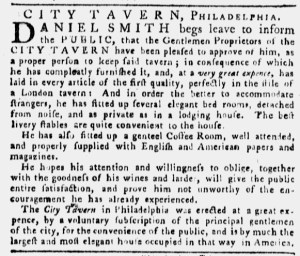
Pennsylvania Gazette (February 16, 1774).

“Perfectly in the stile of a London tavern.”

In February 1774, Daniel Smith took to the pages of the Pennsylvania Gazette and the Pennsylvania Packet to promote his latest enterprise, the City Tavern in Philadelphia.  Residents of the urban port had witnessed the building and marketing of the tavern.  As Smith explained, the building “was erected at a great expence, by a voluntary subscription of the principal gentlemen of the city.”  He billed it as “the largest and most elegant house in that way,” meaning a tavern and inn, “in America.”  The previous summer, the proprietors ran an advertisement seeking a tavernkeeper with “an active, obliging disposition” to rent the building, still under construction with completion expected by September, and operate it “for the convenience and credit of the city.”  Those “Gentlemen Proprietors” wanted the largest and most cosmopolitan city in the colonies to have a tavern that rivaled any found in London.

Smith asserted that he achieved that goal, doing so “at a very great expence.”  He proclaimed that he furnished the building and stocked the storerooms with every necessity.  He “laid in every article of the first quality, perfectly in the stile of a London tavern,” just as envisioned by the affluent subscribers who made the City Tavern one of their projects for improving the bustling urban port and enhancing the city’s reputation throughout the British Atlantic world.  The amenities included a “genteel Coffee Room” where merchants and others could socialize and conduct business.  He “supplied English and American papers and magazines” for their entertainment, but also so they could track the shipping news, prices current, and current events that had an impact on their businesses.  Perhaps his subscriptions included the new Royal American Magazine, the only magazine published in the colonies at the time, demonstrating to his patrons the efforts he made to provide the latest and most interesting publications.  For “strangers” or visitors to the city, Smith “fitted up several elegant bed rooms, detached from noise,” and the “best livery stables,” located “quite convenient to the house.”  Smith expected that all those features, along with “the goodness of his wines and larder,” would “give the public entire satisfaction.”

The City Tavern quickly became a popular meeting place, especially as the imperial crisis intensified.  In addition to merchants and the local gentry frequenting the establishment as part of their everyday routines, concerned citizens met there to debate and discuss politics.  In May 1774, just three months after Smith ran his advertisement, more than two hundred of them gathered at the City Tavern to determine how to respond to messages from Boston in the wake of the Boston Port Act that closed the port until the colonizers paid for the tea destroyed during the Boston Tea Party.  When the First Continental Congress met in Philadelphia in September and October 1774, many influential leaders from throughout the colonies dined and drank at the City Tavern.  John Adams praised it as “the most genteel [tavern] in America.”[1]

**********

[1] See entry for August 29, 1774, in John Adams diary 21, 15 August – 3 September 1774 [electronic edition]. Adams Family Papers: An Electronic Archive. Massachusetts Historical Society. http://www.masshist.org/digitaladams/

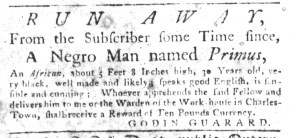
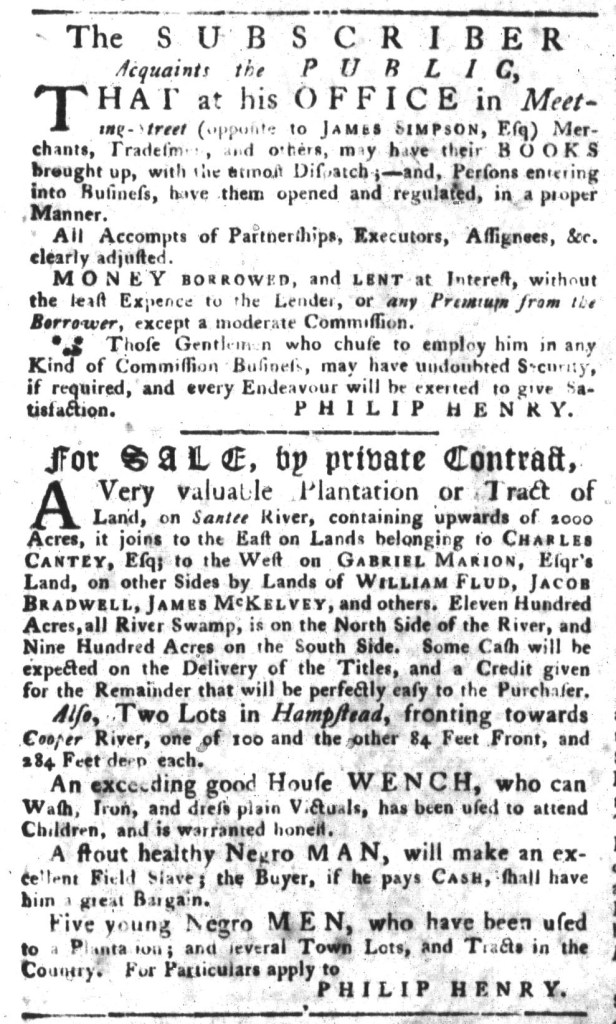
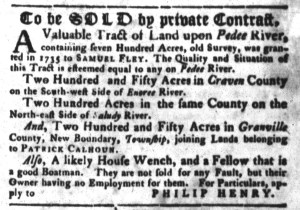
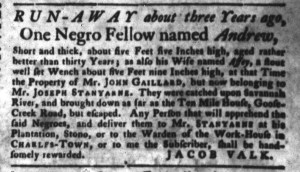
Slavery Advertisements Published February 16, 1774

GUEST CURATOR:  Caroline Branch

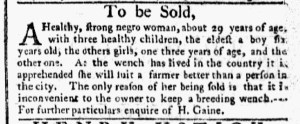
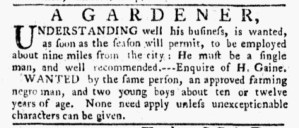
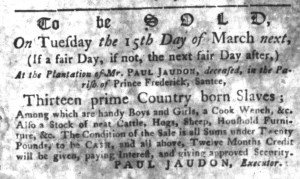
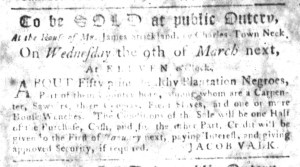
The Slavery Adverts 250 Project chronicles the role of newspaper advertising in perpetuating slavery in the era of the American Revolution. The project seeks to reveal the ubiquity of slavery in eighteenth-century life from New England to Georgia by republishing advertisements about enslaved people – for sale as individuals or in groups, wanted to purchase or for hire for short periods, runaways who liberated themselves, and those who were subsequently captured and confined in jails and workhouses – in daily digests on this site as well as in real time via the @SlaveAdverts250 Twitter feed, utilizing twenty-first-century media to stand in for the print media of the eighteenth century.

The project aims to provide modern audiences with a sense of just how often colonizers encountered these advertisements in their daily lives. Enslaved men, women, and children appeared in print somewhere in the colonies almost every single day. Those advertisements served as a constant backdrop for social, cultural, economic, and political life in colonial and revolutionary America. Colonizers who did not purport to own enslaved people were still confronted with slavery as well as invited to maintain the system by purchasing enslaved men, women, and children or assisting in the capture of so-called “runaways” who sought to free themselves from bondage. The frequency of these newspaper advertisements suggests just how embedded slavery was in colonial and revolutionary American culture in everyday interactions beyond the printed page.

These advertisements also testify to the experiences of enslaved men, women, and children, though readers must consider that those experiences have been remediated through descriptions offered by enslavers rather than enslaved people themselves. Often unnamed in the advertisements, enslaved men, women, and children were not invisible or unimportant in early America.

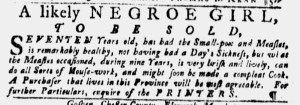
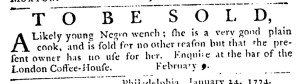
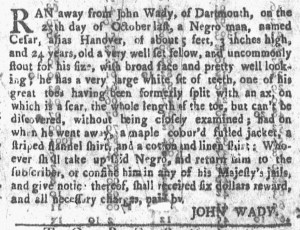
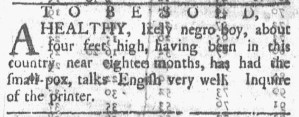
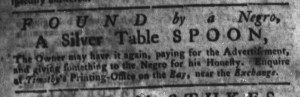
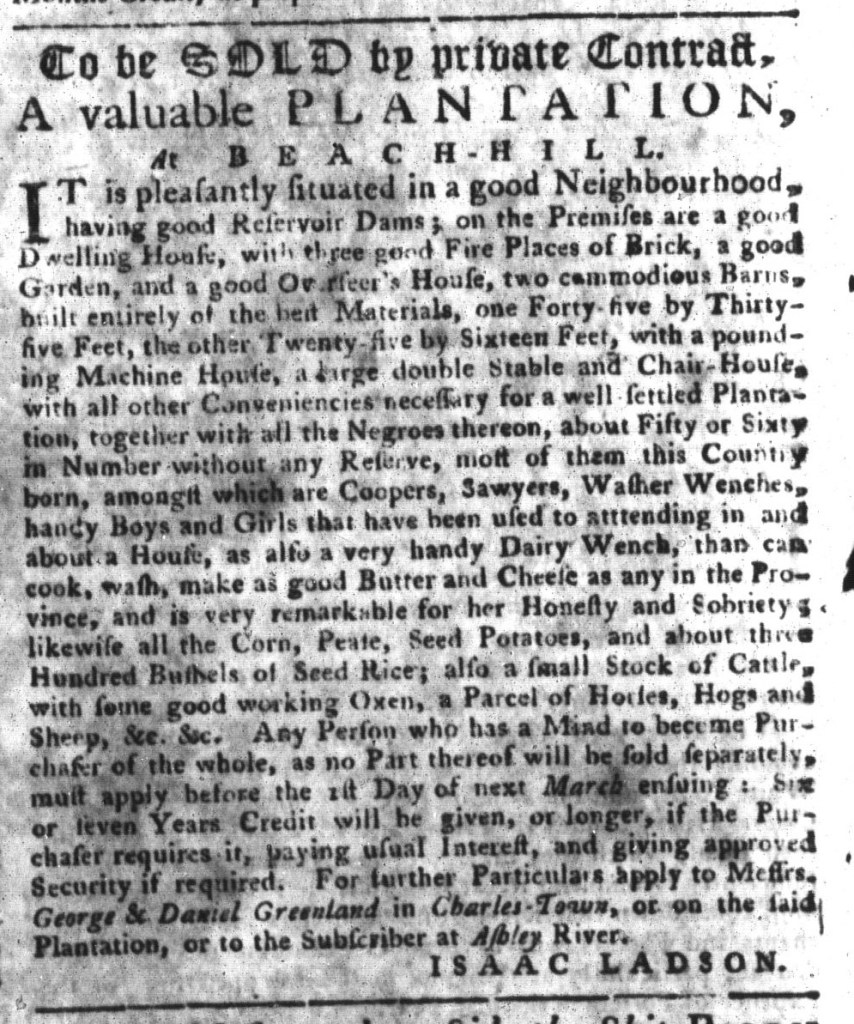
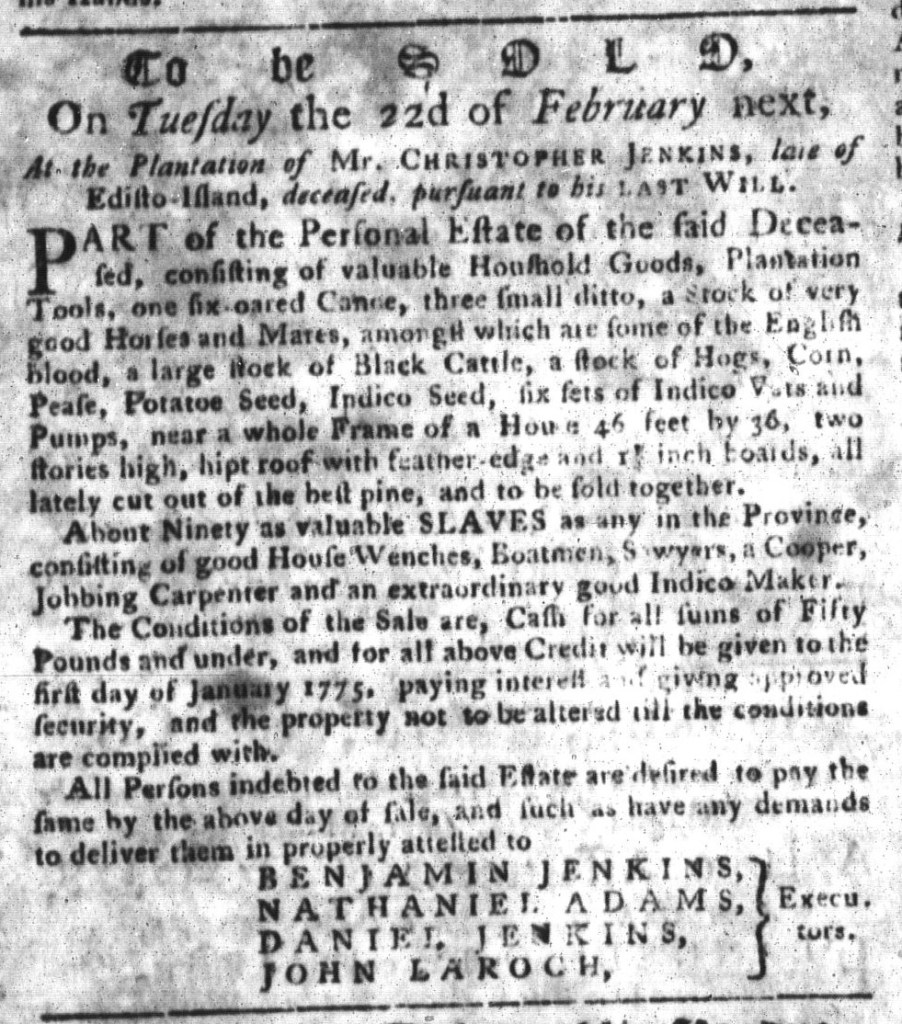
These advertisements appeared in colonial American newspapers 250 years ago today.

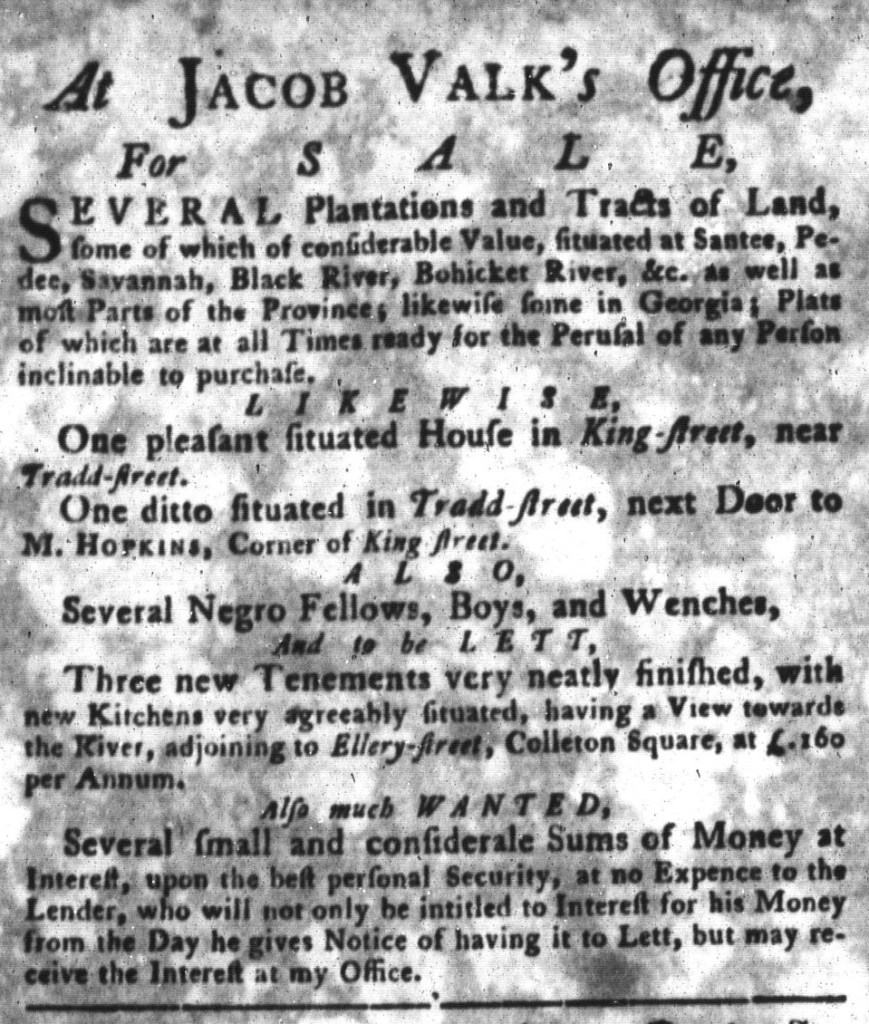
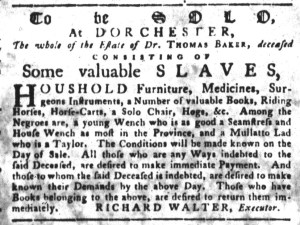
Essex Journal (February 16, 1774).

**********

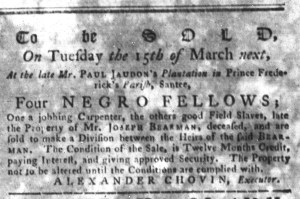
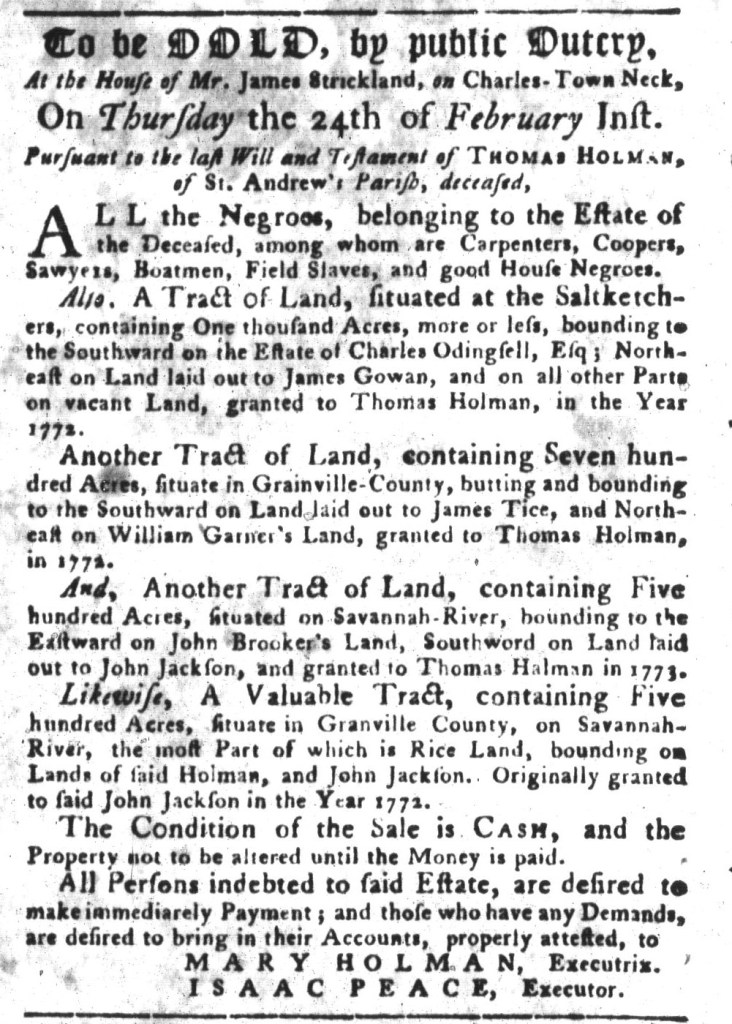
Pennsylvania Gazette (February 16, 1774).

**********

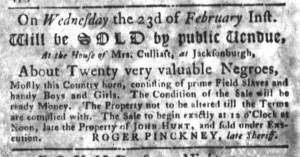
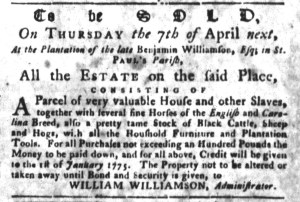
Pennsylvania Gazette (February 16, 1774).

**********

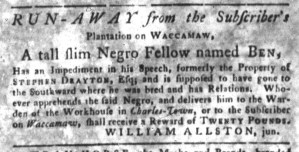
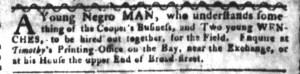
Pennsylvania Journal (February 16, 1774).

February 15

What was advertised in a colonial American newspaper 250 years ago today?

Essex Gazette (February 15, 1774).

“He will sell … at so cheap as Rate as he doubts not will give Satisfaction to every Purchaser.”

George Deblois regularly advertised in the Essex Gazette.  On February 15, 1774, he placed a lengthy notice to promote a “fine Assortment of ENGLISH and HARD-WARE GOODS” that he “just received … from LONDON.”  He asserted that these items were “Suitable for the approaching Season,” encouraging consumers to purchase in advance or at least keep his shop in Salem in mind when they were ready to shop for in the coming weeks and months.  A catalog of his merchandise, divided into two paragraphs, accounted for most of the advertisement.  The first paragraph listed the “ENGLISH” goods, mostly textiles and accessories.  Deblois stocked “Scotch Plaids,” “Devonshire Kersies,” “stampt linen Handkerchiefs,” “a fine assortment of men’s worsted Stockings,” and “Hatter’s Trimmings of all sorts.”  He devoted the other paragraph to housewares and hardware, including the “best of London pewter Dishes,” “hardmetal Tea-Pots,” “steel and iron plate Saws of all sorts and sizes,” and “Brads, Tacks and Nails of all sorts.”

The merchant concluded his advertisement with two common appeals, one about consumer choice and the other about his prices.  The lengthy lists of goods already demonstrated the many choices available to his customers, but he insisted that he also stocked “a great Variety of other Articles, too tedious to enumerate in an Advertisement.”  Readers would have to visit his store to discover what else they might want or need that happened to be on his shelves.  No matter what they selected, his customers could depend on paying low prices.  Deblois declared that “he will sell by Wholesale and Retail … at so cheap a Rate as he doubts not will give Satisfaction to every Purchaser.”  Other advertisers frequently made a nod to low prices.  Elsewhere in the same issue of the Essex Gazette, for instance, John Appleton offered his wares “very cheap.”  Deblois embellished his appeal about prices, hoping to draw the attention of prospective customers and convince them that he offered the best deals.  They would depart his store not only pleased with the goods they acquired but also with a sense of “Satisfaction” about how much they paid.  Deblois encouraged consumers to visit his shop by setting favorable expectations for their shopping experiences.

February 14

GUEST CURATOR:  Caroline Branch

What was advertised in a colonial American newspaper 250 years ago today?

Boston-Gazette (February 14, 1774).

“KEYSER’s FAMOUS PILLS … eradicating every Degree of a certain Disease.”

The date of this advertisement for “KEYSER’s FAMOUS PILLS” to treat venereal disease is an ironic one, appearing on Valentine’s Day, but advertisements for these pills ran often. This advertisement displays the fear of venereal diseases throughout Europe and the colonies in the eighteenth century. Doctors agreed that mercury was the way to treat the disease, including Jean Keyser, a French military surgeon. According to Micheline Louis-Courvoisier, many doctors prescribed a mercurial ointment that patients rubbed all over their bodies for about forty days. In contrast, Keyser’s Pills “contain[ed] a combination of mercuric acid and acetic acid.”  The pills were an invention to treat venereal diseases better. In 1761 doctors in Geneva tested the two methods. Louis-Courvoisier states that “following that trial, Keyser pills were considered a good treatment.” They were deemed a success due to the improvement of side effects from previous medications. The pills became a common medication to treat syphilis and other diseases in Europe and the American colonies.

**********

ADDITIONAL COMMENTARY:  Carl Robert Keyes

Keyser’s Pills may very well have been the most popular, or at least the most widely advertised and generally recognized, patent medicine marketed in British mainland North America in the 1760s and 1770s.  Apothecaries stocked the pills, as did shopkeepers and even printers.  The Adverts 250 Project traced the competition among apothecaries and printers in New York and Philadelphia in the fall of 1773.  That competition (or was it a coordinated effort?) continued into the winter of 1774, extending to Boston as well.

Hugh Gaine, the printer of the New-York Gazette and Weekly Mercury, continued advertising Keyser’s Pills in his newspaper in the new year.  To corner as much of the market as he could, he had previously advertised in the Newport Mercury, encouraging prospective customers in Rhode Island to submit orders to “his book store and printing-office, at the bible & crown in Hanover-square” in New York.  When Benjamin Edes and John Gill, printers of the Boston-Gazette, advertised “KEYSER’s FAMOUS PILLS” on February 14, 1774, they lifted the copy for their notice directly from Gaine’s advertisement.  Edes and Gill used the same headline, followed by two paragraphs of identical text (with some variations in capitalization and italics).”  Like Gaine, they declared that declared that the remedy was “So well known all over Europe, and in this and the neighbouring Colonies, for their superior Efficacy and peculiar Mildness,” making note of the less severe side effects that Caroline discusses above.  The format continued to replicate Gaine’s advertisement, with a secondary headline distributed over three lines.  It announced, “THESE PILLS ARE NOW SOLD BY / EDES and GILL, / (In Boxes of 7s6 L.M. each, fresh imported).”  They simply traded out Gaine’s name for their own and converted the price into local currency.  In another paragraph, Edes and Gill claimed that they “have in their Hands a Letter from the Widow KEYSER, and a Certificate from under her own Hand of the Genuineness of the above Pills.”  Apothecaries, shopkeepers, printers, and other purveyors of Keyser’s Pills frequently squabbled over who sold the real remedy and who peddled counterfeits.  Edes and Gill invited “any Person” to have a “Perusal” of the letter and certificate at their printing office, once again replicating and only slightly editing as necessary Gaine’s advertisement.

Printers and others competed to sell Keyser’s Pills, sometimes even appropriating advertising copy devised by their rivals.  Edes and Gill may not have needed to resort to consulting an advertisement from the Newport Mercury published a couple of months earlier when they first ran their own notice on January 31 and again on February 7 and 14.  More recently, Gaine ran the same advertisement in his New-York Gazette and Weekly Mercury, commencing on January 17.  (He resurrected copy that previously appeared in both his own newspaper and the Newport Mercury.)  That allowed enough time for Edes and Gill to receive that issue in Boston.  Perhaps Gaine even franchised out Keyser’s Pills to Edes and Gill to sell in New England, providing them with both pills and copy for their marketing efforts.  Whatever the explanation, readers in New York and New England experienced consistent messaging about a product imported from Europe and sold in several American ports.  That likely contributed to the acclaim the pills earned in the colonies.

Welcome, Guest Curator Caroline Branch

Caroline Branch is a senior at Assumption University in Worcester, Massachusetts. She is majoring in History and minoring in Political Science. She plans to get her master’s degree in library science and history. Caroline is very passionate about her role as Opinion Editor at Le Provocateur, Assumption University’s student newspaper, and as secretary of Secondhand Hounds. In her free time, she enjoys dance, art, and historic fashion. Caroline spends her summers working at Camp Bernadette in New Hampshire as an activity head. During the school year she works at Assumption’s d’Alzon Library as a front desk supervisor. Caroline made her contributions to the Adverts 250 Project and the Slavery Adverts 250 Project while enrolled in HIS 401 Revolutionary America, 1763-1815, in Fall 2023.

Welcome, guest curator Caroline Branch!

Slavery Advertisements Published February 14, 1774

GUEST CURATOR:  Caroline Branch

The Slavery Adverts 250 Project chronicles the role of newspaper advertising in perpetuating slavery in the era of the American Revolution. The project seeks to reveal the ubiquity of slavery in eighteenth-century life from New England to Georgia by republishing advertisements about enslaved people – for sale as individuals or in groups, wanted to purchase or for hire for short periods, runaways who liberated themselves, and those who were subsequently captured and confined in jails and workhouses – in daily digests on this site as well as in real time via the @SlaveAdverts250 Twitter feed, utilizing twenty-first-century media to stand in for the print media of the eighteenth century.

The project aims to provide modern audiences with a sense of just how often colonizers encountered these advertisements in their daily lives. Enslaved men, women, and children appeared in print somewhere in the colonies almost every single day. Those advertisements served as a constant backdrop for social, cultural, economic, and political life in colonial and revolutionary America. Colonizers who did not purport to own enslaved people were still confronted with slavery as well as invited to maintain the system by purchasing enslaved men, women, and children or assisting in the capture of so-called “runaways” who sought to free themselves from bondage. The frequency of these newspaper advertisements suggests just how embedded slavery was in colonial and revolutionary American culture in everyday interactions beyond the printed page.

These advertisements also testify to the experiences of enslaved men, women, and children, though readers must consider that those experiences have been remediated through descriptions offered by enslavers rather than enslaved people themselves. Often unnamed in the advertisements, enslaved men, women, and children were not invisible or unimportant in early America.

These advertisements appeared in colonial American newspapers 250 years ago today.

Boston Evening-Post (February 14, 1774).

**********

Newport Mercury (February 14, 1774).

**********

Newport Mercury (February 14, 1774).

**********

New-York Gazette and Weekly Mercury (February 14, 1774).

**********

Supplement to the New-York Gazette and Weekly Mercury (February 14, 1774).

**********

South-Carolina Gazette (February 14, 1774).

**********

South-Carolina Gazette (February 14, 1774).

**********

South-Carolina Gazette (February 14, 1774).

**********

South-Carolina Gazette (February 14, 1774).

**********

South-Carolina Gazette (February 14, 1774).

**********

South-Carolina Gazette (February 14, 1774).

**********

South-Carolina Gazette (February 14, 1774).

**********

South-Carolina Gazette (February 14, 1774).

**********

South-Carolina Gazette (February 14, 1774).

**********

South-Carolina Gazette (February 14, 1774).

**********

South-Carolina Gazette (February 14, 1774).

**********

Supplement to the South-Carolina Gazette (February 14, 1774).

**********

Supplement to the South-Carolina Gazette (February 14, 1774).

**********

Supplement to the South-Carolina Gazette (February 14, 1774).

**********

Supplement to the South-Carolina Gazette (February 14, 1774).

**********

Supplement to the South-Carolina Gazette (February 14, 1774).

**********

Supplement to the South-Carolina Gazette (February 14, 1774).

February 13

What was advertised in a colonial American newspaper 250 years ago this week?

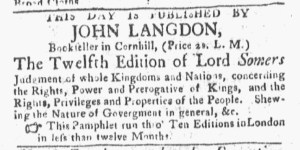
Boston-Gazette (February 7, 1774).

“This Pamphlet run thro’ Ten Editions in London in less than twelve Months.”

American printers and booksellers marketed and sold a variety of political pamphlets and treatises during the imperial crisis that led to thirteen colonies declaring independence from Great Britain.  In addition to hawking items printed in London and imported to the colonies, some of those printers and booksellers also published American editions, as was the case with The Judgment of Whole Kingdoms and Nations, Concerning the Rights, Privileges and Properties of the People.  Three American editions appeared in 1773 and 1774, one in Philadelphia, one in Boston, and one in Newport, Rhode Island.

Several rare book dealers, including Bauman Rare Books, offer overviews of the publication history, contents, and significance of The Judgment of Whole Kingdoms and Nations.  Originally published as Vox Populi, Vox Dei in London in 1709, the pamphlet “examines principles of limited monarchy and the right of resistance to tyranny,” drawing on “historical precedents and reiterat[ing] opposition to absolute monarchy during the time of England’s Glorious Revolution.”  Colonial printers and booksellers both answered the demand for this sort of political philosophy and helped to stoke opposition to king and Parliament by publishing and disseminating this pamphlet and other tracts and treatises.  The Judgment of Whole Kingdoms and Nations “contains the seed of what would become the American Bill of Rights – reprinting the English Bill of Rights – and was read by many of the Founding Fathers, including John Adams and Thomas Jefferson, who owned the Philadelphia 1773 edition.”

Adams may have acquired his copy after reading the advertisement that John Langdon placed in the February 7, 1774, edition of the Boston-Gazette, a newspaper that took an especially vocal stance in support of the Sons of Liberty and the rights of Americans.  Langdon, a bookseller, published the book, engaging the services of Isaiah Thomas as printer.  To incite demand, Langdon informed prospective customers that “This Pamphlet run thro’ Ten Editions in London in less than twelve Months.”  How could anyone interested in politics in the colonies miss out on what was such a popular and influential work in the capital of the empire?  Readers of the Boston-Gazette had to decide for themselves how much to trust Langdon’s assertion about the rapid sales of the pamphlet in London.

That report, however, may have contributed to colonizers overestimating how much the general public on the other side of the Atlantic supported them in their disputes with George III and Parliament.  In Misinformation Nation: Foreign News and the Politics of Truth in Revolutionary America, Jordan E. Taylor argues that American newspapers selectively published reports from London, creating narratives of recent events that matched the ideologies of the printers.  Langdon’s note at the end of his advertisement for a political pamphlet used to support the American cause may have buttressed the narrative that Benjamin Edes and John Gill advanced in the news items and editorials they published elsewhere in the Boston-Gazette.  Declaring that The Judgment of Whole Kingdoms and Nations sold so rapidly in London suggested widespread support for the principles it contained as well as applying them to the American colonies.

February 12

What was advertised in a colonial American newspaper 250 years ago today?

Providence Gazette (February 12, 1774).

“As low Rates as can be purchased at any Shop or Store in Boston or elsewhere.”

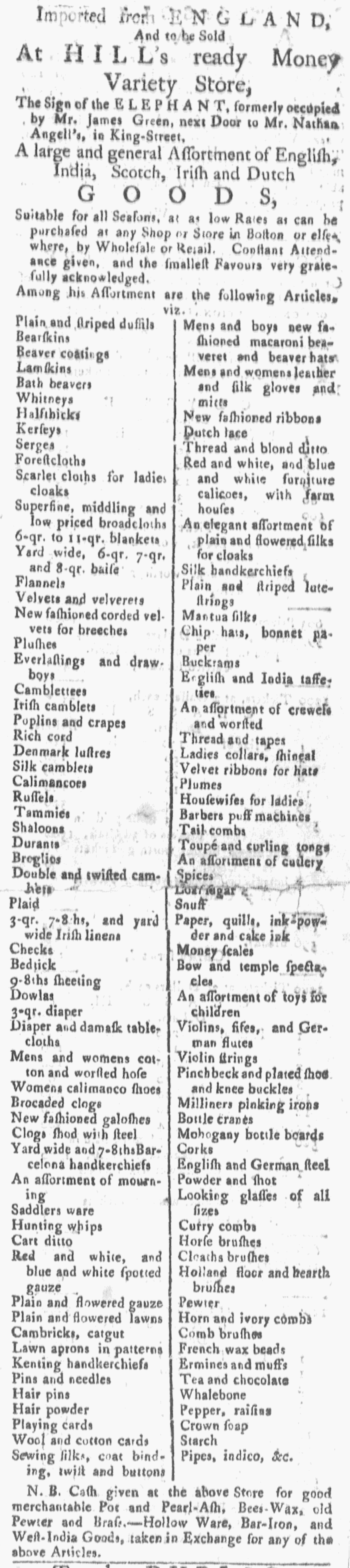
When the proprietor of “HILL’s Variety Store” took to the pages of the Providence Gazette near the end of January 1774, his advertisement promoted a “compleat Assortment of English, Scotch and India Goods,” listed about a dozen items, and promised “every other Article usually imported, too many to be enumerated in this Week’s Paper.”  That final note suggested that either the printer had truncated the advertisement due to space constraints or the advertiser had not yet compiled a more complete inventory to insert in the public prints.  It may very well have been the latter, considering that three weeks passed before a more extensive advertisement appeared in the Providence Gazette.

And more extensive it certainly was!  That advertisement filled nearly an entire column in the February 12 edition.  The merchant devoted most of that space to a catalog of “English, India, Scotch, Irish and Dutch GOODS,” demonstrating the range of choices available to consumers.  Divided into two columns with only one item per line, making it easier for readers to navigate than the dense paragraphs of text in some advertisements, this notice included many kinds of textiles and accessories, “Womens calamanco shoes,” “Mens and boys new fashioned macaroni beaveret and beaver hats,” “Mens and womens leather and silk gloves and mitts,” “Pinchbeck and plated shoe and knee buckles,” “Violins, fifes, and German flutes,” and even an “assortment of toys for children.”  Prospective customers could expect to discover much more at “HILL’s ready Money and Variety Store.”  (The variation on the name suggested that they would need to pay at the time of sale rather than purchase on credit, but a note at the end of the advertisements indicated “Hollow Ware, Bar-Iron, and West-India Goods, taken in Exchange for any of the above Articles.”)  The list of goods began with a clarification that “Among his Assortment are the following Articles,” while the catalog concluded with “&c.” (an abbreviation for et cetera) to signal that even more was available at the store.

Yet such appeals to consumer choice were not the only marketing strategies deployed by the merchant.  A preamble to his inventory reported that he sold his goods both wholesale and retail “at as low Rates as can be purchased at any Shop or Store in Boston or elsewhere.”  He realized that he did not compete solely with local merchants and shopkeepers but also with their counterparts in Boston, Newport, New York, and other towns.  He did not want shopkeepers in the countryside turning to importers in other ports to supply their inventory.  Such wholesale purchases could amount to significant revenue.  At the same time, he did not ignore consumers interested in retail purchases.  The merchant stated that “the smallest Favours” or purchases would be “gratefully acknowledged.”  Between the selection and the prices, he hoped prospective customers would come to the “Sign of the ELEPHANT” in King Street to acquire goods they needed to supplement inventories at their own shops or that they wanted for their own use.

Slavery Advertisements Published February 12, 1774

GUEST CURATOR:  Caroline Branch

The Slavery Adverts 250 Project chronicles the role of newspaper advertising in perpetuating slavery in the era of the American Revolution. The project seeks to reveal the ubiquity of slavery in eighteenth-century life from New England to Georgia by republishing advertisements about enslaved people – for sale as individuals or in groups, wanted to purchase or for hire for short periods, runaways who liberated themselves, and those who were subsequently captured and confined in jails and workhouses – in daily digests on this site as well as in real time via the @SlaveAdverts250 Twitter feed, utilizing twenty-first-century media to stand in for the print media of the eighteenth century.

The project aims to provide modern audiences with a sense of just how often colonizers encountered these advertisements in their daily lives. Enslaved men, women, and children appeared in print somewhere in the colonies almost every single day. Those advertisements served as a constant backdrop for social, cultural, economic, and political life in colonial and revolutionary America. Colonizers who did not purport to own enslaved people were still confronted with slavery as well as invited to maintain the system by purchasing enslaved men, women, and children or assisting in the capture of so-called “runaways” who sought to free themselves from bondage. The frequency of these newspaper advertisements suggests just how embedded slavery was in colonial and revolutionary American culture in everyday interactions beyond the printed page.

These advertisements also testify to the experiences of enslaved men, women, and children, though readers must consider that those experiences have been remediated through descriptions offered by enslavers rather than enslaved people themselves. Often unnamed in the advertisements, enslaved men, women, and children were not invisible or unimportant in early America.

These advertisements appeared in colonial American newspapers 250 years ago today.

Providence Gazette (February 12, 1774).

February 11

What was advertised in a colonial American newspaper 250 years ago today?

Connecticut Gazette (February 11, 1774).

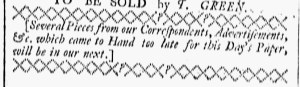
Several Pieces from our Correspondents, Advertisements, &c. which came to Hand too late for this Day’s Paper, will be in out next.”

Timothy Green, the printer of the Connecticut Gazette, inserted a brief notice in the February 11, 1774, edition to advise that “Several Pieces from our Correspondents, Advertisements, &c. which came to Hand too late for this Day’s Paper, will be in out next.”  In a few short lines, the printer aimed to manage his relationships with subscribers, advertisers, and anyone who submitted news, editorials, essays, or any other content for the newspaper.  He suggested to readers that he worked until the last possible moment to include the latest news.  He assured advertisers that their notices would indeed appear in print in the next issue.  He let those who provided content know that practical matters, not a lack of appreciation for their efforts, played the deciding role in why their submissions did not appear alongside a proclamation from the governor, resolutions from a “Town-Meeting of the Town of Providence” concerning a “Duty upon Tea” enacted by Parliament, and an account of events that resulted in the tarring and feathering of John Malcom, a customs officer, in Boston.

Green’s notice appeared at the bottom of the final column on the third page.  While that may seem like a curious place to modern readers, it made absolute sense to eighteenth-century readers, especially anyone familiar with the process for printing newspapers.  The Connecticut Gazette, like other newspapers of the era, consisted of four pages, created by printing two pages on each side of a broadside and folding it in half.  Workers in a printing office set the type for the first and fourth pages, printed the side of the broadsheet that featured those pages, and let the ink dry before printing the second and third pages on the other side.  That meant that type for the interior pages was set last, so news received most recently, regardless of its magnitude, appeared there rather than on the front page.  Whatever appeared at the end of the last column on the third page was the final bit of content that printers managed to fit in that issue.  That Green’s notice appeared there testified to his efforts to publish everything received in his printing office in New London up to the moment he had to take that issue to press and distribute the February 11 edition on schedule.