February 13

What was advertised in a colonial American newspaper 250 years ago today?
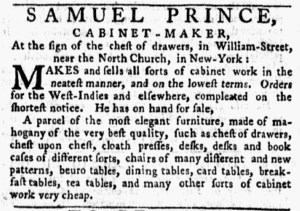
Supplement to the New-York Gazette and Weekly Mercury (February 13, 1775).

“Orders for the West-Indies and elsewhere, compleated on the shortest notice.”

Samuel Prince, a cabinetmaker, produced furniture in his workshop “At the sign of the chest of drawers, in William-Street, near the North Church, in New-York” in the 1770s.  In February 1775, he took to the pages of the New-York Gazette and Weekly Mercury to promote a “parcel of the most elegant furniture, made of mahogany,” imported from the West Indies, “of the very best quality.”  In addition to the “chest of drawers, … desks and book cases of different sorts, [and] chairs of many different and new patterns” that he had on hand, Prince made “all sorts of cabinet work in the neatest manner, and on the lowest terms.”

While he certainly sought customers in New York, he also indicated that he accepted “Orders for the West-Indies and elsewhere” and shipped the furniture to his clients.  That Prince addressed prospective customers in the West Indies testified to the circulation of the New-York Gazette and Weekly Mercury and other colonial newspapers.  The cabinetmaker had a reasonable expectation that prospective customers in faraway places would see his advertisement.

Prince promised that he “completed” orders “on the shortest notice, an appeal with additional significance since the Continental Association went into effect.  Devised by the First Continental Congress, that nonimportation, nonconsumption, and nonexportation agreement was designed to use commerce as leverage for convincing Parliament to repeal the Coercive Acts.  The fourth article specified that the “earnest Desire we have not to injure our Fellow Subjects in Great Britain, Ireland, or the West Indies, induces us to suspend a Non-exportation until the tenth Day of September 1775.”  If Parliament did not take satisfactory action by that time, “we will not, directly or indirectly, export any Merchandise, or Commodity whatsoever, to Great Britain, Ireland, or the West Indies.”  In other words, Prince and prospective clients in the West Indies had a short window of opportunity for placing orders, producing the furniture, and shipping it.  Prince did not violate the provisions of the Continental Association, but he likely had that looming deadline in mind when he pledged to fill orders “on the shortest notice.”

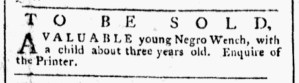
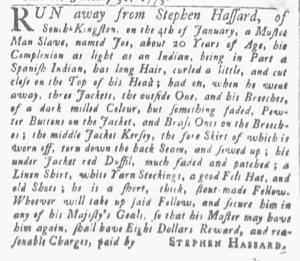
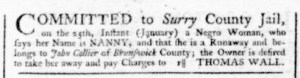
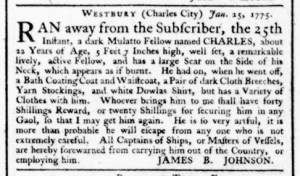
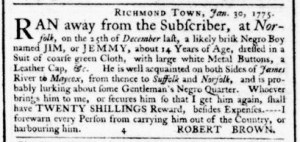
Slavery Advertisements Published February 13, 1775

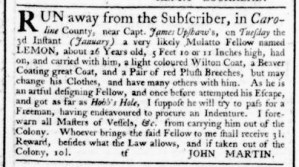
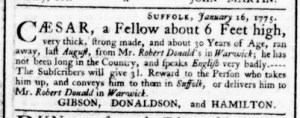
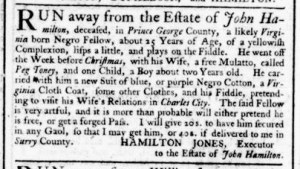
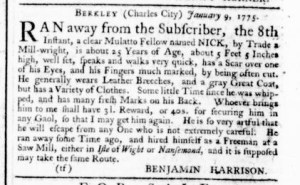
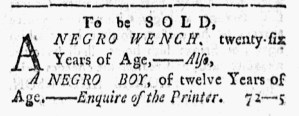
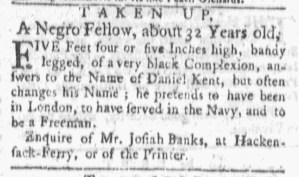
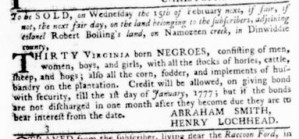
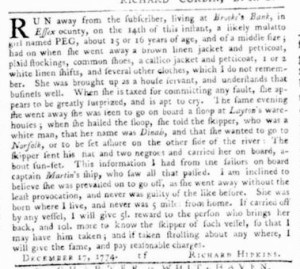
The Slavery Adverts 250 Project chronicles the role of newspaper advertising in perpetuating slavery in the era of the American Revolution. The project seeks to reveal the ubiquity of slavery in eighteenth-century life from New England to Georgia by republishing advertisements about enslaved people – for sale as individuals or in groups, wanted to purchase or for hire for short periods, runaways who liberated themselves, and those who were subsequently captured and confined in jails and workhouses – in daily digests on this site as well as in real time via the @SlaveAdverts250 Twitter feed, utilizing twenty-first-century media to stand in for the print media of the eighteenth century.

The project aims to provide modern audiences with a sense of just how often colonizers encountered these advertisements in their daily lives. Enslaved men, women, and children appeared in print somewhere in the colonies almost every single day. Those advertisements served as a constant backdrop for social, cultural, economic, and political life in colonial and revolutionary America. Colonizers who did not purport to own enslaved people were still confronted with slavery as well as invited to maintain the system by purchasing enslaved men, women, and children or assisting in the capture of so-called “runaways” who sought to free themselves from bondage. The frequency of these newspaper advertisements suggests just how embedded slavery was in colonial and revolutionary American culture in everyday interactions beyond the printed page.

These advertisements also testify to the experiences of enslaved men, women, and children, though readers must consider that those experiences have been remediated through descriptions offered by enslavers rather than enslaved people themselves. Often unnamed in the advertisements, enslaved men, women, and children were not invisible or unimportant in early America.

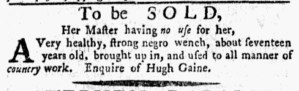
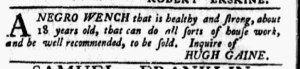
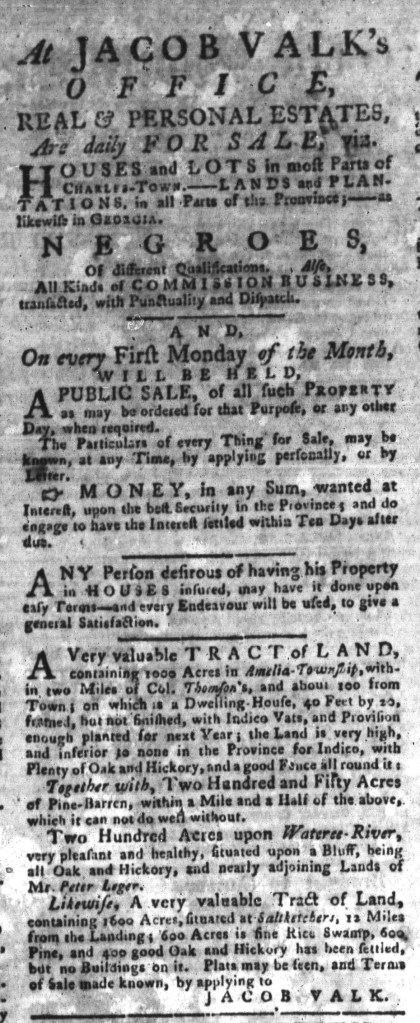
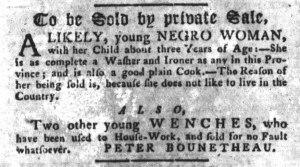
These advertisements appeared in colonial American newspapers 250 years ago today.

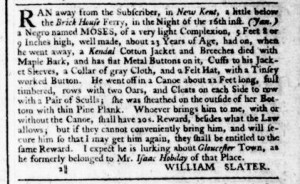
Connecticut Courant (February 13, 1775).

**********

Dunlap’s Pennsylvania Packet (February 13, 1775).

**********

Dunlap’s Pennsylvania Packet (February 13, 1775).

**********

Dunlap’s Pennsylvania Packet (February 13, 1775).

**********

Newport Mercury (February 13, 1775).

**********

Newport Mercury (February 13, 1775).

**********

Newport Mercury (February 13, 1775).

**********

New-York Gazette and Weekly Mercury (February 13, 1775).

**********

New-York Gazette and Weekly Mercury (February 13, 1775).

**********

New-York Gazette and Weekly Mercury (February 13, 1775).

**********

New-York Gazette and Weekly Mercury (February 13, 1775).

**********

Supplement to the New-York Gazette and Weekly Mercury (February 13, 1775).

**********

Supplement to the New-York Gazette and Weekly Mercury (February 13, 1775).

**********

Supplement to the New-York Gazette and Weekly Mercury (February 13, 1775).

**********

South-Carolina Gazette (February 13, 1775).

**********

South-Carolina Gazette (February 13, 1775).

**********

South-Carolina Gazette (February 13, 1775).

**********

South-Carolina Gazette (February 13, 1775).

**********

South-Carolina Gazette (February 13, 1775).

**********

South-Carolina Gazette (February 13, 1775).

**********

Supplement to the South-Carolina Gazette (February 13, 1775).

**********

Supplement to the South-Carolina Gazette (February 13, 1775).

**********

Supplement to the South-Carolina Gazette (February 13, 1775).

**********

Supplement to the South-Carolina Gazette (February 13, 1775).

**********

Supplement to the South-Carolina Gazette (February 13, 1775).

**********

Supplement to the South-Carolina Gazette (February 13, 1775).

**********

Supplement to the South-Carolina Gazette (February 13, 1775).

**********

Supplement to the South-Carolina Gazette (February 13, 1775).

**********

Supplement to the South-Carolina Gazette (February 13, 1775).

**********

Supplement to the South-Carolina Gazette (February 13, 1775).

February 12

What was advertised in a colonial American newspaper 250 years ago this week?

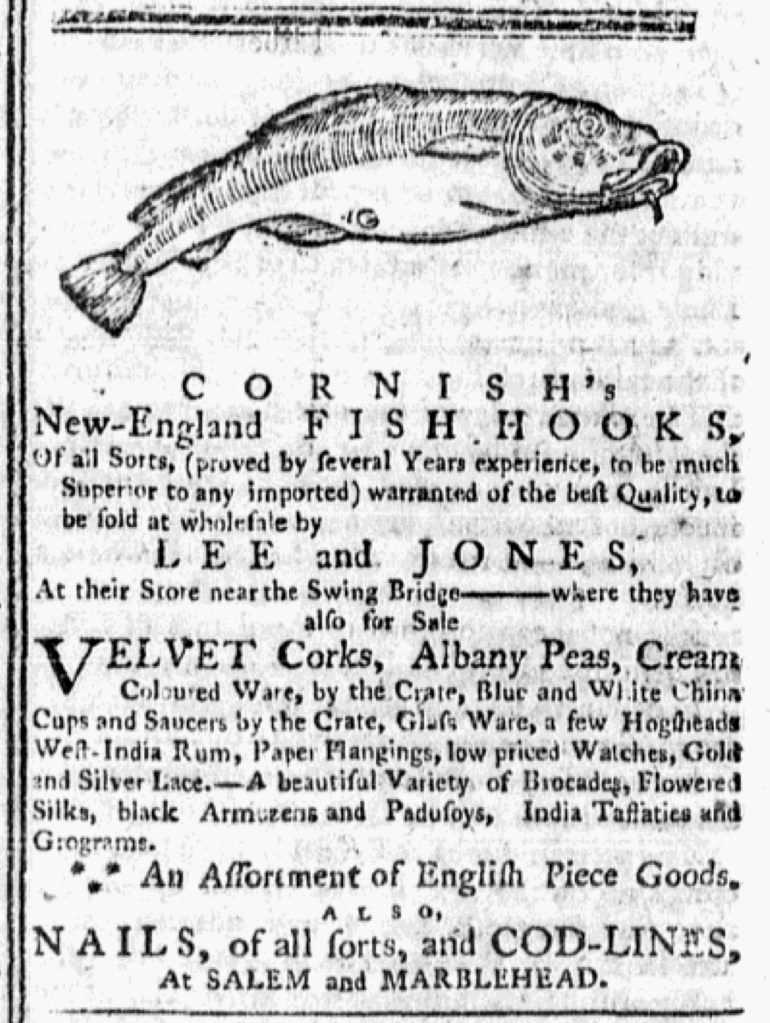
Massachusetts Spy (February 9, 1775).

“CORNISH’s New-England FISH HOOKS.”

Lee and Jones stocked a variety of merchandise at “their Store near the Swing Bridge” in Boston in February 1775, but they made “CORNISH’s New-England FISH HOOKS” the centerpiece of their advertisement in the February 9 edition of the Massachusetts Spy.  Not only did they list that product first and devote the most space to describing it, but they also adorned their advertisement with a woodcut depicting a fish.  That image previously appeared in advertisements that Abraham Cornish placed in the Massachusetts Spy in March 1772 and March 1773.  Either Lee and Jones acquired the woodcut from Cornish when they composed the copy for their notice or Isaiah Thomas, the printer of the Massachusetts Spy, held the woodcut for Cornish and determined that advertisers promoting his product could use it in their notices.  It was not the first time that Lee and Jones distributed “CORNISH’s New-England Cod-Fish HOOKS.”

By the time that Lee and Jones ran their advertisement, Cornish had established a familiar brand.  In addition to advertising in the Massachusetts Spy, he also advertised in the Massachusetts Gazette and Boston Weekly News-Letter and Salem’s Essex Gazette.  His marketing efforts regularly touted the approval he received when “Fishermen … made trial of his Hooks” and found them “much superior to those imported from England.”  Lee and Jones deployed similar appeals when they proclaimed that the hooks had been “Proved by several Years experience, to be much Superior to any imported.”  Such assertions held even greater significance with the Continental Association, a nonimportation pact, in effect and the imperial crisis becoming even more dire.  In protest of the Coercive Acts passed in response to the Boston Tea Party, colonizers vowed not to import good from Britain.  The Continental Association called for encouraging domestic manufactures or goods produced in the colonies as alternatives to imported items.  Cornish has been making that case for his product for several years, as many readers likely remembered when they saw Lee and Jones’s advertisement for “CORNISH’s New-England FISH HOOKS.”

February 11

What was advertised in a colonial American newspaper 250 years ago today?

Supplement to the Pennsylvania Ledger (February 11, 1775).

“POLITICAL PAMPHLETS … on Both Sides of the Question.”

As the imperial crisis intensified in late 1774 and early 1775, most American newspapers became increasingly partisan, even those that claimed that they did not take a side in the contest between Patriots and Parliament.  Printers sometimes ran advertisements for pamphlets that did not align with the principles most often espoused in their publications, but few made a point of declaring that they did so.  James Rivington, printer of Rivington’s New-York Gazetteer and a noted Loyalist, took the most strident approach in a series of advertisements for “POLITICAL PUBLICATIONSwritten on the Whig and the Tory Side of the Question.”  Sporting headlines like “The American Contest” and “The American Controversy,” those advertisements listed several pamphlets, many of them written in response to others also advertised.

Yet Rivington was not alone.  In the supplement that accompanied the third issue of the new Pennsylvania Ledger, James Humphreys, Jr., the printer, inserted a short notice that announced, “Most of the POLITICAL PAMPHLETS That have been published, on Both Sides of the Question, May be had of the Printer hereof.”  On the first page, he once again ran the proposals for the newspaper, stating that he established a “Free and Impartial News Paper, open to All, and Influenced by None.”  Despite that assertion, “[i]t was supposed that Humhreys’s paper would be in the British interest,” according to Isaiah Thomas in his History of Printing in America (1810).[1]  He further explained that “in times more tranquil than those in which it appeared, [Humphreys] might have succeeded in his plan” to “conduct his paper with political impartiality.”[2]
When it came to marketing strategies for political pamphlets, printers associated with supporting the Tory “Side” took the more evenhanded approach of drawing attention to their commitment to selling and disseminating work on “Both Sides of the Question.”  In Rivington’s case, doing so was a matter of generating revenue as much as operating an impartial press and bookstore.  For Humphreys, on the other hand, doing so seemed to fall in line with the commitment he made in his proposals for the Pennsylvania Ledger.  Even taking those motivations into account, both printers may have considered it necessary to profess that they sold pamphlets on “Both Sides” to justify how many titles they sold that argued from the Tory perspective.
**********

[1] Isaiah Thomas, The History of Printing in America: With a Biography of Printers and an Account of Newspapers (1810; New York: Weathervane Books, 1970), 399.

[2] Thomas, History of Printing, 439.

Slavery Advertisements Published February 11, 1775

The Slavery Adverts 250 Project chronicles the role of newspaper advertising in perpetuating slavery in the era of the American Revolution. The project seeks to reveal the ubiquity of slavery in eighteenth-century life from New England to Georgia by republishing advertisements about enslaved people – for sale as individuals or in groups, wanted to purchase or for hire for short periods, runaways who liberated themselves, and those who were subsequently captured and confined in jails and workhouses – in daily digests on this site as well as in real time via the @SlaveAdverts250 Twitter feed, utilizing twenty-first-century media to stand in for the print media of the eighteenth century.

The project aims to provide modern audiences with a sense of just how often colonizers encountered these advertisements in their daily lives. Enslaved men, women, and children appeared in print somewhere in the colonies almost every single day. Those advertisements served as a constant backdrop for social, cultural, economic, and political life in colonial and revolutionary America. Colonizers who did not purport to own enslaved people were still confronted with slavery as well as invited to maintain the system by purchasing enslaved men, women, and children or assisting in the capture of so-called “runaways” who sought to free themselves from bondage. The frequency of these newspaper advertisements suggests just how embedded slavery was in colonial and revolutionary American culture in everyday interactions beyond the printed page.

These advertisements also testify to the experiences of enslaved men, women, and children, though readers must consider that those experiences have been remediated through descriptions offered by enslavers rather than enslaved people themselves. Often unnamed in the advertisements, enslaved men, women, and children were not invisible or unimportant in early America.

These advertisements appeared in colonial American newspapers 250 years ago today.

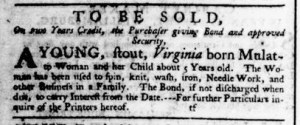
Providence Gazette (February 11, 1775).

**********

Virginia Gazette [Dixon and Hunter] (February 11, 1775).

**********

Virginia Gazette [Dixon and Hunter] (February 11, 1775).

**********

Virginia Gazette [Dixon and Hunter] (February 11, 1775).

**********

Virginia Gazette [Dixon and Hunter] (February 11, 1775).

**********

Virginia Gazette [Dixon and Hunter] (February 11, 1775).

**********

Virginia Gazette [Dixon and Hunter] (February 11, 1775).

**********

Virginia Gazette [Dixon and Hunter] (February 11, 1775).

**********

Virginia Gazette [Dixon and Hunter] (February 11, 1775).

**********

Virginia Gazette [Dixon and Hunter] (February 11, 1775).

**********

Virginia Gazette [Dixon and Hunter] (February 11, 1775).

**********

Virginia Gazette [Dixon and Hunter] (February 11, 1775).

**********

Virginia Gazette [Dixon and Hunter] (February 11, 1775).

**********

Virginia Gazette [Dixon and Hunter] (February 11, 1775).

February 10

What was advertised in a colonial American newspaper 250 years ago today?

South-Carolina and American General Gazette (February 10, 1775).

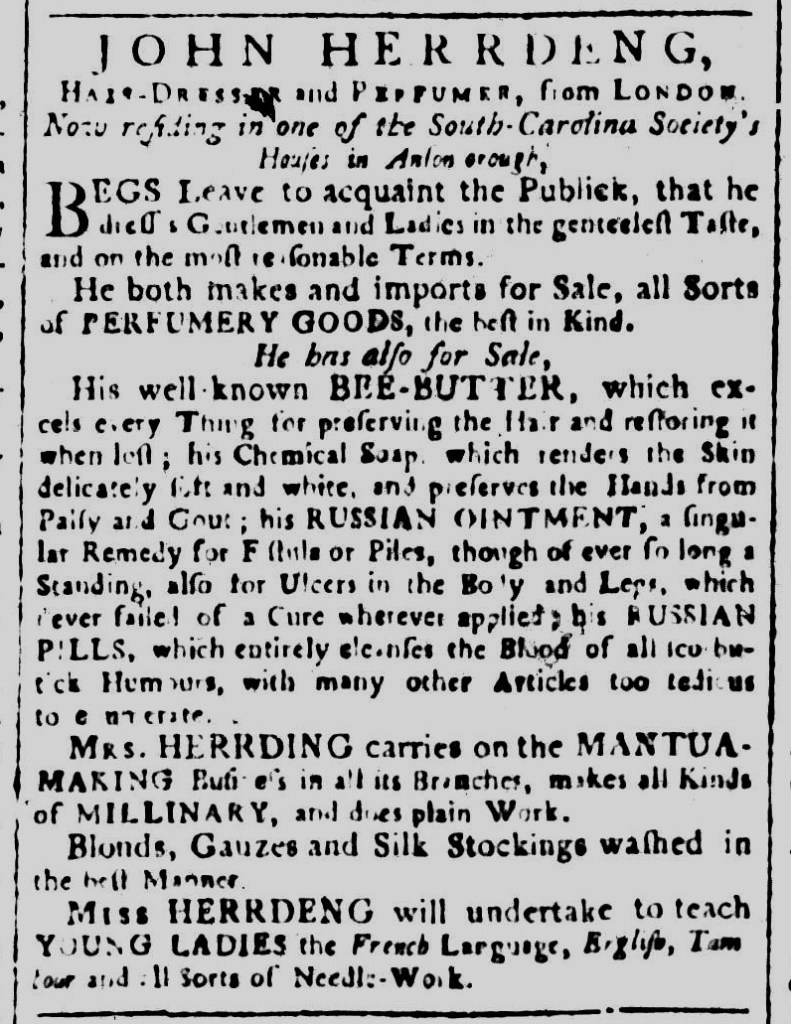
“JOHN HERRDENG, HAIR-DRESSER and PERFUMER.”

“MRS. HERRDING carries on the MANTUA-MAKING Business.”

“MISS HERRDENG will undertake to teach YOUNG LADIES the French Language.”
At a glance, the headline for an advertisement in the February 10, 1775, edition of the South-Carolina and American General Gazette promoted goods and services provided by John Herrdeng, a “HAIR-DRESSER and PERFUMER, from LONDON,” yet when they perused it more closely readers discovered that the notice also included entrepreneurial activities undertaken by other members of the Herrdeng household.  Descriptions of “PERFUMERY GOODS” and medicines that Herrdeng made and sold accounted for the first two thirds of the advertisements.  The final third outlined Mrs. Herrdeng’s “MANTUA-MAKING Business” and Miss Herrdeng offering lessons in French, English, and Needlework to the “YOUNG LADIES” of Charleston.

On occasion, the Adverts 250 Project has examined newspaper advertisements jointly placed by husbands and wives, brothers and sisters, or other relations residing in the same household.  This unusual advertisement, however, featured three family members who each pursued their own occupations.  As was often (but not always) the case, the man of the household received top billing.  Not only did the description of John Herrdeng’s goods and services take up the most space in the advertisement, his name, in larger font, appeared as the headline.  The order that the other members of the household appeared indicated their status and, likely, their experience.

Mrs. Herrdeng and Miss Herrdeng were not the only female entrepreneurs who advertised in that issue of the South-Carolina and American General Gazette.  Ann Fowler ran an advertisement for paper hangings and textiles that she also placed in the South-Carolina Gazette and Country Journal.  It filled almost as much space as the Herrdengs’ notice.  At the top of the column, Jane Thomson, a milliner, encouraged consumers to avail themselves of her services.  These advertisements made Fowler’s and Thomson’s presence in the marketplace much more visible in the public prints than Mrs. Herrdeng and Miss Herrdeng.  The Herrdengs made different decisions about how to depict themselves as entrepreneurs, yet their advertisement testifies to the contributions they made to their household beyond assisting a husband and father in his occupation.  The Herrdeng women practiced their own trades, engaged with their own clients, and resorted to advertising to facilitate their work.

Slavery Advertisements Published February 10, 1775

The Slavery Adverts 250 Project chronicles the role of newspaper advertising in perpetuating slavery in the era of the American Revolution. The project seeks to reveal the ubiquity of slavery in eighteenth-century life from New England to Georgia by republishing advertisements about enslaved people – for sale as individuals or in groups, wanted to purchase or for hire for short periods, runaways who liberated themselves, and those who were subsequently captured and confined in jails and workhouses – in daily digests on this site as well as in real time via the @SlaveAdverts250 Twitter feed, utilizing twenty-first-century media to stand in for the print media of the eighteenth century.

The project aims to provide modern audiences with a sense of just how often colonizers encountered these advertisements in their daily lives. Enslaved men, women, and children appeared in print somewhere in the colonies almost every single day. Those advertisements served as a constant backdrop for social, cultural, economic, and political life in colonial and revolutionary America. Colonizers who did not purport to own enslaved people were still confronted with slavery as well as invited to maintain the system by purchasing enslaved men, women, and children or assisting in the capture of so-called “runaways” who sought to free themselves from bondage. The frequency of these newspaper advertisements suggests just how embedded slavery was in colonial and revolutionary American culture in everyday interactions beyond the printed page.

These advertisements also testify to the experiences of enslaved men, women, and children, though readers must consider that those experiences have been remediated through descriptions offered by enslavers rather than enslaved people themselves. Often unnamed in the advertisements, enslaved men, women, and children were not invisible or unimportant in early America.

These advertisements appeared in colonial American newspapers 250 years ago today.

South-Carolina and American General Gazette (February 10, 1775).

**********

South-Carolina and American General Gazette (February 10, 1775).

**********

South-Carolina and American General Gazette (February 10, 1775).

**********

South-Carolina and American General Gazette (February 10, 1775).

**********

South-Carolina and American General Gazette (February 10, 1775).

**********

South-Carolina and American General Gazette (February 10, 1775).

**********

South-Carolina and American General Gazette (February 10, 1775).

**********

South-Carolina and American General Gazette (February 10, 1775).

**********

South-Carolina and American General Gazette (February 10, 1775).

**********

South-Carolina and American General Gazette (February 10, 1775).

**********

South-Carolina and American General Gazette (February 10, 1775).

**********

South-Carolina and American General Gazette (February 10, 1775).

**********

South-Carolina and American General Gazette (February 10, 1775).

**********

South-Carolina and American General Gazette (February 10, 1775).

**********

South-Carolina and American General Gazette (February 10, 1775).

**********

South-Carolina and American General Gazette (February 10, 1775).

**********

South-Carolina and American General Gazette (February 10, 1775).

**********

South-Carolina and American General Gazette (February 10, 1775).

**********

South-Carolina and American General Gazette (February 10, 1775).

**********

South-Carolina and American General Gazette (February 10, 1775).

**********

South-Carolina and American General Gazette (February 10, 1775).

**********

South-Carolina and American General Gazette (February 10, 1775).

**********

South-Carolina and American General Gazette (February 10, 1775).

**********

South-Carolina and American General Gazette (February 10, 1775).

**********

South-Carolina and American General Gazette (February 10, 1775).

**********

South-Carolina and American General Gazette (February 10, 1775).

**********

South-Carolina and American General Gazette (February 10, 1775).

**********

Virginia Gazette [Purdie] (February 10, 1775).

**********

Virginia Gazette [Purdie] (February 10, 1775).

**********

Virginia Gazette [Purdie] (February 10, 1775).

February 9

What was advertised in a colonial American newspaper 250 years ago today?

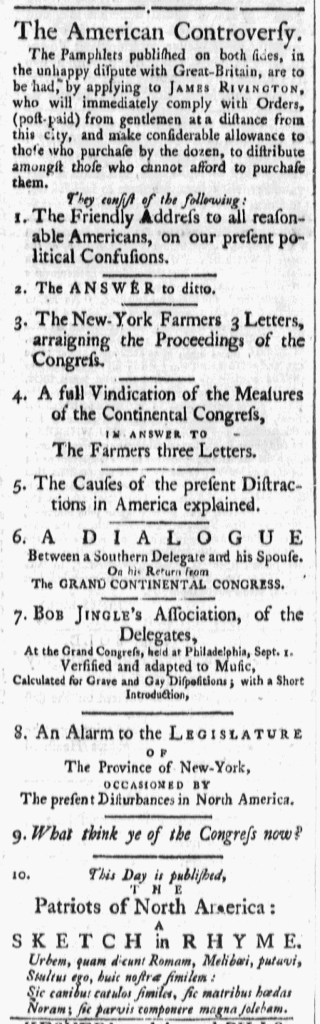
Rivington’s New-York Gazetteer (February 9, 1774).

“Pamphlets published on both sides, in the unhappy dispute with Great-Britain.”
As the imperial crisis intensified in the winter of 1775, James Rivington continued to print a newspaper “at his OPEN and UNINFLUENCED PRESS” in New York.  He also ran a bookstore, peddling “Pamphlets published on both sides, in the unhappy dispute with Great-Britain.”  Both Patriot and Tory printers professed to operate free presses that delivered news and editorials from various perspectives, yet the public associated most newspapers with supporting one side over the other and even actively advocating for their cause.  Tory printers invoked freedom of the press as a means of justifying their participation in public discourse rather than allowing Patriot printers to have the only say.  When it came to advertising books and pamphlets about current events, Tory printers, especially Rivington, took the more balanced approach.

For Rivington, it was a matter of generating revenue as much as political principle.  He saw money to be made from printing and selling pamphlets about “The American Controversy.”  That was the headline he used for an advertisement that listed ten pamphlets in the February 9, 1775, edition of Rivington’s New-York Gazetteer.  He previously ran a similar advertisement for “POLITICAL PAMPHLETSon the Whig and Tory Side of the Question” and another about “The American Contest” that included some of the same pamphlets as well as others.  In his “American Controversy” advertisement, Rivington once again offered some familiar titles and new ones.  He made clear that the first two represented different positions, “The Friendly Address to all reasonable Americans, on our present political Confusions” and “The ANSWER to ditto,” though he did not indicate which took which side.

The printer positioned this venture as a service that kept the public better informed of the arguments “on both sides.”  He sought to disseminate his pamphlets beyond New York to “gentlemen at a distance from this city,” promising to “immediately comply with Orders.”  In turn, customers could do their part in making the pamphlets available far and wide since Rivington made “considerable allowance” or deep discounts “to those who purchase by the dozen, to distribute amongst those who cannot afford to purchase them.”  Though he portrayed himself as a fair dealer who marketed pamphlets “on both sides,” he did not express any expectation that customers would purchase or distribute both Patriot and Tory pamphlets.  Rivington presented readers with the freedom to consume (and further disseminate) the ideas they wished, seemingly hoping the public would allow him the same freedom in printing the content that he wished.  Whether he was sincere in such idealism or sought to justify printing editorials and pamphlets that many found objectionable, Rivington increasingly ran afoul of Patriots who did not share his outlook on freedom of the press when it came to disseminating news and opinion that favored the Tory side in “the unhappy dispute with Great-Britain.”

Slavery Advertisements Published February 9, 1775

The Slavery Adverts 250 Project chronicles the role of newspaper advertising in perpetuating slavery in the era of the American Revolution. The project seeks to reveal the ubiquity of slavery in eighteenth-century life from New England to Georgia by republishing advertisements about enslaved people – for sale as individuals or in groups, wanted to purchase or for hire for short periods, runaways who liberated themselves, and those who were subsequently captured and confined in jails and workhouses – in daily digests on this site as well as in real time via the @SlaveAdverts250 Twitter feed, utilizing twenty-first-century media to stand in for the print media of the eighteenth century.

The project aims to provide modern audiences with a sense of just how often colonizers encountered these advertisements in their daily lives. Enslaved men, women, and children appeared in print somewhere in the colonies almost every single day. Those advertisements served as a constant backdrop for social, cultural, economic, and political life in colonial and revolutionary America. Colonizers who did not purport to own enslaved people were still confronted with slavery as well as invited to maintain the system by purchasing enslaved men, women, and children or assisting in the capture of so-called “runaways” who sought to free themselves from bondage. The frequency of these newspaper advertisements suggests just how embedded slavery was in colonial and revolutionary American culture in everyday interactions beyond the printed page.

These advertisements also testify to the experiences of enslaved men, women, and children, though readers must consider that those experiences have been remediated through descriptions offered by enslavers rather than enslaved people themselves. Often unnamed in the advertisements, enslaved men, women, and children were not invisible or unimportant in early America.

These advertisements appeared in colonial American newspapers 250 years ago today.

Maryland Gazette (February 9, 1775).

**********

Maryland Gazette (February 9, 1775).

**********

Maryland Gazette (February 9, 1775).

**********

Maryland Gazette (February 9, 1775).

**********

Maryland Gazette (February 9, 1775).

**********

Maryland Gazette (February 9, 1775).

**********

Maryland Gazette (February 9, 1775).

**********

Maryland Gazette (February 9, 1775).

**********

Maryland Gazette (February 9, 1775).

**********

New-York Journal (February 9, 1775).

**********

Supplement to the New-York Journal (February 9, 1775).

**********

Supplement to the New-York Journal (February 9, 1775).

**********

Supplement to the New-York Journal (February 9, 1775).

**********

Supplement to Rivington’s New-York Gazetteer (February 9, 1775).

**********

Supplement to Rivington’s New-York Gazetteer (February 9, 1775).

**********

Supplement to Rivington’s New-York Gazetteer (February 9, 1775).

**********

Virginia Gazette [Pinkney] (February 9, 1775).

**********

Virginia Gazette [Pinkney] (February 9, 1775).

**********

Virginia Gazette [Pinkney] (February 9, 1775).

February 8

What was advertised in a colonial American newspaper 250 years ago today?

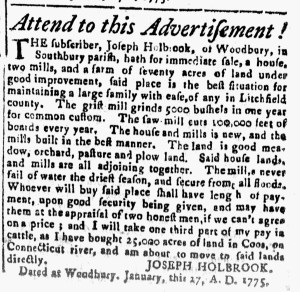
Connecticut Journal (February 8, 1775).

Attend to this Advertisement!

When Joseph Holbrook sought to sell a house, two mills, and a farm in Woodbury in the winter of 1775, he placed an advertisement in the Connecticut Journal and New-Haven Post-Boy.  In it, he assured prospective purchasers that “said place is the best situation for maintaining a large family with ease.”  The house and mills were new.  The gristmill “grinds 5000 bushels in one year for common custom,” while the sawmill “cuts 100,000 feet of boards every year.”  They operated throughout the year because the mills “never fail of water [during] the driest season,” nor did they flood at other times.  The land included “good meadow, orchard, pasture and plow land.”

Holbrook’s notice looked much like other advertisements in colonial newspapers except for a headline that proclaimed, “Attend to this Advertisement!”  That headline almost certainly drew the attention of readers, making them curious about what appeared in the notice.  Such a command distinguished Holbrook’s advertisement from others, not only because it gave instructions but because it had a headline at all.  Several notices in the February 8 edition of the Connecticut Journaldid not have headlines, just the first word in capital letters with a dropped capital for the first letter.  Some had the first line in larger font, such as one that began, “Pursuant to a Request made to,” and another that started, “This is to give notice to all.”  Among those with headlines, the name of the advertiser usually served that purpose.  One headline announced, “Jacob Dagget” in a larger font than anything else on that page.  Another used “JOSEPH HOWELL” as the primary headline with two secondary headlines, “Choice good Train & blubber Oil” and “Dry’d and pickled COD-FISH.”  Holbrook, however, did not resort to the usual wording and format for advertisements.  The headline for his advertisement, in italics and a larger font than its body, suggested that something of consequence followed the edict to “Attend to this Advertisement!”  The advertiser and the compositor deployed both copy and design to encourage readers to peruse what otherwise would have been an ordinary real estate notice.