November 22

What was advertised in a revolutionary American newspaper 250 years ago today?
Pennsylvania Gazette (November 22, 1775).

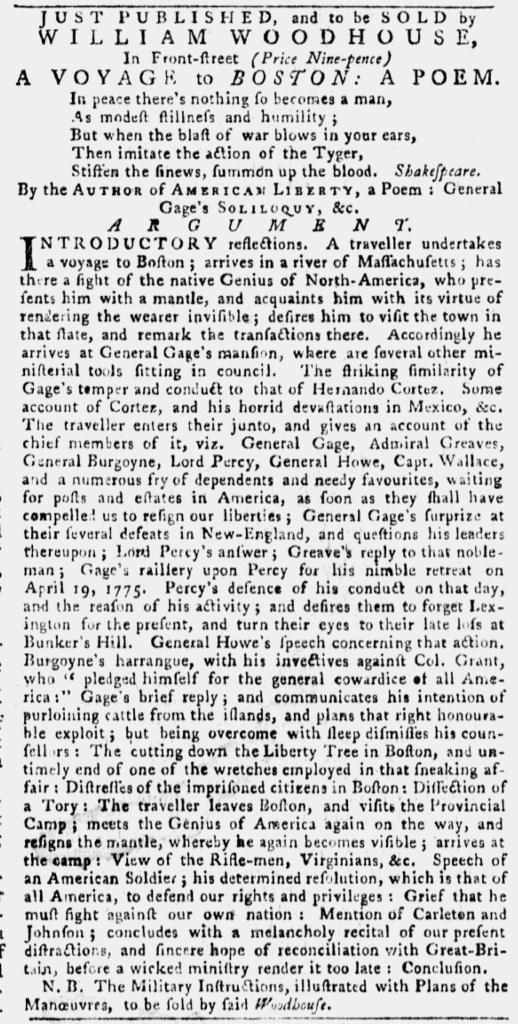
“A VOYAGE to BOSTON: A POEM.”

An advertisement for a new publication, “A Voyage to Boston: A Poem,” appeared on the front page of the November 18, 1775, edition of the Pennsylvania Ledger.  William Woodhouse, a bookseller, stationer, and bookbinder marketed a work that historians attribute to the pen of Philip Freneau and the press of Benjamin Towne.  The imprint on the title page merely stated, “Philadelphia: Sold by William Woodhouse, in Front-Street.”  The advertisement did advise that “A Voyage to Boston” was “By the same Author of AMERICAN LIBERTY: A Poem. General Gage’s SOLILOQUY, &c.”  A similar note appeared on the title page.  Woodhouse likely hoped that associating this publication with ones already familiar to readers would aid in inciting demand for the work.  He also inserted five lines about peace and war from Shakespeare, transcribing them from the title page of the pamphlet.

Four days later, he published a much more extensive advertisement in the Pennsylvania Gazette.  It contained all the content from the version in the Pennsylvania Ledger, including a nota bene that announced, “The Military Instructions, illustrated with Plans of the Manœuvres, to be sold by said Woodhouse.”  The new advertisement also featured the “ARGUMENT” of the poem.  That summary provided an overview of recent events as observed by an imaginary “traveller [who] undertakes a voyage to Boston” and, after being bestowed with a cloak of invisibility by the “Genius of North-America,” entered the city and witnessed General Thomas Gage and “several other ministerial tools sitting in council” as they discussed the battles at Lexington and Concord and “their late loss at Bunker’s Hill,” the “cutting down of the Liberty Tree in Boston,” and the “Distresses of the imprisoned citizens in Boston” as the siege of the city continued.  The traveler departed from Boston, visited “the Provincial Camp,” returned the cloak, saw “the Rifle-men, Virginians,” and others who supported the American cause, and listened to the “Speech of an American Soldier,” delivered with “determined resolution, which is that of all America, to defend our rights and privileges.”  The poem concluded with a “sincere hope of reconciliation with Great-Britain, before a wicked ministry render it too late.”  Most colonizers still sought a redress of grievances rather than separating from the British Empire.  In adding this lengthy “ARGUMENT” to the advertisement, Woodhouse did not compose original copy.  Instead, just as the lines from Shakespeare came from the title page of the pamphlet, the “ARGUMENT” filled two pages of the pamphlet preceding the poem.  Although he did not write the copy, Woodhouse apparently decided that providing more information about the contents of the poem would help to increase sales.

Slavery Advertisements Published November 22, 1775

GUEST CURATOR: Massimo Sgambati

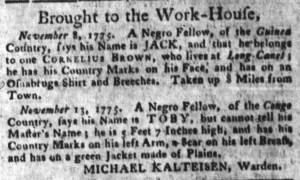
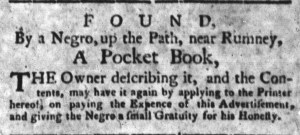
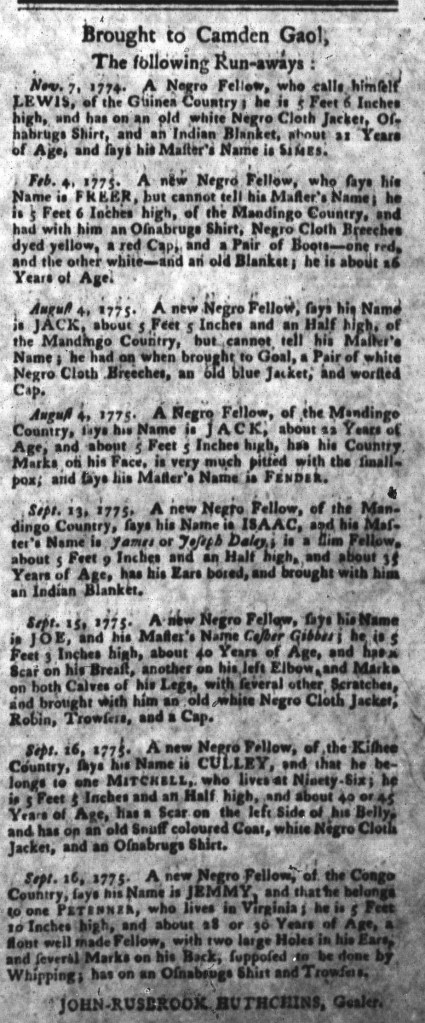
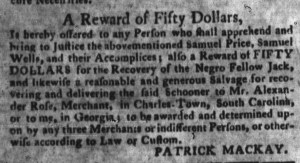
The Slavery Adverts 250 Project chronicles the role of newspaper advertising in perpetuating slavery in the era of the American Revolution. The project seeks to reveal the ubiquity of slavery in eighteenth-century life from New England to Georgia by republishing advertisements about enslaved people – for sale as individuals or in groups, wanted to purchase or for hire for short periods, runaways who liberated themselves, and those who were subsequently captured and confined in jails and workhouses – in daily digests on this site as well as in real time via the @SlaveAdverts250 Twitter feed, utilizing twenty-first-century media to stand in for the print media of the eighteenth century.

The project aims to provide modern audiences with a sense of just how often colonizers encountered these advertisements in their daily lives. Enslaved men, women, and children appeared in print somewhere in the colonies almost every single day. Those advertisements served as a constant backdrop for social, cultural, economic, and political life in colonial and revolutionary America. Colonizers who did not purport to own enslaved people were still confronted with slavery as well as invited to maintain the system by purchasing enslaved men, women, and children or assisting in the capture of so-called “runaways” who sought to free themselves from bondage. The frequency of these newspaper advertisements suggests just how embedded slavery was in colonial and revolutionary American culture in everyday interactions beyond the printed page.

These advertisements also testify to the experiences of enslaved men, women, and children, though readers must consider that those experiences have been remediated through descriptions offered by enslavers rather than enslaved people themselves. Often unnamed in the advertisements, enslaved men, women, and children were not invisible or unimportant in early America.

From compiling an archive of digitized eighteenth-century newspapers to identifying advertisements about enslaved men, women, and children in those newspapers to preparing images of each advertisement to posting this daily digest, Massimo Sgambati served as guest curator for this entry. He completed this work as part of the Summer Scholars Program, funded by a fellowship from the D’Amour College of Liberal Arts and Sciences at Assumption University in Worcester, Massachusetts, in Summer 2025.

These advertisements appeared in colonial American newspapers 250 years ago today.

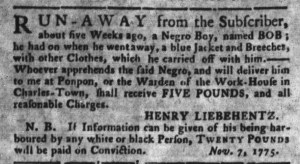
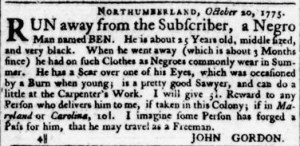
Maryland Journal (November 22, 1775)

**********

Maryland Journal (November 22, 1775)

**********

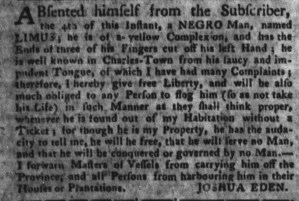
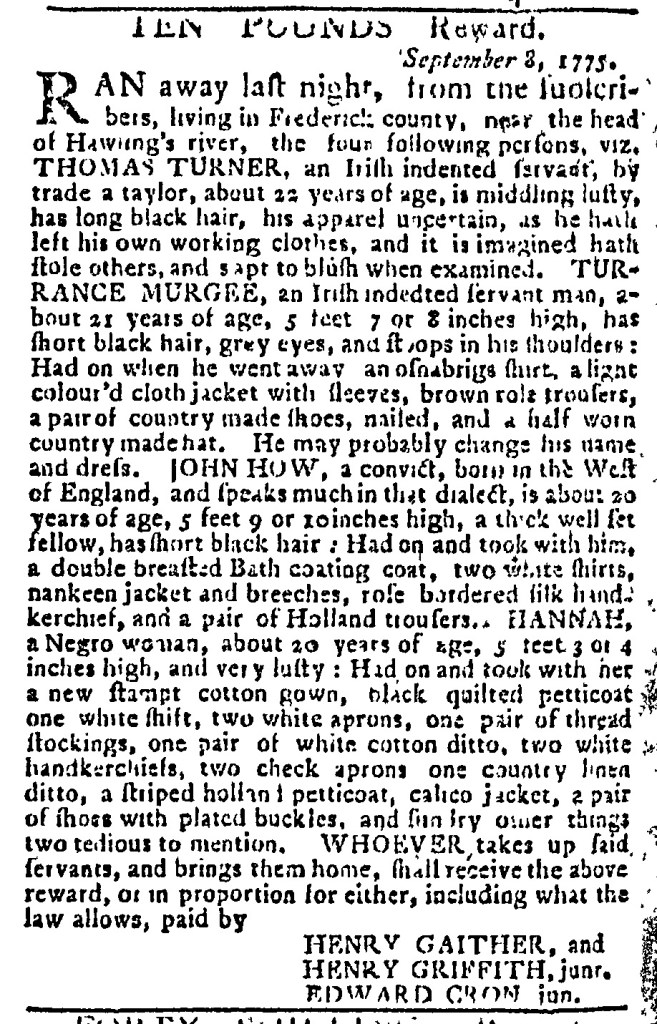
Pennsylvania Gazette (November 22, 1775)

**********

Pennsylvania Journal (November 22, 1775)

November 21

What was advertised in a revolutionary American newspaper 250 years ago today?

New-Hampshire Gazette (November 21, 1775).

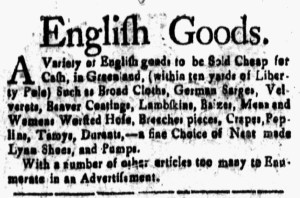
“English Goods … within ten yards of Liberty Pole.”

An anonymous advertiser hawked “A Variety of English goods” in the November 21, 1775, edition of the New-Hampshire Gazette.  The notice included a short list of imported items, mostly textiles, such as “Broad Cloths, … Velverets, … Poplins, Tamys, [and] Durants,” as well as “Mens and Womens Worsted Hose [and] Breeches pieces.”  That list apparently did not cover everything available for sale; the advertisement concluded with a note about “a number of other articles too many to Enumerate in an Advertisement.”

That may have been the advertiser’s choice since some merchants and shopkeepers did occasionally resort to similar language, though it may have been a decision influenced by the printer, Daniel Fowle.  That issue of the New-Hampshire Gazette consisted of only two pages instead of the usual four.  It was the first issue of the New-Hampshire Gazette since November 8.  The printer did not produce and circulate an issue the previous week.  The Adverts 250 Project has tracked apparent disruptions in the supply of paper that had an impact on the New-Hampshire Gazette, yet that was not the only difficulty the printer faced.  In the monumental History and Bibliography of American Newspapers, 1690-1820, Clarence S. Brigham notes that Fowle announced that he printed the November 2 edition “‘with great difficulty’ because of the threatened British attack on Portsmouth” and that the printer “stated that the press ‘is removed to Greenland, about six miles from Portsmouth.”[1]  Those circumstances may have played a role in the decision to publish an abbreviated advertisement that promised a greater selection of goods than appeared in print.

The advertisement presents other questions about consumer culture during the era of the American Revolution.  The Continental Association, a nonimportation and nonconsumption agreement devised by the First Continental Congress, was in effect, yet the unnamed advertiser boldly marketed imported goods.  The headline, “English Goods,” appeared in a larger font than anything else in that issue except for the title of the newspaper in the masthead.  The advertiser conveniently did not mention when the goods had arrived in the colonies, whether they had been transported and delivered before the boycott went into effect.  Yet the advertiser did acknowledge current events when giving the location to purchase the imported goods: “within ten yards of [the] Liberty Pole” in Greenland.  In his recent book on the consumption and politics of tea during the era of the American Revolution, James R. Fichter argues that many tea retailers did not face repercussions while tea importers certainly did.  He further contends that advertisements revealed the reality of local commerce compared to the propaganda that appeared in news articles and editorials about tea.[2]  Perhaps something similar occurred with these “English Goods” in Greenland in the late fall of 1775.

**********

[1] Clarence S. Brigham, History and Bibliography of American Newspapers, 1690-1820 (American Antiquarian Society, 1947), 471.

[2] James Fichter, “Truth in Advertising,” in Tea: Consumption, Politics, and Revolution, 1773-1776 (Cornell University Press, 2023), 132-157.

Slavery Advertisements Published November 21, 1775

GUEST CURATOR: Massimo Sgambati

The Slavery Adverts 250 Project chronicles the role of newspaper advertising in perpetuating slavery in the era of the American Revolution. The project seeks to reveal the ubiquity of slavery in eighteenth-century life from New England to Georgia by republishing advertisements about enslaved people – for sale as individuals or in groups, wanted to purchase or for hire for short periods, runaways who liberated themselves, and those who were subsequently captured and confined in jails and workhouses – in daily digests on this site as well as in real time via the @SlaveAdverts250 Twitter feed, utilizing twenty-first-century media to stand in for the print media of the eighteenth century.

The project aims to provide modern audiences with a sense of just how often colonizers encountered these advertisements in their daily lives. Enslaved men, women, and children appeared in print somewhere in the colonies almost every single day. Those advertisements served as a constant backdrop for social, cultural, economic, and political life in colonial and revolutionary America. Colonizers who did not purport to own enslaved people were still confronted with slavery as well as invited to maintain the system by purchasing enslaved men, women, and children or assisting in the capture of so-called “runaways” who sought to free themselves from bondage. The frequency of these newspaper advertisements suggests just how embedded slavery was in colonial and revolutionary American culture in everyday interactions beyond the printed page.

These advertisements also testify to the experiences of enslaved men, women, and children, though readers must consider that those experiences have been remediated through descriptions offered by enslavers rather than enslaved people themselves. Often unnamed in the advertisements, enslaved men, women, and children were not invisible or unimportant in early America.

From compiling an archive of digitized eighteenth-century newspapers to identifying advertisements about enslaved men, women, and children in those newspapers to preparing images of each advertisement to posting this daily digest, Massimo Sgambati served as guest curator for this entry. He completed this work as part of the Summer Scholars Program, funded by a fellowship from the D’Amour College of Liberal Arts and Sciences at Assumption University in Worcester, Massachusetts, in Summer 2025.

These advertisements appeared in colonial American newspapers 250 years ago today.

New-Hampshire Gazette (November 21, 1775)

**********

New-Hampshire Gazette (November 21, 1775)

**********

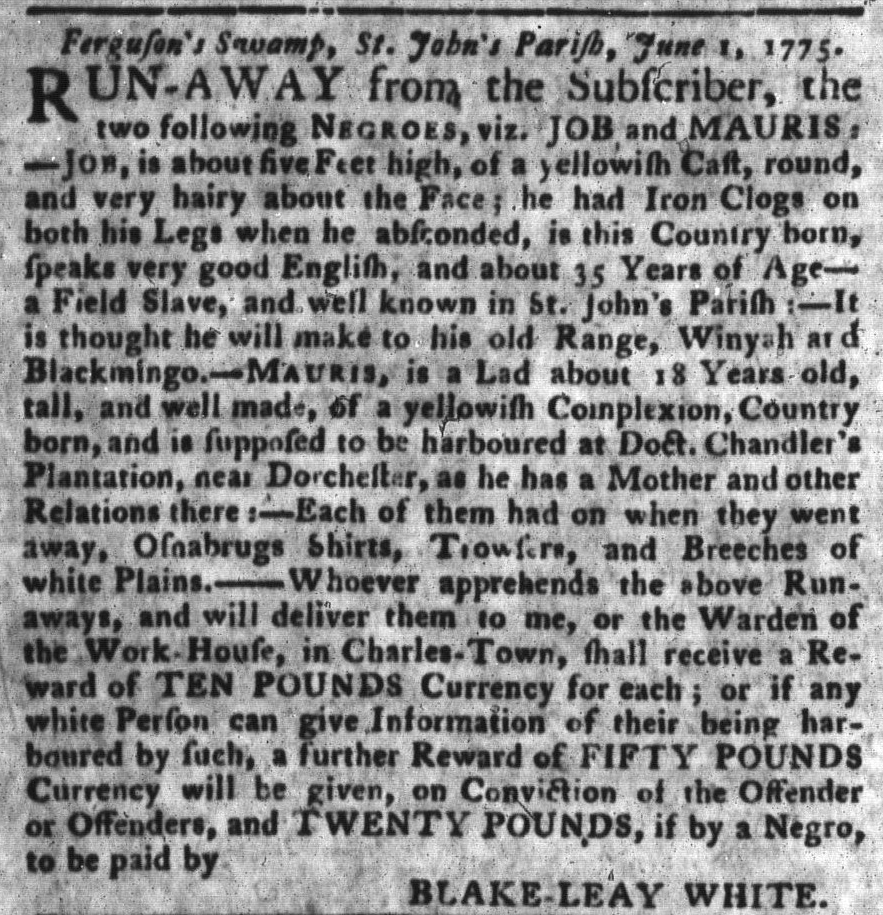
South-Carolina Gazette (November 21, 1775)

**********

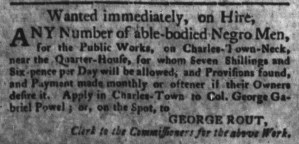
South-Carolina Gazette (November 21, 1775)

**********

South-Carolina Gazette (November 21, 1775)

**********

South-Carolina Gazette (November 21, 1775)

**********

South-Carolina Gazette (November 21, 1775)

**********

South-Carolina Gazette (November 21, 1775)

**********

South-Carolina Gazette (November 21, 1775)

**********

South-Carolina Gazette (November 21, 1775)

**********

South-Carolina Gazette (November 21, 1775)

**********

South-Carolina Gazette (November 21, 1775)

**********

South-Carolina Gazette (November 21, 1775)

**********

South-Carolina Gazette (November 21, 1775)

**********

South-Carolina Gazette (November 21, 1775)

November 20

What was advertised in a revolutionary American newspaper 250 years ago today?

Boston-Gazette (November 20, 1775).

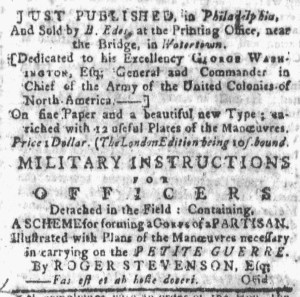
“MILITARY INSTRUCTIONS for officers Detached in the Field.”

On November 20, 1775, Benjamin Edes, the printer of the Boston-Gazette, ran an advertisement for a military manual “JUST PUBLISHED, in Philadelphia,” and available at his printing office in Watertown.  The printer had relocated there shortly after the battles at Lexington and Concord, though he did not update the name of his newspaper.  He advertised an edition of Roger Stevenson’s Military Instructions for Officers Detached in the Field published by Robert Aitken.  Although the advertisement proclaimed that the book had been “JUST PUBLISHED,” another edition had been available in Philadelphia since June.  At the time that Aitken advertised it, he noted that “A new Edition of this Book, with some Additions, is now in the Press and will soon be published.”  That likely referred to the edition that Edes stocked, especially considering that the appeals in his advertisement paralleled the advertisement that Aitken published in the Pennsylvania Ledger in August.

Both advertisements opened with an announcement that the book had been published and where to acquire copies, followed by a note that this edition was “Dedicated to his Excellency GEORGE WASHINGTON, Esq; General and Commander in Chief of the Army of the United Colonies of North-America.”  Next, both advertisements commented on the material aspects of the book, noting the “fine Paper and a beautiful new Type” as well as the “12 useful Plates [or illustrations] of the Manœuvres.”  The price in the local currency followed, along with a comparison to the price of a bound London edition.”  As was so often the case in advertisements for books, all that preamble appeared before the title of the book.  Aitken’s much longer advertisement then presented an address “TO THE PUBLIC” drawn from the preface.  Edes did not devote that much space to his advertisement in the Boston-Gazette.  Instead, he inserted a quotation from Ovid: “Fas est et ab roste doceri” (It is right to be taught from the pulpit).  That phrase invoked Stevenson’s experience as a British officer.  Edes did not devise it on his own.  Instead, he borrowed it from the title page.  Overall, Edes did not generate original copy for his advertisement for a military manual printed in Philadelphia.  Instead, he borrowed heavily from Aitken’s advertisement, revising the location where customers could purchase the book and the price in local currency.  He also substituted the quotation on the title page for an excerpt from the preface but did not compose anything new for his advertisement.  The marketing for the book in the Boston-Gazette thus replicated the strategies that Aitken introduced in the public prints in Philadelphia months earlier.  He may even have dispatched a clipping of the advertisement with the copies he sent to Edes.

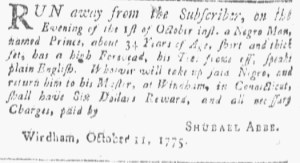
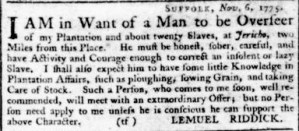
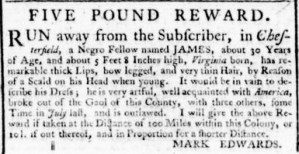
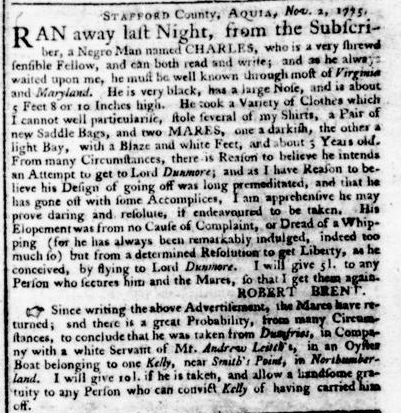
Slavery Advertisements Published November 20, 1775

GUEST CURATOR: Massimo Sgambati

The Slavery Adverts 250 Project chronicles the role of newspaper advertising in perpetuating slavery in the era of the American Revolution. The project seeks to reveal the ubiquity of slavery in eighteenth-century life from New England to Georgia by republishing advertisements about enslaved people – for sale as individuals or in groups, wanted to purchase or for hire for short periods, runaways who liberated themselves, and those who were subsequently captured and confined in jails and workhouses – in daily digests on this site as well as in real time via the @SlaveAdverts250 Twitter feed, utilizing twenty-first-century media to stand in for the print media of the eighteenth century.

The project aims to provide modern audiences with a sense of just how often colonizers encountered these advertisements in their daily lives. Enslaved men, women, and children appeared in print somewhere in the colonies almost every single day. Those advertisements served as a constant backdrop for social, cultural, economic, and political life in colonial and revolutionary America. Colonizers who did not purport to own enslaved people were still confronted with slavery as well as invited to maintain the system by purchasing enslaved men, women, and children or assisting in the capture of so-called “runaways” who sought to free themselves from bondage. The frequency of these newspaper advertisements suggests just how embedded slavery was in colonial and revolutionary American culture in everyday interactions beyond the printed page.

These advertisements also testify to the experiences of enslaved men, women, and children, though readers must consider that those experiences have been remediated through descriptions offered by enslavers rather than enslaved people themselves. Often unnamed in the advertisements, enslaved men, women, and children were not invisible or unimportant in early America.

From compiling an archive of digitized eighteenth-century newspapers to identifying advertisements about enslaved men, women, and children in those newspapers to preparing images of each advertisement to posting this daily digest, Massimo Sgambati served as guest curator for this entry. He completed this work as part of the Summer Scholars Program, funded by a fellowship from the D’Amour College of Liberal Arts and Sciences at Assumption University in Worcester, Massachusetts, in Summer 2025.

These advertisements appeared in colonial American newspapers 250 years ago today.

Connecticut Courant (November 20, 1775)

**********

Dunlap’s Pennsylvania Packet (November 20, 1775)

**********

New-York Gazette and Weekly Mercury (November 20, 1775)

**********

New-York Gazette and Weekly Mercury (November 20, 1775)

**********

New-York Gazette and Weekly Mercury (November 20, 1775)

November 19

What was advertised in a revolutionary American newspaper 250 years ago this week?

Rivington’s New-York Gazetteer (November 16, 1775).

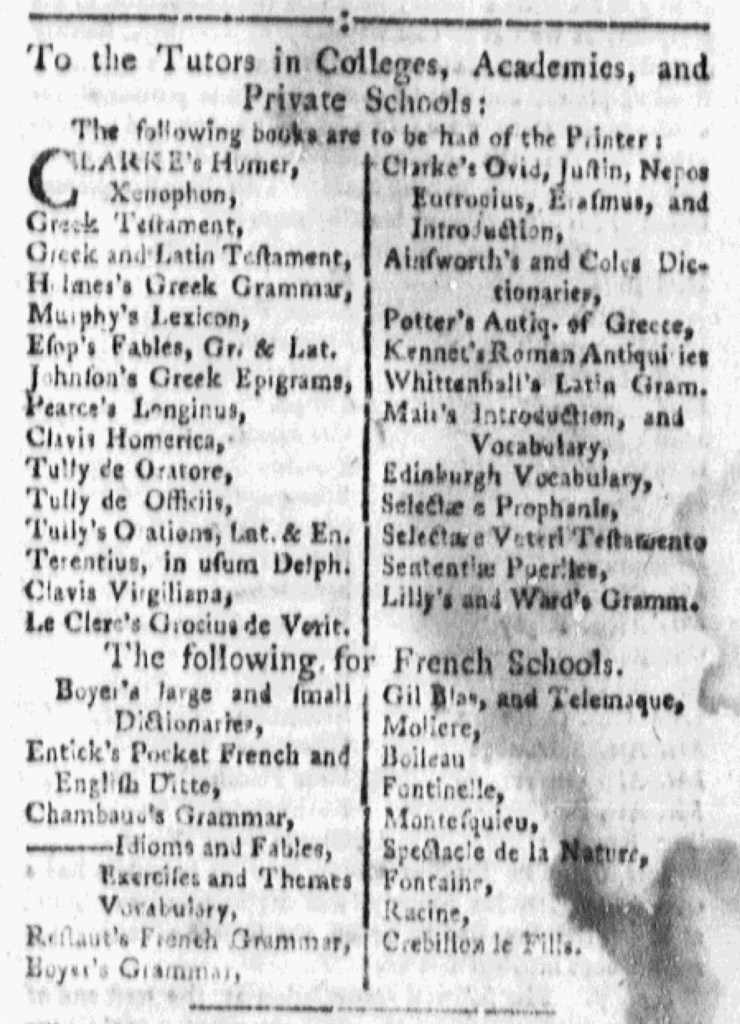
“To the Tutors in Colleges, Academies, and Private Schools.”

James Rivington, the printer of Rivington’s New-York Gazetteer, sold books as an additional revenue stream rather than relying solely on subscriptions and advertisements.  Such was the case with other printers throughout the colonies, their printing offices doubling as bookstores.  Rivington’s newspaper often carried advertisements for books, pamphlets, and almanacs that he stocked.  He printed some of them, acquired others from other colonial printers, and imported most of them from England.  Some advertisements featured a single title.  The November 16, 1775, edition, for instance, featured an advertisement for “A DICTIONARY OF THE Holy Bible” that included the prints, size, and number of volumes along with a description of the contents.  Other advertisements listed multiple titles without providing additional information.

On occasion, Rivington ran advertisements that promoted books and pamphlets with a common theme.  With a headline proclaiming, “The American Controversy,” an advertisement published in February 1775 listed ten pamphlets “published on both sides, in the unhappy dispute with Great-Britain.”  He deployed the same strategy in another notice that ran on November 16, this time addressing “the Tutors in Colleges, Academies, and Private Schools.”  He then gave the titles of more than two dozen books he considered suitable for classrooms, such as “CLARKE’s Homer,” “Greek and Latin Testament,” “Esop’s Fable, Gr[eek] & Lat[in],” “Tully’s Orations, Lat[in] & En[glish],” “Ainsworth’s and Coles Dictionaries,” “Whittenhall’s Latin Gram[mar],” and “Lilly’s and Wards Gramm[ar].”  Rivington implied that those books should have been familiar to tutors.  In addition to those titles, he devoted the final third of the advertisement to books “for French Schools,” including “Boyer’s large and small Dictionaries,” “Entick’s Pocket French and English [Dictionary],” “Chambaud’s Grammar,” “[Chambaud’s] Exercises and Themes,” “Moliere,” and “Montesquieu.”  While Rivington usually marketed most books and pamphlets to general audiences and prospective customers of all backgrounds, especially when his advertisements consisted of catalogs of books available at his printing office, he occasionally attempted to boost sales by directing particular kinds of readers to carefully curated lists of titles.  In this case, tutors and schoolmasters did not need to pore over lengthy lists of books and pamphlets not relevant or not appropriate to their lessons when Rivington presented a specialized catalog for their convenience.
November 18

What was advertised in a revolutionary American newspaper 250 years ago today?

Pennsylvania Evening Post (November 18, 1775).

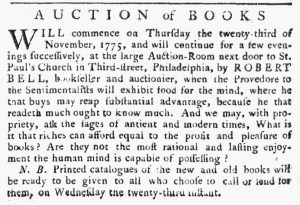
“The Provedore to the Sentimentalists will exhibit food for the mind.”

Readers of the November 18, 1775, edition of the Pennsylvania Evening Post encountered two advertisements promoting an “AUCTION of BOOKS,” one placed by Charles Mouse, “auctionier,” and the other by Robert Bell, “bookseller and auctionier.”  Mouse operated a “vendue store,” a combination of an auction house and a flea market, where he had a “large and choice collection of the most useful and entertaining [books].”  He invited those who had books to sell and “will[ing] to take their chance by auction” to deliver them to his vendue store on Second Street in Philadelphia.  The auctions would begin “precisely at six each evening” and “continue till the whole are sold.”  Mouse provided a straightforward account of this endeavor.

Robert Bell, on the other hand, crafted a more elaborate advertisement.  One of the most prominent American booksellers in the second half of the eighteenth century, Bell already established a reputation throughout the colonies by the time he advertised an auction “at the large Auction-Room next door to St. Paul’s Church in Third-street, Philadelphia,” scheduled for November 23.  He colorfully referred to himself in the third person as “the Provedore to the Sentimentalists” who would “exhibit food for the mind” to bidders and curious observers.  Those who made purchases, Bell declared, “may reap substantial advantage, because he that readeth much ought to know much.”  He further mused that “we may, with propriety, ask the sages of antient and modern times, What is it that riches can afford equal to the profit and pleasure of books?  Are they not the most rational and lasting enjoyment the human mind is capable of possessing?”  Mouse’s description of his “large and choice collection of the most useful and entertaining [books]” paled in comparison to the appeals that Bell made to readers.

Bell deployed another strategy to entice prospective bidders.  In a nota bene, he informed them that “[p]rinted catalogues of the new and old books will be ready to be given to all who choose to call or send for them.”  Those catalogues gave a preview of the sale and allowed Bell to disseminate information about the books up for bids more widely.  Those who visited his “Auction-Room” to collect a catalogue likely had an opportunity to browse the books, yet they could take their time going through the entries in the catalogue in the comfort of their own homes or offices or even at a coffeehouse with friends.  Those who sent for catalogues enjoyed the same benefit.  By distributing catalogs, Bell encouraged interest and prompted readers to imagine themselves bidding on the books they selected in advance.  He may have believed that prospective bidders were more likely to bid higher prices if they had spent time with the catalogue in advance and, as a result, became more committed to acquiring the books that interested them.

Slavery Advertisements Published November 18, 1775

GUEST CURATOR: Massimo Sgambati

The Slavery Adverts 250 Project chronicles the role of newspaper advertising in perpetuating slavery in the era of the American Revolution. The project seeks to reveal the ubiquity of slavery in eighteenth-century life from New England to Georgia by republishing advertisements about enslaved people – for sale as individuals or in groups, wanted to purchase or for hire for short periods, runaways who liberated themselves, and those who were subsequently captured and confined in jails and workhouses – in daily digests on this site as well as in real time via the @SlaveAdverts250 Twitter feed, utilizing twenty-first-century media to stand in for the print media of the eighteenth century.

The project aims to provide modern audiences with a sense of just how often colonizers encountered these advertisements in their daily lives. Enslaved men, women, and children appeared in print somewhere in the colonies almost every single day. Those advertisements served as a constant backdrop for social, cultural, economic, and political life in colonial and revolutionary America. Colonizers who did not purport to own enslaved people were still confronted with slavery as well as invited to maintain the system by purchasing enslaved men, women, and children or assisting in the capture of so-called “runaways” who sought to free themselves from bondage. The frequency of these newspaper advertisements suggests just how embedded slavery was in colonial and revolutionary American culture in everyday interactions beyond the printed page.
These advertisements also testify to the experiences of enslaved men, women, and children, though readers must consider that those experiences have been remediated through descriptions offered by enslavers rather than enslaved people themselves. Often unnamed in the advertisements, enslaved men, women, and children were not invisible or unimportant in early America.
From compiling an archive of digitized eighteenth-century newspapers to identifying advertisements about enslaved men, women, and children in those newspapers to preparing images of each advertisement to posting this daily digest, Massimo Sgambati served as guest curator for this entry. He completed this work as part of the Summer Scholars Program, funded by a fellowship from the D’Amour College of Liberal Arts and Sciences at Assumption University in Worcester, Massachusetts, in Summer 2025.

These advertisements appeared in colonial American newspapers 250 years ago today.

Providence Gazette (November 18, 1775)

**********

Providence Gazette (November 18, 1775)

**********

Virginia Gazette [Dixon and Hunter] (November 18, 1775)

**********

Virginia Gazette [Dixon and Hunter] (November 18, 1775)

**********

Virginia Gazette [Dixon and Hunter] (November 18, 1775)

**********

Virginia Gazette [Dixon and Hunter] (November 18, 1775)

**********

Virginia Gazette [Dixon and Hunter] (November 18, 1775)

**********

Virginia Gazette [Dixon and Hunter] (November 18, 1775)

**********

Virginia Gazette [Dixon and Hunter] (November 18, 1775)

**********

Virginia Gazette [Dixon and Hunter] (November 18, 1775)

November 17

What was advertised in a revolutionary American newspaper 250 years ago today?

Thomas’s Massachusetts Spy (November 17, 1775).

“A CONSTITUTIONAL POST-OFFICE is established in this town.”

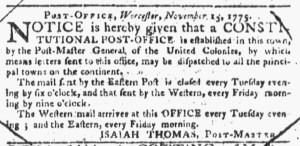
Isaiah Thomas, the printer of Thomas’s Massachusetts Spy, gained a new title in the fall of 1775.  He became the postmaster for the “CONSTITUTIONAL POST-OFFICE” in Worcester.  In an advertisement in the November 17 edition of his newspaper, he informed the public that “the Post-Mater General of the United Colonies” established the post office in Worcester.  That meant that “letters sent to this office, may be dispatched to all the principal towns on the continent” via a network of post offices and riders authorized by the Second Continental Congress as an alternative to the imperial postal system.  Thomas provided a schedule.  Outgoing mail “sent by the Eastern Post is closed every Tuesday evening by six o’clock.”  For outgoing mail, the post office dispatched letter received “Friday morning by nine o’clock.”  That corresponded with the arrival of new mail: “The Western mail arrives at this OFFICE every Tuesday evening; and the Eastern, every Friday morning.”  Patrons who planned accordingly could use the new postal system to correspond with friends, relatives, and associates throughout the colonies.

Thomas gave this advertisement a prominent place when he published it, placing it immediately below a notice that the Second Continental Congress created a committee to compile a “just and well authenticated account of the hostilities committed by the ministerial troops and navy in America since March last,” including “proper evidence of the truth of the facts related.”  In documenting buildings destroyed, vessels seized, and stock taken, they justified their resistance and engaged in public relations to demonstrate that colonizers had legitimate grievances.  Thomas could have placed any number of other advertisements below that notice, yet he opted for one that promoted another effort undertaken by the Second Continental Congress to protect American liberties.  It was a fitting editorial decision for a newspaper with American Oracle of Liberty as its secondary title.  In this instance, Thomas deployed an advertisement as a continuation of news about current events, keeping readers updated not only about what occurred but also about how they could support the American cause.