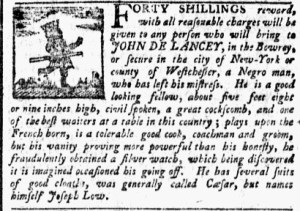
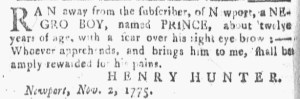
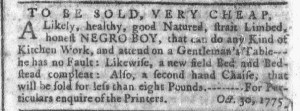
Slavery Advertisements Published November 17, 1775

GUEST CURATOR: Massimo Sgambati

The Slavery Adverts 250 Project chronicles the role of newspaper advertising in perpetuating slavery in the era of the American Revolution. The project seeks to reveal the ubiquity of slavery in eighteenth-century life from New England to Georgia by republishing advertisements about enslaved people – for sale as individuals or in groups, wanted to purchase or for hire for short periods, runaways who liberated themselves, and those who were subsequently captured and confined in jails and workhouses – in daily digests on this site as well as in real time via the @SlaveAdverts250 Twitter feed, utilizing twenty-first-century media to stand in for the print media of the eighteenth century.

The project aims to provide modern audiences with a sense of just how often colonizers encountered these advertisements in their daily lives. Enslaved men, women, and children appeared in print somewhere in the colonies almost every single day. Those advertisements served as a constant backdrop for social, cultural, economic, and political life in colonial and revolutionary America. Colonizers who did not purport to own enslaved people were still confronted with slavery as well as invited to maintain the system by purchasing enslaved men, women, and children or assisting in the capture of so-called “runaways” who sought to free themselves from bondage. The frequency of these newspaper advertisements suggests just how embedded slavery was in colonial and revolutionary American culture in everyday interactions beyond the printed page.

These advertisements also testify to the experiences of enslaved men, women, and children, though readers must consider that those experiences have been remediated through descriptions offered by enslavers rather than enslaved people themselves. Often unnamed in the advertisements, enslaved men, women, and children were not invisible or unimportant in early America.

From compiling an archive of digitized eighteenth-century newspapers to identifying advertisements about enslaved men, women, and children in those newspapers to preparing images of each advertisement to posting this daily digest, Massimo Sgambati served as guest curator for this entry. He completed this work as part of the Summer Scholars Program, funded by a fellowship from the D’Amour College of Liberal Arts and Sciences at Assumption University in Worcester, Massachusetts, in Summer 2025.

These advertisements appeared in colonial American newspapers 250 years ago today.
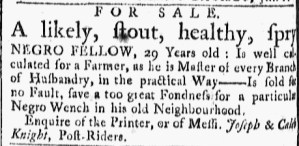
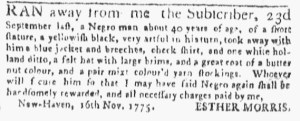
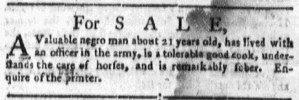
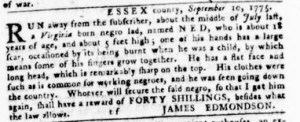
Connecticut Gazette (November 17, 1775)

**********
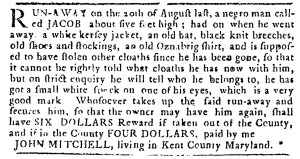
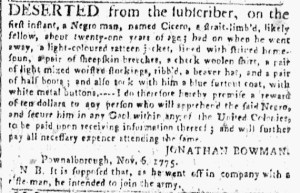
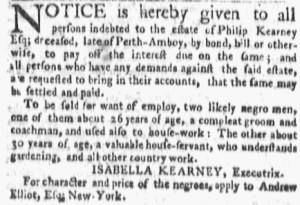
Connecticut Gazette (November 17, 1775)

**********

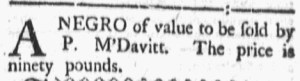
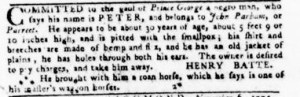
Virginia Gazette [Purdie] (November 17, 1775)

**********
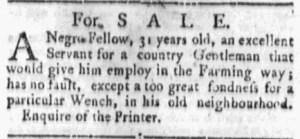
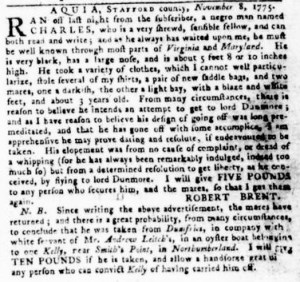
Virginia Gazette [Purdie] (November 17, 1775)

**********
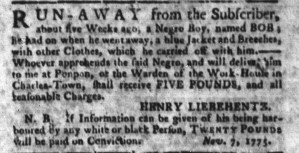
Virginia Gazette [Purdie] (November 17, 1775)

**********
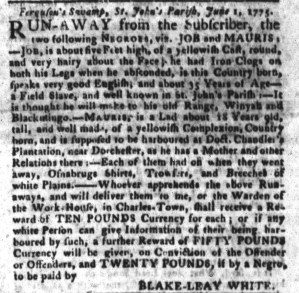
Virginia Gazette [Purdie] (November 17, 1775)

**********
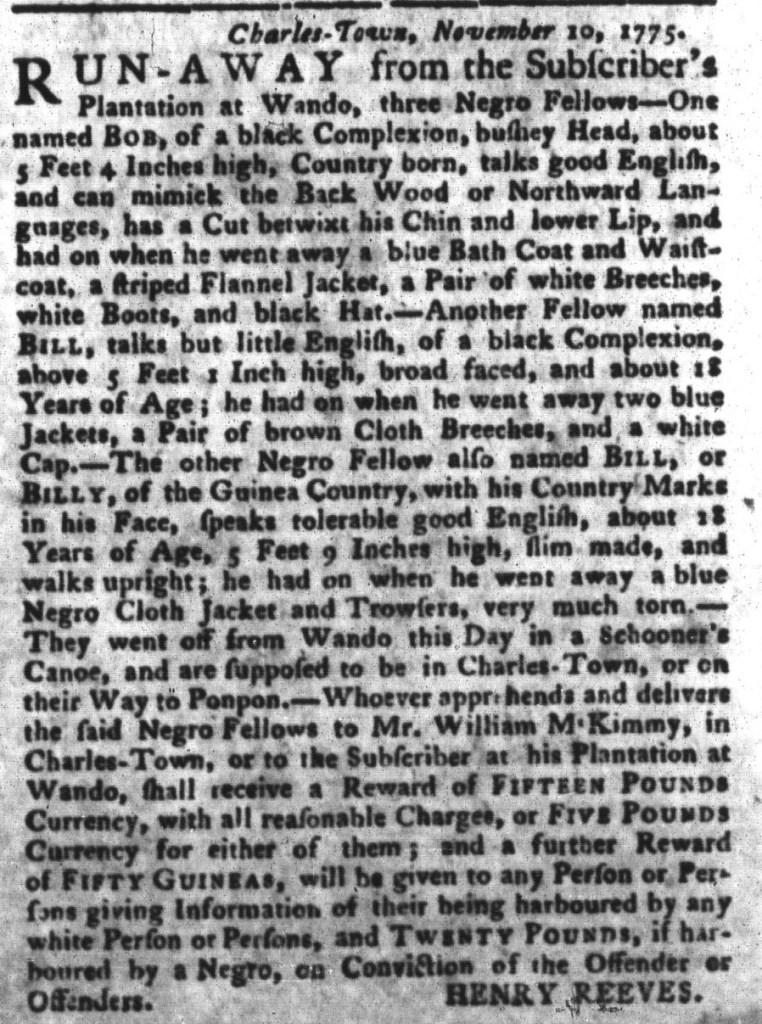
Virginia Gazette [Purdie] (November 17, 1775)

**********
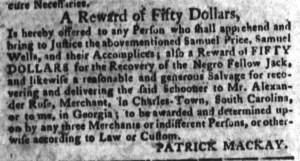
Virginia Gazette [Purdie] (November 17, 1775)

**********
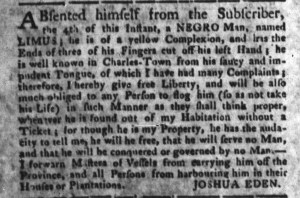
Virginia Gazette [Purdie] (November 17, 1775)

**********
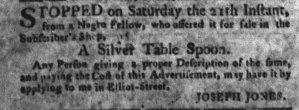
Virginia Gazette [Purdie] (November 17, 1775)

**********
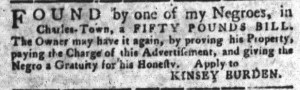
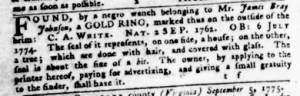
Virginia Gazette Supplement [Purdie] (November 17, 1775)

**********
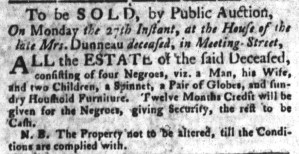
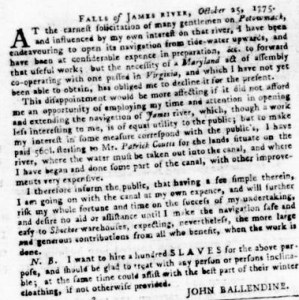
Virginia Gazette Supplement [Purdie] (November 17, 1775)

**********
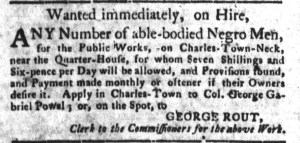
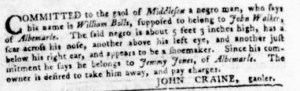
Virginia Gazette Supplement [Purdie] (November 17, 1775)

**********

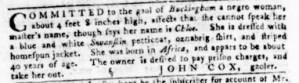
Virginia Gazette Supplement [Purdie] (November 17, 1775)

**********

Virginia Gazette Supplement [Purdie] (November 17, 1775)

**********

Virginia Gazette Supplement [Purdie] (November 17, 1775)

November 16

What was advertised in a revolutionary American newspaper 250 years ago today?

Pennsylvania Evening Post (November 16, 1775).

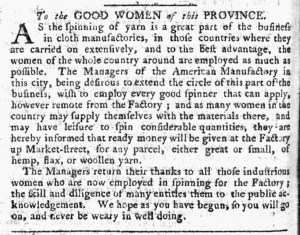
“The Managers of the American Manufactory … wish to employ every good spinner that can apply.”

The proprietors of the American Manufactory in Philadelphia periodically took to the public prints to encourage the public to support their enterprise.  In the March 1775, they called a general meeting at Carpenters’ Hall, the site where the First Continental Congress held its meetings the previous fall.  They invited prospective investors to attend as well as sign subscription papers already circulating.  A month later, the proprietors ran a brief advertisement, that one seeking both materials (“A Quantity of WOOL, COTTON, FLAX, and HEMP”) and workers “(a number of spinners and flax dressers”).  That notice happened to appear in the Pennsylvania Journal on April 19, 1775, the day of the battles at Lexington and Concord, though it would take a while for residents of Philadelphia to learn about the outbreak of hostilities near Boston.  The mission of the American Manufactory to produce an alternative to imported textiles became even more urgent.  In August, the proprietors once again sought workers, publishing an address “To the SPINNERS in thisCITY and the SUBURBS.”  They offered women an opportunity to participate in politics and “help to save the state from ruin.”

In November 1775, the proprietors or “Managers of the American Manufactory” made another appeal “To the GOOD WOMEN of this PROVINCE.”  They explained that “the spinning of year is a great part of the business in cloth manufactories” and “in those countries where they are carried on extensively, and to the best advantage, the women of the whole country are employed as much as possible.”  Having already engaged women “in this CITY and the SUBURBS” who responded to their previous advertisement and apparently needing even more yarn to make into textiles, the managers found themselves “desirous to extend the circle … to employ every good spinner than can apply, however remote from the Factory.”  They believed that women in the countryside “may supply themselves with the materials there” and had “leisure to spin considerable quantities.”  They may have been right on the first count, but perhaps overestimated how many other responsibilities wives, mothers, sisters, and daughters had in their households.  For those who made the time, the managers offered “ready money … for any parcel, either great or small, of hemp, flax, or woollen yarn.”

The managers also lauded the contributions of “those industrious women who are now employed in spinning for the Factory,” declaring that “the skill and diligence of many entitles them to the public acknowledgement.”  They served the American cause in their own way according to their own abilities, just as the delegates to the Second Continental Congress did and just as the soldiers and officers participating in the siege of Boston did.  “We hope as you have begun,” the managers encouraged, “so you will go on, and never be weary in well doing.”

Slavery Advertisements Published November 16, 1775

GUEST CURATOR: Massimo Sgambati

The Slavery Adverts 250 Project chronicles the role of newspaper advertising in perpetuating slavery in the era of the American Revolution. The project seeks to reveal the ubiquity of slavery in eighteenth-century life from New England to Georgia by republishing advertisements about enslaved people – for sale as individuals or in groups, wanted to purchase or for hire for short periods, runaways who liberated themselves, and those who were subsequently captured and confined in jails and workhouses – in daily digests on this site as well as in real time via the @SlaveAdverts250 Twitter feed, utilizing twenty-first-century media to stand in for the print media of the eighteenth century.

The project aims to provide modern audiences with a sense of just how often colonizers encountered these advertisements in their daily lives. Enslaved men, women, and children appeared in print somewhere in the colonies almost every single day. Those advertisements served as a constant backdrop for social, cultural, economic, and political life in colonial and revolutionary America. Colonizers who did not purport to own enslaved people were still confronted with slavery as well as invited to maintain the system by purchasing enslaved men, women, and children or assisting in the capture of so-called “runaways” who sought to free themselves from bondage. The frequency of these newspaper advertisements suggests just how embedded slavery was in colonial and revolutionary American culture in everyday interactions beyond the printed page.

These advertisements also testify to the experiences of enslaved men, women, and children, though readers must consider that those experiences have been remediated through descriptions offered by enslavers rather than enslaved people themselves. Often unnamed in the advertisements, enslaved men, women, and children were not invisible or unimportant in early America.

From compiling an archive of digitized eighteenth-century newspapers to identifying advertisements about enslaved men, women, and children in those newspapers to preparing images of each advertisement to posting this daily digest, Massimo Sgambati served as guest curator for this entry. He completed this work as part of the Summer Scholars Program, funded by a fellowship from the D’Amour College of Liberal Arts and Sciences at Assumption University in Worcester, Massachusetts, in Summer 2025.

These advertisements appeared in colonial American newspapers 250 years ago today.

Maryland Gazette (November 16, 1775)

**********

Maryland Gazette (November 16, 1775)

**********

Maryland Gazette (November 16, 1775)

**********

Maryland Gazette (November 16, 1775)

**********

Maryland Gazette (November 16, 1775)

**********

New-England Chronicle (November 16, 1775)

**********

New-England Chronicle (November 16, 1775)

**********

Rivington’s New-York Gazetteer (November 16, 1775)

**********

Rivington’s New-York Gazetteer (November 16, 1775)

**********

Rivington’s New-York Gazetteer (November 16, 1775)

**********

Rivington’s New-York Gazetteer (November 16, 1775)

**********

Virginia Gazette [Pinkney] (November 16, 1775)

**********

Virginia Gazette [Pinkney] (November 16, 1775)

**********

Virginia Gazette [Pinkney] (November 16, 1775)

**********

Virginia Gazette [Pinkney] (November 16, 1775)

**********

Virginia Gazette [Pinkney] (November 16, 1775)

**********

Virginia Gazette [Pinkney] (November 16, 1775)

**********

Virginia Gazette [Pinkney] (November 16, 1775)

**********

Virginia Gazette [Pinkney] (November 16, 1775)

November 15

What was advertised in a revolutionary American newspaper 250 years ago today?

Constitutional Gazette (November 15, 1775).

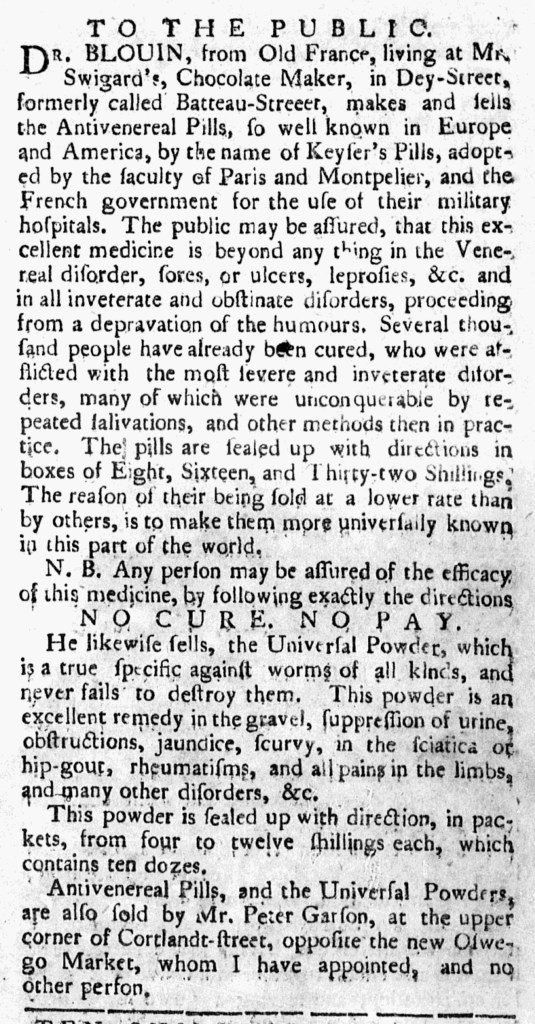
“DR. BLOUIN … makes and sells the Antivenereal Pills, so well known … by the name of Keyser’s Pills.”

It was the eighteenth-century version of offering a generic medication at a lower price than the name brand in hopes of attracting customers.  An entrepreneur who identified himself as “DR. BLOUIN, from Old France,” placed an advertisement in the November 15, 1775, edition of the Constitutional Gazette to inform readers in New York that he makes and sells the Antivenereal Pills, so well known in Europe and America, by the name of Keyser’s Pills.”  Indeed, that medication was popular in the colonies, advertised frequently by apothecaries, shopkeepers, and even printers who sold patent medicines as an alternate revenue stream.  At the same time that Blouin ran his advertisement, James Rivington, the printer of Rivington’s New-York Gazetteer, continued running his notice that proclaimed, “EVERY ONE THEIR OWN PHYSICIAN, By THE USE OF Dr. KEYSER’s PILLS.”  Rivington had been using that familiar refrain in his advertisements for years.

Blouin offered a brief history of the original medication as a means of marketing his generic version, noting that Keyser’s Pills had been “adopted by the faculty of Paris and Montpelier, and the French government for the use of their military hospitals.”  Furthermore, “[s]everal thousand people have already been cured, many of which were unconquerable by … other methods” of treatment.  Prospective customers, Blouin claimed, could not find a more effective remedy: “The public may be assured, that this excellent medicine is beyond any thing in the Venereal disorder, sores, or ulcers, leprosies, &c. and in all inveterate and obstinate disorders, proceeding from a depravation of the humours.”  He was so certain that he offered a guarantee: “NO CURE.  NO PAY.”

Readers interested in purchasing the pills that Blouin made in New York rather than imported ones would receive printed directions and could choose among boxes costing eight, sixteen, and thirty-two shillings.  The efficacy of the cure, he cautioned, depended on “following exactly the directions.”  Rivington sold Keyser’s Pills for ten, twenty, and forty shillings.  Blouin explained that he gave a discount “to make [his generic pills] more universally known in this part of the world.”  For those who wavered in choosing his pills over the name brand version, he hoped that the lower price would help convince them.  Blouin also noted that an associate, Peter Garson, “at the upper corner of Cortlandt-street, opposite the new Oswego Market,” sold the pills, but “no other person.”  Many advertisements for Keyser’s Pills warned prospective customers about counterfeits.  Blouin freely admitted that he “makes and sells” his own version … and advised readers to avoid any attributed to him but not sold by him or his appointed agent.

Slavery Advertisements Published November 15, 1775

GUEST CURATOR: Massimo Sgambati

The Slavery Adverts 250 Project chronicles the role of newspaper advertising in perpetuating slavery in the era of the American Revolution. The project seeks to reveal the ubiquity of slavery in eighteenth-century life from New England to Georgia by republishing advertisements about enslaved people – for sale as individuals or in groups, wanted to purchase or for hire for short periods, runaways who liberated themselves, and those who were subsequently captured and confined in jails and workhouses – in daily digests on this site as well as in real time via the @SlaveAdverts250 Twitter feed, utilizing twenty-first-century media to stand in for the print media of the eighteenth century.

The project aims to provide modern audiences with a sense of just how often colonizers encountered these advertisements in their daily lives. Enslaved men, women, and children appeared in print somewhere in the colonies almost every single day. Those advertisements served as a constant backdrop for social, cultural, economic, and political life in colonial and revolutionary America. Colonizers who did not purport to own enslaved people were still confronted with slavery as well as invited to maintain the system by purchasing enslaved men, women, and children or assisting in the capture of so-called “runaways” who sought to free themselves from bondage. The frequency of these newspaper advertisements suggests just how embedded slavery was in colonial and revolutionary American culture in everyday interactions beyond the printed page.

These advertisements also testify to the experiences of enslaved men, women, and children, though readers must consider that those experiences have been remediated through descriptions offered by enslavers rather than enslaved people themselves. Often unnamed in the advertisements, enslaved men, women, and children were not invisible or unimportant in early America.

From compiling an archive of digitized eighteenth-century newspapers to identifying advertisements about enslaved men, women, and children in those newspapers to preparing images of each advertisement to posting this daily digest, Massimo Sgambati served as guest curator for this entry. He completed this work as part of the Summer Scholars Program, funded by a fellowship from the D’Amour College of Liberal Arts and Sciences at Assumption University in Worcester, Massachusetts, in Summer 2025.

These advertisements appeared in colonial American newspapers 250 years ago today.

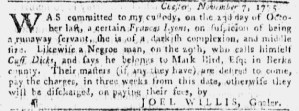
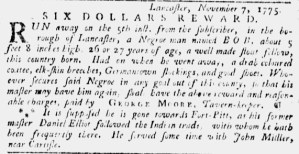
Pennsylvania Gazette (November 15, 1775)

**********

Pennsylvania Gazette (November 15, 1775)

**********

Pennsylvania Journal (November 15, 1775)

**********

Pennsylvania Journal (November 15, 1775)

**********

Pennsylvania Journal (November 15, 1775)

**********

Pennsylvania Journal (November 15, 1775)

**********

Pennsylvania Journal (November 15, 1775)

November 14

What was advertised in a revolutionary American newspaper 250 years ago today?

Dunlap’s Maryland Gazette (November 14, 1775).

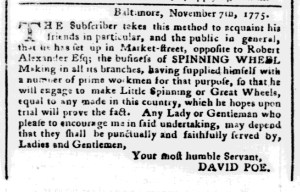
“He has set up … the business of SPINNING WHEEL Making.”

David Poe established a workshop for making spinning wheels in Baltimore in the fall of 1775.  To attract the attention of prospective customers, he placed an advertisement in the November 14 edition of Dunlap’s Maryland Gazette, advising “his friends in particular, and the public in general, that he has set up … the business of SPINNING WHEEL Making in all its branches.”  Rather than make one spinning wheel at a time, he could produce them in quantity, “having supplied himself with a number of prime workmen for that purpose.”  Poe did not specify whether those “prime workmen” were free, indentured, or enslaved.  He instead emphasized that he “will engage to make Little Spinning or Great Wheels, equal to any made in this country.”  Furthermore, he invited readers to see for themselves, stating that he “hopes upon trial” spinning wheels made in his workshop “will prove the fact.”

Poe advertised spinning wheels at a time that they became political symbols.  In response to the Coercive Acts that Parliament passed to punish Boston after the destruction of imported tea during a protest now known as the Boston Tea Party, the First Continental Congress devised the Continental Association, a nonimportation, nonconsumption, and nonexportation pact that called on colonizers to abstain from purchasing goods, including textiles, imported from England.  The agreement also included a call for colonizers to “encourage Frugality, Economy, and Industry; and promote Agriculture, Arts, and the Manufactures of this Country, especially that of Wool.”  Poe heeded that call as homespun cloth produced in the colonies became a fashionable political statement.  Newspapers carried reports of women participating in politics by holding spinning bees in public spaces.  Rather than a useful tool operated in domestic settings, the spinning wheel became a symbol of public commitment to the American cause, a visible demonstration to friends, neighbors, and the rest of the community that industrious women hoped would inspire others to follow their lead.  Poe did his part, aiming to provide “Any Lady or Gentleman” with spinning wheels for their households.  He did not make direct reference to the Continental Association or the events that had unfolded in the seven months since the battles at Lexington and Concord, but he did not need to do so.  Readers certainly understood the connection between spinning wheels and current events.

Slavery Advertisements Published November 14, 1775

GUEST CURATOR: Massimo Sgambati

The Slavery Adverts 250 Project chronicles the role of newspaper advertising in perpetuating slavery in the era of the American Revolution. The project seeks to reveal the ubiquity of slavery in eighteenth-century life from New England to Georgia by republishing advertisements about enslaved people – for sale as individuals or in groups, wanted to purchase or for hire for short periods, runaways who liberated themselves, and those who were subsequently captured and confined in jails and workhouses – in daily digests on this site as well as in real time via the @SlaveAdverts250 Twitter feed, utilizing twenty-first-century media to stand in for the print media of the eighteenth century.

The project aims to provide modern audiences with a sense of just how often colonizers encountered these advertisements in their daily lives. Enslaved men, women, and children appeared in print somewhere in the colonies almost every single day. Those advertisements served as a constant backdrop for social, cultural, economic, and political life in colonial and revolutionary America. Colonizers who did not purport to own enslaved people were still confronted with slavery as well as invited to maintain the system by purchasing enslaved men, women, and children or assisting in the capture of so-called “runaways” who sought to free themselves from bondage. The frequency of these newspaper advertisements suggests just how embedded slavery was in colonial and revolutionary American culture in everyday interactions beyond the printed page.

These advertisements also testify to the experiences of enslaved men, women, and children, though readers must consider that those experiences have been remediated through descriptions offered by enslavers rather than enslaved people themselves. Often unnamed in the advertisements, enslaved men, women, and children were not invisible or unimportant in early America.

From compiling an archive of digitized eighteenth-century newspapers to identifying advertisements about enslaved men, women, and children in those newspapers to preparing images of each advertisement to posting this daily digest, Massimo Sgambati served as guest curator for this entry. He completed this work as part of the Summer Scholars Program, funded by a fellowship from the D’Amour College of Liberal Arts and Sciences at Assumption University in Worcester, Massachusetts, in Summer 2025.

These advertisements appeared in colonial American newspapers 250 years ago today.

South-Carolina Gazette (November 14, 1775)

**********

South-Carolina Gazette (November 14, 1775)

**********

South-Carolina Gazette (November 14, 1775)

**********

South-Carolina Gazette (November 14, 1775)

**********

South-Carolina Gazette (November 14, 1775)

**********

South-Carolina Gazette (November 14, 1775)

**********

South-Carolina Gazette (November 14, 1775)

**********

South-Carolina Gazette (November 14, 1775)

**********

South-Carolina Gazette (November 14, 1775)

**********

South-Carolina Gazette (November 14, 1775)

**********

South-Carolina Gazette (November 14, 1775)

November 13

What was advertised in a revolutionary American newspaper 250 years ago today?

Norwich Packet (November 13, 1775).

“Wanted, a Quantity of Hog’s Bristles [from] Friends to American Manufactures.”

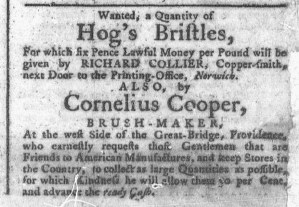
Cornelius Cooper, a brushmaker who had relocated from Philadelphia to Providence, needed materials to continue operating his business in the fall of 1775.  He ran an advertisement to that effect in the Providence Gazette, but his efforts did not end there.  He also enlisted the help of Richard Collier, a coppersmith, in Norwich, Connecticut.  An advertisement in the November 13, 1775, edition of the Norwich Packet proclaimed, “Wanted, a Quantity of Hog’s Bristles, For which six Pence Lawful Money per Pound will be given.”  The notice listed Collier as the local agent who collected the bristles and paid the premium, yet it did not end there.

Instead, it also advised that “Cornelius Cooper,” his name in a font as large as “Hog’s Bristles,” offered the same price.  After giving directions to his shop on “the west Side of the Great-Bridge, Providence,” the “BRUSH-MAKER” declared that he “earnestly requests those Gentlemen that are Friends to American Manufactures, and keep Stores in the Country, to collect as large Quantities as possible.”  In his advertisement that simultaneously ran in the Providence Gazette, he indicated that he wished to acquire “Five Thousand Weight of Hog’s Bristles,” a considerable quantity.  In making an appeal to “Friends to American Manufactures,” he invoked the Continental Association and efforts to replace goods imported from England with items produced in the colonies.  That became more important than ever after the battles at Lexington and Concord.  Decisions in the marketplace, including collecting hog’s bristles and purchasing brushes made from them, had political implications.  Collier supported the cause by serving as a local agent for Cooper; the brushmaker presented an opportunity for others to do the same, especially shopkeepers in the countryside who collected bristles from their patrons.  In return for that “Kindness,” Cooper not only paid “ready Cash” but also “allow[ed] them 30 per Cent.”  It seems that he offered a discount to retailers who collected bristles if they purchased his brushes to stock in their stores.  That strategy meant acquiring supplies and making sales at the same time, a neat arrangement for a brushmaker seeking to establish himself in New England.

Slavery Advertisements Published November 13, 1775

GUEST CURATOR: Massimo Sgambati

The Slavery Adverts 250 Project chronicles the role of newspaper advertising in perpetuating slavery in the era of the American Revolution. The project seeks to reveal the ubiquity of slavery in eighteenth-century life from New England to Georgia by republishing advertisements about enslaved people – for sale as individuals or in groups, wanted to purchase or for hire for short periods, runaways who liberated themselves, and those who were subsequently captured and confined in jails and workhouses – in daily digests on this site as well as in real time via the @SlaveAdverts250 Twitter feed, utilizing twenty-first-century media to stand in for the print media of the eighteenth century.

The project aims to provide modern audiences with a sense of just how often colonizers encountered these advertisements in their daily lives. Enslaved men, women, and children appeared in print somewhere in the colonies almost every single day. Those advertisements served as a constant backdrop for social, cultural, economic, and political life in colonial and revolutionary America. Colonizers who did not purport to own enslaved people were still confronted with slavery as well as invited to maintain the system by purchasing enslaved men, women, and children or assisting in the capture of so-called “runaways” who sought to free themselves from bondage. The frequency of these newspaper advertisements suggests just how embedded slavery was in colonial and revolutionary American culture in everyday interactions beyond the printed page.

These advertisements also testify to the experiences of enslaved men, women, and children, though readers must consider that those experiences have been remediated through descriptions offered by enslavers rather than enslaved people themselves. Often unnamed in the advertisements, enslaved men, women, and children were not invisible or unimportant in early America.

From compiling an archive of digitized eighteenth-century newspapers to identifying advertisements about enslaved men, women, and children in those newspapers to preparing images of each advertisement to posting this daily digest, Massimo Sgambati served as guest curator for this entry. He completed this work as part of the Summer Scholars Program, funded by a fellowship from the D’Amour College of Liberal Arts and Sciences at Assumption University in Worcester, Massachusetts, in Summer 2025.

These advertisements appeared in colonial American newspapers 250 years ago today.

Dunlap’s Pennsylvania Packet (November 13, 1775)

**********

Dunlap’s Pennsylvania Packet (November 13, 1775)

**********

New-York Gazette and Weekly Mercury (November 13, 1775)

**********

New-York Gazette and Weekly Mercury (November 13, 1775)

**********

New-York Gazette and Weekly Mercury (November 13, 1775)

**********

Newport Mercury (November 13, 1775)

**********

Norwich Packet (November 13, 1775)

November 12

What was advertised in a revolutionary American newspaper 250 years ago this week?

Providence Gazette (November 11, 1775).

“WANTED to purchase, Five Thousand Weight of Hog’s Bristles, long and good.”

Cornelius Cooper, a “Brush Maker, from Philadelphia,” experimented with various marketing strategies when he relocated to Providence and placed advertisements in the Providence Gazette in the fall of 1775.  In an advertisement that ran for several weeks, he announced that the “makes and sells, Wholesale and Retail, Sweeping, Hearth, Cloaths, Shoe and Buckle-Brushes, and every other Article in the Brush Way.”  In other words, he produced every sort of brush for any sort of purpose that his customers needed.  He also made a pitch for local consumers to “Buy American,” asking that “every Friend to America, both in Town and Country, will encourage him occasionally” by making a purchase from his shop.  Only in the nota bene that concluded his advertisement did Cooper issue a call that “People will be careful to save their Hogs Bristles,” an essential material for making brushes, “for which he will give a good Price in Cash.”

In a subsequent advertisement, Cooper put his request for hog bristles front and center.  A headline in capital letters proclaimed, “READY CASH.”  The brushmaker explained that he sought to purchase “Five Thousand Weight of Hog’s Bristles, long and good,” and would pay six pence per pound.  Only after he caught readers’ attention with that offer did he list the inventory available at his shop in Providence.  Rather than name general categories of brushes, he made a display of the many kinds of brushes that he made and sold, including “Tanner’s and Currier’s Scouring and Blacking Brushes, Hatter’s Stopping and Planking Brushes, [and] best Weaver’s Sizing or Look Brushes.”  In addition to supplying consumers with brushes to use in their homes, Cooper aimed to supply artisans with brushes specific to their trades.  He also renewed his appeal for “a Lad about 14 Years of Age” to serve as an apprentice, but added that he “wanted, a smart active Negro Boy, about 14 Years of Age.”  Whether the enslaved youth would also learn how to make brushes or instead do other tasks in the workshop, Cooper did not specify.  He dropped the appeal to “every Friend in America,” though likely not because he noticed any discrepancy in advocating for the liberties of white colonizers and seeking to purchase an enslaved youth.  After all, acquiring bristles so he could stay in business seemed to be Cooper’s primary focus in his new advertisement.