What was advertised in a revolutionary American newspaper 250 years ago today?

“Thomas Tileston, HAT-MAKER from BOSTON.”
Thomas Tileston, a hatmaker, ran an advertisement in the Connecticut Gazette for several weeks in the summer and early fall of 1775. He published it to inform prospective customers that “he has taken a Shop In WINDHAM, … Where he intends the carrying on his Business in all its Branches.” He currently had in stock the “Best of Beaver, Beaverett, Castor and Felt HATS.” Tileston promised exemplary customer service, asserting that they “may depend on the best Usage” and promising to undertake all orders “with Fidelity and Dispatch.”
As a newcomer to the area, Tileston introduced himself as a “HAT-MAKER from BOSTON.” Advertisers often indicated where they previously conducted business or received their training, but this detail had new significance. Tileston’s arrival in Windham coincided with the outbreak of hostilities at Lexington and Concord and the ensuing siege of Boston. General Thomas Gage, the governor, and the Massachusetts Provincial Congress negotiated an agreement that permitted Loyalists to enter the city and Patriots and others to depart. After enduring the closure of the harbor a year earlier via to the Boston Port Act and the hardships that resulted, Tileston may have decided to take what might have been his last opportunity to leave the city and establish himself elsewhere before the situation deteriorated even more. Windham was certainly a small town compared to Boston, yet Tileston did not merely suggest that he brought an elevated sense of fashion with him. He likely expected that readers might consider him a refugee and hoped that they would believe that he merited support from consumers in his new town.
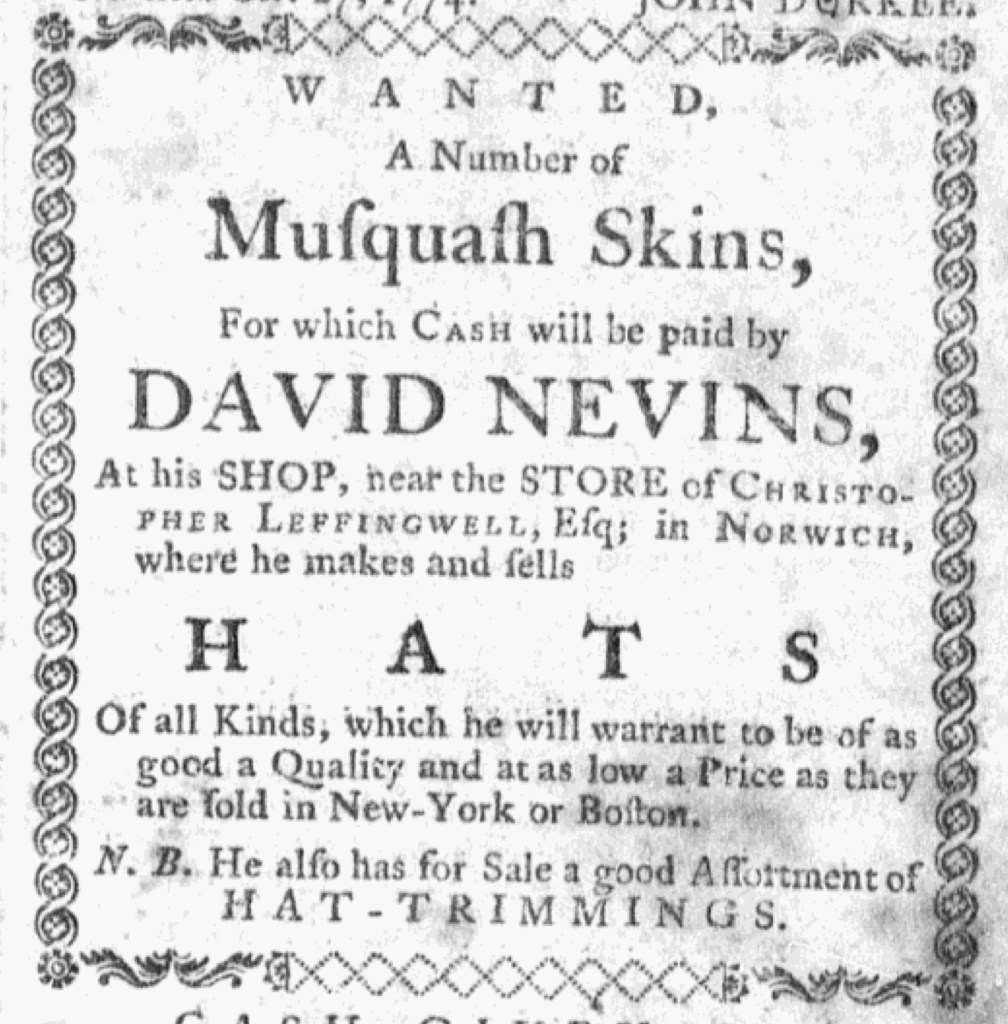
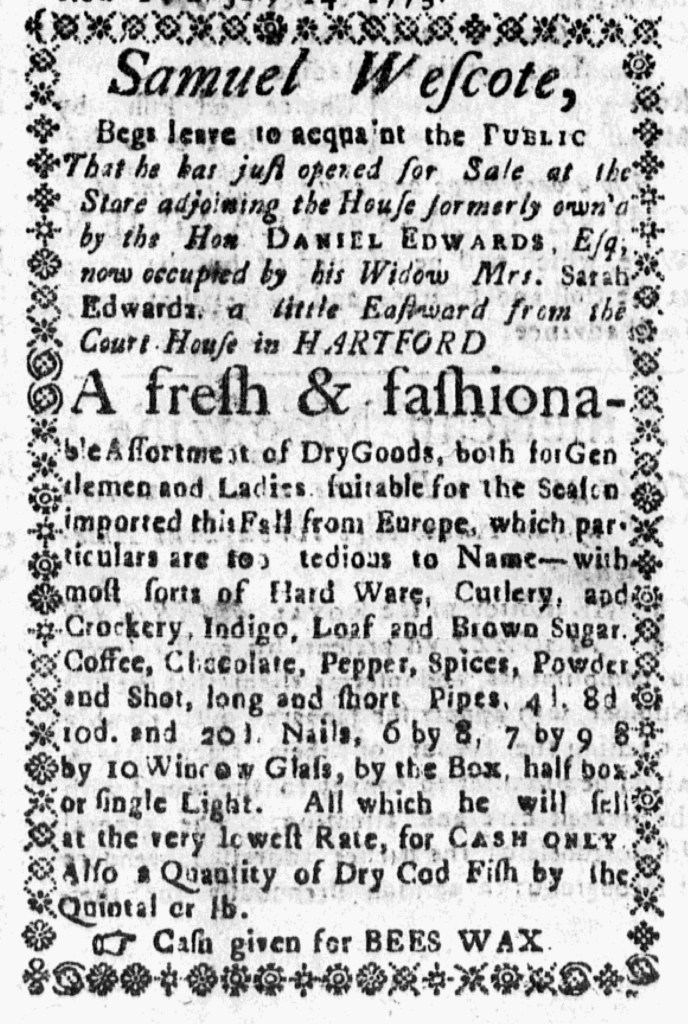
Given the stakes, Tileston went to additional lengths to draw attention to his advertisement. A border composed of printing ornaments enclosed his notice, distinguishing it from other advertisements that appeared in the Connecticut Gazette. Week after week, Tileston’s notice had that distinctive feature, making it easy for readers to spot. The hatmaker would have had to make special arrangements with the printer for his advertisement to receive such treatment. Perhaps he even had to pay more for it. Tileston apparently considered it worth the investment as he sought to establish his business in a new town.