Slavery Advertisements Published January 14, 1771

GUEST CURATOR:  Chloe Amour

The Slavery Adverts 250 Project chronicles the role of newspaper advertising in perpetuating slavery in the era of the American Revolution. The project seeks to reveal the ubiquity of slavery in eighteenth-century life from New England to Georgia by republishing advertisements for slaves – for sale, wanted to purchase, runaways, captured fugitives – in daily digests on this site as well as in real time via the @SlaveAdverts250 Twitter feed, utilizing twenty-first-century media to stand in for the print media of the eighteenth century.

The project aims to provide modern audiences with a sense of just how often colonists encountered these advertisements in their daily lives. Enslaved men, women, and children appeared in print somewhere in the colonies almost every single day. Those advertisements served as a constant backdrop for social, cultural, economic, and political life in colonial and revolutionary America. Colonists who did not own slaves were still confronted with slavery as well as invited to maintain the system by purchasing slaves or assisting in the capture of runaways. The frequency of these newspaper advertisements suggests just how embedded slavery was in colonial and revolutionary American culture in everyday interactions beyond the printed page.

These advertisements also testify to the experiences of enslaved men, women, and children, though readers must consider that those experiences have been remediated through descriptions offered by slaveholders rather than the slaves themselves. Often unnamed in the advertisements, enslaved men, women, and children were not invisible or unimportant in early America.

From compiling an archive of digitized eighteenth-century newspapers to identifying advertisements about enslaved men, women, and children in those newspapers to preparing images of each advertisement to posting this daily digest, Chloe Amour served as guest curator for this entry.  She completed this work while enrolled in an independent study for HIS 366 – Introduction to Public History at Assumption University in Worcester, Massachusetts, in Fall 2020.

These advertisements appeared in colonial American newspapers 250 years ago today.

Boston-Evening Post (January 14, 1771).

**********
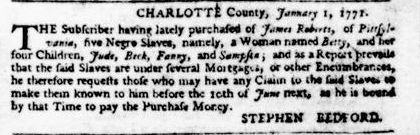
Massachusetts Spy (January 14, 1771).

**********
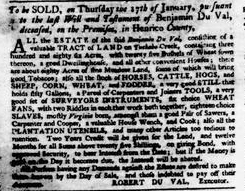
Massachusetts Gazette and Boston Post-Boy (January 14, 1771).

**********
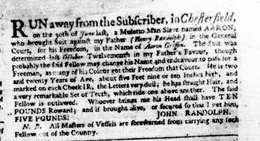
New-York Gazette and Weekly Mercury (January 14, 1771).

**********
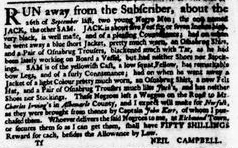
New-York Gazette and Weekly Mercury (January 14, 1771).

**********
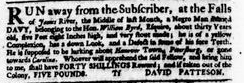
New-York Gazette and Weekly Mercury (January 14, 1771).

**********

New-York Gazette and Weekly Mercury (January 14, 1771).

**********

New-York Gazette and Weekly Mercury (January 14, 1771).

**********

New-York Gazette and Weekly Mercury (January 14, 1771).

**********

New-York Gazette and Weekly Mercury (January 14, 1771).

**********
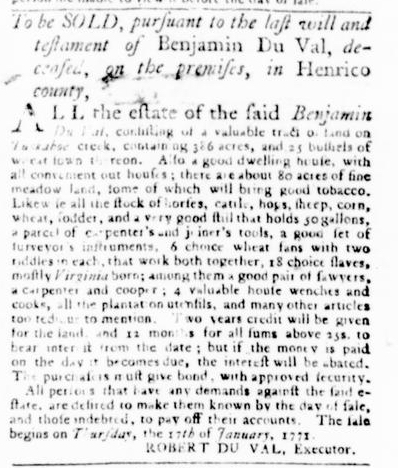
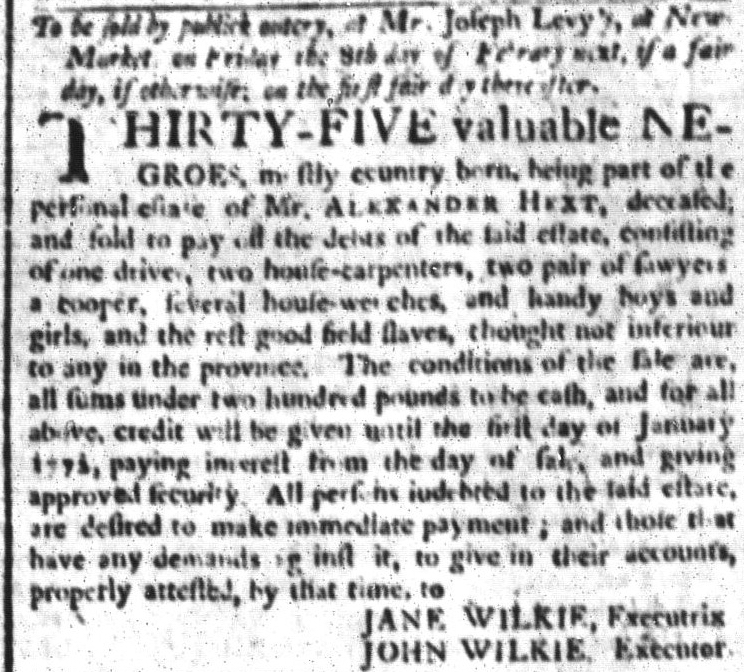
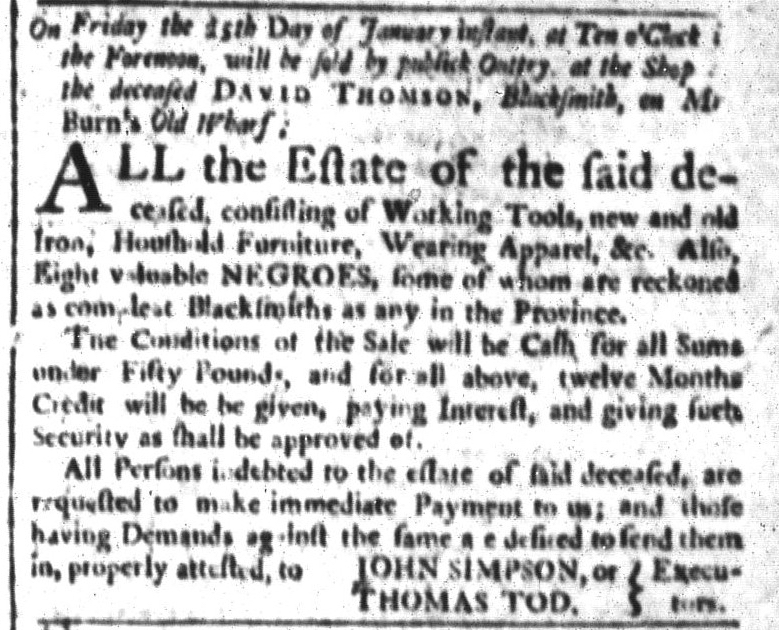
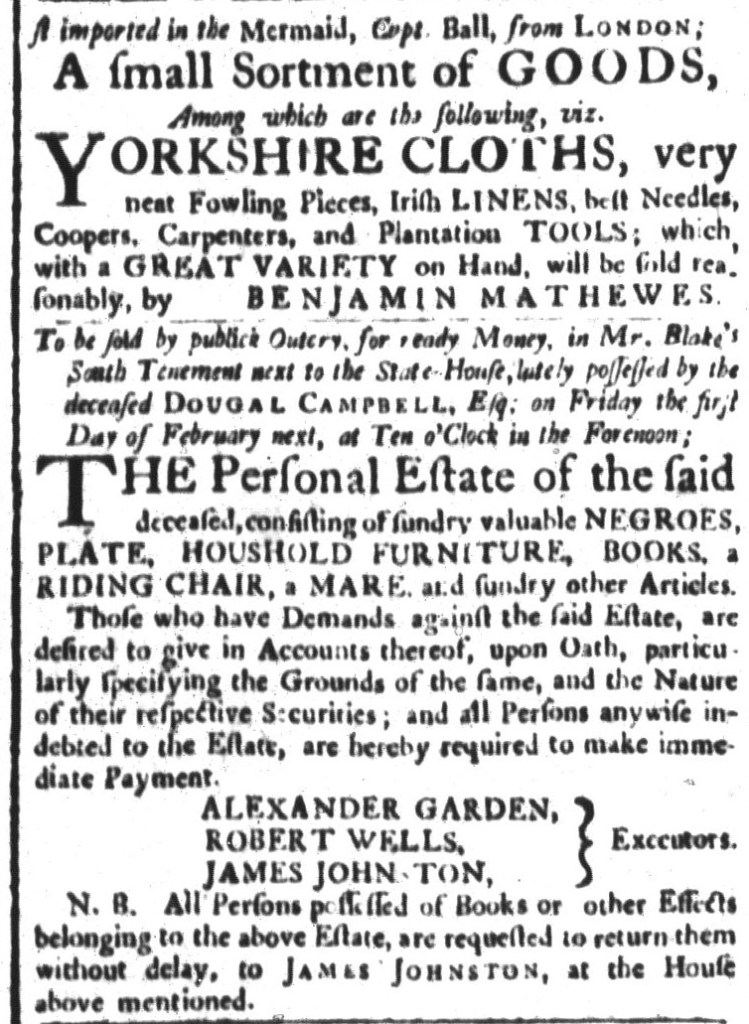
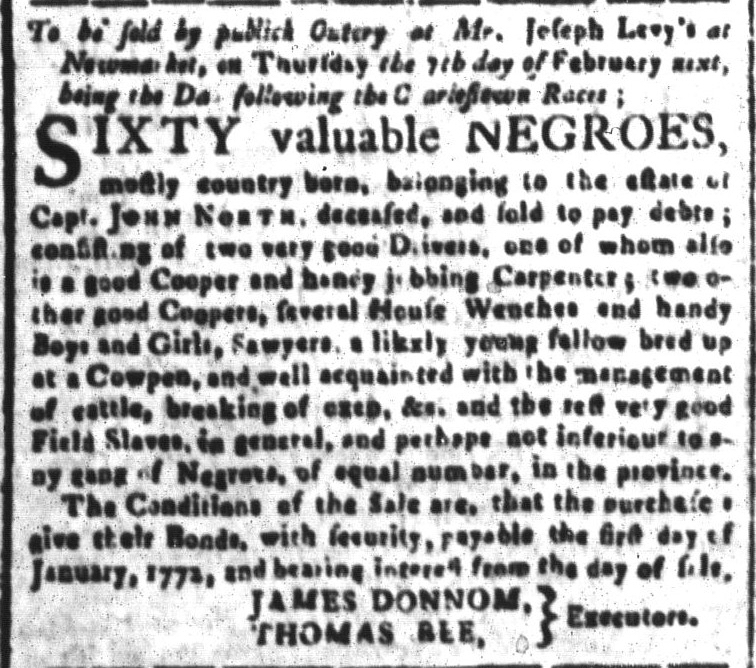
South-Carolina and American General Gazette (January 14, 1771).

**********
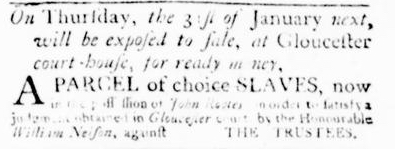
South-Carolina and American General Gazette (January 14, 1771).

**********

South-Carolina and American General Gazette (January 14, 1771).

**********

South-Carolina and American General Gazette (January 14, 1771).

**********

South-Carolina and American General Gazette (January 14, 1771).

**********

South-Carolina and American General Gazette (January 14, 1771).

**********

South-Caroline and American General Gazette (January 14, 1771).

**********

South-Carolina and American General Gazette (January 14, 1771).

**********

South-Caroline and American General Gazette (January 14, 1771).

**********

South-Carolina and American General Gazette (January 14, 1771).

**********

South-Carolina and American General Gazette (January 14, 1771).

**********

South-Carolina and American General Gazette (January 14, 1771).

**********

South-Carolina and American General Gazette (January 14, 1771).

**********

South-Carolina and American General Gazette (January 14, 1771).

**********

South-Carolina and American General Gazette (January 14, 1771).

**********

South-Carolina and American General Gazette (January 14, 1771).

**********

South-Carolina and American General Gazette (January 14, 1771).

**********

South-Carolina and American General Gazette (January 14, 1771).

January 13

What was advertised in a colonial American newspaper 250 years ago this week?

South-Carolina Gazette (January 10, 1771).

“The most effectual Medicine that has ever yet been offered to the Public, for the Cure of an inveterate Scurvy.”

John Norton, surgeon and proprietor of “Maredant’s Anti-Scorbutic Drops,” and Thomas Powell, his local agent in Charleston, deployed a variety of marketing strategies in an advertisement that ran in the January 10, 1771, edition of the South-Carolina Gazette.  Filling almost an entire column, the advertisement included a recitation of the various maladies that the patent medicine supposedly cured, two testimonials from former patients, an overview of the patent medicine’s reputation in England and Ireland, and a notice that Powell was the only authorized seller.  Eighteenth-century advertisements for patent medicines often included one or more of these various elements, but this particular advertisement was notable for incorporating all of them.

Norton and Powell billed Maredant’s Anti-Scorbutic Drops as the “most effectual Medicine that has ever yet been offered to the Public, for the Cure of an inveterate Scurvy, Leprosy, and pimpled Faces … so as never to return again.”  In addition, the patent medicine cured sores, ulcers, and hemorrhoids, purified blood, and “prevents malignant Humours of every Kind from being thrown upon the Lungs.”  Yet that was not all, according to Norton and Powell, who proclaimed that the drops were effective “in eradicating every Disorder incident to the Human Body, proceeding from the Scurvy, or Foulness of the Blood.”

The lively commentary did not end there.  Norton and Powell inserted two testimonials, one from Joseph Feyrac, “late Lieutenant-Colonel to His Majesty’s 28th Regiment of Foot in Ireland,” and the other from John Good, “late Surgeon to His Majesty’s Sloop Ferris.”  Feyrac’s lengthy testimonial accounted for half of the advertisement.  He went into detail, describing the “Particulars of my Distemper” and other treatments he had endured.  He experienced temporary relief after consulting “an old Woman” who administered “Juice of Herbs, preceded by violent Bleedings.”  He traveled to Bath, but “found a bad Effect from the Waters.”  Feyrac described several times that he was incapacitated for a month or more.  A physician and a surgeon provided various treatments, but those also produced only temporary relief.  Feyrac was “Low in Spirits” when he happened to read one Norton’s advertisements in the English press.  He asked others who had taken Maredant’s Anti-Scorbutic Drops about their experiences, discovering that the remedy “had performed a great Number of Cures, in all the Disorders” mentioned in the advertisements.  When Feyrac took the medicine himself, he began experiencing relief within a week.  Several months later, he reported that he was “well recovered; my Strength is returned, my Spirits good.”

Good’s testimonial was much shorter, simply declaring the “valuable Drops” had “entirely cured me of a dangerous and obstinate Fistula.”  Some of the value of this testimonial no doubt derived from Good’s former service as “Surgeon to His Majesty’s Sloop Ferris.”  His own experience tending to patients likely enhanced his standing in recommending this patent medicine.  Good also framed his testimonial as a service to the public, stating that making it public “may be the Means of doing Service to the Community in general.”

Such stories contributed to the reputation Maredant’s Anti-Scorbutic Drops earned in England in Ireland.  The drops were so effective “in all Disorders occasioned by the Scurvy, that even Numbers of the Faculty” of the Corporation of Surgeons in London “have been induced to seek Relief from the known Virtues of this excellent Medicine.”  In addition, Norton brandished his credentials, stating that he “was regularly brought up in the Practice of Surgery.”  He also stated that the king had granted “His Royal Letters Patent” to Norton for “the preparing and vending” of the patent medicine.

Given the reputation and success of Maredant’s Anti-Scorbutic Drops on the other side of the Atlantic, Norton and Powell hoped to create demand in the colonies.  Their advertisement noted that Norton appointed Powell as “the sole Vendor … in the Southern Colonies of AMERICA.”  Consumers could purchase the drops “with printed Directions for using them” from Powell only.  Such exclusivity served as a form of quality control and guarded against counterfeits, increasing consumer confidence.

From descriptions of the maladies the patent medicine cured to testimonials from patients who recovered after taking the drops to commentary about their reputation, Norton and Powell provided prospective customers with a variety of reasons to purchase Maredant’s Anti-Scorbutic Drops.  They combined multiple marketing strategies into a single advertisement as they attempted to make a convincing case to consumers.

January 12

What was advertised in a colonial American newspaper 250 years ago today?

SlaveryProvidence Gazette (January 12, 1771).“A Likely strong Negro Man.”

On January 12, 1771, an advertisement for a “Likely strong Negro Man, about 28 Years of Age,” ran in the Providence Gazette.  It was just one of dozens of advertisements concerning enslaved men, women, and children that appeared in newspapers published throughout the colonies during the week of Sunday, January 6, through Saturday, January 12.  From New England to South Carolina, newspapers contributed to the perpetuation of slavery by publishing advertisements about buying and selling enslaved people, notices that described enslaved people who liberated themselves and offered rewards for their capture and return, and advertisements about suspected “runaways” who had been committed to jails in northern colonies and workhouses in southern colonies.

Newspaper printers, including John Carter of the Providence Gazette, generated revenues from publishing at least seventy-one such advertisements.  They appeared in newspapers in every region:  six advertisements in five newspapers in New England, eleven advertisements in four newspapers in the Middle Atlantic, twenty-five advertisements in three newspapers in the Chesapeake, and twenty-nine newspapers in the Lower South.  This tally almost certainly undercounts the total number of newspaper advertisements concerning enslaved people published that week.  Two of the four pages of the January 8 edition of the South-Carolina Gazette and Country Journal are missing.  Portions of the January 10 edition of Purdie and Dixon’s Virginia Gazette are so damaged as to be illegible.  No copies of the Georgia Gazette from 1771 survive, though other sources confirm that newspaper continued publication throughout the year.  This census of newspapers notices concerning enslaved men, women, and children provides only the minimum number of such notices that readers throughout the colonies encountered that week.

That being the case, these advertisements were a familiar sight, a part of everyday life in the colonies … and not just colonies in the Chesapeake and the Lower South.  In New England, the Boston Evening-Post, the Massachusetts Gazette and Boston Post-Boy, the Massachusetts Spy, the New-Hampshire Gazette, and the Providence Gazette all carried advertisements concerning enslaved people.  In the Middle Atlantic, the New-York Gazette and Weekly Mercury, the Pennsylvania Chronicle, the Pennsylvania Gazette, and the Pennsylvania Journal did as well.  Today it may seem striking to some to glimpse an advertisement about the sale of a “Likely strong Negro Man” in the pages of the Providence Gazette in the early 1770s, that advertisement did not seem out of place to readers in Rhode Island and elsewhere in New England and other colonies when it was published.

Slavery Advertisements Published January 12, 1771

GUEST CURATOR:  Chloe Amour

The Slavery Adverts 250 Project chronicles the role of newspaper advertising in perpetuating slavery in the era of the American Revolution. The project seeks to reveal the ubiquity of slavery in eighteenth-century life from New England to Georgia by republishing advertisements for slaves – for sale, wanted to purchase, runaways, captured fugitives – in daily digests on this site as well as in real time via the @SlaveAdverts250 Twitter feed, utilizing twenty-first-century media to stand in for the print media of the eighteenth century.

The project aims to provide modern audiences with a sense of just how often colonists encountered these advertisements in their daily lives. Enslaved men, women, and children appeared in print somewhere in the colonies almost every single day. Those advertisements served as a constant backdrop for social, cultural, economic, and political life in colonial and revolutionary America. Colonists who did not own slaves were still confronted with slavery as well as invited to maintain the system by purchasing slaves or assisting in the capture of runaways. The frequency of these newspaper advertisements suggests just how embedded slavery was in colonial and revolutionary American culture in everyday interactions beyond the printed page.

These advertisements also testify to the experiences of enslaved men, women, and children, though readers must consider that those experiences have been remediated through descriptions offered by slaveholders rather than the slaves themselves. Often unnamed in the advertisements, enslaved men, women, and children were not invisible or unimportant in early America.

From compiling an archive of digitized eighteenth-century newspapers to identifying advertisements about enslaved men, women, and children in those newspapers to preparing images of each advertisement to posting this daily digest, Chloe Amour served as guest curator for this entry.  She completed this work while enrolled in an independent study for HIS 366 – Introduction to Public History at Assumption University in Worcester, Massachusetts, in Fall 2020.

These advertisements appeared in colonial American newspapers 250 years ago today.

Providence Gazette (January 12, 1771).

January 11

What was advertised in a colonial American newspaper 250 years ago today?

New-London Gazette (January 11, 1771).

To be Sold by Garret Noel, at New-York … and at the Printing-Office in N. London.”

Timothy Green, printer of the New-London Gazette, augmented revenues by selling books, pamphlets, and almanacs in addition to newspaper subscriptions and advertising.  Two advertisements in the January 11, 1771, edition of the New-London Gazette promoted items available at his printing office, “Ames’s Almanack” and “A Review Of the Military Operations in NORT[H]-AMERICA.”  Much of the advertisement for the latter consisted of the extensive subtitle that summarized the contents of the book.  It covered a portion of the conflict now known by several names, including the French and Indian War, the Seven Years War, and the Great War for Empire, “From the Commencement of the FrenchHostilities on the Frontiers of Virginia, in 1753, to the Surrender of Oswego, on the 14th of August 1756.”  That narrative was “Interspersed with various Observations, Characters, and Anecdotes, necessary to give Light into the Conduct of American Transactions in general; and more especially into the political Management of Affairs in New-York.”

First published in London in 1757, the Review of the Military Operations in North America was reprinted in New England in 1758 and, again, in New York in 1770.  Alexander Robertson and James Robertson printed the more recent edition that Green sold.  The advertisement in the New-London Gazette provided an overview of the network of printers and booksellers throughout the colonies who cooperated in distributing the book to consumers, listing eight individuals or partnerships in eight towns from Boston to Charleston.  Other advertisements for books printed in the colonies sometimes included similar lists, creating the impression of a community of readers that extended far beyond the local market.  Residents of New London who obtained copies at Green’s printing office joined readers who acquired theirs from Garret Noel’s bookshop in New York or from “Mr. Stephens, at the Coffee-House” in Charleston.  Printers and publishers often could not generate sufficient demand to justify producing American editions for local markets, so they strove to create regional or continental markets via networks of agents and associates as well as subscription notices and newspaper advertisements disseminated widely.

Slavery Advertisements Published January 11, 1771

GUEST CURATOR:  Chloe Amour

The Slavery Adverts 250 Project chronicles the role of newspaper advertising in perpetuating slavery in the era of the American Revolution. The project seeks to reveal the ubiquity of slavery in eighteenth-century life from New England to Georgia by republishing advertisements for slaves – for sale, wanted to purchase, runaways, captured fugitives – in daily digests on this site as well as in real time via the @SlaveAdverts250 Twitter feed, utilizing twenty-first-century media to stand in for the print media of the eighteenth century.

The project aims to provide modern audiences with a sense of just how often colonists encountered these advertisements in their daily lives. Enslaved men, women, and children appeared in print somewhere in the colonies almost every single day. Those advertisements served as a constant backdrop for social, cultural, economic, and political life in colonial and revolutionary America. Colonists who did not own slaves were still confronted with slavery as well as invited to maintain the system by purchasing slaves or assisting in the capture of runaways. The frequency of these newspaper advertisements suggests just how embedded slavery was in colonial and revolutionary American culture in everyday interactions beyond the printed page.

These advertisements also testify to the experiences of enslaved men, women, and children, though readers must consider that those experiences have been remediated through descriptions offered by slaveholders rather than the slaves themselves. Often unnamed in the advertisements, enslaved men, women, and children were not invisible or unimportant in early America.

From compiling an archive of digitized eighteenth-century newspapers to identifying advertisements about enslaved men, women, and children in those newspapers to preparing images of each advertisement to posting this daily digest, Chloe Amour served as guest curator for this entry.  She completed this work while enrolled in an independent study for HIS 366 – Introduction to Public History at Assumption University in Worcester, Massachusetts, in Fall 2020.

These advertisements appeared in colonial American newspapers 250 years ago today.

New-Hampshire Gazette (January 11, 1771).

January 10

What was advertised in a colonial American newspaper 250 years ago today?

Massachusetts Spy (January 10, 1771).

“AN exact List of Blanks and Prizes in Fanueil-Hall Lottery, to [be] seen at the Printing-Office.”

Printing offices were hubs for disseminating information in eighteenth-century America.  Many were sites of newspaper production, printing and reprinting news, letters, and editorials from near and far.  Many printers encouraged readers and others to submit “Articles of Intelligence” for publication in the colophons that appeared on the final pages of their newspapers.  Every newspaper printer participated in exchange networks, trading newspapers with counterparts in other towns and colonies and then selecting items already published elsewhere to insert in their newspapers.  Newspaper printers also disseminated a wide range of advertising, from legal notices to advertisements about runaway apprentices and indentured servants or enslaved people who liberated themselves to notices marketing consumer goods and services.  In many instances, newspaper advertisements did not include all of the relevant information but instead instructed interested parties to “enquire of the printer” to learn more.  Accordingly, not all of the information disseminated from printing offices did so in print.  Some printers also worked as postmasters.  Letters flowed through their printing offices.  Printers did job printing, producing broadsides, handbills, and pamphlets for customers, further disseminating information at the discretion of their patrons rather than through their own editorial discretion.  Many printers sold books, pamphlets, and almanacs posted subscription notices for proposed publications, and printed book catalogs and auction catalogs.

Yet that was not the extent of information available at early American printing offices.  Colonists could also visit them to learn more about the results of lotteries sponsored for public works projects.  An advertisement in the January 10, 1771, edition of the Massachusetts Spy, for instance, informed readers of “AN exact Lost of Blanks and Prizes in Fanueil-Hall Lottery, to [be] seen at the Printing-Office opposite to William Vassell’s, Esq; the head of Queen-street.”  Other newspapers published in Boston that same week carried the same notice but named “Green & Russell’s Printing-Office.”  The printers of the Massachusetts Gazette and Boston Post-Boy also played a role in disseminating information about a lottery that helped to fund a local building project.  Eighteenth-century newspapers sometimes included lottery results, the “Blanks” or ticket numbers and the corresponding prizes, but those could occupy a significant amount of space.  Rather than incur the expense of purchasing that space in newspapers, the sponsors of lotteries sometimes instead chose to deposit that information at printing offices, sites that collected and disseminated all sorts of information via a variety of means.  Printers served as information brokers, but they did not limit their efforts and activities to printed pages dispersed beyond their offices.  Sometimes colonists had to visit printing office or correspond with printers via the post in order to acquire information that did not appear in print.

Slavery Advertisements Published January 10, 1771

GUEST CURATOR:  Chloe Amour

The Slavery Adverts 250 Project chronicles the role of newspaper advertising in perpetuating slavery in the era of the American Revolution. The project seeks to reveal the ubiquity of slavery in eighteenth-century life from New England to Georgia by republishing advertisements for slaves – for sale, wanted to purchase, runaways, captured fugitives – in daily digests on this site as well as in real time via the @SlaveAdverts250 Twitter feed, utilizing twenty-first-century media to stand in for the print media of the eighteenth century.

The project aims to provide modern audiences with a sense of just how often colonists encountered these advertisements in their daily lives. Enslaved men, women, and children appeared in print somewhere in the colonies almost every single day. Those advertisements served as a constant backdrop for social, cultural, economic, and political life in colonial and revolutionary America. Colonists who did not own slaves were still confronted with slavery as well as invited to maintain the system by purchasing slaves or assisting in the capture of runaways. The frequency of these newspaper advertisements suggests just how embedded slavery was in colonial and revolutionary American culture in everyday interactions beyond the printed page.

These advertisements also testify to the experiences of enslaved men, women, and children, though readers must consider that those experiences have been remediated through descriptions offered by slaveholders rather than the slaves themselves. Often unnamed in the advertisements, enslaved men, women, and children were not invisible or unimportant in early America.

From compiling an archive of digitized eighteenth-century newspapers to identifying advertisements about enslaved men, women, and children in those newspapers to preparing images of each advertisement to posting this daily digest, Chloe Amour served as guest curator for this entry.  She completed this work while enrolled in an independent study for HIS 366 – Introduction to Public History at Assumption University in Worcester, Massachusetts, in Fall 2020.

These advertisements appeared in colonial American newspapers 250 years ago today.

Maryland Gazette (January 10, 1771).

**********

Maryland Gazette (January 10, 1771).

**********

Maryland Gazette (January 10, 1771).

**********

Maryland Gazette (January 10, 1771).

**********

Maryland Gazette (January 10, 1771).

**********

Massachusetts Gazette and Boston Weekly News-Letter (January 10, 1771).

**********

Massachusetts Spy (January 10, 1771).

**********

Pennsylvania Gazette (January 10, 1771).

**********

Pennsylvania Gazette (January 10, 1771).

**********

Pennsylvania Journal (January 10, 1771).

**********

South-Carolina Gazette (January 10, 1771).

**********

South-Carolina Gazette (January 10, 1771).

**********

South-Carolina Gazette (January 10, 1771).

**********

South-Carolina Gazette (January 10, 1771).

**********

South-Carolina Gazette (January 10, 1771).

**********

South-Carolina Gazette (January 10, 1771).

**********

South-Carolina Gazette (January 10, 1771).

**********

South-Carolina Gazette (January 10, 1771).

**********

South-Carolina Gazette (January 10, 1771).

**********

South-Carolina Gazette (January 10, 1771).

**********

Virginia Gazette [Purdie and Dixon] (January 10, 1771).

**********

Virginia Gazette [Purdie and Dixon] (January 10, 1771).

**********

Virginia Gazette [Purdie and Dixon] (January 10, 1771).

**********

Virginia Gazette [Purdie and Dixon](January 10, 1771).

**********

Virginia Gazette [Purdie and Dixon] (January 10, 1771).

**********

Virginia Gazette [Purdie and Dixon](January 10, 1771).

**********

Virginia Gazette [Rind] (January 10, 1771).

**********

Virginia Gazette [Rind] (January 10, 1771).

**********

Virginia Gazette [Rind] (January 10, 1771).

**********

Virginia Gazette [Rind] (January 10, 1771).

**********

Virginia Gazette [Rind] (January 10, 1771).

**********

Virginia Gazette [Rind] (January 10, 1771).

**********

Virginia Gazette [Rind] (January 10, 1771).

**********

Virginia Gazette [Rind] (January 10, 1771).

**********

Virginia Gazette [Rind] (January 10, 1771).

**********

Virginia Gazette [Rind] (January 10, 1771).

**********

Virginia Gazette [Rind] (January 10, 1771).

**********

Virginia Gazette [Rind] (January 10, 1771).

**********

Virginia Gazette [Rind] (January 10, 1771).

**********

Virginia Gazette [Rind] (January 10, 1771).

January 9

What was advertised in a colonial American newspaper 250 years ago this week?

New-York Gazette and Weekly Mercury (January 7, 1771).

“ADDRESS To those who possess a PUBLIC SPIRIT.”

When bookseller Robert Bell inserted a notice about upcoming auctions in the January 3, 1771, edition of the New-York Journal, he devoted the second half of the advertisement to promoting an American edition of William Robertson’s multivolume History of the Reign of the Emperor Charles V.  He addressed the “real friends to the progress of Literary entertainment, and to the extension of useful Manufactures in a young country.”  Bell advanced a “Buy American” marketing strategy during the period of the imperial crisis that ultimately culminated in the American Revolution.

Later that week, he continued his advertising campaign with another notice in the January 7 edition of the New-York Gazette and Weekly Mercury.  Bell included some of the copy from the earlier advertisement in this much lengthier iteration.  Both versions highlighted the phrase “THE LAND WE LIVE IN” by printing it in all capitals and centering it on a line of its own within the advertisement, drawing attention to Bell’s proposition that consumers who purchased this work also contributed to the “elevation and enriching” of the colonies.  He enhanced that argument with a headline that described the entire advertisement as an “ADDRESS To those who possess a PUBLIC SPIRIT.”  Potential customers, Bell asserted, had an opportunity to engage in acts of consumption that possessed political significance.

At the same time, the bookseller declared that the American edition was a bargain compared to imported alternatives.  He charged “the moderate price of One Dollar each Volume” for the three volumes, noting that the “British edition cannot be imported for less than Twelve Dollars.”  Colonists could acquire the work at a significant savings, a reward for their role in creating a distinctive American marketplace for the production and consumption of books.  Only the first volume had gone to press, so the advertisement also served as a subscription notice.  Bell encouraged “Gentlemen who have rationality enough to consider they will receive an equivalent” to an imported edition to sign on as subscribers, simultaneously flattering and cajoling prospective customers.

Bell informed the “Encouragers of printing this Grand Historical Work” that they “may depend upon ebullitions of gratitude,” but that was only an ancillary reason for purchasing Robertson’s biography of Charles the Fifth.  He presented their own edification and their responsibility for promoting domestic manufactures in the colonies as the primary reasons for buying the first volume and subscribing for the subsequent second and third volumes.

January 8

What was advertised in a colonial American newspaper 250 years ago today?

Connecticut Courant (January 8, 1771).

“He will sell for the following Prices.”

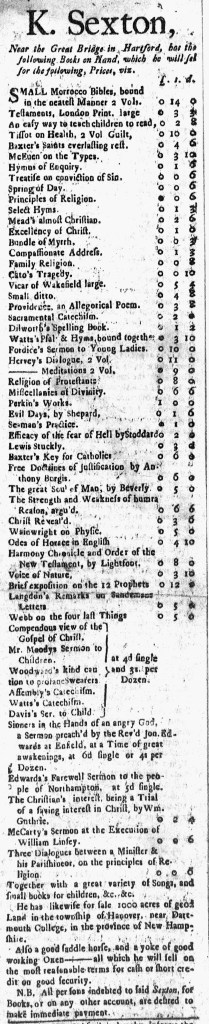
K. Sexton sold books at a shop “Near the Great Bridge in Hartford” in the early 1770s. Like many other early American booksellers, he placed newspaper advertisements that listed various titles available at his shop. In his advertisement in the January 8, 1771, edition of the Connecticut Courant, however, he included an enhancement not part of most newspaper advertisements or book catalogs published during the period.  He gave the prices of his merchandise.

In orderly columns that ran down the right side of his notice, Sexton listed prices in pounds, shillings, and pence, allowing prospective customers to anticipate what they would spend on his books as well as identify bargains.  He charged, for instance, fourteen shillings for a two-volume set of “SMALL Morrocco Bibles, bound in the neatest Manner,” five shillings and four pence for a “large” edition of a popular novel, The Vicar of Wakefield, and four shillings and eight pence for a “small” edition, and ten pence for “Cato’s Tragedy.”

For some items, Sexton sought buyers among both consumers and retailers.  He sold “Sinners in the Hands of an angry God, a Sermon preach’d by the Rev’d Jon. Edwards at Enfield, at a Time of great awakenings” for six pence for a single copy or four shillings for a dozen.  Retailers and others who bought in volume enjoyed a significant discount when they paid four shillings or forty-eight pence for twelve copies; Sexton reduced the retail price by one third.  He offered similar savings for purchasing at least a dozen copies of six other titles, including “Mr. Moodys Sermon to Children” and “Watts’s Catechism.”  For each of those, he charged either four pence each or three shillings (or thirty-six pence) for a dozen.  Those who bought a dozen save one quarter of the retail price.

Most booksellers did not specify prices for their merchandise in newspapers advertisements that listed multiple titles, though they were more likely to mention prices in advertisements for single titles and almost always did so in subscription notices for proposed books, magazines, and pamphlets.  In general, most purveyors of goods and services in eighteenth-century America did not indicate prices in their advertisements, except to offer assurances that they were low or reasonable.  Setting prices and promoting them to prospective customers eventually became a standard marketing strategy, but it was not common in eighteenth-century advertisements.  In the early 1770s, Sexton’s use of prices in his newspaper notices amounted to an experiment and innovation in marketing.