January 6

What was advertised in a colonial American newspaper 250 years ago today?
Norwich Packet (January 6, 1774).

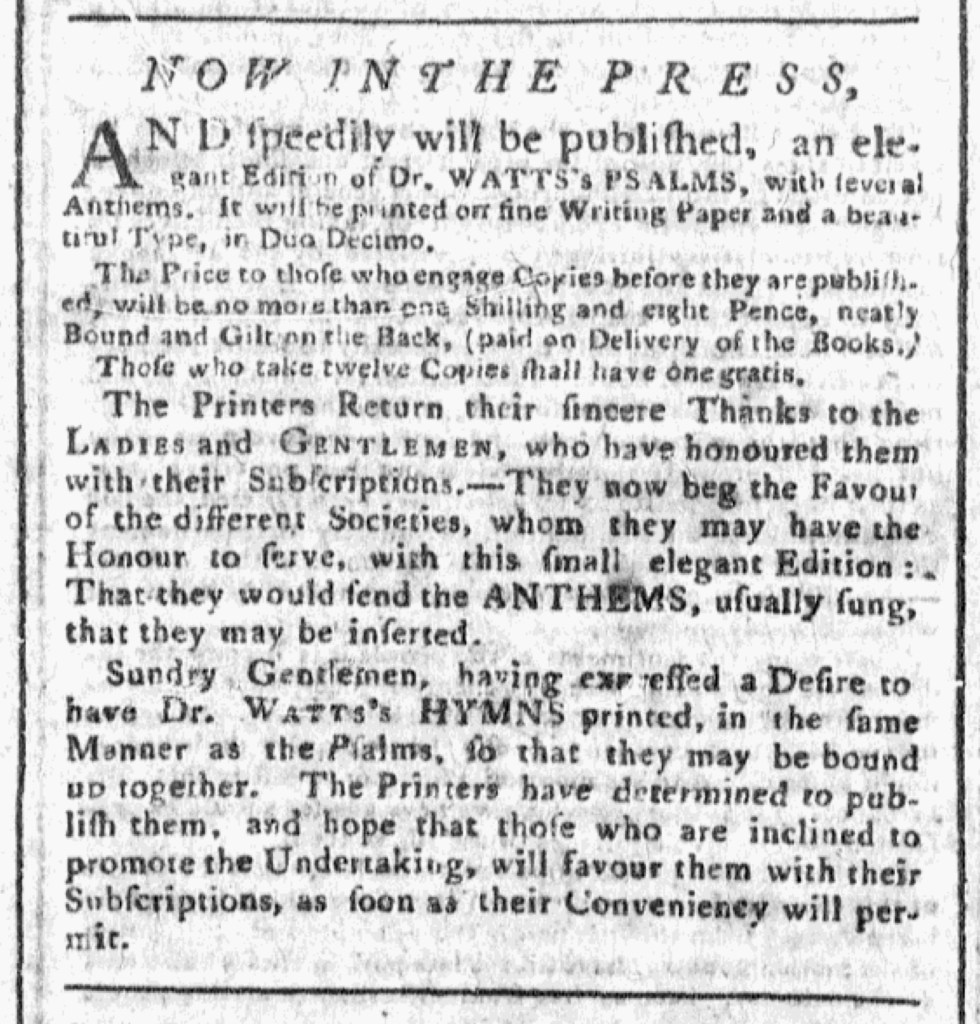
“They now beg the Favour of the different Societies … That they would send the ANTHEMS, usually sung, that they may be inserted.”

Alexander Robertson, James Robertson, and John Trumull, the printers of the Norwich Packet, placed a notice in their own newspaper to announce that “an Elegant Edition of DR. WATTS’s PSALMS, with several Anthems,” was “NOW IN THE PRESS.”  It was not too late for customers to qualify for the bargain price, “no more than one Shilling and eight Pence,” as long as they reserved their copies “before they are published” and offered for sale to the general public.  In addition, “Those who take twelve Copies shall have one gratis.”  Printers sometimes offered such discounts to retailers who purchased in volume to sell again, though in this case the Robertsons and Trumbull likely had congregations in mind as well.

They certainly attempted to enlist the aid of congregations in submitting additional material to enhance the project and make their edition of Isaac Watts’s translation of The Psalms of David more attractive to prospective customers.  The Robertsons and Trumbull “now beg the Favour of the different Societies, whom they may have the Honour to serve, with this small elegant Edition: That they would send the ANTHEMS, usually sung, that they may be inserted.”  Such additions would make the books all the more useful to consumers … and marketable for the printers.  Having taken the project to press, they aimed to maximize the return on their investment by producing other items that could be bound in a single volume.  The book ultimately included eleven anthems, some of them likely contributed by members of the “different Societies” that saw the advertisement in the Norwich Packet.

The Robertsons and Trumbull also envisioned a companion to “Dr. WATTS’s PSALMS.”  They reported that “Sundry Gentlemen … expressed a Desire to have Dr. WATTS’s HYMNS printed in the same Manner as the Psalms, so that they may be bound up together.”  That does not seem to have happened, at least not in the copy of Watts’s Psalms held by the Library of Congress and reproduced in America’s Historical Imprints.  The printers likely did not take that project to press, lacking sufficient demand even though they claimed “Sundry Gentleman” suggested the idea to them.  That may have been a ploy to encourage prospective buyers to reserve copies in advance, but when they did not materialize the Robertsons and Trumbull presumably opted not to pursue publishing the hymns.
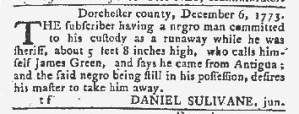
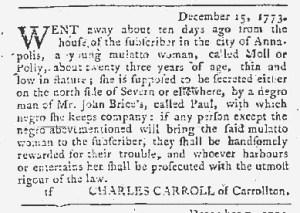
Slavery Advertisements Published January 6, 1774

The Slavery Adverts 250 Project chronicles the role of newspaper advertising in perpetuating slavery in the era of the American Revolution. The project seeks to reveal the ubiquity of slavery in eighteenth-century life from New England to Georgia by republishing advertisements about enslaved people – for sale as individuals or in groups, wanted to purchase or for hire for short periods, runaways who liberated themselves, and those who were subsequently captured and confined in jails and workhouses – in daily digests on this site as well as in real time via the @SlaveAdverts250 Twitter feed, utilizing twenty-first-century media to stand in for the print media of the eighteenth century.

The project aims to provide modern audiences with a sense of just how often colonizers encountered these advertisements in their daily lives. Enslaved men, women, and children appeared in print somewhere in the colonies almost every single day. Those advertisements served as a constant backdrop for social, cultural, economic, and political life in colonial and revolutionary America. Colonizers who did not purport to own enslaved people were still confronted with slavery as well as invited to maintain the system by purchasing enslaved men, women, and children or assisting in the capture of so-called “runaways” who sought to free themselves from bondage. The frequency of these newspaper advertisements suggests just how embedded slavery was in colonial and revolutionary American culture in everyday interactions beyond the printed page.

These advertisements also testify to the experiences of enslaved men, women, and children, though readers must consider that those experiences have been remediated through descriptions offered by enslavers rather than enslaved people themselves. Often unnamed in the advertisements, enslaved men, women, and children were not invisible or unimportant in early America.

These advertisements appeared in colonial American newspapers 250 years ago today.

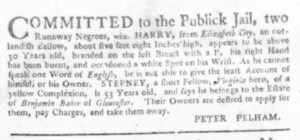
Maryland Gazette (January 6, 1774).

**********

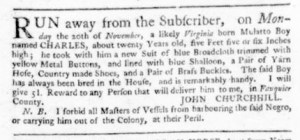
Maryland Gazette (January 6, 1774).

**********

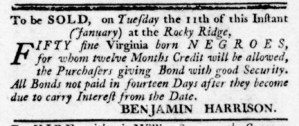
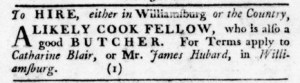
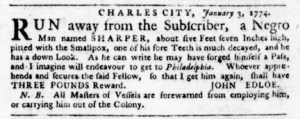
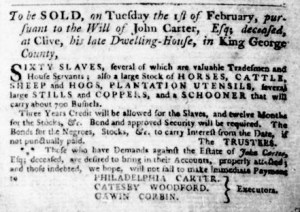
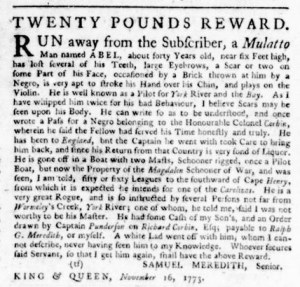
Virginia Gazette [Purdie and Dixon] (January 6, 1774).

**********

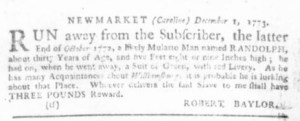
Virginia Gazette [Purdie and Dixon] (January 6, 1774).

**********

Virginia Gazette [Purdie and Dixon] (January 6, 1774).

**********

Virginia Gazette [Purdie and Dixon] (January 6, 1774).

**********

Virginia Gazette [Purdie and Dixon] (January 6, 1774).

**********

Virginia Gazette [Purdie and Dixon] (January 6, 1774).

**********

Virginia Gazette [Purdie and Dixon] (January 6, 1774).

**********

Virginia Gazette [Purdie and Dixon] (January 6, 1774).

**********

Virginia Gazette [Purdie and Dixon] (January 6, 1774).

January 5

What was advertised in a colonial American newspaper 250 years ago today?

Essex Journal (January 5, 1774).

“At the sign of the Golden-Eagle, in Newbury Port.”

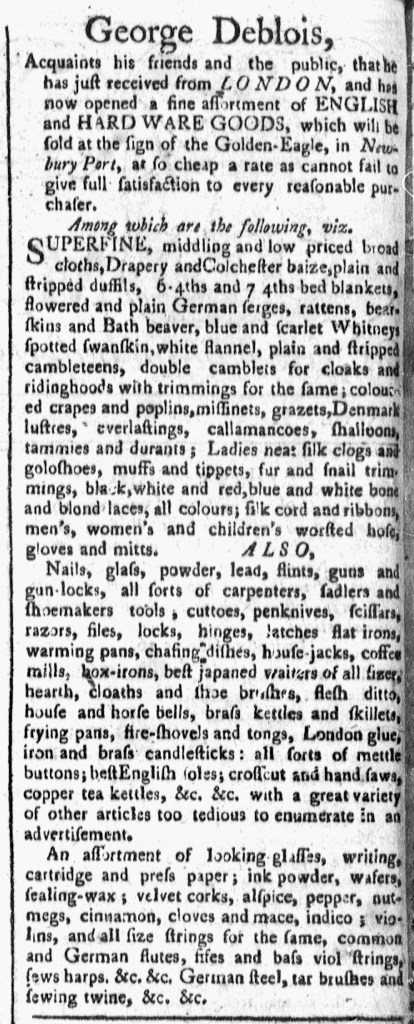
George Deblois recognized an opportunity to place his advertisements before as many prospective customers as possible.  The savvy merchant ran a shop “at the sign of the Golden-Eagle” in Newburyport, Massachusetts.  For several years, he placed advertisements in the Essex Gazette, published in nearby Salem and the New-Hampshire Gazette in Portsmouth.  When Isaiah Thomas and Henry-Walter Tinges announced their intention to establish a new newspaper in Newburyport, Deblois became one of the first advertisers in the Essex Journal.

In late November 1773, Thomas took to the pages of the newspaper he published in Boston, the Massachusetts Spy, to announce the impending publication of the first issue of the Essex Journal on December 4.  He advised that the “Number I” would be “distributed and given, GRATIS, to the Inhabitants” of both Massachusetts and New Hampshire.  In addition, he suggested that “THOSE who incline to ADVERTISE in said paper, in this or the neighbouring Towns, may find it GREATLY to their ADVANTAGE, especially the Merchants and Shopkeepers in BOSTON, as a very large Number will be printed off, and distributed throughout the Provinces of Massachusetts Bay and New-Hampshire.  [Gratis.]”

Deblois did not want any of those “Merchants and Shopkeepers in BOSTON” displacing him by capturing any of the market that he already managed to gain in the region the Essex Journal would serve.  In addition to maintaining his current clientele, he also wished to expand his customer base.  For both reasons, he heeded the call for advertisements, submitting a notice to include in the inaugural issue.  When Thomas and Tinges commenced weekly publication of the Essex Journal on December 29, Deblois ran the same advertisement.  It appeared once again on January 5, 1774, inviting consumers to acquire merchandise from among “a fine assortment of ENGLISH and HARDWARE GOODS … at so cheap a rate as cannot fail to give full satisfaction to every reasonable purchaser.”  Deblois listed dozens of items he stocked and promised “a great variety of other articles too tedious to enumerate in an advertisement.”  As access to print culture expanded with a new newspaper printed in the town where he kept shop, Deblois made certain that readers encountered his advertisements as they perused the Essex Journal.

Slavery Advertisements Published January 5, 1774

The Slavery Adverts 250 Project chronicles the role of newspaper advertising in perpetuating slavery in the era of the American Revolution. The project seeks to reveal the ubiquity of slavery in eighteenth-century life from New England to Georgia by republishing advertisements about enslaved people – for sale as individuals or in groups, wanted to purchase or for hire for short periods, runaways who liberated themselves, and those who were subsequently captured and confined in jails and workhouses – in daily digests on this site as well as in real time via the @SlaveAdverts250 Twitter feed, utilizing twenty-first-century media to stand in for the print media of the eighteenth century.

The project aims to provide modern audiences with a sense of just how often colonizers encountered these advertisements in their daily lives. Enslaved men, women, and children appeared in print somewhere in the colonies almost every single day. Those advertisements served as a constant backdrop for social, cultural, economic, and political life in colonial and revolutionary America. Colonizers who did not purport to own enslaved people were still confronted with slavery as well as invited to maintain the system by purchasing enslaved men, women, and children or assisting in the capture of so-called “runaways” who sought to free themselves from bondage. The frequency of these newspaper advertisements suggests just how embedded slavery was in colonial and revolutionary American culture in everyday interactions beyond the printed page.

These advertisements also testify to the experiences of enslaved men, women, and children, though readers must consider that those experiences have been remediated through descriptions offered by enslavers rather than enslaved people themselves. Often unnamed in the advertisements, enslaved men, women, and children were not invisible or unimportant in early America.

These advertisements appeared in colonial American newspapers 250 years ago today.

Pennsylvania Gazette (January 5, 1774).

**********

Pennsylvania Gazette (January 5, 1774).

January 4

What was advertised in a colonial American newspaper 250 years ago today?

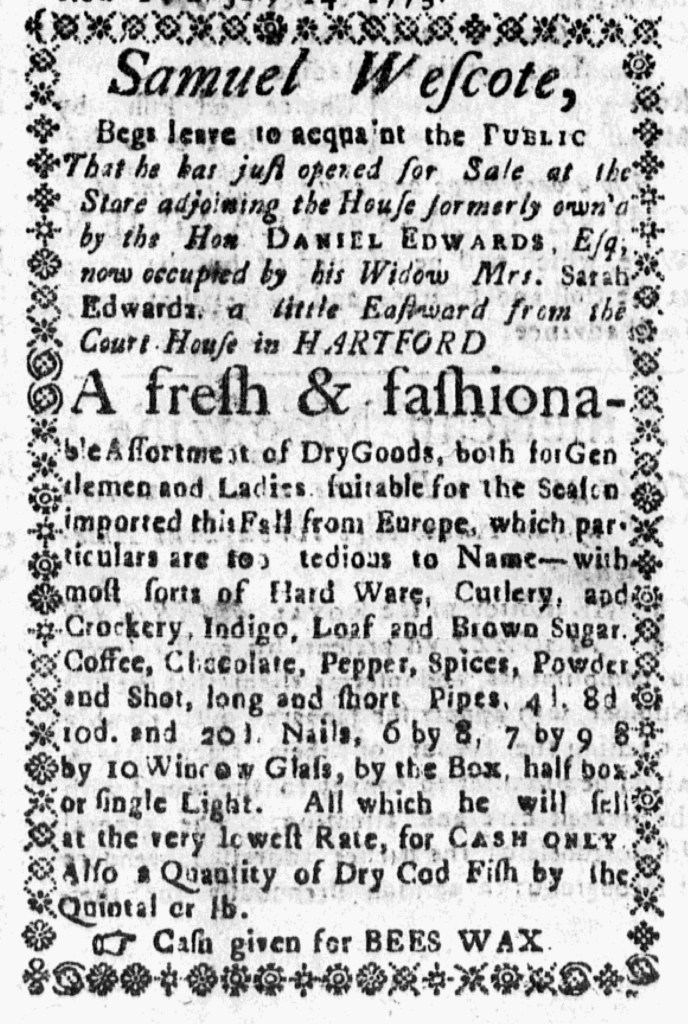
Connecticut Courant (January 4, 1774).

“Loaf and Brown Sugar, Coffee, Chocolate, Peeper, Spices.”

In the fall of 1773 and into the winter of 1774, Samuel Wescote ran advertisements in the Connecticut Courant to promote a “fresh & fashionable Assortment of Dry Goods, both for Gentlemen and Ladies.”  He gave directions to his store “a little Eastward from the Court-House in HARTFORD,” informed the public that he had recently imported his inventory from Europe, and insisted that he offered such a selection that the “particulars are too tedious to Name” in a newspaper notice.  Prospective customers needed to visit his store to see for themselves!  In addition to dry goods, he stocked “most sorts of Hard Ware, Cutlery, and Crockery” as well as sugar, coffee, and spices.  Wescote pledged to sell his wares “at the very lowest Rate,” but he did not extend credit.  “CASH ONLY,” he advised.

The contents of Wescote’s advertisement replicated what appeared in others that ran in the Connecticut Courant and newspapers throughout the colonies during the era of the American Revolution.  Its format, however, differed from most others.  A border comprised of a variety of printing ornaments surrounded the notice.  The compositor did not choose a single decoration but instead incorporated many in a seemingly random order.  Most other advertisements did not feature a border, though William Beadle of Wethersfield did opt for a border around his advertisement for a “good Assortment of GOODS suitable for the present Season” that ran in some of the same issues as Wescote’s advertisement.  Where did Beadle and Wescote get the idea to request borders for their advertisements?  Maybe they noticed the borders around Caleb Bull’s advertisements when they perused the Connecticut Courant … or perhaps all of those advertisers took inspiration from another newspaper that circulated in the colony, Rivington’s New-York Gazetteer, or the Connecticut, New-Jersey, Hudson’s-River, and Quebec Weekly Advertiser.  In the summer and fall of 1773, decorative borders became a signature feature of advertisements in that newspaper.  Rivington and others who labored in his printing office certainly did not invent that particular style, but they utilized to an extent previously unknown in colonial American newspapers.  As advertisements with borders increased in number and frequency in Rivington’s New-York Gazetteer they also became more common in many newspapers printed in the region served by that newspaper.  Printers, compositors, and advertisers in towns beyond New York seemed to take note of a format that became popular in Rivington’s New-York Gazetteer.

Slavery Advertisements Published January 4, 1774

The Slavery Adverts 250 Project chronicles the role of newspaper advertising in perpetuating slavery in the era of the American Revolution. The project seeks to reveal the ubiquity of slavery in eighteenth-century life from New England to Georgia by republishing advertisements about enslaved people – for sale as individuals or in groups, wanted to purchase or for hire for short periods, runaways who liberated themselves, and those who were subsequently captured and confined in jails and workhouses – in daily digests on this site as well as in real time via the @SlaveAdverts250 Twitter feed, utilizing twenty-first-century media to stand in for the print media of the eighteenth century.

The project aims to provide modern audiences with a sense of just how often colonizers encountered these advertisements in their daily lives. Enslaved men, women, and children appeared in print somewhere in the colonies almost every single day. Those advertisements served as a constant backdrop for social, cultural, economic, and political life in colonial and revolutionary America. Colonizers who did not purport to own enslaved people were still confronted with slavery as well as invited to maintain the system by purchasing enslaved men, women, and children or assisting in the capture of so-called “runaways” who sought to free themselves from bondage. The frequency of these newspaper advertisements suggests just how embedded slavery was in colonial and revolutionary American culture in everyday interactions beyond the printed page.

These advertisements also testify to the experiences of enslaved men, women, and children, though readers must consider that those experiences have been remediated through descriptions offered by enslavers rather than enslaved people themselves. Often unnamed in the advertisements, enslaved men, women, and children were not invisible or unimportant in early America.

These advertisements appeared in colonial American newspapers 250 years ago today.

Essex Gazette (January 4, 1774).

January 3

What was advertised in a colonial American newspaper 250 years ago today?

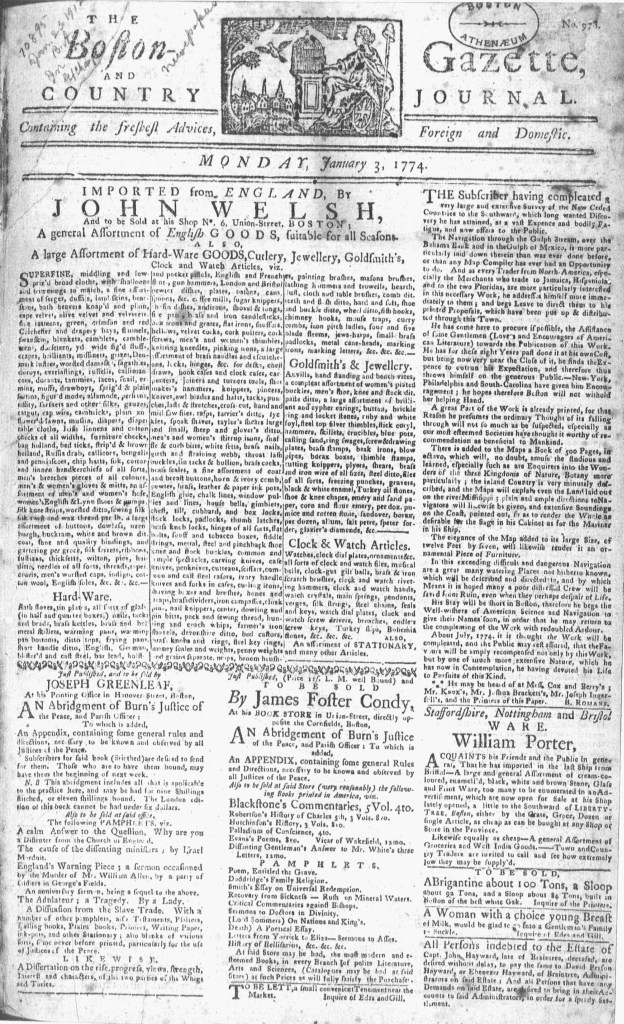
Boston-Gazette (January 3, 1774).

“A large Assortment of Hard-Ware GOODS, Cutlery, Jewellery, Goldsmith’s, Clock and Watch Articles.”

Readers almost certainly noticed John Welsh’s advertisement in the January 3, 1774, edition of the Boston-Gazette.  The shopkeeper announced that he imported and sold “A general Assortment of English GOODS, suitable for all Seasons” and “A large Assortment of Hard-Ware GOODS, Cutlery, Jewellery, Goldsmith’s, Clock and Watch Articles.”  To demonstrate the selection he offered to consumers, Welsh published an extensive list of his inventory.

The length of that list alone distinguished Welsh’s advertisement from others that ran in that issue of the newspaper.  More significantly, the format and placement made his notice notable.  Rather than extending in one column and continuing in the next, the advertisement spanned two of the regular columns, an unusual format in the Boston-Gazette or any other colonial newspaper.  Within the space occupied by the advertisement, the list of goods was divided into three columns with lines, but no space, separating them.  While that made the dense text more difficult to navigate, Welsh did provide some guidance with a series of headers.  The “English GOODS,” mostly textiles and accessories, that appeared first did not have a header, but “Hard-Ware,” “Goldsmith’s & Jewellery,” and “Clock & Watch Articles” each had headers that directed readers to items of interest.

The advertisement’s position on the page also enhanced its visibility.  It ran in the upper left corner on the first page, right below the masthead, making it the first item that readers saw when they perused the first issue of the Boston-Gazettepublished in 1774.  Even if readers who knew that the latest news often appeared on the second and third pages rather than the front page immediately flipped past the first page, they likely noticed Welsh’s advertisement as they skimmed to make sure they did not miss any news that might have appeared on the front page.  After all, the organization did vary from week to week depending on the amount of “intelligence” and advertisements submitted to the printing office.  Welsh’s advertisement dominated the first page, as it would have done on any page.  The unusual format underscored the wide selection of merchandise that he made available to customers.

Boston-Gazette (January 3, 1774).

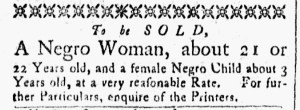
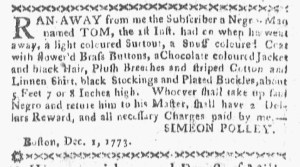
Slavery Advertisements Published January 3, 1774

The Slavery Adverts 250 Project chronicles the role of newspaper advertising in perpetuating slavery in the era of the American Revolution. The project seeks to reveal the ubiquity of slavery in eighteenth-century life from New England to Georgia by republishing advertisements about enslaved people – for sale as individuals or in groups, wanted to purchase or for hire for short periods, runaways who liberated themselves, and those who were subsequently captured and confined in jails and workhouses – in daily digests on this site as well as in real time via the @SlaveAdverts250 Twitter feed, utilizing twenty-first-century media to stand in for the print media of the eighteenth century.

The project aims to provide modern audiences with a sense of just how often colonizers encountered these advertisements in their daily lives. Enslaved men, women, and children appeared in print somewhere in the colonies almost every single day. Those advertisements served as a constant backdrop for social, cultural, economic, and political life in colonial and revolutionary America. Colonizers who did not purport to own enslaved people were still confronted with slavery as well as invited to maintain the system by purchasing enslaved men, women, and children or assisting in the capture of so-called “runaways” who sought to free themselves from bondage. The frequency of these newspaper advertisements suggests just how embedded slavery was in colonial and revolutionary American culture in everyday interactions beyond the printed page.

These advertisements also testify to the experiences of enslaved men, women, and children, though readers must consider that those experiences have been remediated through descriptions offered by enslavers rather than enslaved people themselves. Often unnamed in the advertisements, enslaved men, women, and children were not invisible or unimportant in early America.

These advertisements appeared in colonial American newspapers 250 years ago today.

Boston-Gazette (January 3, 1774).

**********

New-York Gazette and Weekly Mercury (January 3, 1774).

January 2

What was advertised in a colonial American newspaper 250 years ago this week?

Rivington’s New-York Gazetteer (December 30, 1773).

“NEW-YEAR’S PRESENTS.”

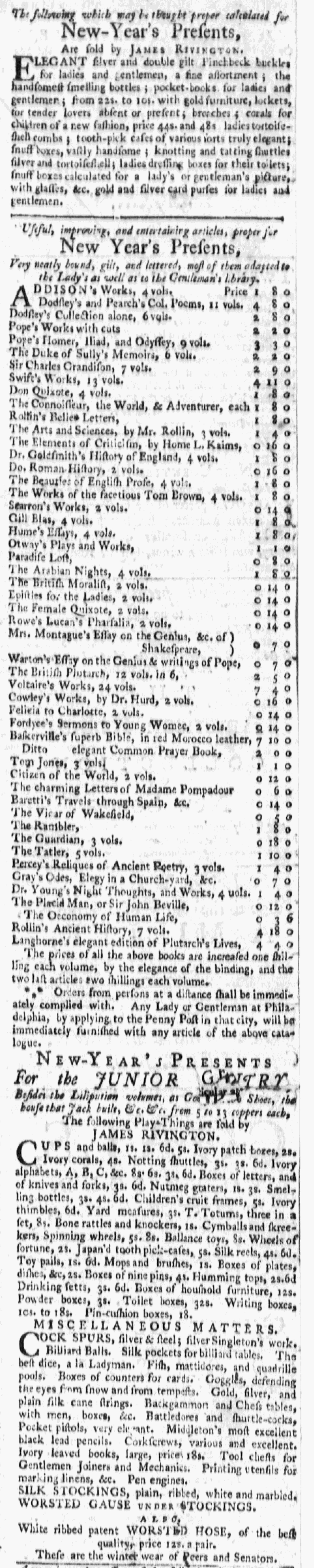
Rarely did retailers associate Christmas and consumption in newspaper advertisements they published in the 1760s and 1770s.  They were just as likely to identify the new year as a time to give presents, though relatively few adopted that strategy either.  James Rivington, a bookseller, stationer, and printer of Rivington’s New-York Gazetteer, was among those who suggested to consumers that they should purchase presents to commemorate the occasion.  His advertisements filled an entire column in the December 30, 1773, edition of his newspaper.

As the first day of the new year approached, Rivington advised that he stocked “[t]he following which may be thought proper calculated for New-Year’s Presents.”  He listed a variety of items, including “ELEGANT silver and double gilt Pinchbeck buckles for ladies and gentlemen, a fine assortment,” “snuff boxes, vastly handsome,” “ladies dressing boxes for their toilets,” and “pocket-books for ladies and gentlemen.”  Rivington made clear that both women and men could be recipients of these “New-Year’s Presents,” even though editorials and other commentary often depicted women as the perpetrators of conspicuous, frivolous, or unnecessary consumption.

Rivington also presented a catalog of books as “Useful, improving, and entertaining articles, proper for New Year’s Presents,” most of them suitable for recipients of either sex.  He described the books as “very neatly bound, gilt, and lettered, most of them adapted to the Lady’s as well as to the Gentleman’s Library.”  They included “Pope’s Works with cuts” (or illustrations), “Dr. Goldsmith’s History of England,” “Paradise Lost,” “Mrs. Montague’s Essay on the Genius, &c. of Shakespeare,” “The charming Letters of Madame Pompadour,” and “Gray’s Odes, Elegy in a Church-yard.”  Unlike most book catalogs published as newspaper advertisements, this one included the prices for each volume.  Those contemplating giving them as gifts could take into account their budget and their relationship to the recipient when considering their purchases.  Rivington also encouraged readers living beyond New York to give books as gifts for the new year, declaring that “Orders from persons at a distance shall be immediately complied with.”  Those in Philadelphia, he directed, could “immediately” acquire any of the books “by applying to the Penny Post in that city.”

In addition to gifts for adults, Rivington also marketed “NEW-YEAR’S PRESENTS For the JUNIOR GENTRY.”  He sold books for children, “Liliputian volumes,” as well as “Play-Things.”  The toys included “CUPS and balls,” “Ivory alphabets, A, B, C,” “Bones rattles and knockers,” “Humming tops,” and “Toy pails.”  Once again, he listed prices so prospective customers could assess how much they wished to spend on gifts.

Rivington concluded that advertisement with a list of “MISCELLEANOUS MATTERS” that he apparently did not consider as appropriate for giving as presents.  In a final advertisement in that column, he promoted a “new and corrected edition” of “Rivington’s Gentleman and Ladys Pocket Almanack.”  Although he did not suggest giving the almanac as a gift, the printer considered it “Necessary to every one, in and out of Business, and useful in every Colony upon the Continent.”  A couple of days before the new year was the perfect time to purchase an almanac and, according to Rivington, items that customers might not otherwise have purchased but would give as gifts.

January 1

What was advertised in a colonial American newspaper 250 years ago today?

Providence Gazette (January 1, 1774).

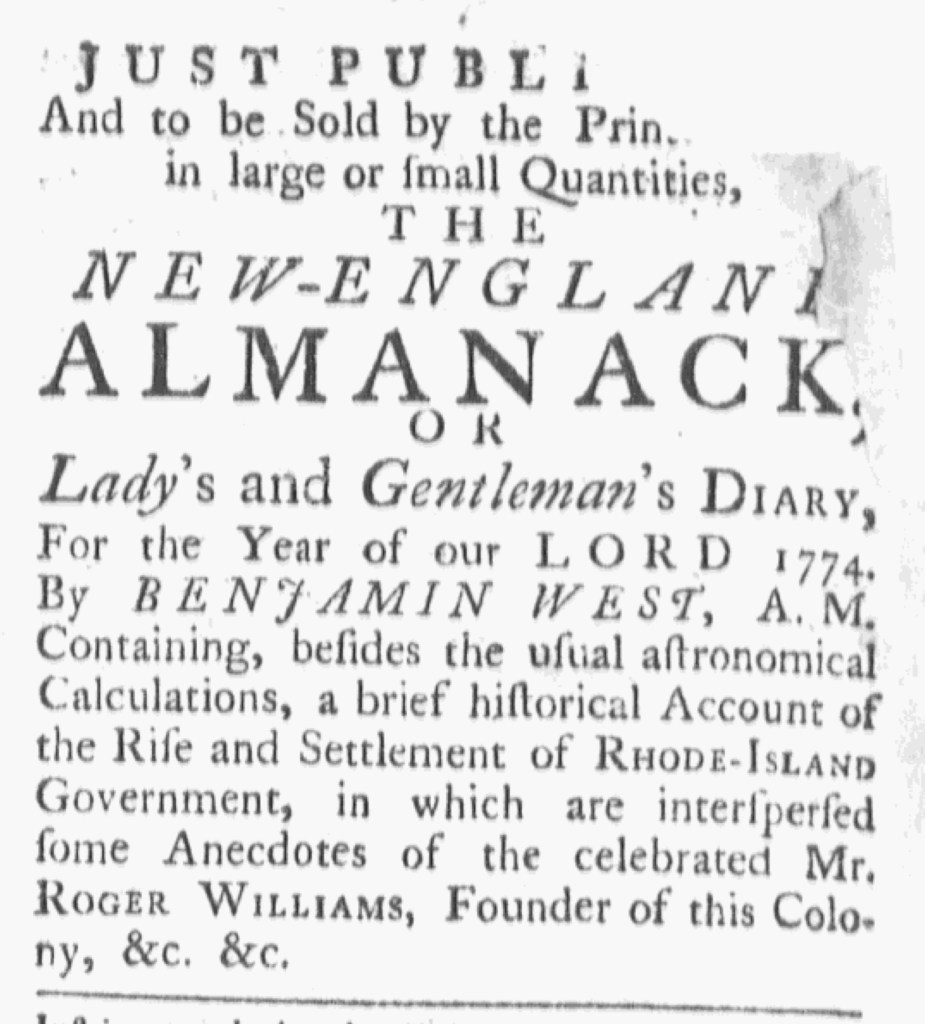
NEW-ENGLAND ALMANACK, OR Lady’s and Gentleman’s DIARY, For the Year of our LORD 1774.”

There may not have been a better day to buy an almanac … or to advertise the “NEW-ENGLAND ALMANACK, OR Lady’s and Gentleman’s DIARY, For the Year of our LORD 1774.”  On January 1, all of the astronomical Calculations in the almanac for the previous year became obsolete.  Colonizers who had not yet acquired almanacs for the new year could no longer delay if they wished to have access to current information.  In addition, some of the contents of that new almanac also became outdated with each passing day.  To take full advantage of the useful reference manual, readers needed to have it on the first day of the year.  Prospective buyers knew it.  John Carter, the printer of both the New-England Almanack and the Providence Gazette, knew it as well.  He placed an advertisement for it in the upper right corner of the final page of the January 1, 1774, edition of his newspaper.

It was part of an annual ritual of advertising almanacs in Providence and throughout the colonies.  On occasion, advertisements appeared as early as August or September, though those usually announced that the printer intended to publish a particular title.  Such advertisements alerted readers that their favorite titles would be available again, an effort to discourage them from purchasing others instead.  In October and November, more and more printers inserted notices stating that they took their almanacs to press and offered them for sale.  These advertisements increased in number, frequency, and length.  Multiple advertisements for almanacs sometimes appeared in a single issue, especially in newspapers published in the largest port cities.  Some of those advertisements featured extensive lists of the contents, seeking to entice buyers with more than the “usual astronomical Calculations.”  Carter opted for a streamlined version, but he did promote “a brief historical Account of the Rise and Settlement of RHODE-ISLAND Government, in which are interspersed some Anecdotes of the celebrated Mr. ROGER WILLIAMS, Founder of this Colony,” as additional items of interest that customers could read when they acquired the New-England Almanack.  The volume of advertising for almanacs continued in December, a last push before the new year, and into January, while the astronomical Calculations and schedules for courts, meetings, and other events remained relevant for the entire year.  Those contents became less relevant with each passing day, but many printers still had surplus copies that cut into any profits they made from publishing almanacs.  Advertisements continued to appear in January, February, and March, tapering off over time.  By the time spring arrived, most advertisements for almanacs disappeared from colonial newspapers.  Their presence, absence, and number became signs of the seasons among newspaper readers, corresponding to changes in the weather and the amount of sunlight in the day.