March 15

What was advertised in a colonial American newspaper 250 years ago today?
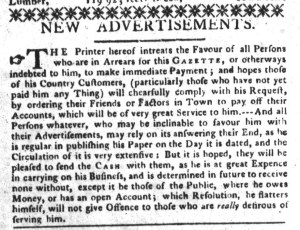
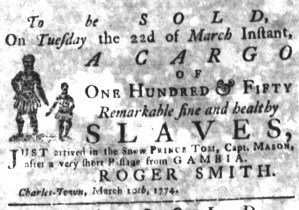
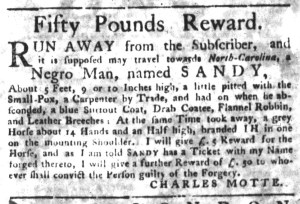
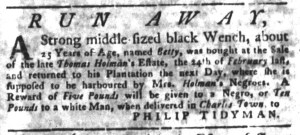
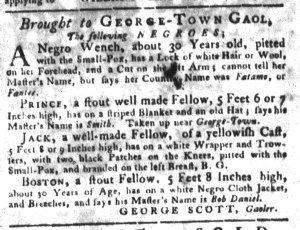
South-Carolina Gazette and Country Journal (March 15, 1774).

“All Persons whatever, who may be inclinable to favour him with their Advertisements, may rely on its answering their End.”

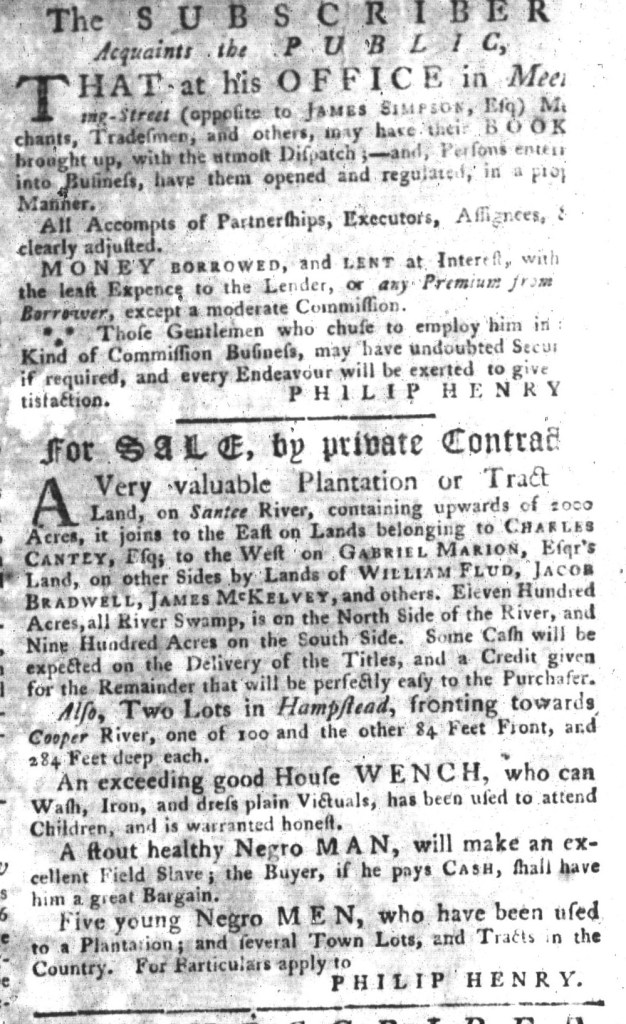
The “NEW ADVERTISEMENTS” in the March 15, 1774, edition of the South-Carolina Gazette and Country Journalbegan with a notice from the printer, Charles Crouch.  Like his counterparts throughout the colonies, Crouch occasionally issued a call for “all Persons who are in Arrear for this GAZETTE, or otherways indebted to him, to make immediate Payment.”  Recognizing that many of his subscribers lived outside Charleston, he requested that “his Country Customers … will cheerfully comply” by directing “their Friends or Factors in Town to pay off their Accounts.”  In particular, he pointedly suggested that “those who have not yet paid him any Thing” would tend to what they owed.  When they ran notices for similar purposes, some printers asserted that certain customers had not made payments for years, taking advantage of credit extended to them.

How did Crouch and other printers manage to stay in business under such circumstances.  Many, but not all, required advertisers to pay in advance, figuring that advertising generated enough revenue to offset shortfalls from subscriptions.  That was the case for Crouch and the South-Carolina Gazette and Country Journal.  He instructed advertisers “send the CASH” when they submitted copy to the printing office.  After all, “he is at great Expence in carrying on his Business.” Accordingly, Crouch was “determined in future to receive none without,” suggesting that perhaps he had accepted advertisements without “the CASH” in the past.  The printer made an exception for those he “owes Money, or has an open Account,” presumably counting new advertisements against his own debts.

In hopes of attracting new advertisers, Crouch commented on the effectiveness of inserting notices in his newspaper.  Advertisers could “rely on its answering their End” or serving their purpose, whether disseminating information or enticing customers or whatever other reason they had for advertising.  He competed against two other newspapers published in Charleston, the South-Carolina Gazette and the South-Carolina and American General Gazette.  Prospective advertisers should choose the South-Carolina Gazette and Country Journal, Crouch stated, because “the Circulation of it is very extensive.”  In other words, the newspaper reached many readers.  In addition, Crouch bragged that he was “regular in publishing his Paper on the Day it is dated,” taking a swipe at other competitors who sometimes delayed printing and distributing their weekly newspapers.  Advertisers could depend on their notices in the South-Carolina Gazette and Country Journal reaching readers in a timely manner.  At the same time, he tended to settling accounts with existing customers, Crouch sought additional customers who had reason to advertise.

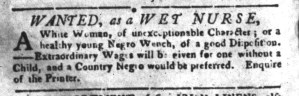
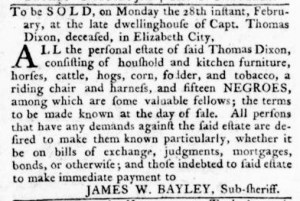
Slavery Advertisements Published March 15, 1774

GUEST CURATOR:  Jack Healy

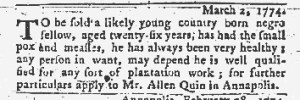
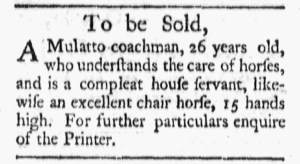
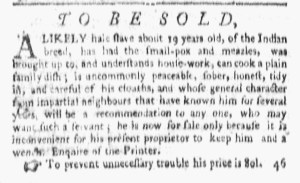
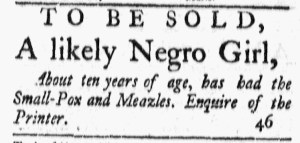
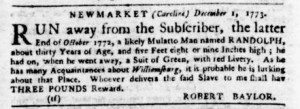
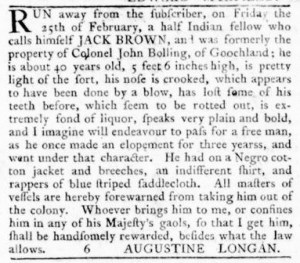
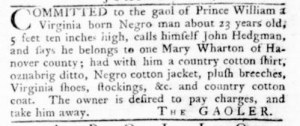
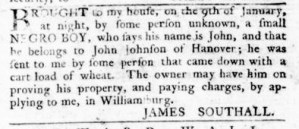
The Slavery Adverts 250 Project chronicles the role of newspaper advertising in perpetuating slavery in the era of the American Revolution. The project seeks to reveal the ubiquity of slavery in eighteenth-century life from New England to Georgia by republishing advertisements about enslaved people – for sale as individuals or in groups, wanted to purchase or for hire for short periods, runaways who liberated themselves, and those who were subsequently captured and confined in jails and workhouses – in daily digests on this site as well as in real time via the @SlaveAdverts250 Twitter feed, utilizing twenty-first-century media to stand in for the print media of the eighteenth century.

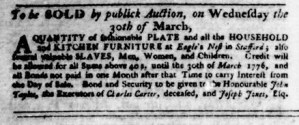
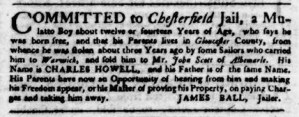
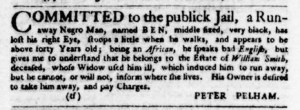
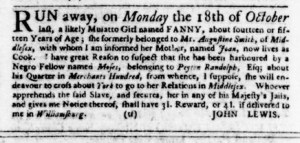
The project aims to provide modern audiences with a sense of just how often colonizers encountered these advertisements in their daily lives. Enslaved men, women, and children appeared in print somewhere in the colonies almost every single day. Those advertisements served as a constant backdrop for social, cultural, economic, and political life in colonial and revolutionary America. Colonizers who did not purport to own enslaved people were still confronted with slavery as well as invited to maintain the system by purchasing enslaved men, women, and children or assisting in the capture of so-called “runaways” who sought to free themselves from bondage. The frequency of these newspaper advertisements suggests just how embedded slavery was in colonial and revolutionary American culture in everyday interactions beyond the printed page.
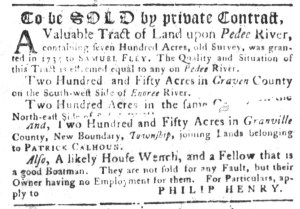
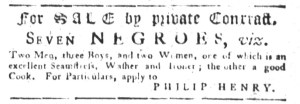
These advertisements also testify to the experiences of enslaved men, women, and children, though readers must consider that those experiences have been remediated through descriptions offered by enslavers rather than enslaved people themselves. Often unnamed in the advertisements, enslaved men, women, and children were not invisible or unimportant in early America.

These advertisements appeared in colonial American newspapers 250 years ago today.

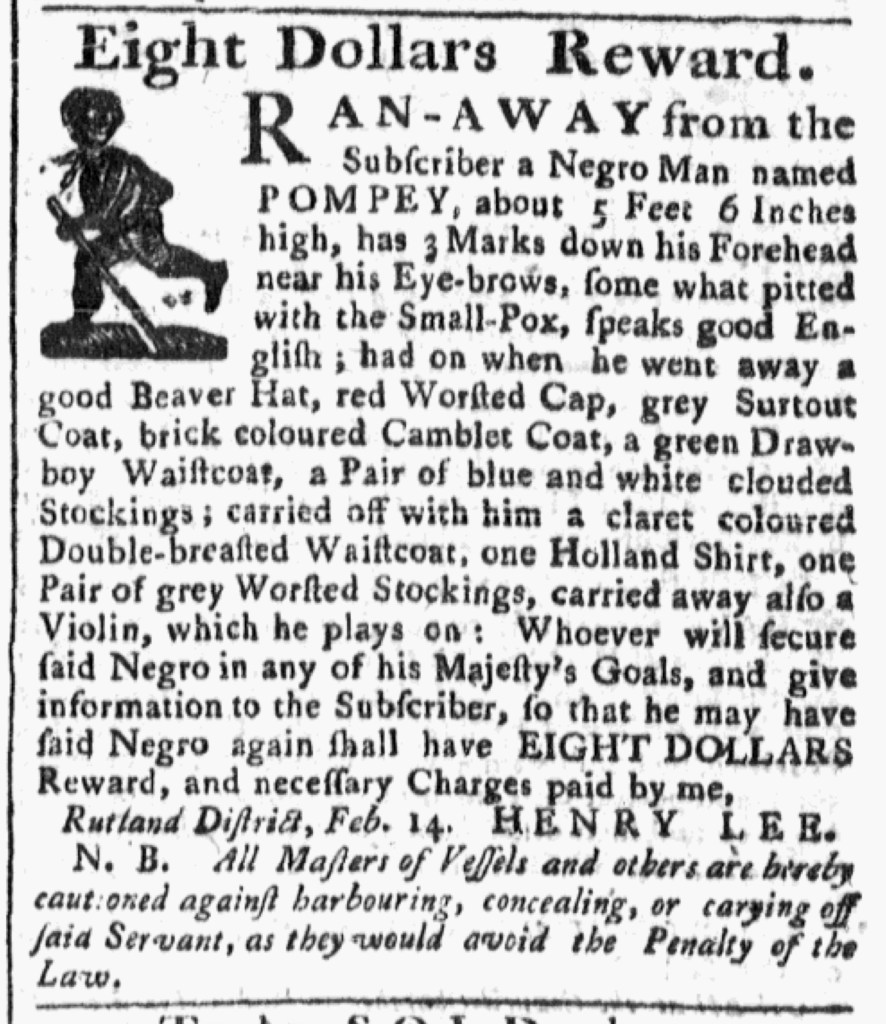
Essex Gazette (March 15, 1774).

**********

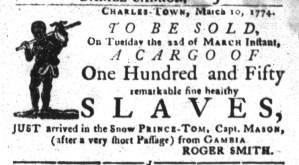
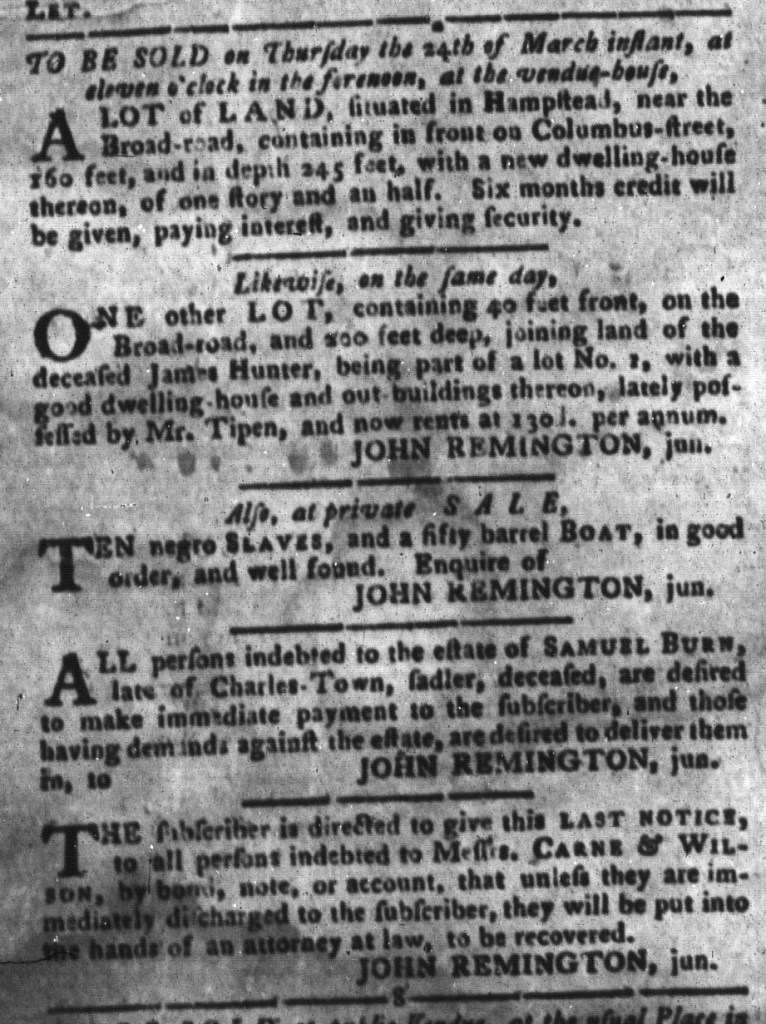
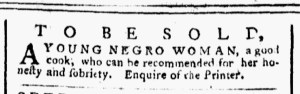
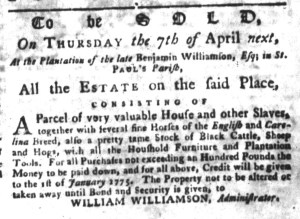
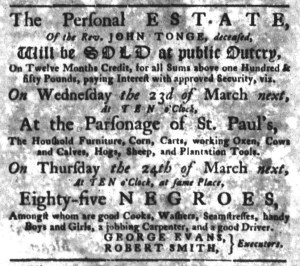
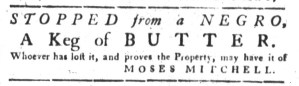
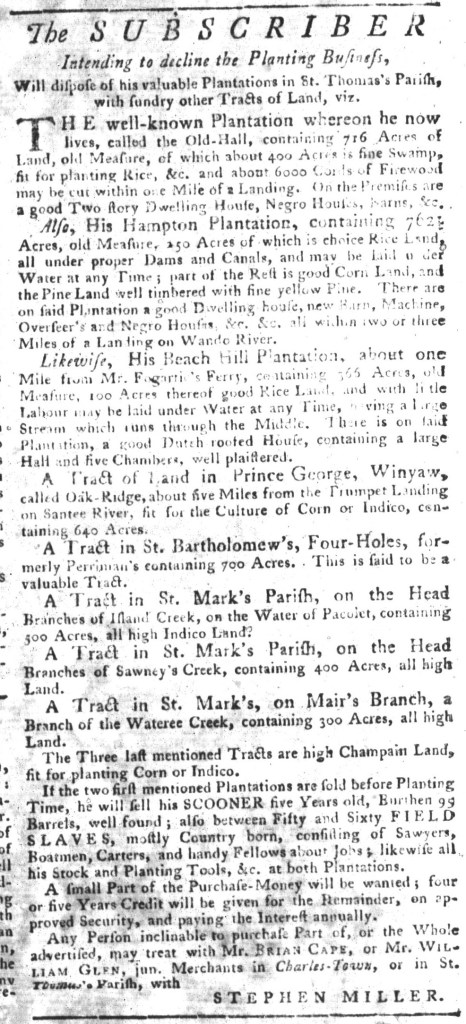
South-Carolina Gazette and Country Journal (March 15, 1774).

**********

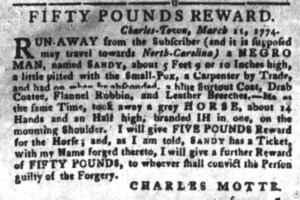
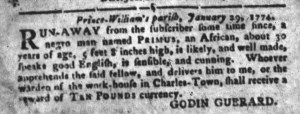
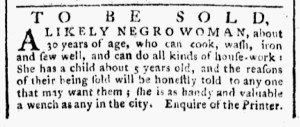
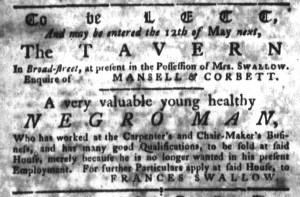
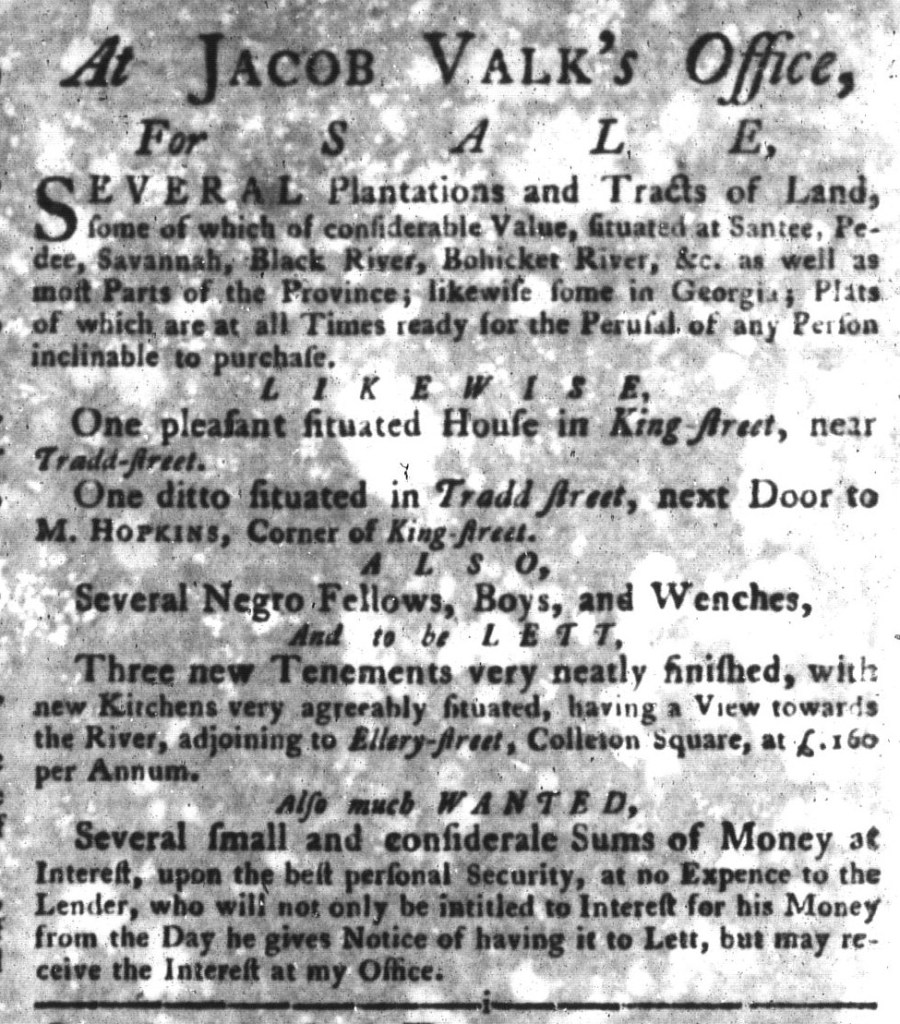
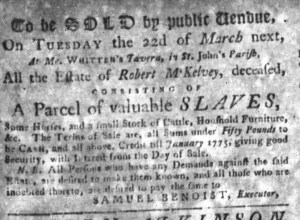
South-Carolina Gazette and Country Journal (March 15, 1774).

**********

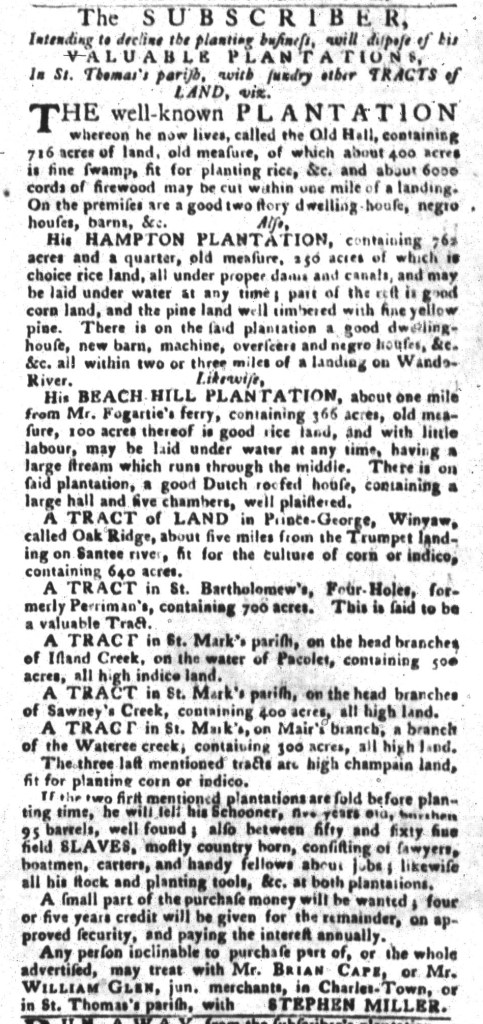
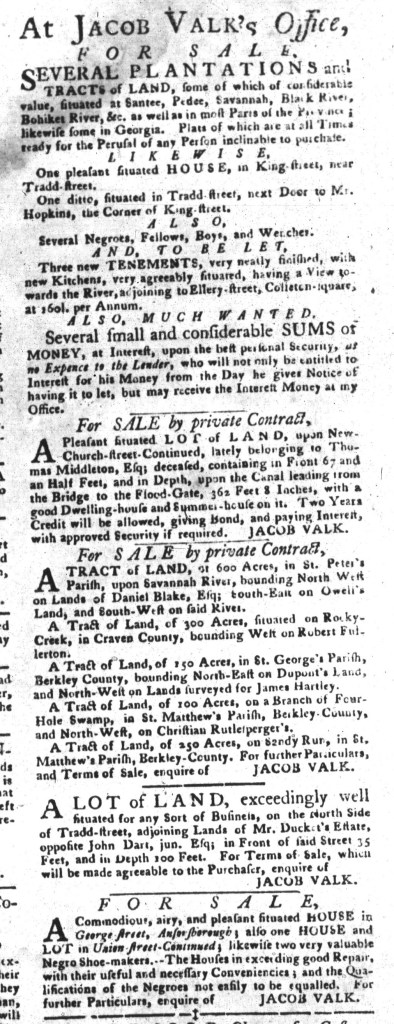
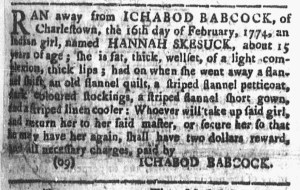
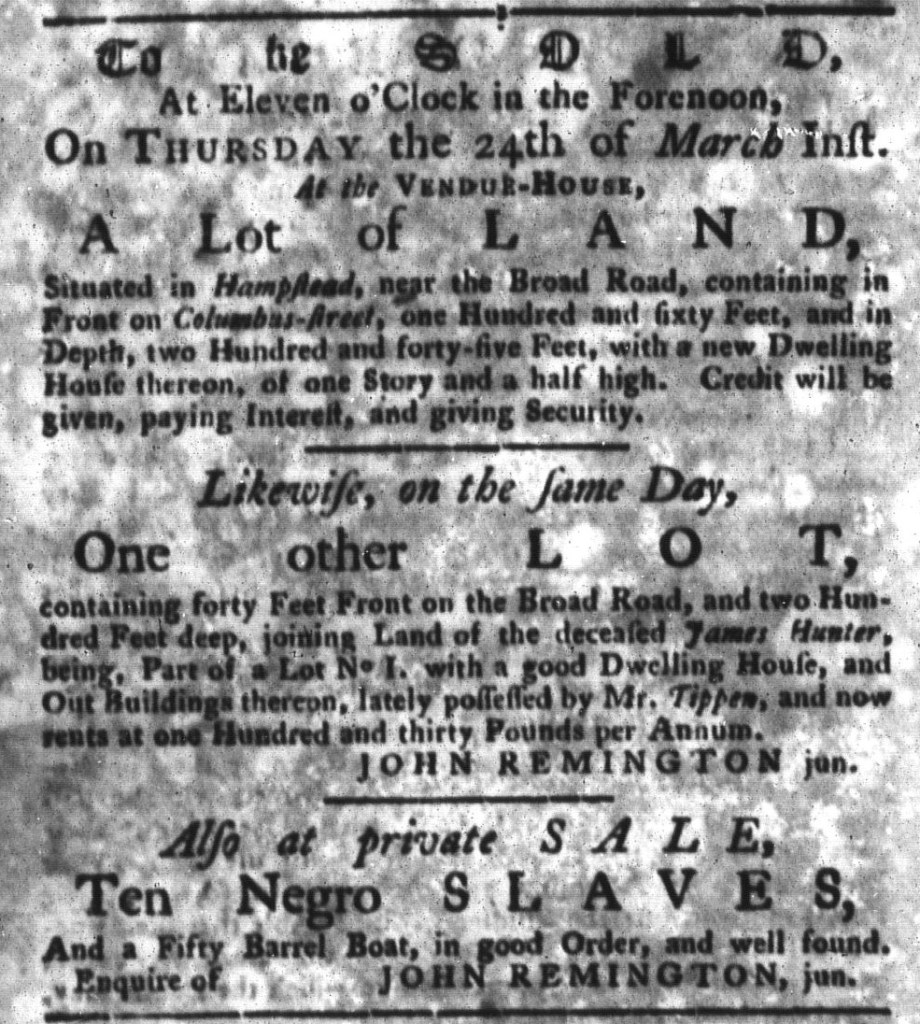
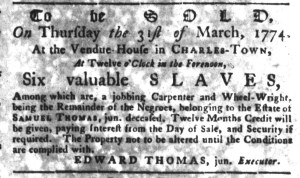
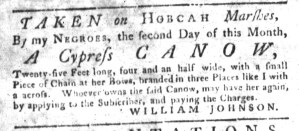
South-Carolina Gazette and Country Journal (March 15, 1774).

**********

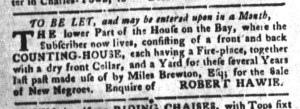
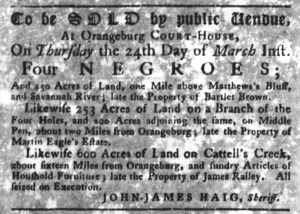
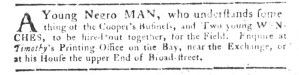
South-Carolina Gazette and Country Journal (March 15, 1774).

**********

South-Carolina Gazette and Country Journal (March 15, 1774).

**********

South-Carolina Gazette and Country Journal (March 15, 1774).

**********

South-Carolina Gazette and Country Journal (March 15, 1774).

**********

South-Carolina Gazette and Country Journal (March 15, 1774).

**********

South-Carolina Gazette and Country Journal (March 15, 1774).

**********

South-Carolina Gazette and Country Journal (March 15, 1774).

**********

South-Carolina Gazette and Country Journal (March 15, 1774).

March 14

What was advertised in a colonial American newspaper 250 years ago today?

New-York Gazette and Weekly Mercury (March 14, 1774).

“ANNIVERSARY of the REPEAL of the STAMP-ACT … will be celebrated.”

Many colonizers commemorated events associated with the American Revolution even before the Revolutionary War.  During the years of the imperial crisis, residents of Boston staged annual commemorations honoring those killed in the Boston Massacre and residents of New York held annual dinners to mark the anniversary of the repeal of the Stamp Act. To mark the eighth anniversary of the latter, colonizers in New York had choices about which celebration to attend in 1774.  Advertisements for two of those events appeared in the March 14 edition of the New-York Gazette and Weekly Mercury.

For one, “18th of MARCH” served as the headline.  Many readers certainly recognized that date without having to peruse the rest of the advertisement.  For those who did not, the notice provided a reminder of its significance: “ON Friday next … at the house of Mr. DE LA MONTAGNIE, will be celebrated the ANNIVERSARY OF THE REPEAL OF THE STAMP-ACT, by those gentlemen, and their friends, who associated there last year.”  De la Montagnie hosted a celebration each year, promoting it in the public prints.  In 1774, he served dinner three hours earlier than the previous year.  Given recent developments, including the destruction of tea in Boston, perhaps he determined that his guests needed more time to commemorate the repeal of the Stamp Act and air their grievances about new abuses perpetrated by Parliament.

New-York Gazette and Weekly Mercury (March 14, 1774).

The other advertisement also deployed the date as the headline: “FRIDAY next, The 18th of MARCH.”  It also clarified that was “the ANNIVERSARY of the REPEAL of the STAMP-ACT.”  In this instance, the event “will be celebrated at PROTESTANT-HALL” and “all the SONS of LIBERTY are heartily invited.”  While the two celebrations competed for guests, they worked in concert in cultivating a culture of commemoration among colonizers in New York.  Many years after those events, John Adams famously asked in a letter to Thomas Jefferson, “What do WE mean by the Revolution?”  Answering his own question, Adams asserted, “The Revolution was in the Minds of the People, and this was effected, from 1760 to 1775.”  That occurred, in part, through the annual commemorations of significant events and promoting them in the public prints.

Slavery Advertisements Published March 14, 1774

GUEST CURATOR:  Jack Healy

The Slavery Adverts 250 Project chronicles the role of newspaper advertising in perpetuating slavery in the era of the American Revolution. The project seeks to reveal the ubiquity of slavery in eighteenth-century life from New England to Georgia by republishing advertisements about enslaved people – for sale as individuals or in groups, wanted to purchase or for hire for short periods, runaways who liberated themselves, and those who were subsequently captured and confined in jails and workhouses – in daily digests on this site as well as in real time via the @SlaveAdverts250 Twitter feed, utilizing twenty-first-century media to stand in for the print media of the eighteenth century.

The project aims to provide modern audiences with a sense of just how often colonizers encountered these advertisements in their daily lives. Enslaved men, women, and children appeared in print somewhere in the colonies almost every single day. Those advertisements served as a constant backdrop for social, cultural, economic, and political life in colonial and revolutionary America. Colonizers who did not purport to own enslaved people were still confronted with slavery as well as invited to maintain the system by purchasing enslaved men, women, and children or assisting in the capture of so-called “runaways” who sought to free themselves from bondage. The frequency of these newspaper advertisements suggests just how embedded slavery was in colonial and revolutionary American culture in everyday interactions beyond the printed page.

These advertisements also testify to the experiences of enslaved men, women, and children, though readers must consider that those experiences have been remediated through descriptions offered by enslavers rather than enslaved people themselves. Often unnamed in the advertisements, enslaved men, women, and children were not invisible or unimportant in early America.

These advertisements appeared in colonial American newspapers 250 years ago today.

Boston-Gazette (March 14, 1774).

**********

Dunlap’s Pennsylvania Packet (March 14, 1774).

**********

Dunlap’s Pennsylvania Packet (March 14, 1774).

**********

Massachusetts Gazette and Boston Post-Boy (March 14, 1774).

**********

Newport Mercury (March 14, 1774).

**********

New-York Gazette and Weekly Mercury (March 14, 1774).

**********

New-York Gazette and Weekly Mercury (March 14, 1774).

**********

Supplement to the New-York Gazette and Weekly Mercury (March 14, 1774).

**********

Supplement to the New-York Gazette and Weekly Mercury (March 14, 1774).

**********

Supplement to the New-York Gazette and Weekly Mercury (March 14, 1774).

**********

South-Carolina Gazette (March 14, 1774).

**********

South-Carolina Gazette (March 14, 1774).

**********

South-Carolina Gazette (March 14, 1774).

**********

South-Carolina Gazette (March 14, 1774).

**********

South-Carolina Gazette (March 14, 1774).

**********

South-Carolina Gazette (March 14, 1774).

**********

South-Carolina Gazette (March 14, 1774).

**********

South-Carolina Gazette (March 14, 1774).

**********

South-Carolina Gazette (March 14, 1774).

**********

South-Carolina Gazette (March 14, 1774).

**********

South-Carolina Gazette (March 14, 1774).

**********

Supplement to the South-Carolina Gazette (March 14, 1774).

**********

Supplement to the South-Carolina Gazette (March 14, 1774).

**********

Supplement to the South-Carolina Gazette (March 14, 1774).

**********

Supplement to the South-Carolina Gazette (March 14, 1774).

**********

Supplement to the South-Carolina Gazette (March 14, 1774).

**********

Supplement to the South-Carolina Gazette (March 14, 1774).

**********

Supplement to the South-Carolina Gazette (March 14, 1774).

**********

Supplement to the South-Carolina Gazette (March 14, 1774).

**********

Supplement to the South-Carolina Gazette (March 14, 1774).

March 13

What was advertised in a colonial American newspaper 250 years ago this week?

Rivington’s News-York Gazetteer (March 10, 1774).

“He has not yet obtained a certificate from the Queen’s stay-maker in London.”

Peter Hulick, a “STAY-MAKER, IN HANOVER-SQUARE,” took to the pages of Rivington’s New-York Gazetteer to advise “ladies in this city and the country around it” that he made all kinds of stays.  He acknowledged that he “has not yet obtained a certificate from the Queen’s stay-maker in London,” but he likely intended that simply mentioning the possibility planted the idea that he qualified for that honor.  Regardless of such recognition, he “flatters himself fully capable of satisfying any ladies who shall be pleased to favour him with their commands.”  To that end, he pledged “to give the best of goods and work, with integrity, gratitude and dispatch.”  The women of New York could choose from among many staymakers, including John Burchett “at the Sign of the Crown and Stays” (who had “obtained a certificate from the Queen’s Stay-Maker in London”), Thomas Hartley, John McQueen, and Richard Norris.  Hulick made and sold stays “after the newest, neatest, and best fashion.”  Even without any certificates, “many reputable ladies” in New York and other towns could testify to his skill.

The staymaker also offered stays for “children and growing Misses,” noting that his stays would “give and preserve a shape truly perfect, not dropping or falling in.”  He joined some of his competitors in encouraging women and girls to feel self-conscious about their bodies, believing that would incite demand for his services.  Norris, for instance, addressed “Ladies uneasy in their shapes” in his advertisements, prompting women to experience uneasiness after perusing his notice even if they previously felt comfortable about their appearance.  Like Hulick, Norris placed special emphasis on “young ladies and growing misses,” pushing them to feel alienated by their developing bodies in hopes that they would enlist his aid in achieving the proper form from “their hips [to] shoulders.”  Hulick, Norris, and other staymakers sometimes cultivated feelings of insecurity and inadequacy among prospective clients, marketing their services by offering to alleviate those concerns.  Promising the “newest, neatest, and best fashion” did not by itself sell their stays.

March 12

What was advertised in a colonial American newspaper 250 years ago today?

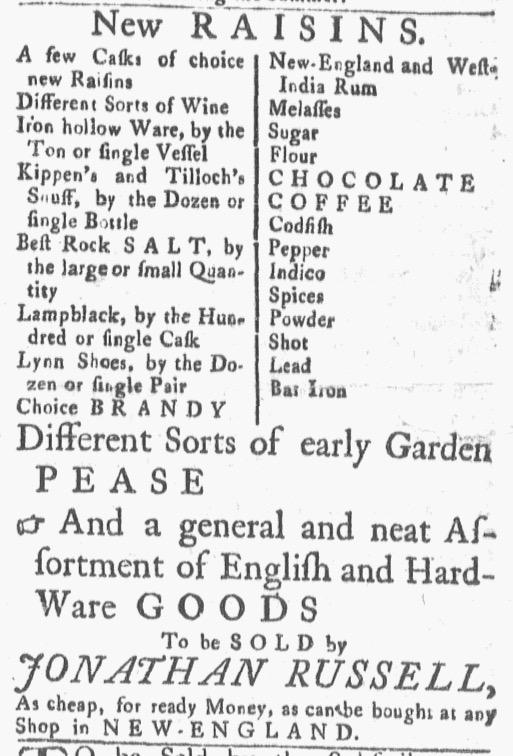
Providence Gazette (March 12, 1774).

“As cheap … as can be bought at any Shop in NEW-ENGLAND.”

Jonathan Russell offered a variety of goods to prospective customers in his advertisement in the March 12, 1774, edition of the Providence Gazette.  The headline promised “New RAISINS.”  A list of other items appeared below the headline, followed by a note about “Different Sorts of early Garden PEASE” and another about a “general and neat Assortment of English and Hard-Ware GOODS.”  Both ran in the same size font as the headline, suggesting that Russell may have instructed the compositor to place greater emphasis on that portion of his inventory.  Although he did not enumerate the “English and Hard-Ware GOODS,” he underscored the choices available to consumers when he asserted that he stocked a “general and neat Assortment.”

Some of the items in the list of goods also attracted attention because they appeared in capital letters.  “Best Rock SALT,” “Choice BRANDY,” “CHOCOLATE,” and “COFFEE” stood out among the “Kippen’s and Tilloch’s Snuff, by the Dozen or single Bottle,” “Lampblack, by the Hundred or single Cask,” “Lynn Shoes, by the Dozen or single Pair,” flour, codfish, and other commodities.  Notably, Russell peddled “CHOCOLATE” and “COFFEE,” but did not mention tea at all. Capitalizing “CHOCOLATE” and “COFFEE” called attention to the fact that tea was absent from his inventory as colonizers continued to debate the politics of consuming that beverage just a few months after the Boston Tea Party.

Russell concluded his advertisement with an appeal to price, claiming that customers could purchase his wares “As cheap … as can be bought at any Shop in NEW-ENGLAND.”  He did not place himself in competition solely with James Green, “HILL’s ready Money Variety Store,” and other merchants and shopkeepers in Providence.  Instead, he declared that his low prices matched those in Newport, Portsmouth, and Boston.  Prospective customers did not need to visit other shops in Providence or send away to merchants and shopkeepers in other towns to get better deals.  Although not as extensive as other advertisements in the same issue of the Providence Gazette, Russell’s notice incorporated consumer choice and competitive prices and even seemed to offer political commentary for those who read carefully.

March 11

What was advertised in a colonial American newspaper 250 years ago today?

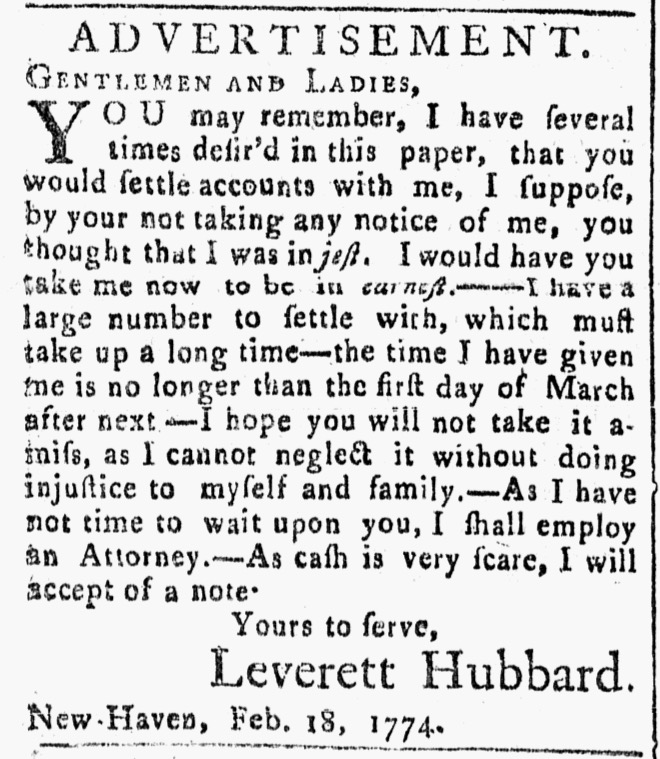
Connecticut Journal (March 11, 1774).

“You thought that I was in jest.  I would have you take me now to be in earnest.”

Leverett Hubbard was not amused.  He made his displeasure known in an advertisement that first appeared in the Connecticut Journal on February 18, 1774, and continued for several weeks.  Perhaps he grew even more frustrated each time that it appeared and those he addressed continued to ignore his call for them to settle accounts.

Hubbard used “ADVERTISEMENT” as a headline for his notice, an unusual opening line.  In this instance, he likely deployed the word according to one of its earliest meanings, one largely obsolete as use of “advertisement” has evolved.  The Oxford English Dictionary gives this definition: “the action or an act of calling the attention of someone; (an) admonition, warning, instruction.”  In a few sentences, Hubbard delivered an admonition, issued a warning, and gave instructions.

“YOU may remember,” he confided to the “GENTLEMEN AND LADIES” he addressed, “I have several times desir’d in this paper, that you would settle accounts with me.”  Such notices regularly appeared in newspapers throughout the colonies, but Hubbard composed lively copy for this “ADVERTISEMENT.”  Sarcastically, he opined, “I suppose by your not taking any of me, you thought that I was in jest.  I would have you take me now to be in earnest.”  Following that admonition, Hubbard gave instructions to settle accounts by “the first day of March.”  He concluded with a warning to his “large number [of colonizers] to settle with,” declaring that since he did not have “time to wait upon you, I shall employ an Attorney.”  Others who placed similar notices sometimes resort to that threat.

Hubbard departed from the formulaic language reiterated from one advertisement to another, perhaps hoping that a more emphatic approach, demonstrating that made his appeal “in earnest” rather than “in jest,” would convince those with open accounts who had ignored his previous notices that it was indeed in their best interests to heed this advertisement with its admonition, instructions, and warning.

Slavery Advertisements Published March 11, 1774

GUEST CURATOR:  Jack Healy

The Slavery Adverts 250 Project chronicles the role of newspaper advertising in perpetuating slavery in the era of the American Revolution. The project seeks to reveal the ubiquity of slavery in eighteenth-century life from New England to Georgia by republishing advertisements about enslaved people – for sale as individuals or in groups, wanted to purchase or for hire for short periods, runaways who liberated themselves, and those who were subsequently captured and confined in jails and workhouses – in daily digests on this site as well as in real time via the @SlaveAdverts250 Twitter feed, utilizing twenty-first-century media to stand in for the print media of the eighteenth century.

The project aims to provide modern audiences with a sense of just how often colonizers encountered these advertisements in their daily lives. Enslaved men, women, and children appeared in print somewhere in the colonies almost every single day. Those advertisements served as a constant backdrop for social, cultural, economic, and political life in colonial and revolutionary America. Colonizers who did not purport to own enslaved people were still confronted with slavery as well as invited to maintain the system by purchasing enslaved men, women, and children or assisting in the capture of so-called “runaways” who sought to free themselves from bondage. The frequency of these newspaper advertisements suggests just how embedded slavery was in colonial and revolutionary American culture in everyday interactions beyond the printed page.

These advertisements also testify to the experiences of enslaved men, women, and children, though readers must consider that those experiences have been remediated through descriptions offered by enslavers rather than enslaved people themselves. Often unnamed in the advertisements, enslaved men, women, and children were not invisible or unimportant in early America.

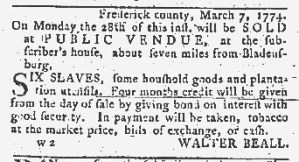
These advertisements appeared in colonial American newspapers 250 years ago today.

New-Hampshire Gazette (March 11, 1774).

March 10

What was advertised in a colonial American newspaper 250 years ago today?

Massachusetts Spy (March 10, 1774).

“We neither jointly nor separately had any share, interest or property, directly or indirectly in any part of the Tea that came from London in said vessel.”

Thomas Walley, Peter Boyer, and William Thompson needed to do some damage control and salvage their reputations in the wake the second Boston Tea Party.  That trio owned the Fortune, a brig that recently arrived from London. Among its cargo, the ship carried twenty-eight chests of tea “destined for some independent merchants,” according to the Massachusetts Historical Society’s overview of events.  The brig arrived in port on March 6, 1774.  J.L. Bell explains that Walley, Boyer, and Thompson worked with those merchants to request that the tea be returned, but customs officers refused.  Bostonians did not spend weeks debating what to do like they had a few months earlier.

A news item in the March 10, 1774, edition of the Massachusetts Spy reported that “His Majesty Oknookortunkogog King of the Narragansett tribe of Indians, on receiving information of the arrival of another cargo of the cursed weed Tea, immediately summoned his Council.”  Colonizers once again played Indian in their acts of resistance against imperial authority.  The imaginary leader of the Narragansetts “did advise and consent to the immediate destruction” of the tea, “after resolving that the IMPORTATION of this Herb, by ANY persons whatever, was attended with pernicious and dangerous consequences to the lives and properties of all his subjects throughout America.”  The king and council dispatched “the seizor and destroyer-general, and their deputies … to the place where this noxious herb was.”  They made their way to the Fortune on the evening of March 7, where they “emptied every chest … and effectually destroyed the whole” before they “returned to Narrangasett to make report of their doings to his Majesty.”  The Sons of Liberty and their allies maintained the ruse deployed the previous December.

Walley, Boyer, and Thompson’s advertisement appeared immediately below that description of the destruction of another cargo of tea.  They opened by rehearsing the story of “a certain WILLAIM BOWES, Brazier, on Dock-square” who “industriously propagated … a false and scandalous report, that the owners of the brig … have imported a quantity of Tea in that vessel upon their own account.”  Walley, Boyer, and Thompson suspected that Bowes might have even “invented” the story himself rather than repeating gossip he heard elsewhere.  The merchants did not trust his motives at all, claiming that Bowes “impudently asserted” that he knew all about the tea they supposedly imported from London and told the story “with a malignant design … to injure their reputation, and expose them to public resentment.”  As a result, they found it necessary to run an advertisement “in vindication of themselves from the vile and groundless aspersion of that impertinent medler in other men’s matters.”  Although they had tried to defuse the situation by assisting merchants who shipped cargo on their vessel in receiving permission to return the tea to London, they had not been aware in advance that the Fortune carried tea.  They wished to make that clear.

To that end they published a “deposition” which explicitly stated, “WE the subscribers, owners of the brig Fortune, do solemnly declare that we neither jointly nor separately had any share, interest or property, directly or indirectly in any part of the Tea that came from London in said vessel.”  Just as Jeremiah Cronin had done when facing allegations that he acted against the interests of the patriots, Walley, Boyer, and Thompson enlisted the aid of a justice of the peace to lend credibility to their explanation of what occurred.  Edmund Quincy asserted that the merchants “personally appeared and made oath to the truth of the above declaration.”  As was often the case in early American newspapers, the section devoted to news did not contain all the information about current events.  Instead, readers garnered valuable information from an advertisement as well.

Slavery Advertisements Published March 10, 1774

GUEST CURATOR:  Jack Healy

The Slavery Adverts 250 Project chronicles the role of newspaper advertising in perpetuating slavery in the era of the American Revolution. The project seeks to reveal the ubiquity of slavery in eighteenth-century life from New England to Georgia by republishing advertisements about enslaved people – for sale as individuals or in groups, wanted to purchase or for hire for short periods, runaways who liberated themselves, and those who were subsequently captured and confined in jails and workhouses – in daily digests on this site as well as in real time via the @SlaveAdverts250 Twitter feed, utilizing twenty-first-century media to stand in for the print media of the eighteenth century.

The project aims to provide modern audiences with a sense of just how often colonizers encountered these advertisements in their daily lives. Enslaved men, women, and children appeared in print somewhere in the colonies almost every single day. Those advertisements served as a constant backdrop for social, cultural, economic, and political life in colonial and revolutionary America. Colonizers who did not purport to own enslaved people were still confronted with slavery as well as invited to maintain the system by purchasing enslaved men, women, and children or assisting in the capture of so-called “runaways” who sought to free themselves from bondage. The frequency of these newspaper advertisements suggests just how embedded slavery was in colonial and revolutionary American culture in everyday interactions beyond the printed page.

These advertisements also testify to the experiences of enslaved men, women, and children, though readers must consider that those experiences have been remediated through descriptions offered by enslavers rather than enslaved people themselves. Often unnamed in the advertisements, enslaved men, women, and children were not invisible or unimportant in early America.

These advertisements appeared in colonial American newspapers 250 years ago today.

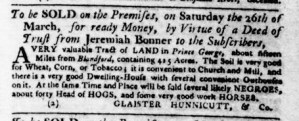
Maryland Gazette (March 10, 1774).

**********

Maryland Gazette (March 10, 1774).

**********

Maryland Gazette (March 10, 1774).

**********

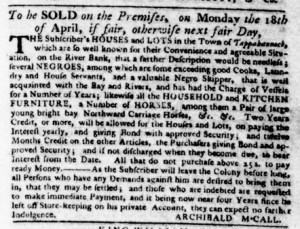
Rivington’s New-York Gazetteer (March 10, 1774).

**********

Rivington’s New-York Gazetteer (March 10, 1774).

**********

Rivington’s New-York Gazetteer (March 10, 1774).

**********

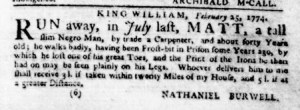
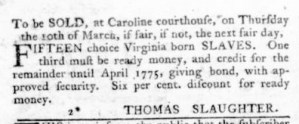
Virginia Gazette [Purdie and Dixon] (March 10, 1774).

**********

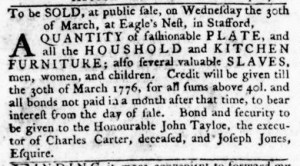
Virginia Gazette [Purdie and Dixon] (March 10, 1774).

**********

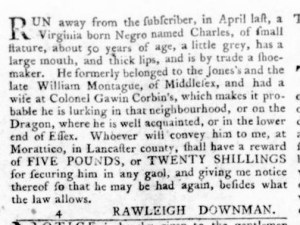
Virginia Gazette [Purdie and Dixon] (March 10, 1774).

**********

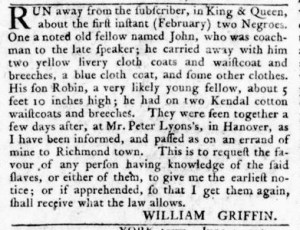
Virginia Gazette [Purdie and Dixon] (March 10, 1774).

**********

Virginia Gazette [Purdie and Dixon] (March 10, 1774).

**********

Virginia Gazette [Purdie and Dixon] (March 10, 1774).

**********

Virginia Gazette [Purdie and Dixon] (March 10, 1774).

**********

Virginia Gazette [Purdie and Dixon] (March 10, 1774).

**********

Virginia Gazette [Purdie and Dixon] (March 10, 1774).

**********

Virginia Gazette [Purdie and Dixon] (March 10, 1774).

**********

Virginia Gazette [Purdie and Dixon] (March 10, 1774).

**********

Virginia Gazette [Purdie and Dixon] (March 10, 1774).

**********

Virginia Gazette [Purdie and Dixon] (March 10, 1774).

**********

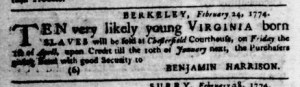
Virginia Gazette [Rind] (March 10, 1774).

**********

Virginia Gazette [Rind] (March 10, 1774).

**********

Virginia Gazette [Rind] (March 10, 1774).

**********

Virginia Gazette [Rind] (March 10, 1774).

**********

Virginia Gazette [Rind] (March 10, 1774).

**********

Virginia Gazette [Rind] (March 10, 1774).

**********

Virginia Gazette [Rind] (March 10, 1774).

**********

Virginia Gazette [Rind] (March 10, 1774).