August 19

What was advertised in a colonial American newspaper 250 years ago today?
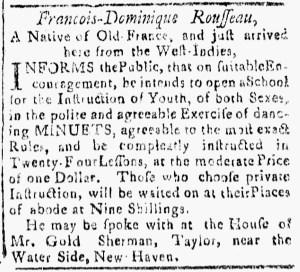
Connecticut Journal (August 19, 1774).

“A School for the Instruction of Youth … in the polite and agreeable Exercise of dancing MINUETS.”

Francois-Dominique Rousseau, a “Native of Old France,” arrived in New Haven by way of the West Indies in the summer of 1774.  When he took up residence in the town, he placed an advertisement in the Connecticut Journal to inform the public that he “intends to open a School for the Instruction of Youth, of both Sexes, in the polite and agreeable Exercise of dancing MINUETS.”  The dancing master further explained that he gave lessons “agreeable to the most exact Rules,” so his charges would be proficient when they completed their studies.  Unlike other dancing masters who advertised in colonial newspapers, he specified how many lessons that would require, a total of twenty-four to be “compleatly instructed” for “the moderate Price of one Dollar.”  For those who preferred private lessons rather than have their initial awkwardness on display in front of fellow students at the school, Rousseau offered to instruct them “at their Places of abode at Nine Shillings.”

The dancing master could have chosen to migrate to one of the largest urban ports, such as Boston or Charleston or Philadelphia, in search of a cosmopolitan clientele rather than take his chances in New Haven.  Dancing masters frequently advertised in those cities.  Yet Rousseau might have been confident that he would indeed find “suitable Encouragement” in New Haven.  Perhaps he had even spoken with ship captains or merchants familiar with the town when they conducted business in the West Indies, getting a sense of his prospects before setting off for Connecticut.  After all, other smaller towns in New England apparently had some demand for dancing masters.  St. George de Viart and Edward Hackett, for instance, operated dancing academies and gave private lessons in New Hampshire.  Viart had even left Portsmouth for Philadelphia, but returned to New England after a short time.  He must have considered his prospects in the smaller town more favorable.  Perhaps he faced too much competition from other dancing masters in the larger city.  That could have been why Rousseau chose New Haven over New York.  Just as the goods associated with the consumer revolution found their way to even the smallest towns in the colonies, not just major urban centers, so did admiration for the skill and gracefulness exhibited through genteel pastimes like dancing.  Rousseau likely encountered prospective students just as eager for instruction in New Haven as any in larger cities.
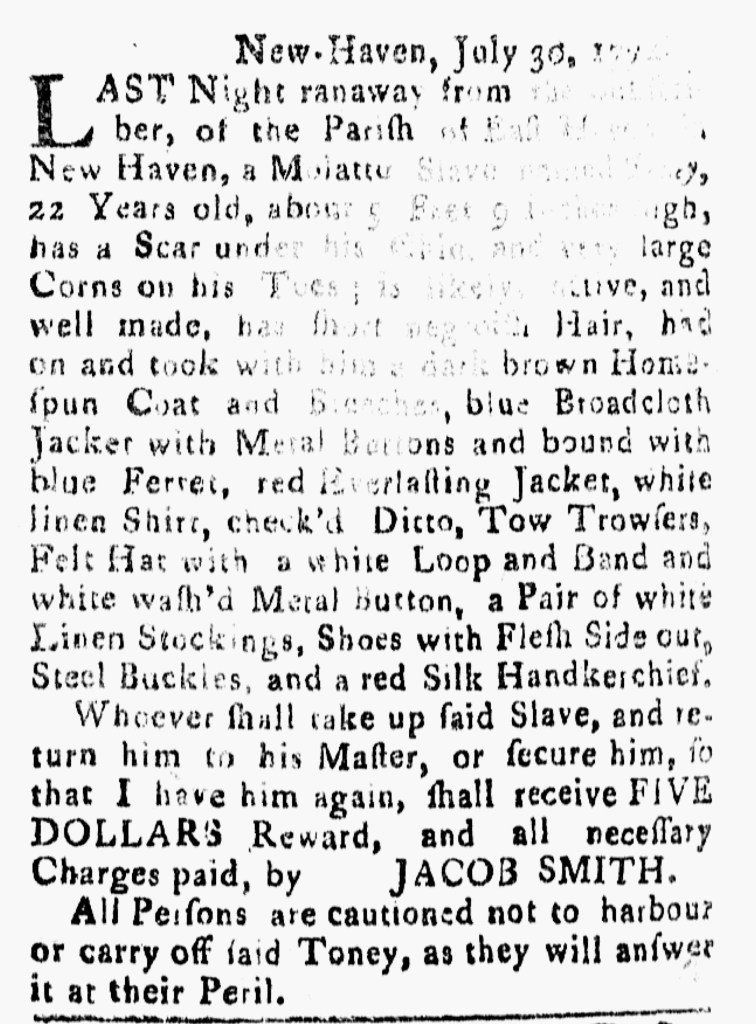
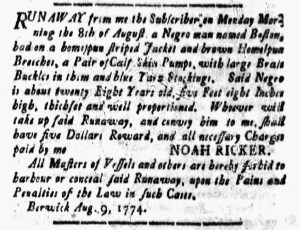
Slavery Advertisements Published August 19, 1774

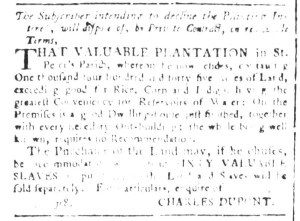
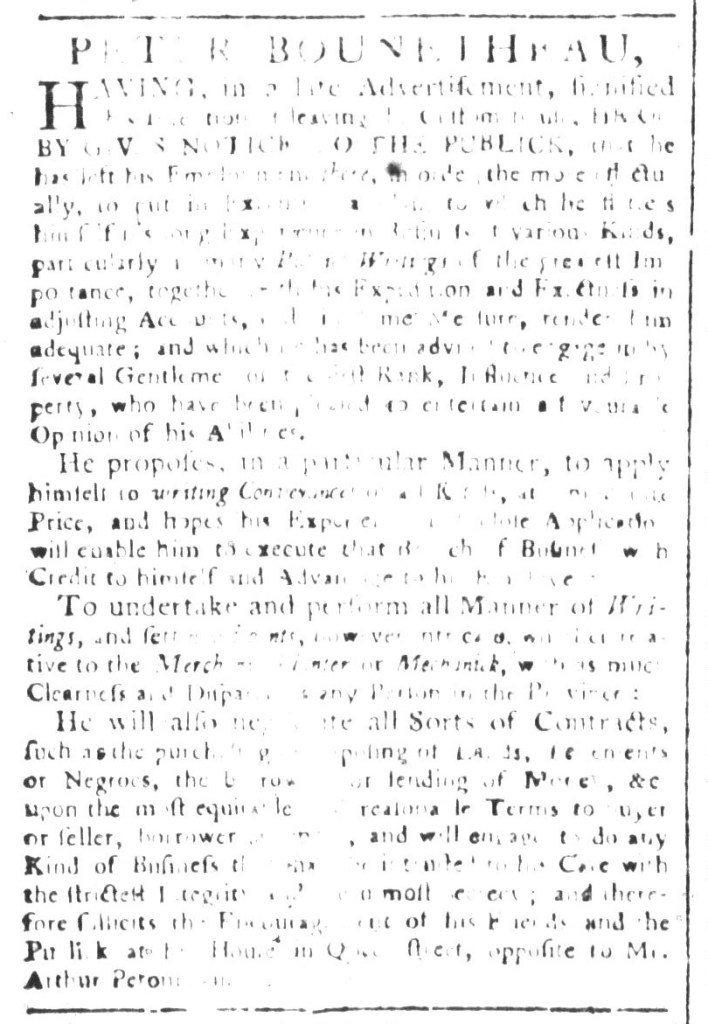
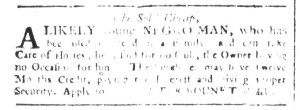
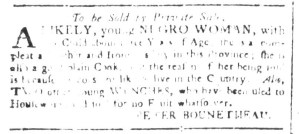
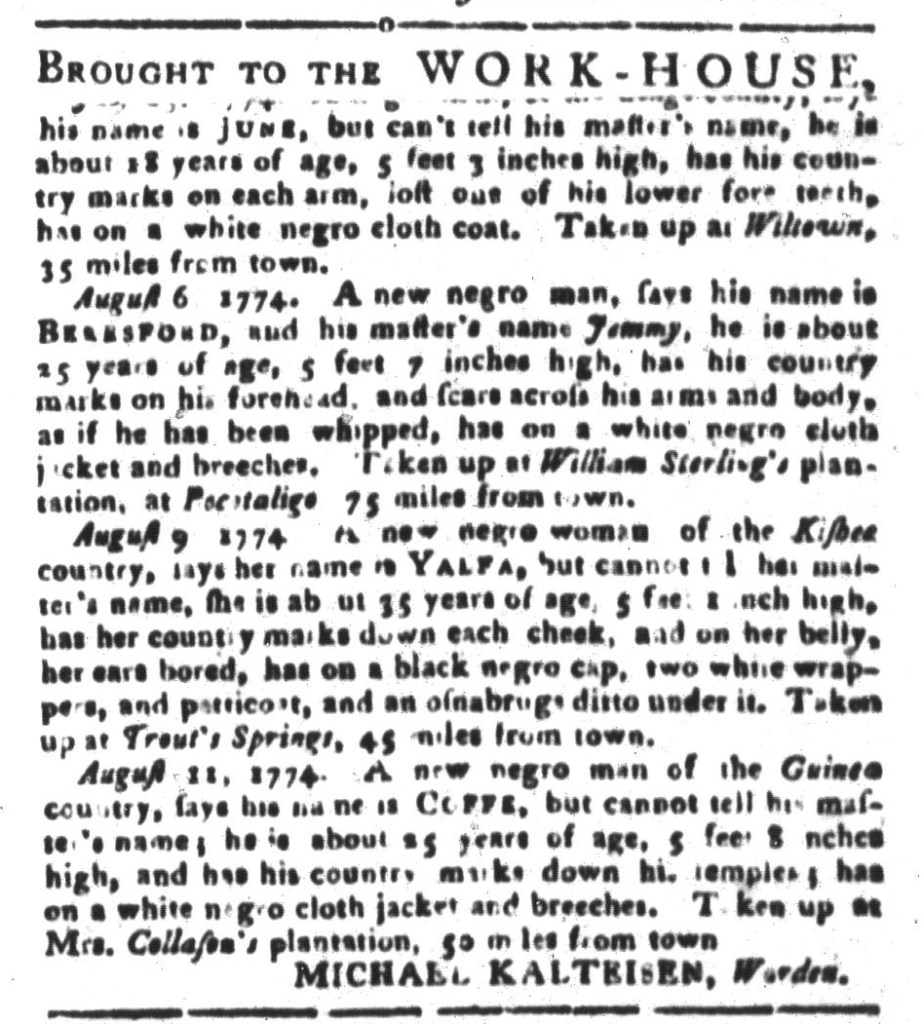
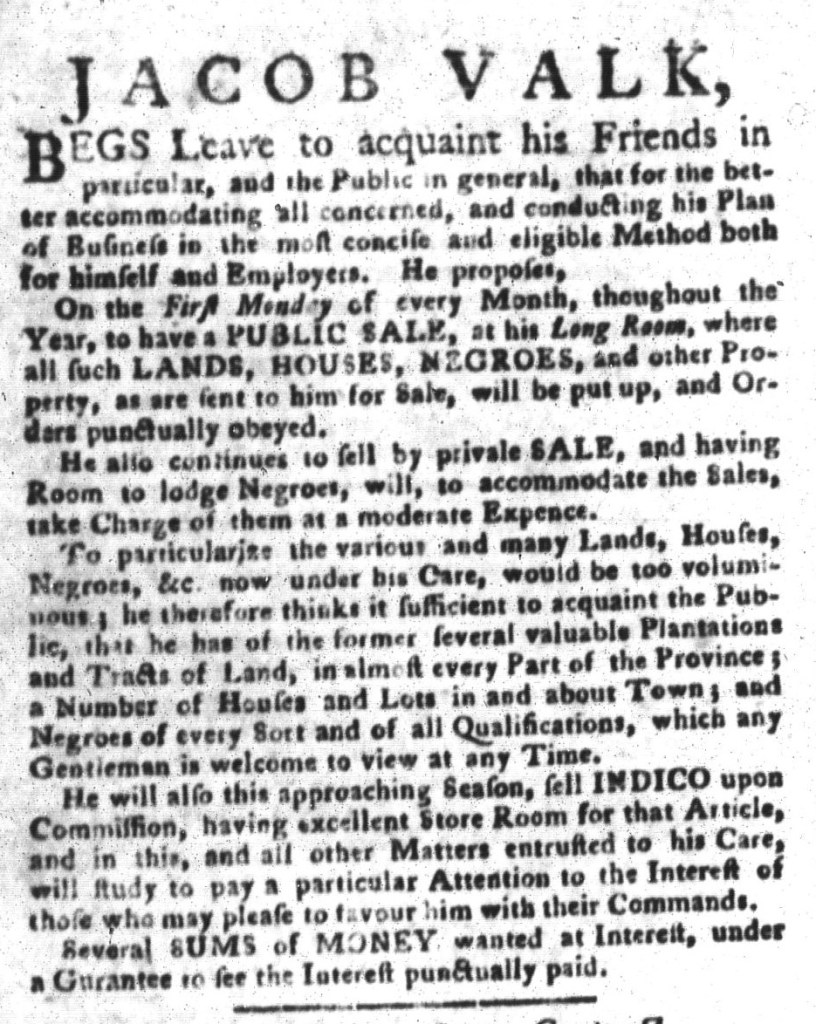
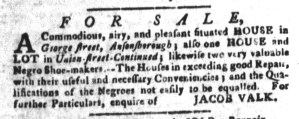
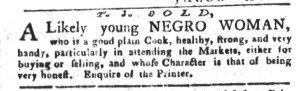
The Slavery Adverts 250 Project chronicles the role of newspaper advertising in perpetuating slavery in the era of the American Revolution. The project seeks to reveal the ubiquity of slavery in eighteenth-century life from New England to Georgia by republishing advertisements about enslaved people – for sale as individuals or in groups, wanted to purchase or for hire for short periods, runaways who liberated themselves, and those who were subsequently captured and confined in jails and workhouses – in daily digests on this site as well as in real time via the @SlaveAdverts250 Twitter feed, utilizing twenty-first-century media to stand in for the print media of the eighteenth century.

The project aims to provide modern audiences with a sense of just how often colonizers encountered these advertisements in their daily lives. Enslaved men, women, and children appeared in print somewhere in the colonies almost every single day. Those advertisements served as a constant backdrop for social, cultural, economic, and political life in colonial and revolutionary America. Colonizers who did not purport to own enslaved people were still confronted with slavery as well as invited to maintain the system by purchasing enslaved men, women, and children or assisting in the capture of so-called “runaways” who sought to free themselves from bondage. The frequency of these newspaper advertisements suggests just how embedded slavery was in colonial and revolutionary American culture in everyday interactions beyond the printed page.
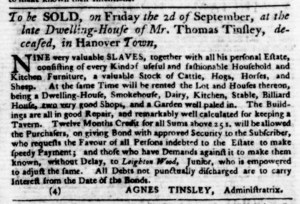
These advertisements also testify to the experiences of enslaved men, women, and children, though readers must consider that those experiences have been remediated through descriptions offered by enslavers rather than enslaved people themselves. Often unnamed in the advertisements, enslaved men, women, and children were not invisible or unimportant in early America.
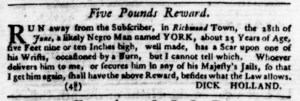
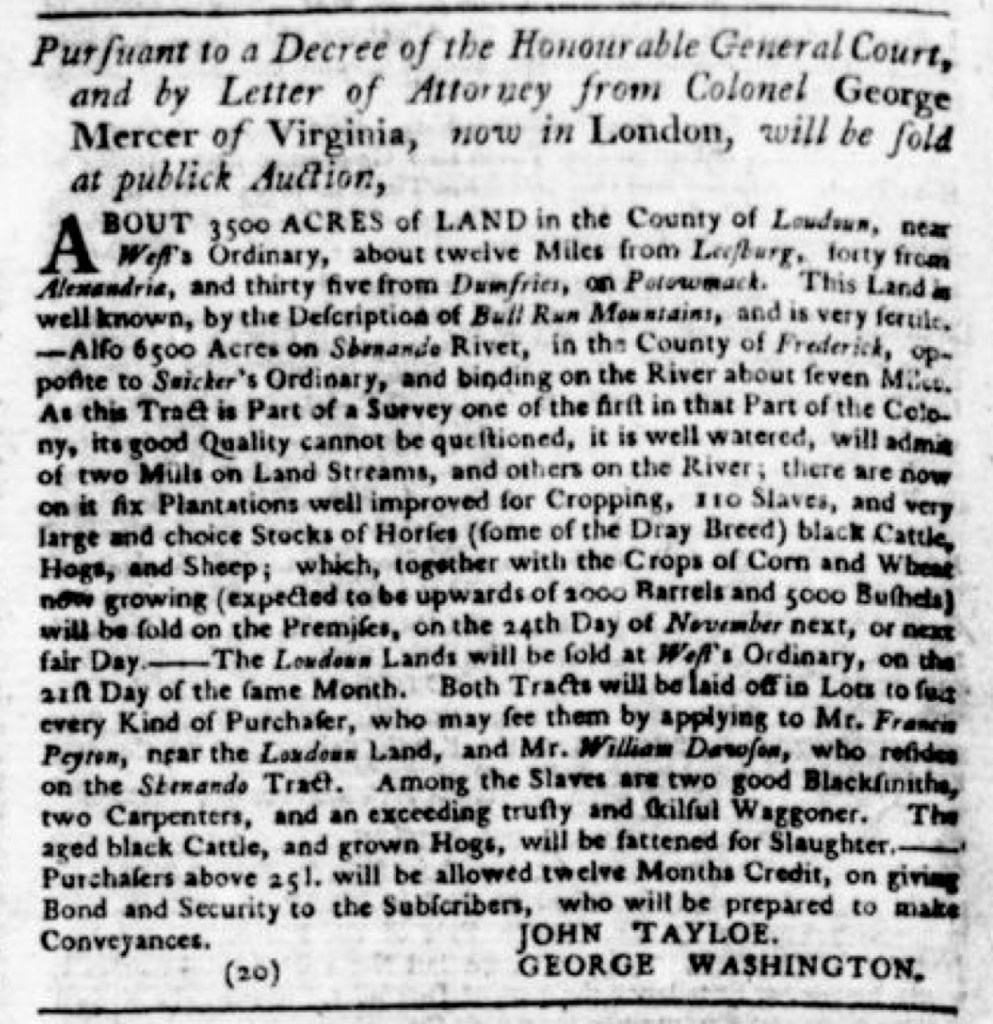
These advertisements appeared in colonial American newspapers 250 years ago today.

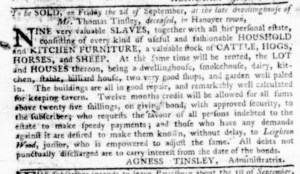
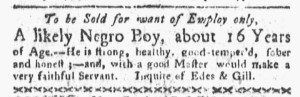
Supplement to the Connecticut Journal (August 19, 1774).

**********

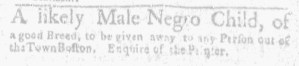
New-Hampshire Gazette (August 19, 1774).

**********

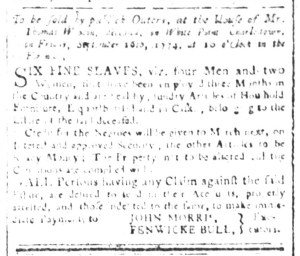
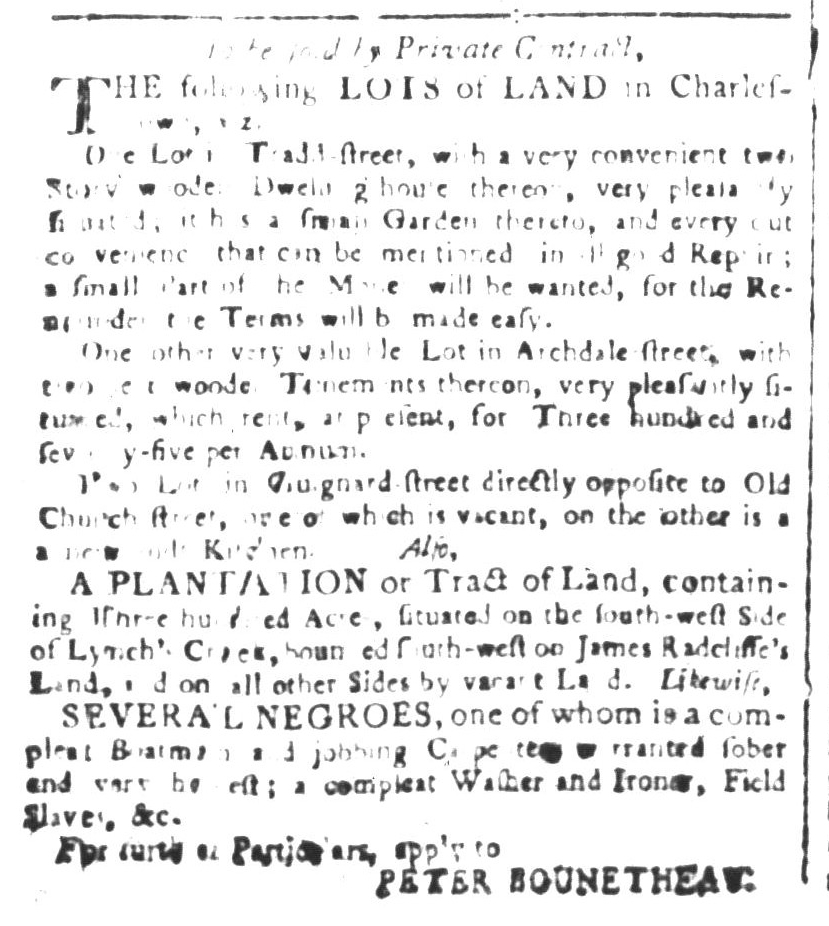
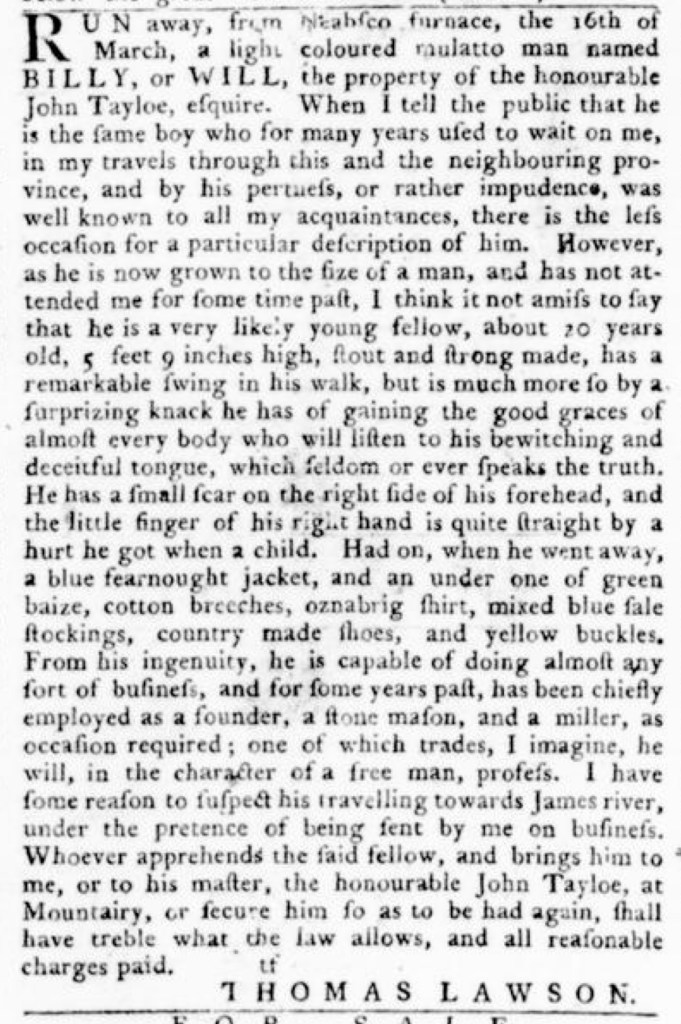
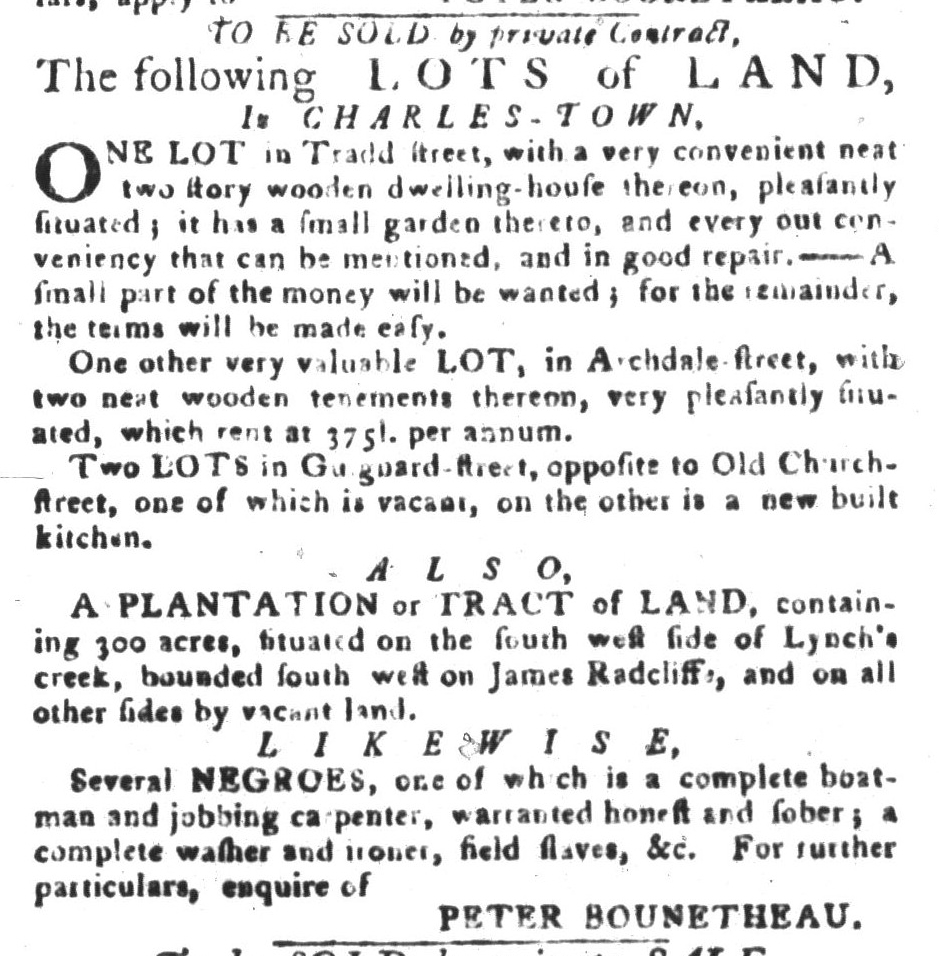
South-Carolina and American General Gazette (August 19, 1774).

**********

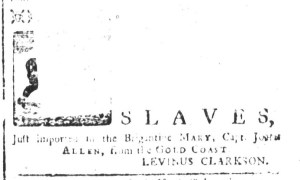
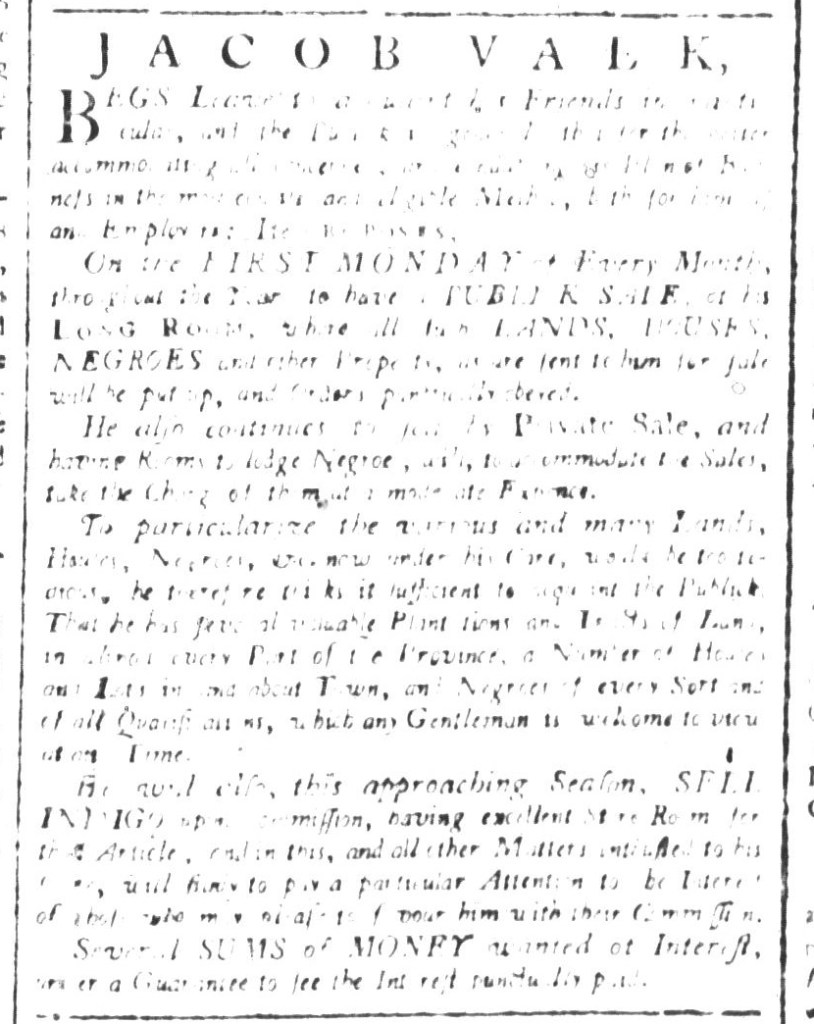
South-Carolina and American General Gazette (August 19, 1774).

**********

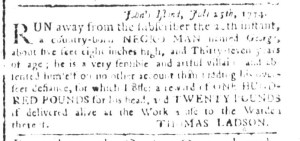
South-Carolina and American General Gazette (August 19, 1774).

**********

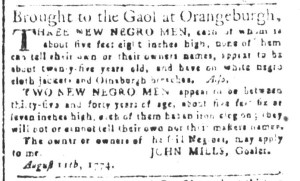
South-Carolina and American General Gazette (August 19, 1774).

**********

South-Carolina and American General Gazette (August 19, 1774).

**********

South-Carolina and American General Gazette (August 19, 1774).

**********

South-Carolina and American General Gazette (August 19, 1774).

**********

South-Carolina and American General Gazette (August 19, 1774).

**********

South-Carolina and American General Gazette (August 19, 1774).

**********

South-Carolina and American General Gazette (August 19, 1774).

**********

South-Carolina and American General Gazette (August 19, 1774).

**********

South-Carolina and American General Gazette (August 19, 1774).

**********

South-Carolina and American General Gazette (August 19, 1774).

**********

South-Carolina and American General Gazette (August 19, 1774).

**********

South-Carolina and American General Gazette (August 19, 1774).

**********

South-Carolina and American General Gazette (August 19, 1774).

**********

South-Carolina and American General Gazette (August 19, 1774).

**********

South-Carolina and American General Gazette (August 19, 1774).

**********

South-Carolina and American General Gazette (August 19, 1774).

**********

South-Carolina and American General Gazette (August 19, 1774).

August 18

What was advertised in a colonial American newspaper 250 years ago today?

Massachusetts Gazette and Boston Weekly News-Letter (August 11, 1774).

“Render this Country an essential Service, by establishing a Manufacture necessary to its Prosperity.”

Abraham Cornish had been in business and advertising long enough by the late summer of 1774 that he expected colonizers to be familiar with his brand of “CORNISH’s New-England Cod-Fish HOOKS.”  He deployed the name of his product as a headline for his advertisement in the August 18 edition of the Massachusetts Gazette and Boston Weekly News-Letter.  Still, for those who needed a refresher or a bit more encouragement to purchase his fishhooks, he provided more information about why those from “his Manufactory” were superior to others.  That they were made in America was central to his marketing efforts.

The savvy entrepreneur had recently moved from “the North-End of Boston, to the Upper Part of Charlestown,” where he continued to make fishhooks “warranted of the best Quality.”  He called on “all concerned in the Fishery” to “favor him with their Custom, as they will thereby promote their own private Interest, and render this Country an essential Service, by establishing a Manufacture necessary to its Prosperity.”  It was a win-win-win situation for “the American Fishery,” the manufacturer, and all colonizers at a time that the political crisis intensified due to the imposition of the Coercive Acts in retaliation for the Boston Tea Party.  Those whose livelihood depended on fishing could acquire equipment “found much Superior to any imported, Cornish could maintain or even expand his business, and the colonies would benefit from “domestic manufactures” that both supported a local industry and directly contributed to the local economy.  Ever since the boycotts inspired by the Stamp Act nearly a decade earlier, many colonizers had advocated for producing more “domestic manufactures” as a means of reducing their reliance on imported goods.  Doing so also served as political leverage in the struggles with Parliament.  Such plans placed obligations on both artisans and tradespeople to produce goods and consumers to purchase those goods instead of imported items.  Like many other producers of “domestic manufactures,” Cornish assured prospective customers that they did not have to sacrifice quality, decalaring that his fishhooks were “made of the best Wire only” and “better shap’d to take Fish.”  He proclaimed that they were “universally approv’d,” having gone into even greater detail in a previous advertisement about how “Fishermen who made Trial of his Hooks … found them … superior to those imported from England.”  Cornish devised a “Buy American” campaign before the colonies declared independence.

Slavery Advertisements Published August 18, 1774

The Slavery Adverts 250 Project chronicles the role of newspaper advertising in perpetuating slavery in the era of the American Revolution. The project seeks to reveal the ubiquity of slavery in eighteenth-century life from New England to Georgia by republishing advertisements about enslaved people – for sale as individuals or in groups, wanted to purchase or for hire for short periods, runaways who liberated themselves, and those who were subsequently captured and confined in jails and workhouses – in daily digests on this site as well as in real time via the @SlaveAdverts250 Twitter feed, utilizing twenty-first-century media to stand in for the print media of the eighteenth century.

The project aims to provide modern audiences with a sense of just how often colonizers encountered these advertisements in their daily lives. Enslaved men, women, and children appeared in print somewhere in the colonies almost every single day. Those advertisements served as a constant backdrop for social, cultural, economic, and political life in colonial and revolutionary America. Colonizers who did not purport to own enslaved people were still confronted with slavery as well as invited to maintain the system by purchasing enslaved men, women, and children or assisting in the capture of so-called “runaways” who sought to free themselves from bondage. The frequency of these newspaper advertisements suggests just how embedded slavery was in colonial and revolutionary American culture in everyday interactions beyond the printed page.

These advertisements also testify to the experiences of enslaved men, women, and children, though readers must consider that those experiences have been remediated through descriptions offered by enslavers rather than enslaved people themselves. Often unnamed in the advertisements, enslaved men, women, and children were not invisible or unimportant in early America.

These advertisements appeared in colonial American newspapers 250 years ago today.

Maryland Gazette (August 18, 1774).

**********

Maryland Gazette (August 18, 1774).

**********

Maryland Gazette (August 18, 1774).

**********

Massachusetts Gazette and Boston Weekly News-Letter (August 18, 1774).

**********

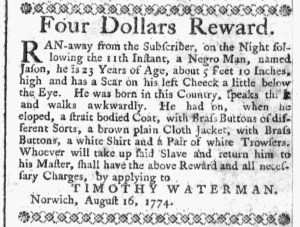
Norwich Packet (August 18, 1774).

**********

Rivington’s New-York Gazetteer (August 18, 1774).

**********

Virginia Gazette [Purdie and Dixon] (August 18, 1774).

**********

Virginia Gazette [Purdie and Dixon] (August 18, 1774).

**********

Virginia Gazette [Purdie and Dixon] (August 18, 1774).

**********

Virginia Gazette [Purdie and Dixon] (August 18, 1774).

**********

Virginia Gazette [Purdie and Dixon] (August 18, 1774).

**********

Virginia Gazette [Purdie and Dixon] (August 18, 1774).

**********

Virginia Gazette [Purdie and Dixon] (August 18, 1774).

**********

Virginia Gazette [Purdie and Dixon] (August 18, 1774).

**********

Virginia Gazette [Purdie and Dixon] (August 18, 1774).

**********

Virginia Gazette [Purdie and Dixon] (August 18, 1774).

**********

Virginia Gazette [Purdie and Dixon] (August 18, 1774).

**********

Virginia Gazette [Rind] (August 18, 1774).

**********

Virginia Gazette [Rind] (August 18, 1774).

**********

Virginia Gazette [Rind] (August 18, 1774).

**********

Virginia Gazette [Rind] (August 18, 1774).

**********

Virginia Gazette [Rind] (August 18, 1774).

**********

Virginia Gazette [Rind] (August 18, 1774).

**********

Virginia Gazette [Rind] (August 18, 1774).

**********

Virginia Gazette [Rind] (August 18, 1774).

August 17

What was advertised in a colonial American newspaper 250 years ago today?

Essex Journal (August 17, 1774).

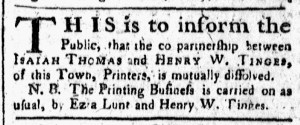
“The co partnership between ISAIAH THOMAS and HENRY W. TINGES, of this Town, Printers, is mutually dissolved.”

When the Essex Journal commenced publication on December 4, 1773, Henry-Walter Tinges printed it in partnership with Isaiah Thomas.  Tinges managed the printing office in Newburyport, while Thomas continued printing the Massachusetts Spy in Boston.  Less than a year passed before their partnership ended.  On August 17, 1774, “No. 35” of the Essex Journal carried a notice “to inform the Public, that the co partnership between ISAIAH THOMAS and HENRY W. TINGES, of this Town, Printers, is mutually dissolved.”  A nota bene further explained, “The Printing Business is carried on as usual, by Ezra Lunt and Henry W. Tinges.”  The young printer had a new partner.  He also updated the colophon on the final page to reflect this change.

Many decades later, Thomas provided a brief account of his partnership with Tinges in The History of Printing in America (1810).  Thomas recollected that he “opened a printing house” in Newburyport “[a]t the request of several gentlemen,” taking Tinges as a partner “who had the principal management of the concerns at Newburyport.”[1]  The young man had previously “served part of his apprenticeship with [John] Fleming,” one of the Tory printers of the Boston Chronicle, “and the residue with Thomas.”[2]  Although the newspaper’s colophon stated that the new printing office in Newburyport accepted job printing orders that would be completed “in a neat manner, on the most reasonable Terms, with the greatest Care and Dispatch,” Tinges devoted most of his time to printing the Essex Journal.  Thomas did not specify why the partnership was “mutually dissolved,” though he may have been frustrated that the printing office did not attract more business or distracted with the responsibilities of running his busy shop in Boston at the same time that the closure of the harbor mandated by the Boston Port Act introduced all sorts of challenges.  Whatever the reason, Thomas “sold the printing materials to Ezra Lunt, the proprietor of a stage, who was unacquainted with printing; but he took Tinges as a partner.”[3]  Tinges contributed his experience and knowledge of the printing trade, while Lunt provided the capital for the necessary equipment.  Even though Tinges performed the bulk of the labor in the printing office, his name appeared second in the colophon during his partnership with Thomas and again during his partnership with Lunt.  Although he may have taken direction from his partners on occasion, Tinges collated the news, engaged with subscribers, advertisers, and other customers, and disseminated additional information in response to “enquire of the printer” advertisements in the Essex Journal.

Essex Journal (August 17, 1774).

**********

[1] Isaiah Thomas, The History of Printing in America: With a Biography of Printers and an Account of Newspapers (1810; New York; Weathervane Books, 1970), 179.

[2] Thomas, History of Printing, 180.

[3] Thomas, History of Printing, 179.

Slavery Advertisements Published August 17, 1774

The Slavery Adverts 250 Project chronicles the role of newspaper advertising in perpetuating slavery in the era of the American Revolution. The project seeks to reveal the ubiquity of slavery in eighteenth-century life from New England to Georgia by republishing advertisements about enslaved people – for sale as individuals or in groups, wanted to purchase or for hire for short periods, runaways who liberated themselves, and those who were subsequently captured and confined in jails and workhouses – in daily digests on this site as well as in real time via the @SlaveAdverts250 Twitter feed, utilizing twenty-first-century media to stand in for the print media of the eighteenth century.

The project aims to provide modern audiences with a sense of just how often colonizers encountered these advertisements in their daily lives. Enslaved men, women, and children appeared in print somewhere in the colonies almost every single day. Those advertisements served as a constant backdrop for social, cultural, economic, and political life in colonial and revolutionary America. Colonizers who did not purport to own enslaved people were still confronted with slavery as well as invited to maintain the system by purchasing enslaved men, women, and children or assisting in the capture of so-called “runaways” who sought to free themselves from bondage. The frequency of these newspaper advertisements suggests just how embedded slavery was in colonial and revolutionary American culture in everyday interactions beyond the printed page.

These advertisements also testify to the experiences of enslaved men, women, and children, though readers must consider that those experiences have been remediated through descriptions offered by enslavers rather than enslaved people themselves. Often unnamed in the advertisements, enslaved men, women, and children were not invisible or unimportant in early America.

These advertisements appeared in colonial American newspapers 250 years ago today.

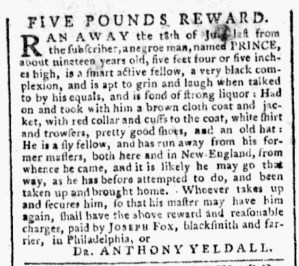
Pennsylvania Gazette (August 17, 1774).

**********

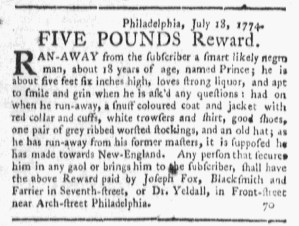
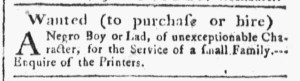
Pennsylvania Journal (August 17, 1774).

August 16

What was advertised in a colonial American newspaper 250 years ago today?

Connecticut Courant (August 16, 1774).

“His Abilities in his Profession of Physic, Surgery and Midwifry, he flatters himself, gave Satisfaction.”

Richard Tidmarsh, a physician and apothecary, often did not remain long in the communities he served, though in an advertisement he placed in the Connecticut Courant in August 1774 he suggested that he would settle in Hartford “probably, for Life” if he managed to cultivate a clientele that would allow him to remain there.  In January 1771, he liquidated the contents of his apothecary shop in Philadelphia (and sold an enslaved man).  Tidmarsh relocated to Hartford before arriving in New Haven in May 1773.  A little over a year later, he “returned to Hartford, where his Abilities in his Profession of Physic, Surgery and Midwifry, he flatters himself, gave Satisfaction.”  He felt confident enough in his reputation for the services he rendered to that community that he encouraged the public to recall the time he spent there.  Furthermore, he expected that his “long practical Experience, will render him a useful and acceptable Member of Society.”

Near the beginning of his notice, Tidmarsh promoted an “Assortment of fresh, genuine DRUGS & MEDICINES” that he sold for even lower prices than in the past.  He listed many of them, including popular patent medicines, at the end of his advertisement.  He also noted that he “faithfully prepared” both “Physician’s Prescriptions, and family Recipe’s,” compounding them in his shop formerly occupied by Dr. Jepson on Queen Street.  Yet Tidmarsh did not limit his endeavors to providing medical care and selling medicines.  He devoted a significant portion of his advertisement to proposals for “instruct[ing] young Gentlemen whose Education and Genius seem adapted to Study, modern Theory and practical System of Physic, Surgery and Midwifry.”  Tidmarsh envisioned a thorough education for his students.  Rather than “the customary Time of a few Months” to two years that allowed for “but a very superficial Knowledge of the Materia Medica, and bare Idea of Diseases,” even under the tutelage of “the most accurate and extensive Practitioner.”  The physician and apothecary implied that he would work with his students over longer periods, pledging that “Young Men, desirous of enlarging their Opportunities in the medical Branches” could learn from him “on reasonable Terms.”  Such an education need not be expensive while extending it over several years would help support Tidmarsh in his intention to permanently settle in Hartford.

The enterprising physician and apothecary made yet another appeal to justify public support for his return to Hartford.  “Poor Persons, unable to see a Physician for Advice,” he proclaimed, “may have the Subscriber’s Opinion gratis,” an act of philanthropy designed to enhance his standing in the community and worthy of “encouragement” from clients who could afford to pay for his services.  In addition, Tidmarsh stood to profit from his “Poor” clients who purchased “Medicines adapted for their Disorders” from him.  He did not gouge them on the prices to balance the free consultations, instead preparing prescriptions “as cheap as any Apothecary.”  All in all, Tidmarsh sought to give “the Inhabitants of HARTFORD, and the Public in General” all sorts of reasons to welcome him back to town and support his various enterprises so he could remain there to provide services “of public Utility to Posterity.”

Slavery Advertisements Published August 16, 1774

The Slavery Adverts 250 Project chronicles the role of newspaper advertising in perpetuating slavery in the era of the American Revolution. The project seeks to reveal the ubiquity of slavery in eighteenth-century life from New England to Georgia by republishing advertisements about enslaved people – for sale as individuals or in groups, wanted to purchase or for hire for short periods, runaways who liberated themselves, and those who were subsequently captured and confined in jails and workhouses – in daily digests on this site as well as in real time via the @SlaveAdverts250 Twitter feed, utilizing twenty-first-century media to stand in for the print media of the eighteenth century.

The project aims to provide modern audiences with a sense of just how often colonizers encountered these advertisements in their daily lives. Enslaved men, women, and children appeared in print somewhere in the colonies almost every single day. Those advertisements served as a constant backdrop for social, cultural, economic, and political life in colonial and revolutionary America. Colonizers who did not purport to own enslaved people were still confronted with slavery as well as invited to maintain the system by purchasing enslaved men, women, and children or assisting in the capture of so-called “runaways” who sought to free themselves from bondage. The frequency of these newspaper advertisements suggests just how embedded slavery was in colonial and revolutionary American culture in everyday interactions beyond the printed page.

These advertisements also testify to the experiences of enslaved men, women, and children, though readers must consider that those experiences have been remediated through descriptions offered by enslavers rather than enslaved people themselves. Often unnamed in the advertisements, enslaved men, women, and children were not invisible or unimportant in early America.

These advertisements appeared in colonial American newspapers 250 years ago today.

Connecticut Courant (August 16, 1774).

**********

South-Carolina Gazette and Country Journal (August 16, 1774).

**********

South-Carolina Gazette and Country Journal (August 16, 1774).

**********

South-Carolina Gazette and Country Journal (August 16, 1774).

**********

South-Carolina Gazette and Country Journal (August 16, 1774).

**********

South-Carolina Gazette and Country Journal (August 16, 1774).

**********

South-Carolina Gazette and Country Journal (August 16, 1774).

**********

South-Carolina Gazette and Country Journal (August 16, 1774).

**********

South-Carolina Gazette and Country Journal (August 16, 1774).

**********

South-Carolina Gazette and Country Journal (August 16, 1774).

**********

South-Carolina Gazette and Country Journal (August 16, 1774).

**********

South-Carolina Gazette and Country Journal (August 16, 1774).

**********

South-Carolina Gazette and Country Journal (August 16, 1774).

**********

South-Carolina Gazette and Country Journal (August 16, 1774).

**********

South-Carolina Gazette and Country Journal (August 16, 1774).

**********

South-Carolina Gazette and Country Journal (August 16, 1774).

**********

South-Carolina Gazette and Country Journal (August 16, 1774).

**********

South-Carolina Gazette and Country Journal (August 16, 1774).

**********

Supplement to the South-Carolina Gazette and Country Journal (August 16, 1774).

**********

Supplement to the South-Carolina Gazette and Country Journal (August 16, 1774).

**********

Supplement to the South-Carolina Gazette and Country Journal (August 16, 1774).

**********

Supplement to the South-Carolina Gazette and Country Journal (August 16, 1774).

**********

Supplement to the South-Carolina Gazette and Country Journal (August 16, 1774).

**********

Supplement to the South-Carolina Gazette and Country Journal (August 16, 1774).

**********

Supplement to the South-Carolina Gazette and Country Journal (August 16, 1774).

August 15

What was advertised in a colonial American newspaper 250 years ago today?

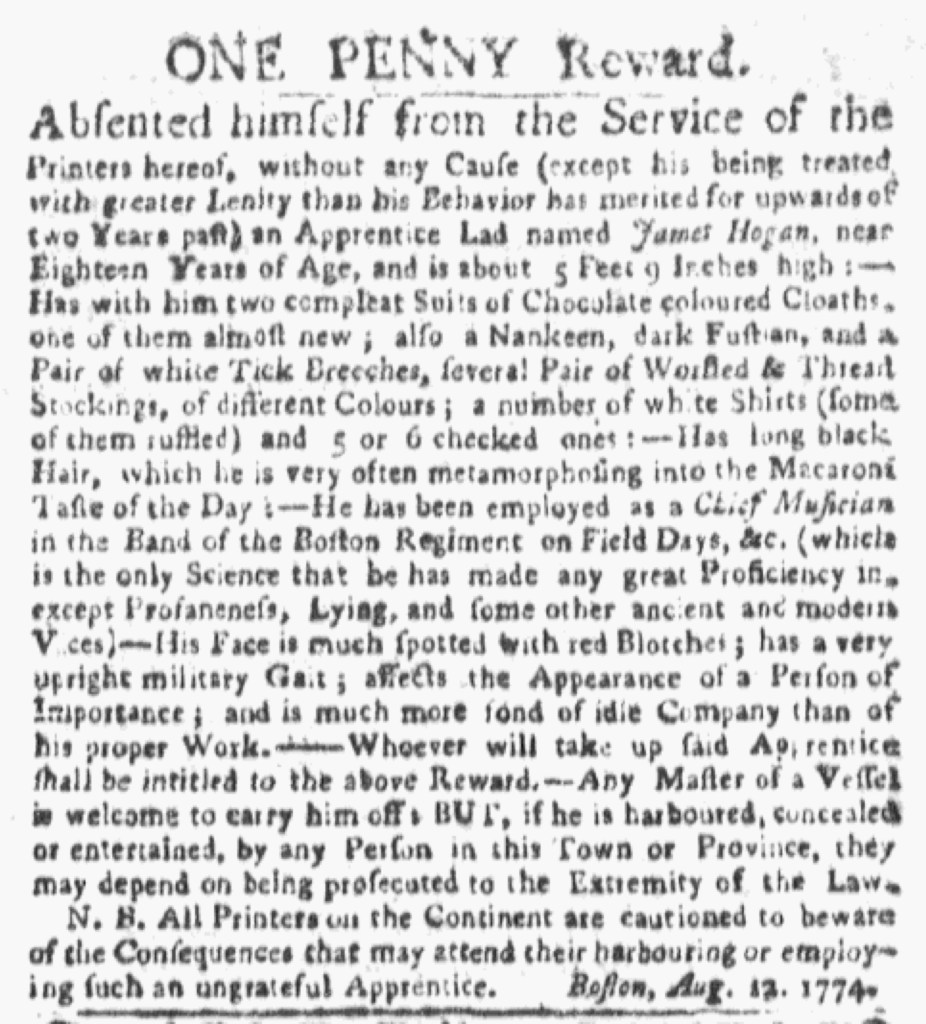
Boston Evening-Post (August 15, 1774).

“ONE PENNY Reward.”

Even though they offered a reward, Thomas Fleet and John Fleet, the printers of the Boston Evening-Post, did not really want anyone to return their runaway apprentice to them.  The reward, “ONE PENNY,” after all, was hardly an incentive but rather an insult to underscore how much contempt the printers had for James Hogan, their “ungrateful Apprentice.”  Contrary to standard language in runaway advertisements that advised ship captains against giving passage to runaway indentured servants and apprentices or enslaved people seeking freedom, the Fleets proclaimed that “Any Master of a Vessel is welcome to carry him off.”  They wished to be done with him, while also warning “All Printers on the Continent” against employing Hogan if he found his way to any of their printing offices.  Whatever skills he had gained, he was not worth the trouble.

Masters did not always treat apprentices well, yet the Fleets claimed that Hogan absconded “without any Cause (except his being treated with greater Lenity than his Behavior has merited for upwards of two years past).”  In addition to working in their shop, Hogan “has been employed as a Chief Musician in the Band of the Boston Regiment on Field Days.”  That was the only quality to his credit, “the only Science that he has made any great Proficiency in, except Profaneness, Lying, and some other ancient and modern Vices.”  Like too many young men seeking to express themselves and gain attention in a transatlantic consumer society, Hogan put too much emphasis on fashion, one of those vices.  According to the fleets, he had “long black Hair, which he is very often metamorphosing into the Macaroni Taste of the Day” and an extensive wardrobe.  In describing Hogan as a macaroni, the printers invoked eighteenth-century slang for a dandy or fop, referring in particular to elaborate hairstyles that rose far above the forehead.  A print produced in London in June 1774 depicted the dismayed reaction of an “honest FARMER” upon encountering his son, Tom, in all his macaroni trappings, including a wig with hair piled high above his head.

The Fleets suggested that Hogan focused more on this ridiculous fashion than his responsibilities in their printing office.  Even though he “has a very upright military Gait” and “affects the Appearance of a Person of Importance,” he was an apprentice who was “much more fond of Idle Company than of his proper Work.”  The Fleets did not seem disappointed by his departure.  Rather than seek his return, they used their advertisement to denigrate Hogan and warn others against trusting him.

Slavery Advertisements Published August 15, 1774

The Slavery Adverts 250 Project chronicles the role of newspaper advertising in perpetuating slavery in the era of the American Revolution. The project seeks to reveal the ubiquity of slavery in eighteenth-century life from New England to Georgia by republishing advertisements about enslaved people – for sale as individuals or in groups, wanted to purchase or for hire for short periods, runaways who liberated themselves, and those who were subsequently captured and confined in jails and workhouses – in daily digests on this site as well as in real time via the @SlaveAdverts250 Twitter feed, utilizing twenty-first-century media to stand in for the print media of the eighteenth century.

The project aims to provide modern audiences with a sense of just how often colonizers encountered these advertisements in their daily lives. Enslaved men, women, and children appeared in print somewhere in the colonies almost every single day. Those advertisements served as a constant backdrop for social, cultural, economic, and political life in colonial and revolutionary America. Colonizers who did not purport to own enslaved people were still confronted with slavery as well as invited to maintain the system by purchasing enslaved men, women, and children or assisting in the capture of so-called “runaways” who sought to free themselves from bondage. The frequency of these newspaper advertisements suggests just how embedded slavery was in colonial and revolutionary American culture in everyday interactions beyond the printed page.

These advertisements also testify to the experiences of enslaved men, women, and children, though readers must consider that those experiences have been remediated through descriptions offered by enslavers rather than enslaved people themselves. Often unnamed in the advertisements, enslaved men, women, and children were not invisible or unimportant in early America.

These advertisements appeared in colonial American newspapers 250 years ago today.

Boston-Gazette (August 15, 1774).

**********

Dunlap’s Pennsylvania Packet (August 15, 1774).

**********

Massachusetts Gazette and Boston Post-Boy (August 15, 1774).

**********

Massachusetts Gazette and Boston Post-Boy (August 15, 1774).

**********

Newport Mercury (August 15, 1774).

**********

New-York Gazette and Weekly Mercury (August 15, 1774).

**********

New-York Gazette and Weekly Mercury (August 15, 1774).